




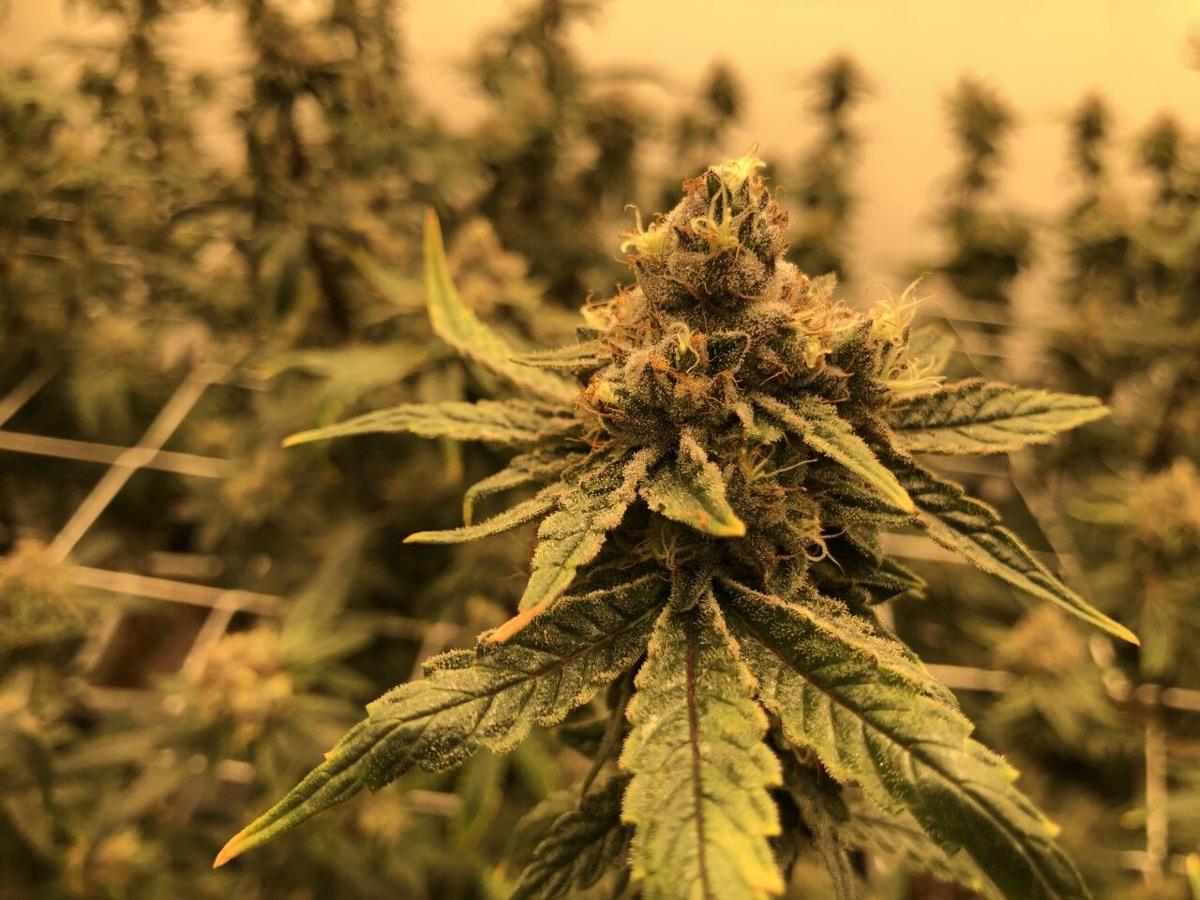
In a reversal of nearly five decades of policy, and almost five years after a former University of Arizona professor’s initial application, the U.S. Drug Enforcement Agency granted preliminary approval for the cultivation of marijuana for clinical research.
The DEA announced last Friday that it had approved the applications of several companies, including one for Phoenix-based Scottsdale Research Institute, a lab run by former University of Arizona professor and renowned marijuana researcher Dr. Sue Sisley, to grow and clinically test marijuana, opening a path for researchers to test its medicinal applications.
“The Drug Enforcement Administration took an important step to increase opportunities for medical and scientific research,” the agency said in a press release. “Pending final approval, DEA has determined, based on currently available information, that a number of manufacturers’ applications to cultivate marijuana for research needs in the United States appears to be consistent with applicable legal standards and relevant laws.”
For Sisley, who has spent her career advocating for such a move, the decision isn’t the finish line, but is a welcome win.
“Now we have to finalize the MOA,” Sisley said, referring to the memorandum of agreement. “Then we will be issued a license to cultivate after that document is complete. They made clear that, you know, this is the first attempt to license any growers outside of Mississippi for the first time in decades.”
Until now, the National Institute on Drug Abuse, or NIDA, had what amounted to a government-granted monopoly on the production and supply of marijuana for research purposes.
Although not officially a regulatory agency, NIDA had de facto control of the supply of marijuana that is FDA-approved for research purposes and grown at the University of Mississippi’s Research Institute of Pharmaceutical Sciences.
The DEA’s decision Friday ends that. Sisley said the decision should be a boon to scientists, doctors and researchers who are not approaching marijuana from a safety and regulatory mindset.
“They’ve always been focused on cannabis for safety studies, looking at harmful side effects of cannabis and addiction potential,” she said. “For maybe the last decade, there’s been a growing demand from the public to study cannabis as a medicine and not just as a drug of abuse.”
SRI — the company Sisley is the founder, owner, president and principal investigator for — states on its website that it “supports the expansion of research efforts to determine the applicability of cannabis as medicine for any conditions for which it might prove safe and effective.”
Sisley also noted that SRI is currently conducting the only FDA-approved research into the effects of marijuana on Post-traumatic Stress Disorder in military veterans.
Attorney Matt Zorn, who represents SRI, said he sees the decision as the DEA and federal government beginning to embrace different, diverse supplies of cannabis for clinical and medical research purposes.
“It’s important because the research thus far has focused on safety and has used what can only be described as bad cannabis,” he said.
Sisley echoed that sentiment about the existing supply of research-grade marijuana being low quality. She said that, during past clinical trials she put on, “molding, diluted cannabis from the University of Mississippi” performed poorly.
“It’s not that it didn’t just perform well, but it never was able to replicate the positive, transformative experiences that people were describing in the real world,” she said.
The decision by the DEA on Friday should also help to pump more research-grade marijuana into supply as other institutions market their marijuana to researchers, Zorn said.
“The idea isn’t that everyone is getting approved to supply themselves,” he said. “Instead this is going to create a more robust marketplace where researchers can test different types of cannabis.”
Sisley confirmed that while SRI is focused on growing marijuana for their clinical studies, excess flower and other products the firm produces will be made available at cost to other researchers and institutions looking to run their own studies.
“That wasn’t our primary mission, but we certainly care. We desperately want to support scientists across the country,” Sisley said.

