


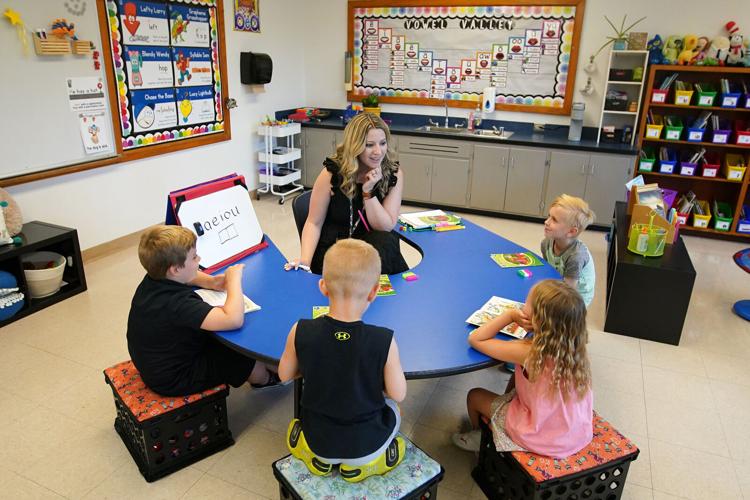
Akron teacher Janine DeTine started learning about the "science of reading" in 2019, right before the Covid-19 pandemic started.
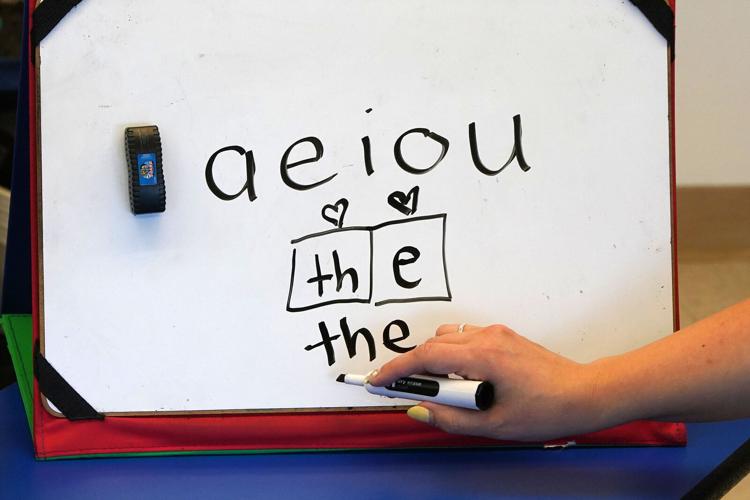
She was intrigued by the research on how to teach children to read. Instead of having young readers look for cues when they come to an unfamiliar word and questioning if it makes sense, if it looks right, is there a clue in the picture, this approach gives children the tools to sound out and decode the word.
The research on reading also looked promising to Tarja Parssinen of the Western New York Education Alliance, which was formed during the pandemic.
"Our starting point, our focus, is really what has the biggest impact in academic outcomes," she said. "As things normalized, the issue that stood out was literacy."
A look at the 2019 New York State English Language Arts scores from 2019, the year before the pandemic started, shows there was room for improvement. Less than half of students in third through eighth grades were deemed proficient.
Parssinen said literacy affects life outcomes.
"When it comes down to equity, if we we're really going to talk about literacy, the gap is widening," she said.
The WNY Education Alliance has formed a collaborative with 11 other groups to increase awareness of the science of reading and help develop partnerships between local schools and educational organizations that support evidence-based reading instruction through teacher training and the implementation of high-quality, content-rich curriculum. The group plans to hold a conference dedicated to the science of reading this fall.
"Teachers are doing this work on their own," Parssinen said.
During the pandemic, DeTine read research articles as she came across them, and compared notes with other educators.
"I do reading interventions. My job this year has been – I’m like a Band-Aid for a lot of the learning loss that has happened. I really try to bring them back to where they should be," DeTine said.

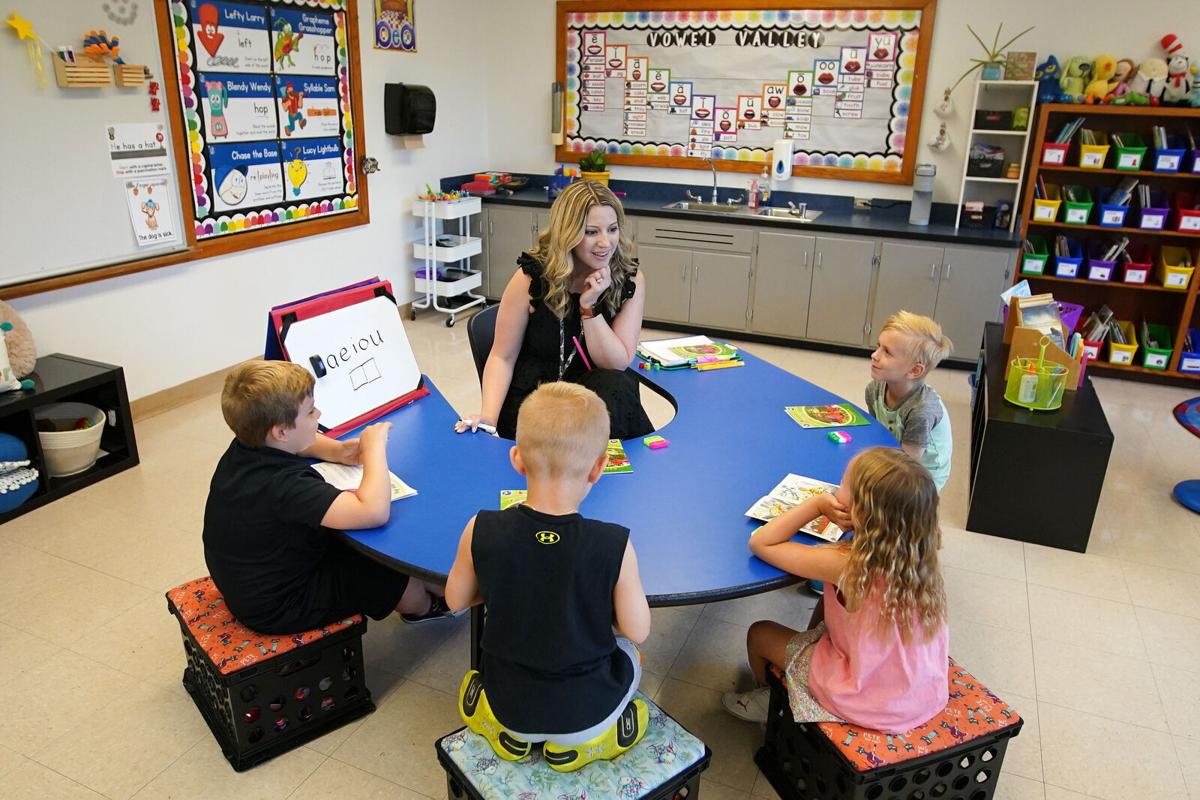
Janine DeTine works with children using the "science of reading" in her classroom at Akron Elementary in Akron Friday, June 17, 2022.
After she was named to the newly created position of academic intervention services coordinator, she piloted a science of reading-aligned curriculum with an emphasis on phonics with a kindergarten classroom.
"Our numbers since a lot of us have made the switch, and especially in those pilot classrooms, are phenomenal," DeTine said.
Many of the children needing remediation gained proficiency, and the number of students needing the highest level of intervention was reduced, she said.
Groups in the literacy initiative include Dyslexia Allies of Western New York, the Education Trust – New York, Literacy Buffalo Niagara, Neuhaus Education Center, the Reading League, Read to Succeed Buffalo, Say Yes Buffalo, Buffalo Police Athletic League, Teach My Kid to Read, We the Parents of Western New York and WNY Literacy Collaborative.
Samuel Radford III of We the Parents of Western New York said reading probably has the longest lasting impact on a child.
"If kids can't read, it affects the ability to do anything else," he said.
Research into how the brain learns to read goes back decades, but the science of reading started gaining more attention after American Public Media education reporter Emily Hanford featured it in her award-winning podcast "Hard Words – why children aren't being taught to read" came out in 2019.
Educators hope this is not another episode in the reading wars that pitted whole language and phonics against each other.
Ann K. Lupo, a teacher and administrator for more than 40 years and lecturer in the History and Social Studies Education Department at SUNY Buffalo State, said classroom teachers try to use different methods to teach children. They use the latest research on how the brain works and functions when someone is learning to read, she said.
She said the choice should never be to use one method or another in the classroom, because students are different.
"Good teachers always explore multiple ways to reach students," Lupo said. "You don't need to slap a label on everything and create a movement; you just need to make sure teachers are up to date."
"A lot of research on reading shows that most children will benefit from explicit and systematic instruction in phonics," said John Z. Strong, assistant professor in the University at Buffalo graduate School of Education.
He said children are often taught to guess words based on the context of the passage and pictures in the text.
"Science of reading advocates, and all of the research evidence, would say children should be taught how to decode words by using all of the letters and all of the sounds and that context is not an appropriate way to figure out what a word is," Strong said. "But context is helpful for confirming that you’ve decoded a word correctly and for determining the meaning of a word."
Critics of the science of reading, or structured literacy, believe it uses foundational skills in practice that are not connected to real text readings, so that there may not be as many culturally relevant texts or comprehension.
"Whole language was the idea that by putting children in print rich environments and a lot of book and text reading, children will naturally learn how to read, they'll figure out the code," Strong said. "For most kids they do need explicit instruction."

