

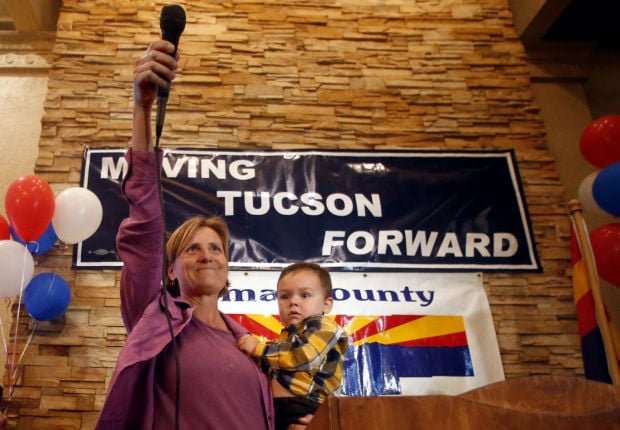

The Tucson City Council has appointed former council member Karin Uhlich to fill the city’s Ward 3 seat, which was left vacant following the resignation of Paul Durham.
In a unanimous vote Monday, the council chose Uhlich to represent Ward 3 for the remainder of the term, with the requirement that she would not seek re-election in the next election cycle. According to City Attorney Mike Rankin, Uhlich could fill the seat for either 10 months or two years, depending on a decision by the Arizona Supreme Court about Tucson’s election dates.
Paul Durham’s decision to resign came after taking several months of leave last year due to personal circumstances. He previously announced that his husband was undergoing treatment for terminal cancer.
“Karin Uhlich has been elected by the people of Ward 3 previously and served them honorably for 12 years,” said Tucson Mayor Regina Romero. “This is an amazing opportunity for the residents of Ward 3 to have a voting member on the city council in our next meeting on March 9.”
Uhlich served three terms on the Tucson City Council before deciding to step down in 2017. In her years on the council, Uhlich is most remembered for her dedication to affordable housing and transportation issues. She currently serves as the Senior Director of System of Care for Arizona Complete Health.
Prior to Monday’s vote, the City Clerk received five letters of interest from qualified candidates, two of whom withdrew their applications. Uhlich was up against Michael Crawford, a local trial attorney and former Ward 3 appointee, as well as Bonnie Poulos, a retired immunobiologist and prominent community activist.
“We’re really lucky to have all three of you apply,” said Councilmember Paul Cunningham. “I have the utmost respect for all three of you. The City of Tucson wins today no matter what.”
The person selected for the Ward 3 seat needed to be a resident of Tucson for the last three years and a resident of Ward 3 for the last year. The ward is made up of many neighborhoods on the city’s northwest side, such as Flowing Wells, Amphi, Campus Farm and Balboa Heights.
Uhlich moved out of Ward 3 during her last term but has since returned to the area after purchasing a house in spring 2019.
The Tucson Festival of books will be a little different this year. You can attend in your pajamas. If you're not sure how that works, here's a little help.
Some links that will be helpful:
When asked about what challenges the city will face in the near future, Uhlich pointed to the transition out of the COVID-19 pandemic and emphasized the need for core city services and support for residents.
“How are we going to help communities heal that have been disproportionately impacted, including people of color, the elderly and their families? There’s the health impacts, but also our economy,” she said. “Tucson prides itself on that local, small business driver that is our economy and I don’t know how best to make sure that we help those businesses re-emerge and survive this next period, but it’s critical.”
Aerial photos of Tucson, Pima County, in 1980
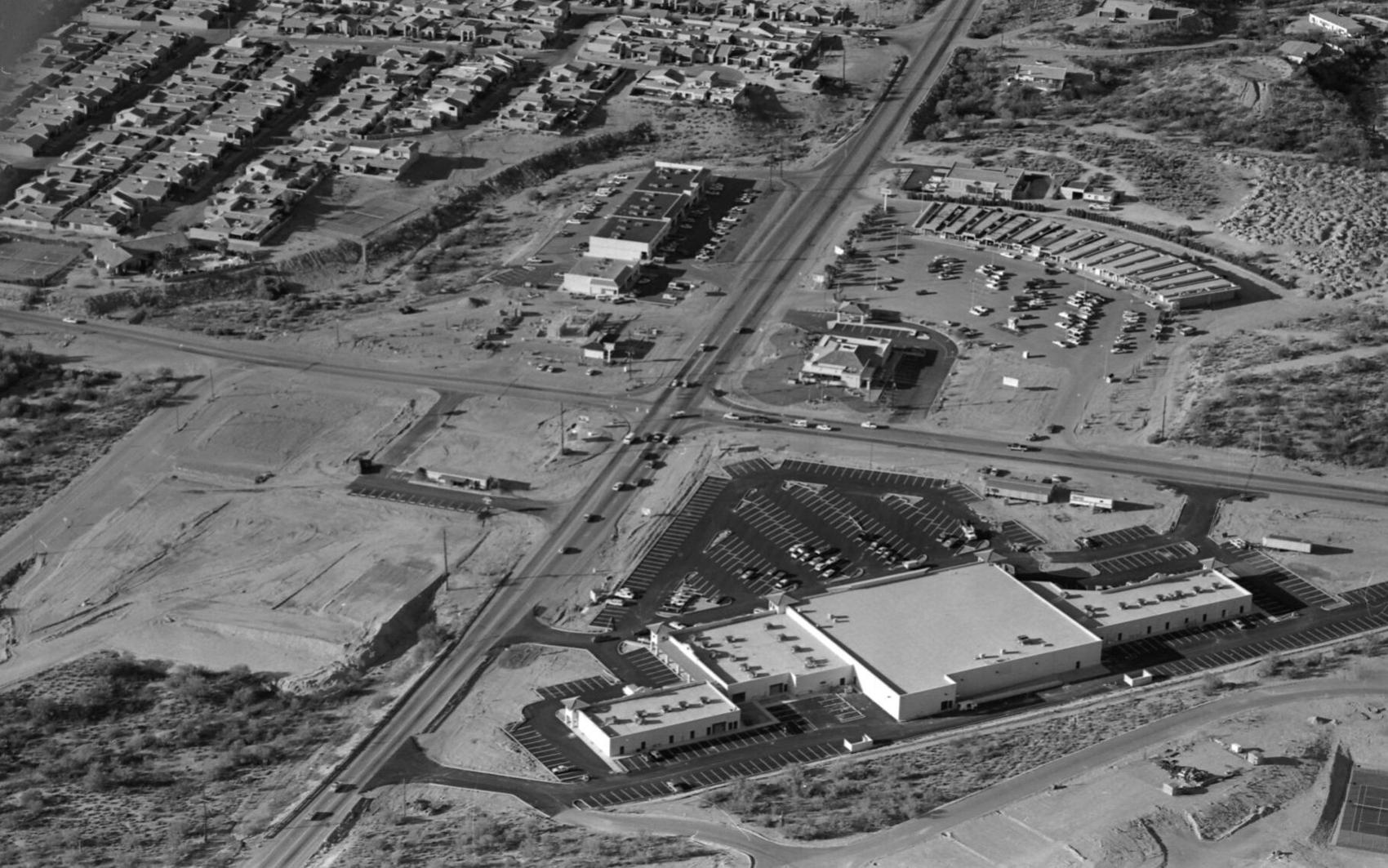
Swan Road and Sunrise Drive in February, 1980. The new Safeway Plaza is bottom right. Catty-corner from the Safeway, a Burger King restaurant is under construction. Across the street, land bladed for a Valley National Bank (now Chase Bank), a restaurant, retail and apartments. The old Rural Metro fire station is behind the street mall at top right.

Oracle Road (left to right) and Ina Road in February, 1980. There were gas stations on three corners of the intersection. All have been demolished. The venerable Casas Adobes Plaza is lower right, now anchored by Whole Foods. The open land at upper right is now the Safeway Plaza. The bank on the corner is still there, but the existing buildings to the right were demolished to make way for parking for the new plaza. Lower left is the property for the Haunted Bookshop, now Tohono Chul Park.

Oracle Road and Magee Road north of Tucson in February, 1980. Plaza Escondida is at right, now anchored by Trader Joe's. The open land at bottom of the photos is now the large retail plaza anchored by Kohl's, Sprouts and Summit Hut. The Circle K (sitting alone, upper left) is now a ballroom dance studio. Note the new asphalt on Oracle Road. In 1977, the state approved a project to widen Oracle Road (a state highway) to six lanes from Ina to Calle Concordia. That may be the last time the road was paved.

Tucson Medical Center in February, 1980. The intersection of Grant and Craycroft roads is at bottom left.

O'Reilly Chevrolet (cluster of cars), then Park Mall (center left) and Broadway Road in February, 1980. The open land at top left is now Williams Centre.

The FICO pecan orchards, bisected by South Nogales Highway, looking north to Sahuarita Road in February, 1980.

Tanque Verde Road (bottom left to upper left) and Wrightstown Road in February, 1980, before the City of Tucson constructed the grade-separated interchange. The first units of the Tanque Verde Apartments are lower left. The Circle K facing Wrightstown at the intersection is now Pair-A-Dice Barbers. The large parking lot and building to the left of the Circle K was the O.K. Corral Steakhouse, which was established in 1968. It closed in 2008. It's now Borderlands Trading Company.

Corona de Tucson Baptist Church, lower right, on Houghton Road south of Sahuarita Road in February, 1980. With exception of some infill housing and a few more trees, the neighborhood looks pretty much the same.

IBM (International Business Machines) on south Rita Road, looking north to the Santa Catalina Mountains in February, 1980. In 1988, IBM began phasing out data storage products manufacturing in Tucson, resulting in the loss of nearly 2,800 workers in Tucson, part of a $600 million consolidation plan.
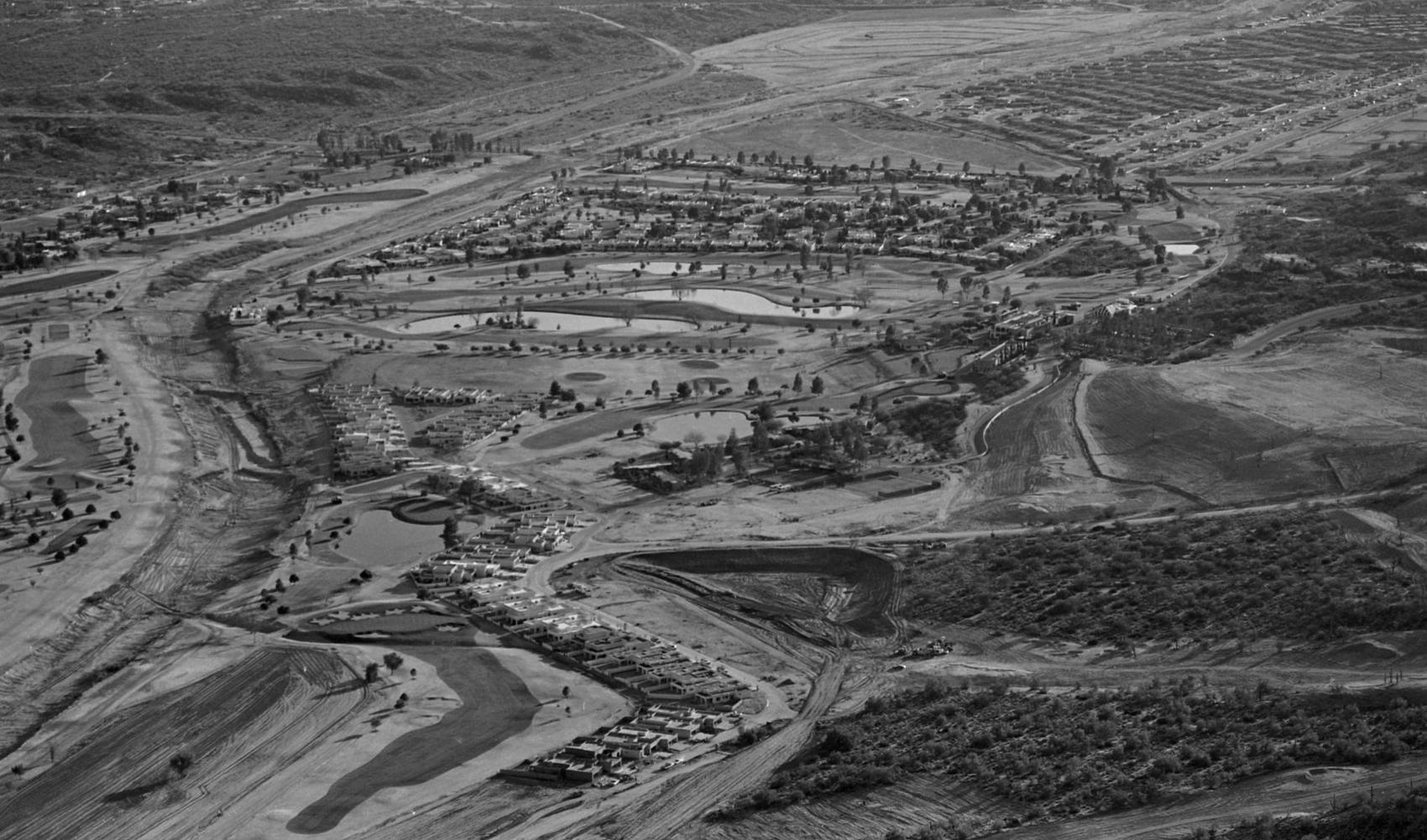
Tucson National Golf Course north of Tucson, looking south, in February, 1980. The Cañada del Oro Wash is at left. Magee Road goes left to right at the top of the photo. Shannon Road curves to the left at top of the photo. That open land is now home to Pima Community College and the YMCA.

