

Josefina Ahumada has only vague memories of a mother and grandmother. Her strongest early memories are of being shunted from one unfamiliar Los Angeles family to the next.
But when Carmen and Benjamin Ahumada heard that a little girl needed a home, “they just came and got me,” she says. She was 6. They were an older couple — open-hearted and community-involved — and they adopted her immediately.
Now 74, Ahumada credits those parents for her lifetime of community service.
That service adds up: She came to Tucson from Los Angeles in 1975, with a fresh master’s in social work, to work at the Tucson East Community Mental Health Center. After about a year, she was hired at Kino Hospital, where she and chief of psychiatry Dr. Jose Santiago developed multicultural teams to work with patients away from the hospital, in the community.
She did “a fantastic job,” Santiago says, helping thousands of patients — often severely ill — where they needed help most. Physically she was diminutive, he notes, but she had a larger-than-life impact.
A Bicameral Democratic group has joined forces on Capitol Hill to push through a bill that would enshrine LGBTQ protections in the nation's labor and civil rights laws, a top priority of President Joe Biden.
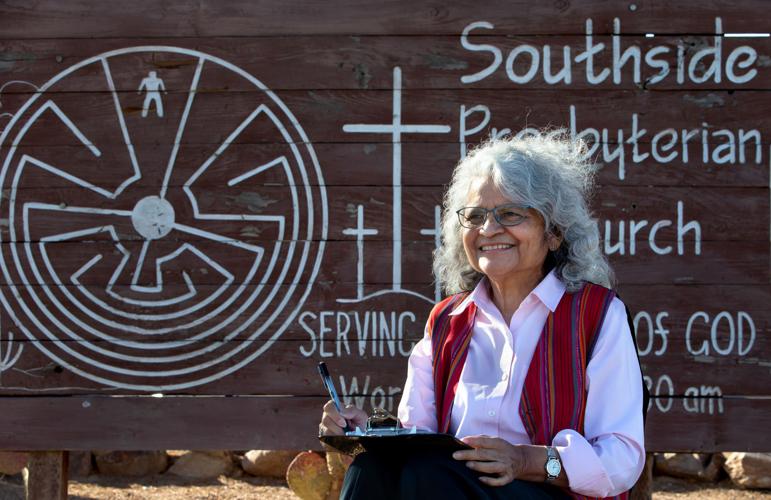
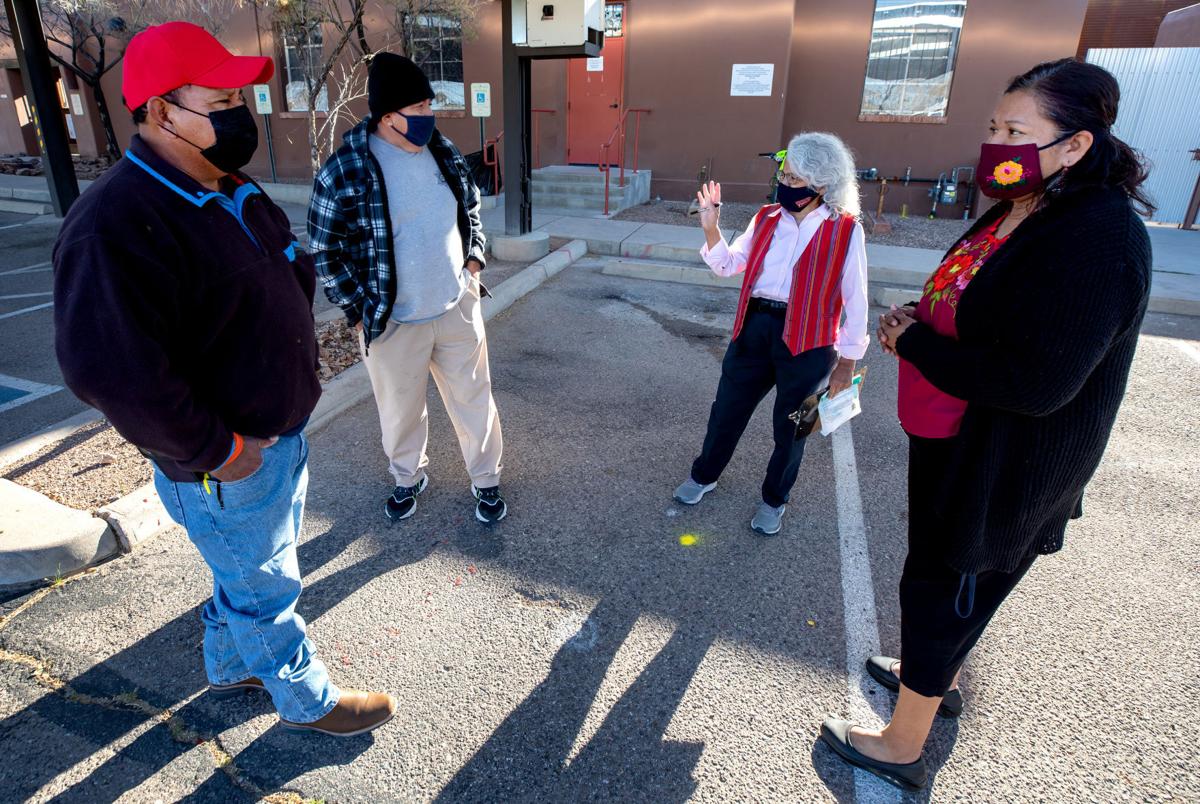
Her professional life then involved supervising mental health services and teaching. In 1999, she joined Arizona State University’s School of Social Work, teaching and mentoring students at its Tucson site for 20 years. Active in South Tucson, she helped establish the Southside Worker Center for day laborers on the grounds of Southside Presbyterian Church.
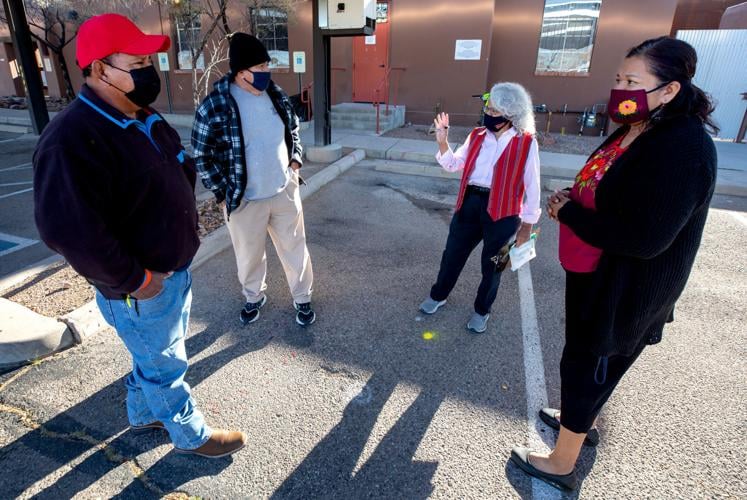
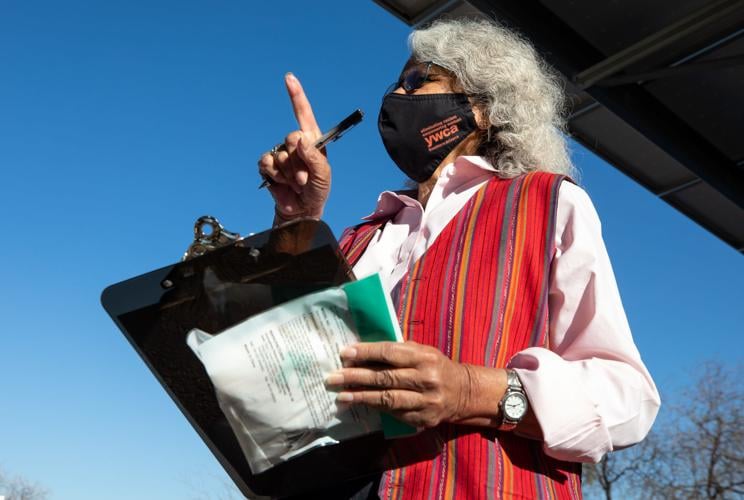
Since retirement in 2019, she’s continued to mentor social work interns and serve on the board for the Southside Worker Center. She’s chair of the YWCA board, moderator of the Presbyterian Church Presbytery de Cristo, lay pastor at a church in Sells, and organizer of a multiple-week Senior Pride program for the older LGBT community.

Josefina Ahumada spends her retirement mentoring social work interns, working with local churches as a moderator and pastor, and organizing a Senior Pride program for the older LGBT community.
When she told a friend she was meeting for an interview for this article, the friend acted surprised. Really? You have time for an interview?
At that interview, double-masked and socially distanced, on a park bench near the Rillito, Ahumada mused about her life in retirement. She loved social work, and teaching is “a passion,” she said, but she is relieved to be freed up from the constraints of institutions.
“At heart,” she said, “I’m always a social worker,” but as a volunteer, “you get to do things on your schedule, and pick your projects.”
She gave careful thought to the arc of her life before she retired.
“This is my legacy period,” she said, for which she will be remembered, and during which she can relate what has come before with that which will follow.
Two things are important in life, she believes: purpose and connectivity with people. To ensure both, she knew she wanted to continue mentoring students. She also wanted to be a spiritual guide.
So, currently her “retirement” includes supervising the internship field experiences of eight grad students in social work and lay-pastoring a small congregation.
Social work field experience is difficult in its own right — it’s where students confront the realities of dealing with crushing needs and limited resources. Field experience in the time of COVID-19 becomes a double-whammy.
Master of social work candidate Gloria Gomez, interning at the Southside Worker Center, is frustrated by the COVID-19 situation there, but bullish about Ahumada. The center is physically closed, providing services only virtually. Gomez wishes she could meet clients face to face: “That’s where trust is established,” she says, “where we build rapport.” But Ahumada bucks her up and helps her refine her efforts. She also pushes Gomez out of her comfort zone, pressing her to expand her role serving her Pascua Yaqui community.
“She’s my motivation, role model, and spiritual and educational guide,” says Gomez. She’s also “strong-headed and feisty. I need that.”

For Josefina Ahumada, two things are important in life, she believes: purpose and connectivity with people. To ensure both, she knew she wanted to continue mentoring students. She also wanted to be a spiritual guide.
It was working with the day laborers that drew Ahumada to the ministry. Helping the workers with their physical, occupational, often immigration issues, she found she was also involved in their emotional and spiritual lives.
Late in life then — a couple of years shy of turning 70 — she entered a Presbyterian Church program to be commissioned as a lay pastor. Within 2½ years, she was commissioned, she retired from ASU, and she became part-time lay pastor at Papago United Presbyterian Church.
Papago Presbyterian has a small congregation, with a building that needs rehabbing, and services held by phone for a full year now, but Ahumada is all over it. Capital’s being raised. An architect’s been selected. Other Native churches are assisting the congregation.
Ahumada’s Lenten sermons resonate with her social-work sensibilities: Disagree; that’s healthy, but do it civilly. Sacrifice is part of life. Own it. Become enraged if you see injustice (Jesus overturned the money-changers’ tables, after all), but channel it toward change.
She admits that her life in Tucson hasn’t always been easy. Early on, in the 1970s, apartments would suddenly become unavailable “when I showed up with my brown face.” She was ignored in restaurants. And she’s been harassed by big straight white guys. “Why? I’m barely 5 feet tall. Why did they need to call me names and bully me?”
“But I’ve been fortunate,” she says, “being in the right place as the right time.” She was the first master of social work Latina hired to direct the psych ward at the county hospital. As the only member of color on a coalition to license social workers, she got cultural competency required for state certification. She has a paver in the UA Women’s Plaza of Honor. She was a plaintiff in the lawsuit that overturned Arizona’s marriage discrimination law. She is the first lesbian moderator of the Presbytery de Cristo.
“Things have changed here,” she says. “The church has changed.” And Tucson is a good place to make a difference. All you have to do, she says, “is roll up your sleeves” and get to work.
In retirement, Ahumada is passing on wisdom, knowledge, skill, and experience — from her life in social work, teaching, training, management, leadership, social justice activism and spiritual guidance.
As master of social work grad student Nora Reyes observes: “Josefina wants the best for you; she gives the best to you.”
The Rev. Alison Harrington, of Southside Presbyterian, calls her a model of selfless activism: “She has taught so many of us about persistence and patience, compassion and commitment.”
These are her legacy. These, plus her “feisty” willingness to roll up her sleeves and get to work.
The open-hearted Ahumadas would be proud of the little girl they “came and got.”
Photos: The Sanctuary Movement in 1984
"Road to Refuge" special report in 1984
Updated
"Juana", Jim Corbett, "Jorge" and "Carlota," (l-r) travel in a car driven by Sanctuary volunteers from Hermosillo to Nogales, Sonora where they will stay in a safehouse and wait to cross the border into the U. S. Photo from the 1984 series "Road to Refuge" documenting the travels of Guatemalan refugees from Mexico City to Tucson by means of an "underground railroad."
"Road to Refuge" special report in 1984
Updated
During the hike following her border crossing, "Juana" stops to empty rocks from her shoe during her hike across the thick vegetation and rough terrain near the Mexico/US border. Photo from the 1984 series "Road to Refuge" documenting the travels of Guatemalan refugees from Mexico City to Tucson by means of an "underground railroad."
"Road to Refuge" special report in 1984
Updated
During the hike following her border crossing "Juana" hustles through the thick vegetation and rough terrain near the Mexico/US border. Photo from the 1984 series "Road to Refuge" documenting the travels of Guatemalan refugees from Mexico City to Tucson by means of an "underground railroad."
"Road to Refuge" special report in 1984
Updated
"Juana" climbs the desert border fence from Sonora, Mexico into Arizona with the help of Jim Corbett, a member of the Sanctuary Movement during the summer of 1984. Photo from the 1984 series "Road to Refuge" documenting the travels of Guatemalan refugees from Mexico City to Tucson by means of an "underground railroad."
"Road to Refuge" special report in 1984
Updated
Guatemalan refugee "Juana", trying to remain inconspicuous, reads a newspaper in the Mexico City Airport during her travel to America in the summer of 1984. Photo from the 1984 series "Road to Refuge" documenting the travels of Guatemalan refugees from Mexico City to Tucson by means of an "underground railroad".
"Road to Refuge" special report in 1984
Updated
"Juana" catches a nap during the first airplane flight of her life from Mexico City to Hermosillo, Sonora in the summer of 1984. Photo from the 1984 series "Road to Refuge" documenting the travels of Guatemalan refugees from Mexico City to Tucson by means of an "underground railroad".
"Road to Refuge" special report in 1984
Updated
Guatemalan refugee "Juana" follows Jim Corbett up the last leg of her journey through the desert towards her freedom. They would be met members of the Sanctuary movement and driven to Tucson. Photo from the 1984 series "Road to Refuge" documenting the travels of Guatemalan refugees from Mexico City to Tucson by means of an "underground railroad".
"Road to Refuge" special report in 1984
Updated
Guatemalan refugee "Juana" lies low in the back of a camper, keeping out of sight oif passersby, outside Bisbee, Arizona. Juana had just crossed the border fence where she hiked through the desert and was picked up by members of the sanctuary movement and driven to Tucson. Photo from the 1984 series "Road to Refuge" documenting the travels of Guatemalan refugees from Mexico City to Tucson by means of an "underground railroad".
"Road to Refuge" special report in 1984
Updated
Sanctuary founder and guide Jim Corbett, left, holds a midnight meeting with "Jorge" and "Carlota" in Mexico City to discuss travel plans for their journey to America. Photo from the 1984 series "Road to Refuge" documenting the travels of Guatemalan refugees from Mexico City to Tucson by means of an "underground railroad".
"Road to Refuge" special report in 1984
Updated
"Juana" mops the floors at a Nogales, Mexico safehouse during an eight-day wait to cross into America with the help of members of the Sanctuary Movement. Photo from the 1984 series "Road to Refuge" documenting the travels of Guatemalan refugees from Mexico City to Tucson by means of an "underground railroad".
"Road to Refuge" special report in 1984
Updated
"Juana" stops to rest during her hike across the thick vegetation and rough terrain near the Mexico/US border. Photo from the 1984 series "Road to Refuge" documenting the travels of Guatemalan refugees from Mexico City to Tucson by means of an "underground railroad".
"Road to Refuge" special report in 1984
Updated
"Juana" sits in a safehouse in Nogales, Mexico waiting to cross the desert border fence into Arizona with the help of members of the Sanctuary Movement. Photo from the 1984 series "Road to Refuge" documenting the travels of Guatemalan refugees from Mexico City to Tucson by means of an "underground railroad".
"Road to Refuge" special report in 1984
Updated
"Juana" tries on a hat at a Nogales, Mexico safehouse during an eight-day wait to cross into America with the help of members of the Sanctuary Movement. Photo from the 1984 series "Road to Refuge" documenting the travels of Guatemalan refugees from Mexico City to Tucson by means of an "underground railroad".
"Road to Refuge" special report in 1984
Updated
Sanctuary founder and guide Jim Corbett stops for a rest during his desert crossing hike. Photo from the 1984 series "Road to Refuge" documenting the travels of Guatemalan refugees from Mexico City to Tucson by means of an "underground railroad".
"Road to Refuge" special report in 1984
Updated
"Jorge" and "Carlota" wait in a Nogales, Arizona church to continue their journey to Tucson. Photo from the 1984 series "Road to Refuge" documenting the travels of Guatemalan refugees from Mexico City to Tucson by means of an "underground railroad".
"Road to Refuge" special report in 1984
Updated
Sanctuary founder and guide Jim Corbett, right, meets Guatemalan refugee "Juana" in a Mexico City hotel room to discuss travel plans for their journey to the United States. Photo from the 1984 series "Road to Refuge" documenting the travels of Guatemalan refugees from Mexico City to Tucson by means of an "underground railroad".
"Road to Refuge" special report in 1984
Updated
"Juana" stands in front of Southside Presbyterian Church in Tucson where she was given safe haven by the Sanctuary Movement.
"Road to Refuge" special report in 1984
Updated
"Juana" hurries along an Hermosillo street to meet a volunteer who will drive her north to a border safehouse. Photo from the 1984 series "Road to Refuge" documenting the travels of Guatemalan refugees from Mexico City to Tucson by means of an "underground railroad".
"Road to Refuge" special report in 1984
Updated
"Jorge" reads in his "room" at a Nogales, Mexico safehouse during an eight-day wait to cross into America with the help of members of the Sanctuary Movement. Photo from the 1984 series "Road to Refuge" documenting the travels of Guatemalan refugees from Mexico City to Tucson by means of an "underground railroad".
"Road to Refuge" special report in 1984
Updated
Waiting at a safehouse to be taken to the U.S. "Juana" recounts her story of rape and torture at the hands of Mexican guards. Photo from the 1984 series "Road to Refuge" documenting the travels of Guatemalan refugees from Mexico City to Tucson by means of an "underground railroad".
"Road to Refuge" special report in 1984
Updated
"Jorge" watches television at a Nogales, Mexico safehouse during the wait to cross into America with the help of members of the Sanctuary Movement. Photo from the 1984 series "Road to Refuge" documenting the travels of Guatemalan refugees from Mexico City to Tucson by means of an "underground railroad".
"Road to Refuge" special report in 1984
Updated
"Juana" is greeted by a volunteer at Southside Presbyterian Church following her crossing into America with the help of members of the Sanctuary Movement. Photo from the 1984 series "Road to Refuge" documenting the travels of Guatemalan refugees from Mexico City to Tucson by means of an "underground railroad".
"Road to Refuge" special report in 1984
Updated
"Carlota" holds an ID card she used to cross the border in Nogales, Mexico. Photo from the 1984 series "Road to Refuge" documenting the travels of Guatemalan refugees from Mexico City to Tucson by means of an "underground railroad".
"Road to Refuge" special report in 1984
Updated
Rev. John Fife of the Southside Presbyterian Church. He is one of the founders of the Sanctuary movement.
"Road to Refuge" special report in 1984
Updated
Jorge and Carlota, having crossed the border with fake identification cards, are greeted by family members upon their safe arrival in Tucson. Photo from the 1984 series "Road to Refuge" documenting the travels of Guatemalan refugees from Mexico City to Tucson by means of an "underground railroad".

