



In northwest Sonora, an armed attack on three vehicles transporting Central and South American migrants to the U.S.-Mexico border resulted in the deaths of two women and a 4-year-old boy last week, Sonoran officials say, but migrant advocates believe the death toll could be higher.
Sonora’s attorney general confirmed to Sonoran media that three migrants died in Thursday’s attack in Sáric, Sonora, about an hour south of the border with Arizona, and said “three or four” additional victims were hospitalized in Cabórca.
Gustavo Rómulo Salas Chavez, attorney general of Sonora, said in a Monday press conference that the Mexican Army had arrested a criminal cell of eight people with long guns in the area who may have been involved in the attack.
Southern Arizona aid workers told the Arizona Daily Star that on Friday, they encountered and rendered aid to survivors of Thursday night’s attack. The migrants crossed the border through a gap in the border wall nearly 20 miles east of Sásabe, Arizona, before border agents picked them up later that day, volunteers say.
One victim was a woman from Peru with a bullet graze wound that a volunteer nurse treated on site, said Randy Mayer, pastor and co-founder of the Green Valley Samaritans. Also among the survivors was a young man from Ecuador who was devastated by what he reported was the death of his 10-year-old sister in the attack, he said.
“The people were really filled with fear and were so thankful to be out of control of the cartel,” Mayer said.
The official report from Sonoran officials did not mention a 10-year-old victim.
But a New York-based law firm that advocates for Ecuadorian immigrants questioned the official death tally during a Tuesday interview with Sonoran media outlet Proyecto Puente.
The firm, 1800 Migrante, was assisting one of the Peruvian survivors in his search for a missing relative following the attack, and found his sister was among the three confirmed deaths. The other female victim was from Honduras and the 4-year-old victim was from Ecuador.
The law firm has demanded more transparency from Mexican authorities, who didn’t release any statement on the incident until the Sonoran attorney general spoke to Sonoran reporters on Monday.
“We are convinced there are more than three deaths and the authorities don’t want to say it,” William Murillo, director of 1800 Migrante, told Hermosillo-based Proyecto Puente. Murillo said about 50 migrants were traveling in the three vehicles that came under fire, while Sonora’s attorney general said it was between 11 and 14.
On Friday, aid workers in Arizona witnessed an armed human smuggler directing the survivors through a gap in the border wall east of Sásabe. The smuggler — whom aid workers heard apologizing for the attack migrants had experienced — took a photograph of each person and logged their name, likely to prove each person had crossed and to get payment for each, Mayer said.
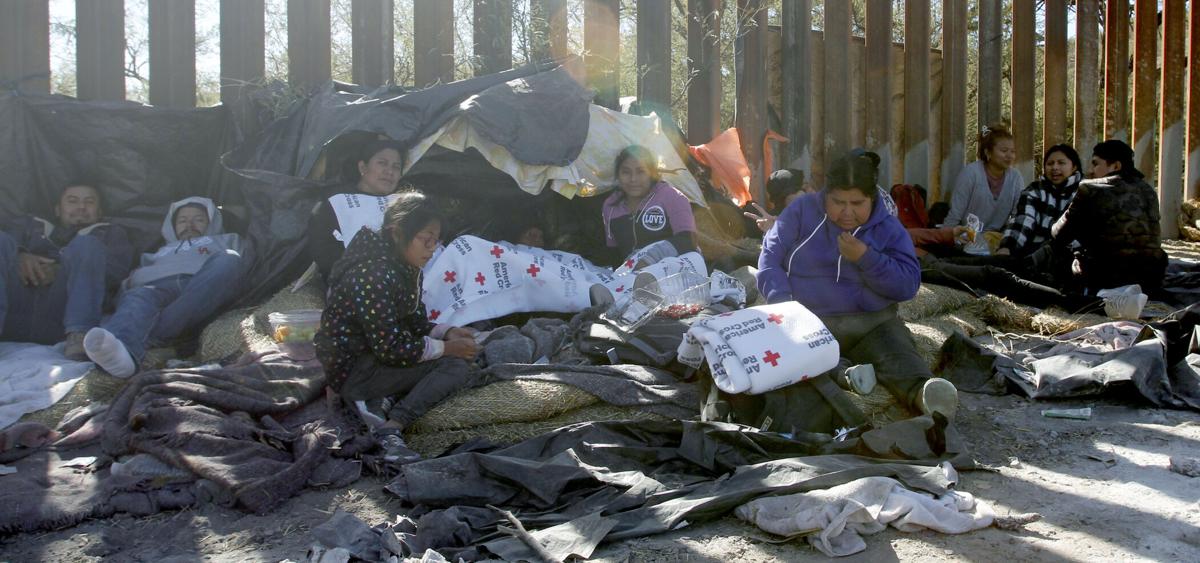
Mayer said aid workers brought the survivors to a make-shift encampment along the border wall that volunteers have established in the remote area.
“We made some soup and coffee, and only then did it feel like they were calming down and started talking,” he said. “They just said they were crammed in these vehicles and the shooting started happening, and they were trapped.”
The survivors reported that the cartel-affiliated smuggling group that was transporting them tried to protect them from the other criminal groups who attacked the vehicles, he said. After the shooting, the smugglers who had brought the migrants to Sáric were able to transport them the rest of the way to the border, east of Sásabe.
The injured Peruvian woman was inconsolable, said Gail Kocourek of the Tucson Samaritans, who arrived at the border wall shortly after the survivors did.
“She started telling us her story and she was crying and crying. It was just heartbreaking,” she said.
Violence against migrants “constant”
The small town of Sáric, where Thursday’s attack occurred, has been a way-station for migrants seeking to reach the Sonora-Arizona border, and locals say it's largely controlled and tightly surveilled by criminal groups.
Last week’s violent attack highlights the grave dangers facing migrants on their journey through Mexico.
The risks have escalated in Sonora in recent months, as a violent battle between factions of criminal gangs in the state has resulted in an exodus of residents from the small border town of Sásabe, Sonora.
While this latest incident made the news, violence against migrants is all-too common, said Dora Rodriguez, a Tucson migrant-rights advocate and founder of Salvavision. In 2021, the binational nonprofit established a migrant resource center in Sásabe, Sonora, currently shuttered due to the area’s violent conflict, which has forced all but about 100 residents to flee the town.
Migrants not only face the risk of targeted attacks, but increasingly they risk being caught in the cross-fire of conflicts between criminal groups, who are fighting for control of the massively profitable human-smuggling routes in the region, Rodriguez said.
Mexican authorities have failed to protect the vulnerable migrants traversing the country, she said.
“There is no protection from the authorities,” she said. “This is not new. These criminal acts are happening every day. But in small numbers, it doesn’t make the news. People constantly are getting kidnapped and getting killed.”
U.S. policymakers are debating proposals such as a return to something similar to the pandemic-era Title 42 policy that allowed border agents to return arriving migrants to Mexico without giving them a chance to request asylum. That policy resulted in large numbers of migrants trying over and over to cross the border, further increasing the profits of the human smugglers taking advantage of the policy’s implications, migrant advocates say.
The now-defunct “Remain in Mexico” policy, established in the Trump administration, forced asylum seekers to await their court date in Mexico and resulted in human rights abuses, particularly kidnappings, against vulnerable migrants waiting in camps along the border.
Human rights advocates have documented instances of kidnapping, physical and sexual assault, robbery and extortion of migrants subject to the policy, both at the hands of criminal actors and corrupt law enforcement or immigration officials in Mexico.
The possibility of a return to policies that return migrants to imminent danger has advocates in Arizona worried.
“It’s easy for us as a country to say, ‘All right, we’ll shut the borders. We’ll wash our hands of it and you are not our problem,’” said Rodriguez, who said she’s talked to migrant women who were raped and men who have been tortured while waiting in Mexico. “It’s closing your eyes to the reality of these hundreds of thousands of people being exposed to more criminal activity.”
Those who get desperate enough inevitably turn to human smugglers to get them across the border, because regular pathways to request asylum at ports of entry are inaccessible for most, she said.
With these policies, “we’re increasing the business of these (smuggling) groups,” Rodriguez said. “It’s totally wrong. It’s not the way to do it.”
U.S. politicians are prioritizing photo ops at the border, rather than creating legislation to deal with the reality here, Mayer said.
“The easiest thing to do is throw money at the Border Patrol and say, ‘They’re going to solve our problems,’” he said. “But the problems are much deeper than what the Border Patrol can solve. They’re being asked to do a horrible job in horrible conditions and they don’t have the training for it. They don’t have training to take of 3-year-old babies.”
Get your morning recap of today's local news and read the full stories here: tucne.ws/morning

