



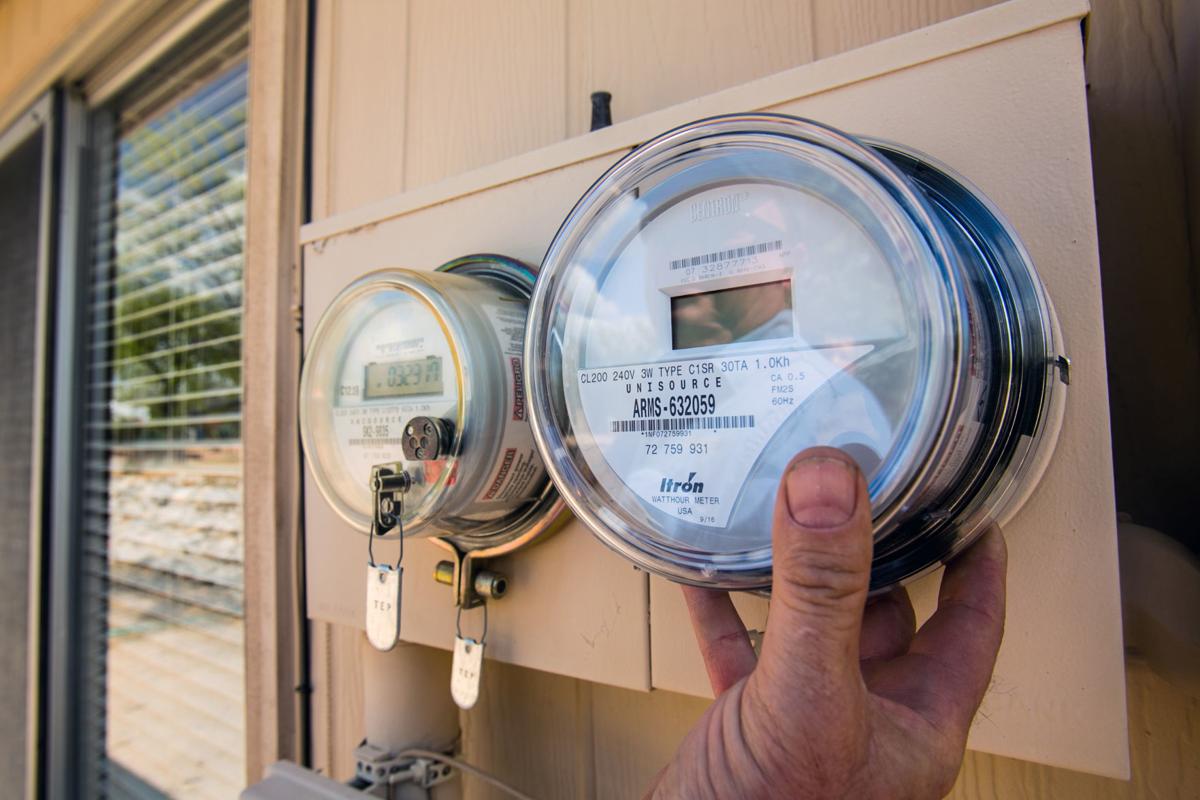
UniSource Energy Services electric customers in Santa Cruz and Mohave counties will see an average monthly home bill increase of nearly $14, or about 12%, after state regulators approved the company’s first general rate increase in more than seven years.
The five-member Arizona Corporation Commission voted 4-1 on Wednesday, Jan. 17, to approve an amended rate request, which includes a $2 increase to the fixed basic monthly residential service charge.
And UniSource will be able to start recovering some costs of new system investments, under a controversial new surcharge approved as part of the case.
The new rates will increase the average monthly bills of typical residential customers by $13.68, or 11.9% when new rates take effect Feb. 1.
The increase is an annualized average, so customers should expect that the impact will be higher in hotter months and lower when the weather is cooler.
Residential customers will see much larger percentage bill increases than business customers, as Arizona regulators in recent years have directed utilities to adjust revenue allocations to reduce business subsidies of home ratepayers.
Under the new UniSource rates, the average bill for typical business customers on the utility's Small and Medium General Service rates will increase by 5.8%, while Large General Service pricing plans will increase by 7%.
The rate request was approved by the ACC’s Republican majority, Chairman Jim O’Connor and members Nick Myers, Kevin Thompson and Lea Marquez Peterson, with the sole dissenting vote by the panel’s lone Democrat, Anna Tovar.
UniSource, a sister company to Tucson Electric Power Co. that serves about 19,000 electric customers in Santa Cruz County and 80,000 in Mohave County, had requested new rates that would boost the average monthly home bill for customers on the basic rate by about 14%, or $18.52.
UniSource said it needs higher rates to recover millions of dollars in system investment and higher operating costs since its last rate case in 2015.
The company did not oppose a rate increase recommended by an administrative law judge that would have resulted in an average monthly home bill increase of $13.71 and accepted a smaller allowable return on equity, a key profit measure, that slightly reduced the bill impact.
The $2 increase in the fixed basic monthly charge would raise that charge to $17 for home customers on the basic rate plan and to $14 for customers on time-of-use or demand-charge rates.
No relief
UniSource’s low-income customers won’t see any relief under the new rates.
UniSource had proposed increasing the flat, monthly discount on its low-income rate plans by $2, to $18, and later agreed to a $4 increase in the discount, to match what regulators approved last year for TEP.
That move was supported by Wildfire, an Arizona nonprofit advocate for low-income communities, though the commission rejected the group’s proposals to create a tiered discount based on income levels to better help the neediest households, or a 25% overall bill discount.
But commission member Nick Myers, a Queen Creek Republican, successfully pushed an amendment to keep the low-income discount at $16 monthly and was joined by Commission Chairman Jim O’Connor and member Kevin Thompson.
That move was opposed by Tovar and Marquez Peterson, a Tucson Republican, who said more relief for low-income customers was needed.
“We cannot keep adopting double-digit rate increases without also adjusting the low-income customer programs to keep pace,” Tovar said in remarks echoed by Peterson.
“I think we continue to need relief for low-income families, things are tougher now for folks certainly than during the last rate case,” said Peterson.
UniSource’s Customer Assistance Residential Energy Support (CARES) program offers discounts to customers with household incomes of up to 200% of the federal poverty level, or $5,000 monthly income for a four-person household.
The company said in filings that a $2 increase to the discount would cost other customers about 10 to 15 cents per month. About 10% of the utility’s customers are on the discount rate, for which they must reapply annually.
New system charge
The ACC also approved UES’ request for a new “System Reliability Benefit,” or SRB, allowing the utility to collect a special surcharge to start recovering major system improvement costs between rate cases.
The company said it needed the new surcharge, which would apply to new generating projects costing at least $25 million, to help it add new generating assets and reduce its current 40% reliance on wholesale-power purchases.
UniSource said the SRB would help reduce large bill impacts for projects by avoiding piling up costs until the next general rate case, and reduce customer costs in the long run by reducing exposure to high wholesale power costs.
The company cited a similar mechanism approved by the ACC several years ago to help small water companies to replace aging infrastructure, partly to avoid the high cost of general rate filings.
The commission’s Utilities Division staff and an administrative law judge had recommended approval of the new charge, which includes an “efficiency credit” of 5% of a system investment’s cost that would reduce the revenues required for each project until they can be incorporated into the next rate case.
UniSource must still seek ACC approval for each SRB, which are limited to one annually and a total of five between rate cases.
But the Residential Utility Consumer Office, a state agency that represents home ratepayers in rate cases, has opposed the charge, noting that the ACC rejected TEP’s request for a similar charge in its rate decision last August on grounds it needed more study and stakeholder consultation.
Daniel Pozefsky, RUCO’s chief counsel, said the new SRB would allow UniSource to accelerate its cost recovery at the expense of customers while avoiding the kind of in-depth scrutiny the commission gives major plant investments during general rate cases.
Tovar said she appreciated the company’s economic argument but was skeptical it would save money.
“Where the wheels fell off for me with the SRB is the fact the company cannot equivocally say this will save customers money when compared to the current approach to (cost) recovery,” she said.
Tovar was joined by O’Connor in voting for an amendment to drop the SRB from the final rate order, but the move failed on a 2-3 vote.
“I believe UNSE (UniSource) is in a unique position, and this SRB provides a tool which will help it reduce the reliance on wholesale markets, which is in the long-term best interest of the ratepayers,” Marquez Peterson said in explaining her supporting vote.
Cutting efficiency
UniSource had sought to update and increase its offering of energy efficiency programs, which haven’t been updated in eight years, and to raise a small surcharge used to pay for programs such as rebates for things like high-efficiency heating and cooling systems, pool pumps and lighting.
Such programs have been shown to lower long-term energy costs by reducing demand, while saving individual customers money. State energy-efficiency rules initially adopted in 2010 and updated in 2020 require state-regulated utilities to implement enough energy-efficiency measures by 2030 to equal 35% of their 2020 peak demand.
The company had proposed increasing the bill surcharge that funds those programs from $0.0015 (one tenth and five hundredths) of a cent per kilowatt-hour of power usage to just over $0.0025 per kWh, resulting in an average home bill increase of about 96 cents monthly, and proposed a total budget of about $14 million over three years.
But that plan, recommended by ACC staff and an administrative law judge, was rejected under a successful amendment proposed by Thompson to keep the surcharge the same, and cut the approved program length to one year.
An official of a nonprofit group that advocates for energy-efficiency policies noted that the UniSource surcharge was last set in 2013 and the programs fall well short of need and demand.
“Current customer demand for these programs will continue to far outpace the amount of money the company is allowed to collect from customers in order to service customers to provide this relief,” Caryn Potter, Arizona representative for the Southwest Energy Efficiency Project, told the commission.
Check out some innovative and sometimes overlooked energy-saving strategies that can help you and your wallet survive Tucson's summer swelter.

