


Everything you need to know: A look at the history of mariachi in Tucson
The mariachi is not only one of the most used symbols representing the culture and history of Mexico, but is in itself history. Each of its elements — the emergence and acceptance, the clothing, the instruments, the name — has its own history.
The Mexican mariachi is the result of cross-pollination of indigenous, European and African influences over several centuries of evolution.
In November 2011, UNESCO, a United Nations agency, registered El Mariachi, String Music, Singing and Trumpet as Intangible Cultural Heritage of Humanity. And although the music is found almost everywhere in the world, Tucson has a special bond as a privileged place for the mariachi.
History
Updated
• Various studies cite the origin of mariachi in the 18th century, although a few claim that it could go back to the 16th century.
• Most musicologists agree that mariachi emerged in Cocula, Jalisco, as a form of adoration of the natives to the Virgin of the Pila. The natives tried to imitate the sounds of the Spanish friars who evangelized them through music.
• Other research says that mariachi emerged in a wide region comprised of the Mexican western states of Jalisco, Michoacán, Colima, Nayarit and some parts of Aguascalientes and Zacatecas in north-central Mexico.
• Until the end of the 19th century, the traditional mariachi was associated with dances in popular and rural festivals, despised by the aristocracy of Mexico which was fascinated at that time with the French and European culture in general.
• The first famous performance of a mariachi among the upper class occurred on a birthday of President Porfirio Díaz in 1905. Two years later, Díaz invited them to play at a party in honor of Elihu Root, secretary of state of the United States, who was visiting Mexico.
• From there, and after the Mexican Revolution, mariachi music arrived in the Mexican capital with widespread acceptance. One of the first famous groups was Mariachi de José and Cirilo Marmolejo.
• In 1936, Lázaro Cárdenas took Mariachi Vargas de Tecalitlán (created by Gaspar Vargas in 1898) with him on a tour of the country as a candidate for the presidency of Mexico. His intention was to unite the country and give strength to the rural sector. It set off a mariachi boom.
• The first recording of a mariachi was that of Concepción "Concho" Andrade and Pablo Becerra, made in Chicago in 1903.
Clothing
Updated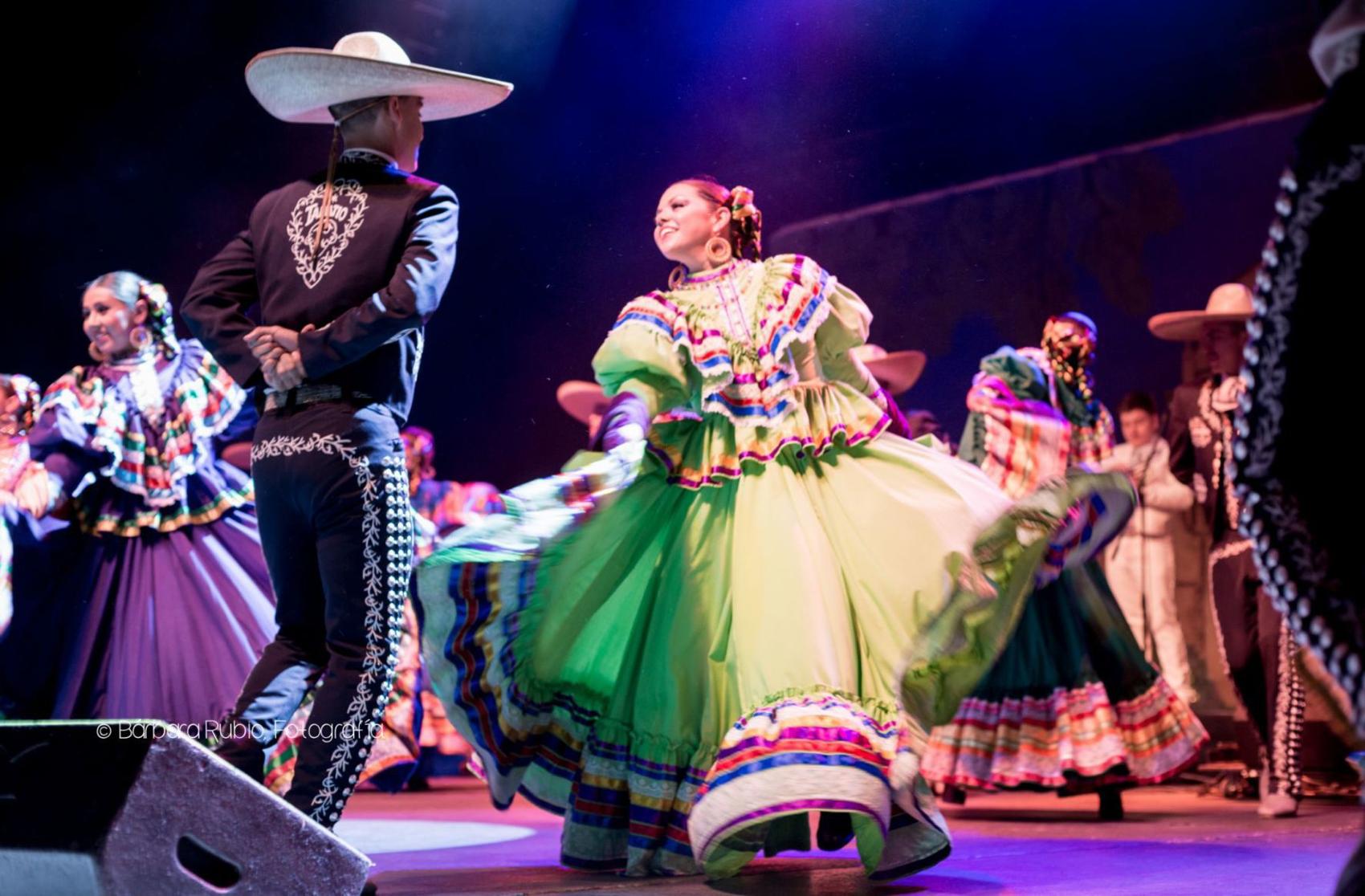
The traditional mariachi until the end of the 19th century wore indigenous clothing: cotton pants and shirt and sandals.
At the beginning of the 20th century, the charro outfit introduced as a uniform for mariachis. There are sources citing the Mariachi of Cirilo Marmolejo as the first to do so.
The new costume was quickly accepted by all mariachis and popularized even more at the time of the Mexican Golden Cinema, between the 1930s and 1960s.
The mariachi costume that we know today is made up of charro pants for men and long-length skirt for women, a short-waisted jacket with buttons, shirt, large bow tie, boots and charro hat.
Traditional mariachi
Updated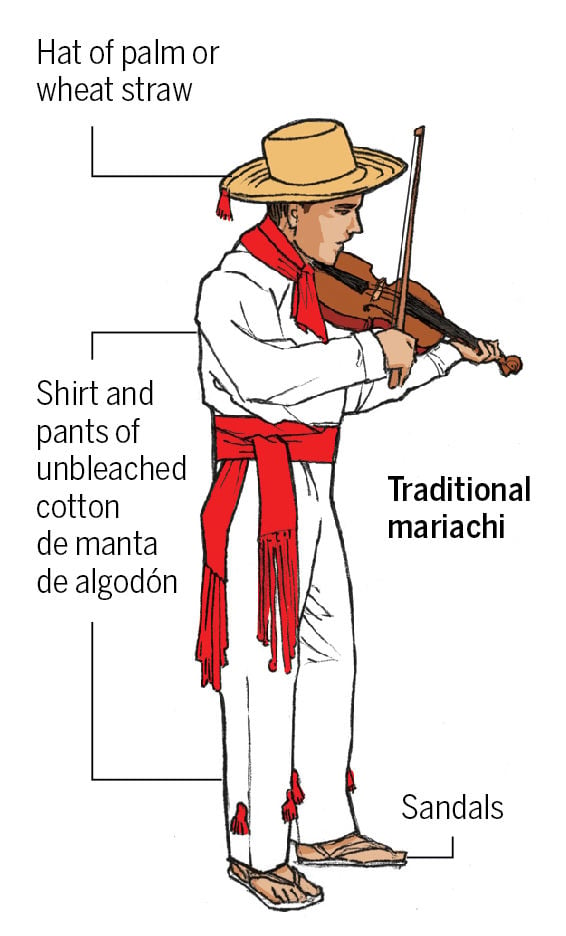
The traditional mariachi is characterized by the predominance of string instruments. Unlike today's popular mariachi, the traditional group did not use trumpets. It is comprised of violins, the "guitarra de golpe" (a five-string guitar) vihuelas (a smaller version of a classical guitar), harp and Mexican six-string bass guitar or upright contrabass.
Modern mariachi
Updated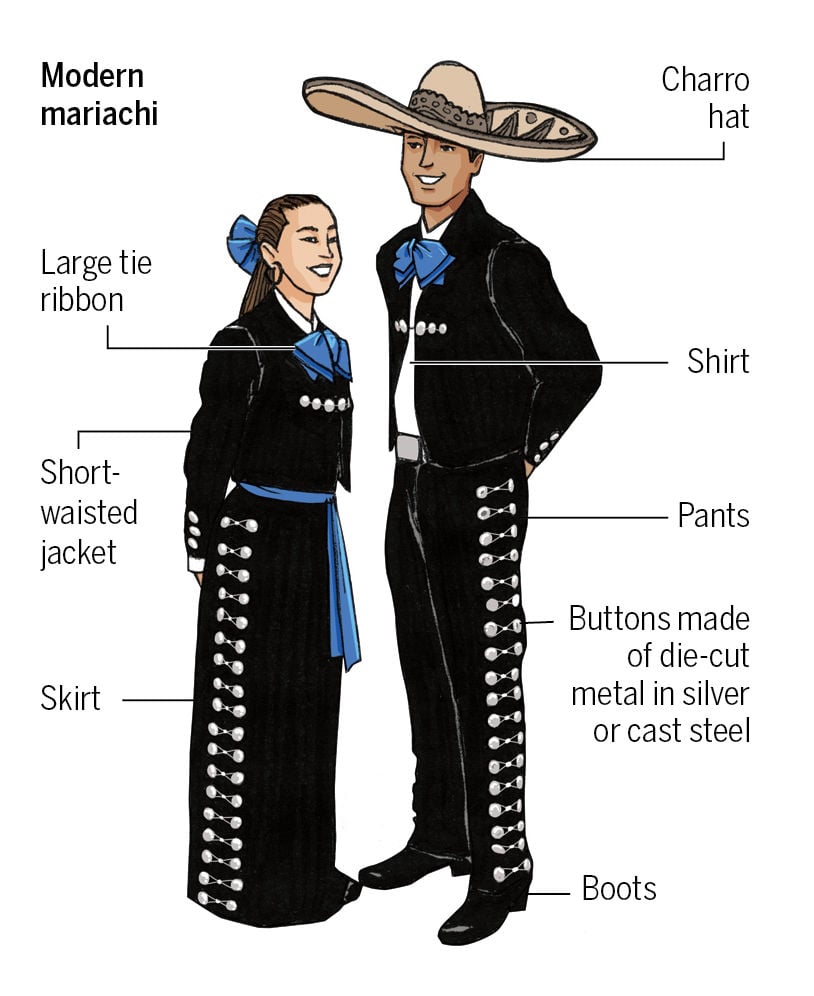
A mariachi can be as small as three, using generally guitar, bass guitar, violin and trumpet, or larger using a different number of instruments. Sometimes mariachis add flute and harp, and in some regions add an accordion.
Did you know…?
Updated
Alejandra Quinonez, 13, receives some help reading music from Martin Marquez during the opening day of the 2018 Tucson International Mariachi Conference at Casino del Sol on April 25, 2018.
• The Cocas Indians, the predominant ethnic group in Cocula, Jalisco, invented the vihuela and the guitarrón bass guitar at the end of the 18th century.
• The first mariachis also used indigenous instruments such as conch shells, teponaztli drums and reed flutes.
• The trumpet - possibly introduced by Mariachi of Cirilo Marmolejo - was incorporated to give more sonority.
• It is said that it was Don Emilio Azcárraga Vidaurreta (founder of Mexico City radio station XEW and Channel 2, now Televisa) who suggested that trumpets be introduced to improve sound on the radio.
• It is believed that the mariachi groups who performed the Plaza Garibaldi in Mexico City introduced the trumpet so that they could be heard farther away.
• The most well-known theory about the name "mariachi" is that it comes from the French word "mariage," related to the wedding parties in western Mexico during the French occupation (1862-1867). But most scholars agree that the word comes from an indigenous word for Pilla or Cirmio tree.
In Tucson
Updated
Trumpeter Jeff Nevin performs with Los Changuitos Feos during a Christmas concert for residents of the Marshall Home for Men on Dec. 21, 1985.
In Tucson, the first juvenile mariachi in the United States was born: Los Changuitos Feos, in 1964, founded by Father Charles Rourke.
Several of the members of the first generation of Los Changuitos founded Mariachi Cobre, recognized nationally and internationally.
Mariachi Cobre was the centerpiece of the 1982 creation of Tucson’s International Mariachi Conference, described on the website of Tucson mariachi historian Daniel Buckley as "the largest continuously active mariachi conference of the planet."
Buckley, who has spent years working on the documentary “The Mariachi Miracle” on the mariachi movement in Tucson, was inducted into the Mariachi Hall of Fame in 2013.
Davis Bilingual Elementary School created the first school mariachi program in the country, a model replicated by other cities.
Mariachi Tucsonense was the first mariachi in Tucson, in the 50s.
Mariachi women
Updated
This 2013 handout photo shows Mariachi Viva la Mujer de Tucsón during a performance at the annual Fiesta San Juan.
During the 1950s there were three all-female mariachis in Mexico: Mariachi Las Coronelas, Mariachi Las Adelitas and Mariachi Estrellas de México. In the United States the first female mariachi was Las Rancheritas and her Mariachi, created in 1964 in South Texas. In the early 1970s, women joined male mariachis.
Mariachi Viva La Mujer is perhaps the first female mariachi of Tucson. The group was formed in 2009 thanks to the efforts of Julie Gallego, director of Viva Performing Arts.
Our pillars
Updated
Linda Ronstadt singing with her father, Gilbert, at Mariachi Espectacular on April 24, 1987 at Tucson Community Center.
• Brothers Steve and Randy Carrillo, members of Los Changuitos Feos and Mariachi Cobre.
• Alfredo Valenzuela, creator of mariachi Las Aguilitas at Davis Bilingual Elementary School.
• Tony García, guitarist Mariachi Tucsonenses.
• Mónica Treviño, one of the first mariachi women of Tucson.
• Linda Ronstadt, with her 1987 album "Canciones de mi Padre,” contributed to the expansion of mariachi music throughout the country. It is the most- sold foreign-language album in the history of American recordings.

