





The line that prematurely ended Greg Patterson’s term as a member of the Arizona Board of Regents was memorable.
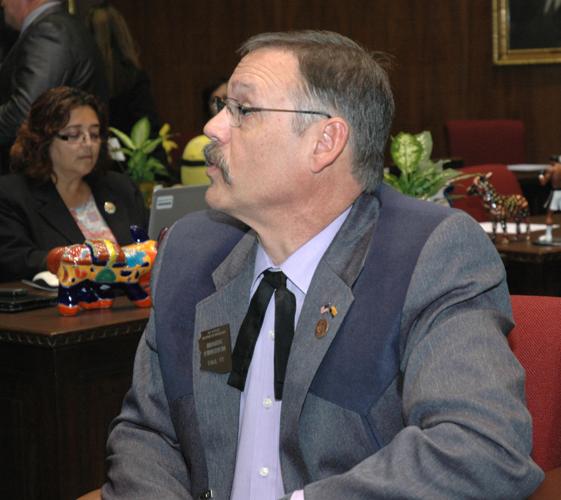
“The costume doesn’t work,” he told Rep. Mark Finchem in February. “Trim that down, buy a suit. Decide where you want to be, but this isn’t it.”
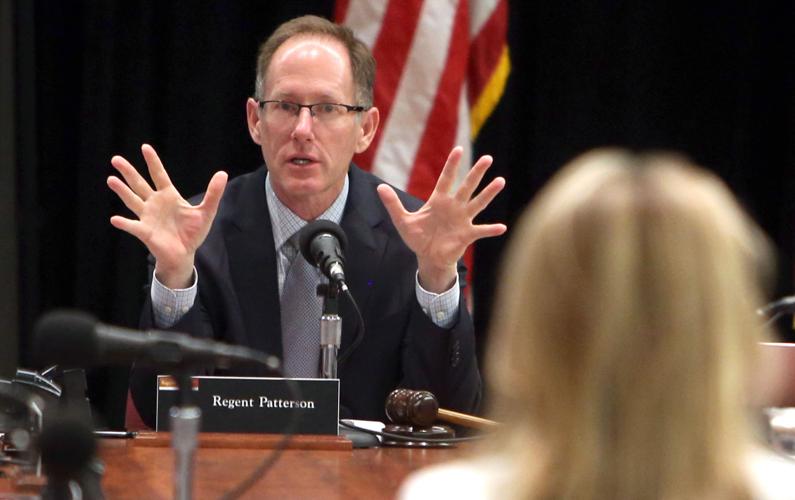
It was overkill on the part of the then-chair of the Arizona Board of Regents, as he acknowledges. Patterson was angry about a bill Finchem had proposed and was, it seems, trying to play a Trump-style dominance game in the meeting with Finchem, of Oro Valley, and fellow GOP Rep. Jill Norgaard of Phoenix. When the Arizona Republic revealed the recording last week, Patterson first apologized, then resigned as a regent.
But the 25-minute recording, made secretly by Patterson, also reveals interesting details of the debate among state Republicans on their approach to funding the University of Arizona and the other state universities. Finchem and Norgaard had proposed abolishing the Board of Regents as it exists now and replacing it with separate oversight boards for each of the three universities. They were concerned in part by what they considered overspending by the universities.
Patterson and Eileen Klein, who is president of the Board of Regents, met with them to argue the regents were actually performing their oversight role well and that the lawmakers’ proposal would have the opposite of the intended effect. Finchem, whom I’ve viewed as an occasionally embarrassing legislator because of his embrace of conspiracy theories, began the meeting by complaining about the criticism the Legislature gets for its low funding of the universities.
“It doesn’t help that we are beaten over a head with a club in the media day after day after day on being tightwad cheap asses when it comes to funding university operations,” he told Patterson in the recording. “I will tell you I find that, and I know that my fellow members find that, extremely offensive, especially when there are college programs for students who are not here legally, there are kids who are not getting an education as nearly free as possible.”
This was a reference to the provision of the Arizona Constitution that says of the state universities, “the instruction furnished shall be as nearly free as possible.”
Patterson, who was a legislator in the early 1990s, suggested in the meeting that today’s legislators could have had more criticism, but that the regents protected them.
“You’re getting beat over the head, but it’s not by us. When I was here there were 86,000 kids in the system, and we appropriated $581 million in 1991 dollars,” he said. “There’s 165,000 kids in the system, and you appropriate $681 million. It’s less money, in real terms, than I appropriated here 26 years ago.”
“Since then, the system has relied on higher tuition, it’s relied on outside revenue, it’s relied on dormitories and research expenditures that we can bring in as much as possible. The systems have been systematically privatized, and you have an eight-member Republican board that does not pummel you for that.”
Republic revenge
Patterson, you may recall, maintained a blog for about a decade and has resumed writing it recently. The blog was dedicated in large measure to criticizing the Arizona news media, especially the Arizona Republic but also the Star and occasionally me personally.
Go back through his archives and you’ll find a drumbeat of often acid critiques of Republic writers, some of it fair, as well as gleeful celebration of the newspaper industry’s expected demise that I find distasteful. His obsession with those two entities came through even in the conversation with Finchem and Norgaard, when he defended the salary of then-UA President Ann Weaver Hart by comparing it to what an executive of the Republic’s parent company would make.
“It’s certainly a fraction of what you’d make at Gannett in the private sector, which is a collapsing business,” he said.
So, you could view it as fitting that Republic reporters, through innovative use of Arizona’s public-records law, essentially forced Patterson out. The Republic had reported Patterson’s angry words for Finchem in April, but then they also found out Patterson had recorded the meeting, and they successfully argued that the recording was a public record that must be released under state law.
Getting the recording was good digging that made Patterson’s position untenable before the Legislature. Of course, Patterson made an argument on his blog that Finchem could have been made out as the “goat” of the story. He subsequently deleted the post, but I’m sure we’ll hear more from Patterson before long, likely criticizing this column and pointing to it as a reason for the newspaper industry’s eventual demise.
Watermelon Eegee’s
You can’t go wrong in Tucson politics extolling Eegee’s. Gov. Doug Ducey talked about getting an Eegee’s card during his earlier years leading the state, and that line was a winner in his speeches here.
Now Mayor Jonathan Rothschild has taken that to the next level. His request that, in light of record high temperatures, Eegee’s release its watermelon flavor early, was met with a quick response from the company. A mainline of watermelon Eegee’s has been jabbed into Tucson’s collective vein.
I was entertained by Rothschild’s move — we’re all a little loco in the summer heat — but was concerned you should know the inspiration of the idea. It’s local blogger, gadfly and occasional radio talker David Morales who has been demanding a return of what he considers Eegee’s most cooling flavor before the usual July date.
I repeated his demands on social media, then my colleague Joe Ferguson repeated them in conversation at a City Council meeting. Before we knew it, the mayor was involved, making good use of his bully pulpit to demand the release of the one substance that could ease our citywide overheating.

