


The federal investigation into the Drug Enforcement Administration’s Buffalo office reached beyond Special Agent Joseph Bongiovanni – and it’s not over yet.
The special agent in charge of Homeland Security Investigations in Buffalo confirmed an investigation remains ongoing.

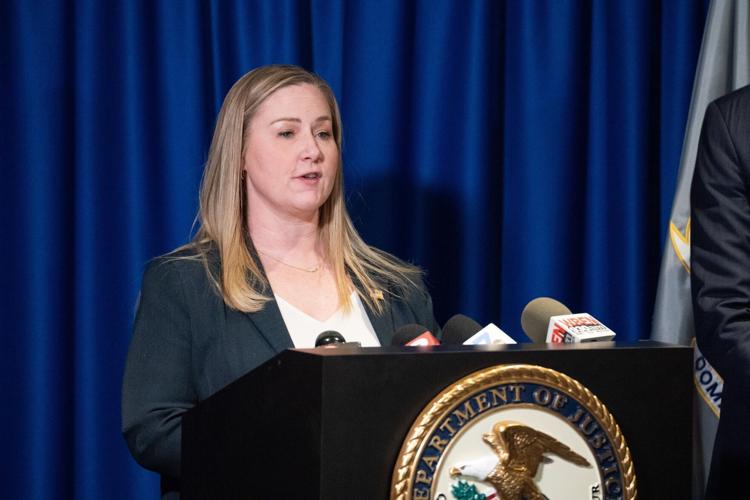
“This should not in any way be a reflection on the thousands of DEA agents or law enforcement officers who serve this nation with honor and integrity,” said Erin Keegan, special agent in charge of Homeland Security Investigations in Buffalo, after the conviction earlier this month of former agent Joseph Bongiovanni.
“Joseph Bongiovanni chose to violate public trust, but this should not in any way be a reflection on the thousands of DEA agents or law enforcement officers who serve this nation with honor and integrity,” said Erin Keegan, the special agent in charge of HSI’s Buffalo office, after the Oct. 10 verdict in his corruption trial. “Joseph Bongiovanni is the exception.”
But the lead prosecutor and also a Homeland Security investigator who testified at Bongiovanni’s two trials this year said three others in the DEA’s Buffalo office – including two who had been Bongiovanni’s partners before they retired – received subject letters from the U.S. Attorney’s Office. The subject letters notified them that they are the subject or target of an investigation, which could lead to prosecution.

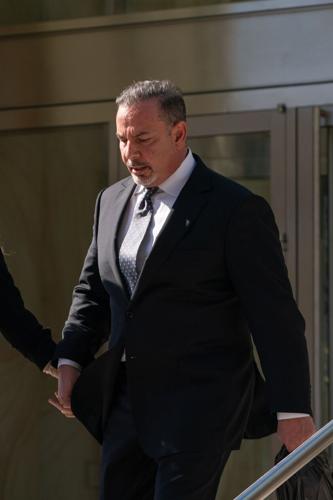
Joseph Bongiovanni, seen walking out of the Robert H. Jackson courthouse, after his conviction.
“They lied, that’s what happened,” Assistant U.S. Attorney Joseph Tripi said during a sidebar conference with the judge during Bongiovanni’s first trial, explaining why prosecutors decided against putting the three on the witness stand.
When asked to comment on the prosecution’s distrust of Bongiovanni’s three DEA colleagues, Keegan declined to comment.
“This is an ongoing investigation, so we’re not going to be able to comment on that at this time,” Keegan said at a news conference after the jury convicted Bongiovanni on seven of the 11 counts he faced in U.S. District Court.
Complete coverage: The case of ex-DEA agent Joseph Bongiovanni
Jurors in Bongiovanni’s retrial convicted him on four counts related to the Ronald Serio and Michael Masecchia marijuana trafficking organization: conspiracy to defraud the U.S; conspiracy to distribute controlled substances; and two counts of obstruction of justice. Bongiovanni’s three other convictions were related to Pharaoh’s Gentlemen’s Club owner Peter Gerace Jr. – two counts of obstruction of justice and one count of false statement to a U.S. agency – for internal DEA memos he wrote and for what he told investigators about his past contact with the Cheektowaga strip club owner.
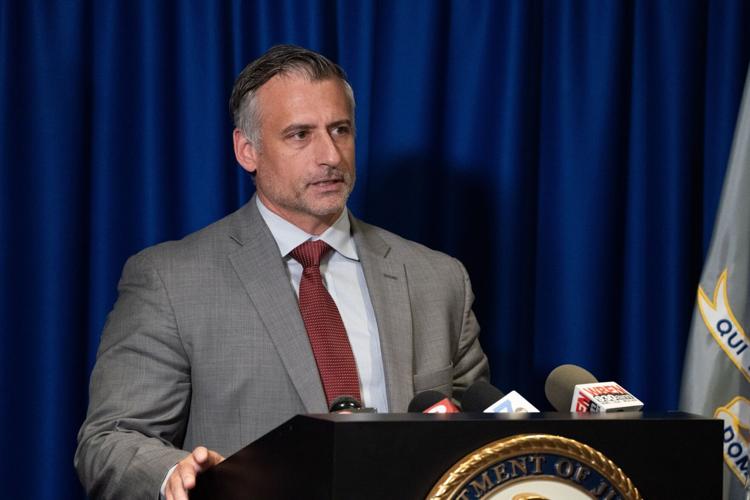
“Make no mistake, this jury determined he was a corrupt federal agent, and he violated his oath and duties to protect those that he should have been investigating and arresting,” Tripi said.
The jury in Bongiovanni’s first trial found him guilty on one count of obstruction of justice and one count of lying to federal agents over a case file kept in his home after his retirement.
Bongiovanni was also acquitted on several charges. Jurors at his retrial found Bongiovanni not guilty of accepting a bribe from the Serio-Masecchia drug-trafficking organization. They also acquitted Bongiovanni of two corruption charges and a drug count related to allegations he protected Gerace and his Cheektowaga strip club from narcotics investigations. Jurors at his first trial acquitted Bongiovanni, 60, of obstruction of justice for deleting data on his DEA-issued cellphone when he retired. And before the start of his retrial, U.S. District Judge Lawrence Vilardo acquitted him on the charge he was paid an undetermined amount by Gerace to help him and his Pharaoh’s Gentlemen’s Club avoid federal narcotics investigations.
“I am confident that no federal agency wants to ever see this happen again, and that knowing what happened and how it happened, that there are guardrails and safeguards in place to ensure that doesn’t happen again,” said U.S. Attorney Trini E. Ross. “But listen, we’re all human, right? And when you take an oath, we trust you to adhere to that oath. Most federal agents and people in the public trust do. But sometimes they don’t, and when they don’t, we’re here to make sure that justice is done.”
Tripi and fellow prosecutors Nicholas Cooper and Casey Chalbeck were under limits about what they could say in front of jurors about the three other agents, including discussing the results of a polygraph exam taken by one of them.

Assistant U.S. Attorney Joseph M. Tripi described Joseph Bongiovanni in stark terms after his conviction, labeling as “corrupt” the former agent who had “violated his oath” and “protect(ed) those he should have been investigating and arresting.”
But they were under no such restrictions when debating legal questions and defense objections during sidebar discussions at the judge’s bench with defense lawyers Parker MacKay and Robert Singer. Sidebar discussions are held out of earshot of jurors and spectators in the courtroom, and static sound effects are played over the courtroom audio system to make sure nobody but those at the bench can hear the discussion.
But sidebar discussions are part of the trial record, so the trial transcripts include the sidebar discussions. A Buffalo News review of transcripts from the first trial reveal the depth of distrust of the other agents by Tripi and Homeland Security Investigations Special Agent Curtis Ryan, who testified at both of Bongiovanni’s trials.
The Buffalo News is not identifying the three former DEA colleagues of Bongiovanni because they have not been charged with a crime. Lawyers for two of the former colleagues declined to comment.
MacKay objected and asked for a sidebar discussion after Tripi asked Ryan whether Bongiovanni’s partner appeared to be withholding information from investigators. Tripi told the judge Ryan applied for a search warrant and received permission to search the partner’s residence.
“So clearly he didn’t believe him,” Tripi said.
Tripi told the judge at the sidebar conference that Ryan concluded the former Bongiovanni partner “is not someone who’s on Team America, we’re not putting any stock in what he says, we’re moving on with our investigation.
“Now, we didn’t charge (him) yet, but in our pretrial memo we say that’s still out there,” Tripi said.
In front of jurors at the second trial, Tripi asked Ryan about the former partner’s role in obtaining local police department reports that Tripi said Bongiovanni wanted concerning people associated with Serio.
“Yes, (he) ran the the local reports,” Ryan said.
One of Bongiovanni’s supervisors also received a target letter. Jurors never heard an explanation why, but Tripi explained it to the judge during a sidebar discussion.
The supervisor’s name was on the draft affidavit for a GPS tracker warrant application for Masecchia’s vehicle that Bongiovanni indicated in an internal file he had submitted, Tripi told the judge. The supervisor was also in a September 2013 meeting with Bongiovanni; Assistant U.S. Attorney Timothy Lynch, at the time the narcotics unit chief at the U.S. Attorney’s Office; and others when the tracker warrants were talked about.
“Mr. Lynch’s testimony was clear we never got GPS tracker warrants,” Tripi told the judge.
As for the supervisor, “I think it’s significant that the three people he worked closely with are subjects of or targets of the investigation currently,” Tripi told the judge at the sidebar discussion in March during Bongiovanni’s first trial.
Testifying before the jury at the retrial, Ryan confirmed the three colleagues of Bongiovanni had received target letters.
“Were all three of them interviewed and asked questions about their knowledge of Bongiovanni’s activities?” Tripi asked Ryan. “In the context of those questions, were all three of them evasive?”
“Yes,” Ryan replied.

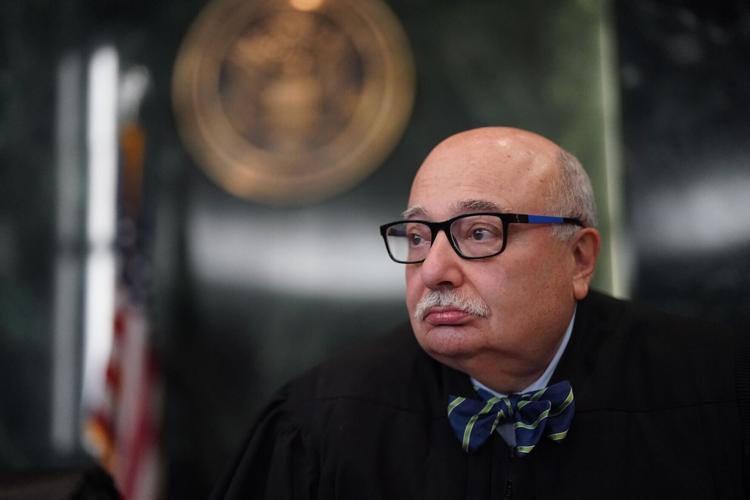
U.S. District Judge Lawrence Vilardo presides over his courtroom in the Robert Jackson Courthouse.
At times, the judge pushed back on Tripi’s assertions, including the claim that Bongiovanni’s three colleagues lied to investigators.
“Hang on,” Vilardo told Tripi during one sidebar. “That’s somebody’s opinion that they lied. So I’m not sure that that’s relevant.”
In a sidebar, the judge also confronted Tripi about the description of the three colleagues being “evasive.”
“I’ll tell you, a lot of stuff you’re doing, the defense is not objecting,” Vilardo said. “But evasive, for instance, is not an observation about how someone is behaving. It’s an observation about whether their answers are truthful or consistent or whether they’re trying to avoid answering questions. So I don’t think that is fair game.”
MacKay also pressed Vilardo to limit questions about the three other agents.
MacKay called the questions to Ryan from Tripi an attempt to discredit one of Bongiovanni’s former partners without putting the former partner on the stand, where defense attorneys would have a chance to cross-examine him.
“I think what it amounts to is trying to backdoor in (the former partner) without having to call him and dirty him up,” MacKay told the judge. “That’s where our concern lies.”

