


The jury note passed to the judge on Tuesday – the second full day of deliberations in the Joseph Bongiovanni retrial – seemed more hypothetical question and less sense of doom than the note jurors at his first trial delivered on their second day of deliberations.
“What if we can’t agree unanimously on every charge?” the jury asked.
But a new jury note Wednesday was not hypothetical at all about the prospects of reaching a unanimous verdict.
“We cannot unanimously agree on every count,” according to the new note.

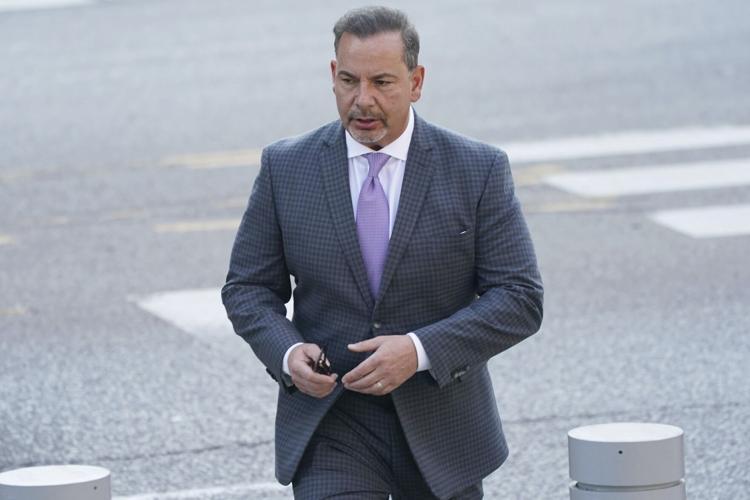
Former DEA agent Joseph Bongiovanni is accused of accepting at least $250,000 in bribes to shield drug traffickers from arrest.
The communication is just the latest turn in the long-running saga of Bongiovanni, 60, who stands accused of using his position as a DEA agent to protect drug dealers he thought were associated with Italian organized crime from investigations. Prosecutors say he took cash payments that totaled more than $250,000 from the Ron Serio drug-trafficking organization. He is also accused of protecting Peter Gerace Jr., the Pharaoh’s Gentleman’s Club owner, who is charged with crimes related to his alleged drug and sex trafficking within the Cheektowaga strip club.
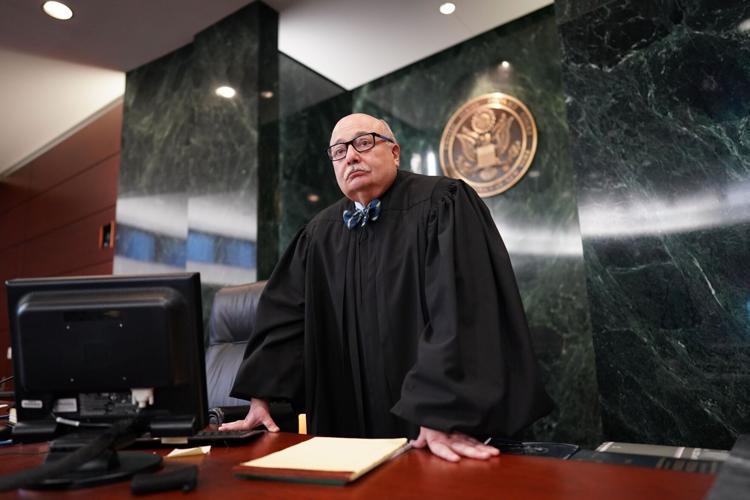
U.S. District Court Judge Lawrence Vilardo on Wednesday mulled a couple of moves in responding to the jurors. As a first step, the judge could have re-read to jurors a portion of the legal charge he previously gave them on their “duty to consult.” That charge instructs them to deliberate and consider each other’s views and reminds them to be open-minded and flexible.
Instead, he decided to issue what’s known as an “Allen charge” – instructions encouraging deadlocked jurors to make another effort to reach a unanimous decision.
After reading jurors the Allen charge, the jurors returned to deliberations and then sent another note: “If we cannot agree on every count, will that throw out the ones we did come to a unanimous decision on?”
Vilardo told the jurors they could come to a partial verdict on the counts they agreed upon.
But even a partial verdict will have to wait at least another day.
In their last note of the day Wednesday, jurors asked for a readback of testimony from Lou Selva, 59, a childhood friend of Bongiovanni’s who went on to become part of a marijuana drug-trafficking organization and an Erie County Sheriff’s Office jail deputy. Selva testified that he negotiated the bribes that the Ronald Serio drug-trafficking organization allegedly paid Bongiovanni, then a Drug Enforcement Administration agent, to shield the organization from investigation and alert it to informants.
Jurors asked for details about Selva’s marijuana-grow operation in his home’s basement and Bongiovanni’s visit to the home while Selva was growing marijuana there.
Jurors also asked for information about the yield of the organization’s Southern Tier outdoor marijuana grows.
Bongiovanni’s defense team has described Selva as untrustworthy and said jurors should not believe his testimony. Defense lawyers Parker MacKay and Robert Singer have said Selva and Michael Masecchia concocted Bongiovanni’s involvement in a made-up bribery scheme in order to trick Ronald Serio into giving money to Masecchia, who did not give it to Bongiovanni.
Why would Selva make up a story about Bongiovanni, his best friend? Singer said Selva is facing criminal penalties for trafficking marijuana. And Selva fears Masecchia, so he wouldn’t offer truthful testimony about him, Singer said. Masecchia, who was sentenced in 2022 to 7 years in prison, did not testify at either of Bongiovanni’s trials.
Selva “has no soul, he is a liar who lies to friends, law enforcement officers,” Singer told jurors in his closing argument.
Masecchia, a longtime teacher who taught English at Grover Cleveland High School, admitted running a marijuana growing facility in rural Cattaraugus County and trafficking in pot beginning around 1999. Masecchia told law enforcement officials that he and others in the drug trade had help from Bongiovanni, according to Masecchia’s plea agreement. He said Bongiovanni helped him and other drug traffickers avoid arrest by providing “law enforcement-sensitive information,” including the names of potential cooperating witnesses.
The jury will return Thursday to listen to the readback and get the details of the Southern Tier marijuana grows. Then they will resume deliberations.
Singer and MacKay moved for a mistrial after Vilardo read Wednesday’s first note. Vilardo denied their motion.
Defense lawyers typically dislike Allen charges for fear jurors who have legitimate reservations will compromise them because they feel pressured by the judge. But the defense attorneys asked Vilardo to read jurors the Allen charge rather than taking the intermediary step of reading the “duty to consult” instruction.
MacKay said issuing the Allen charge right away would mean that deliberations would not be prolonged among jurors who are disagreeing with each other, possibly reaching a point when acrimony could develop in the the jury room.
“We know from the first trial the way it degraded in there,” MacKay said.
Assistant U.S. Attorney Joseph Tripi said Tuesday that he thought it was “a little early” to be hearing juror concerns about not reaching unanimous agreement on the charges, given the two-month length of the retrial and jurors just two days into their deliberations.
Tripi put a more positive spin on Wednesday’s first jury note, from a prosecution perspective. By indicating they could not reach agreement on “every count,” jurors “seem to be in substantial agreement on more than one count,” Tripi said.
Tripi asked the judge to hold off reading an Allen charge, preferring a “slighter nudge” to the jury through re-reading the “duty to consult instruction.”
“They’ve been deliberating two days and three hours,” added Assistant U.S. Attorney Nicholas Cooper. “I think it’s premature to go straight to an Allen charge.”
The Bongiovanni retrial, which began Aug. 5, included testimony from 65 witnesses – 62 called by the prosecution and three by the defense – over 28 days.
It was at this point in the first trial last spring when the first signs of jury acrimony showed as they deliberated the legal fate of Bongiovanni.
In the spring, 11 members of the jury at his first trial indicated a dispute with the remaining juror and expressed concern that they would not be able to reach a unanimous verdict, according to a note from that jury. The note said there was a “general consensus” that a single juror was being “unduly” in relation to deliberations, but the wording in the message didn’t complete the phrase. In their note – the precise meaning of which was unclear – the jurors sought guidance from the court, without which they said they don’t think they will “be able to reach a unanimous decision.”
The current jury’s notes on Tuesday and Wednesday did not indicate that level of consternation.

U.S. District Judge Lawrence Vilardo will decide whether to vacate another judge’s “bad faith” finding.
After receiving Tuesday’s note, Vilardo treated it as a hypothetical question after summoning the jurors back into the courtroom.
“I will provide you with instructions if that becomes an issue,” Vilardo told them.
Then it became an issue.
When judges issue Allen charges, they typically tell jurors not to rush and to talk to each other and re-examine their positions – but not to change their honest beliefs solely because of the opinions of fellow jurors or for the mere purpose of returning a verdict.
At Bongiovanni’s first trial, Vilardo ended the trial on the sixth day of jury deliberations after a juror sent a note complaining of being called “stupid on multiple occasions” in the jury room and saying “the difference in our opinions has not been something that several people are willing to discuss in a reasonable and mature way.”
Vilardo said what happened during jury deliberations at Bongiovanni’s first trial would not affect how he handles the jury notes at the current trial.
Of the 15 charges Bongiovanni faced at his first trial, jurors reached a verdict on just three.
Jurors did not reach a verdict on bribery counts against Bongiovanni, but found him guilty on one count of obstruction of justice and one count of lying to federal agents, with both counts related to a case file he kept in his home after his retirement.
Jurors acquitted him of deleting data on his DEA-issued cellphone when he retired. They could not reach a verdict on 12 other charges at his first trial.

