



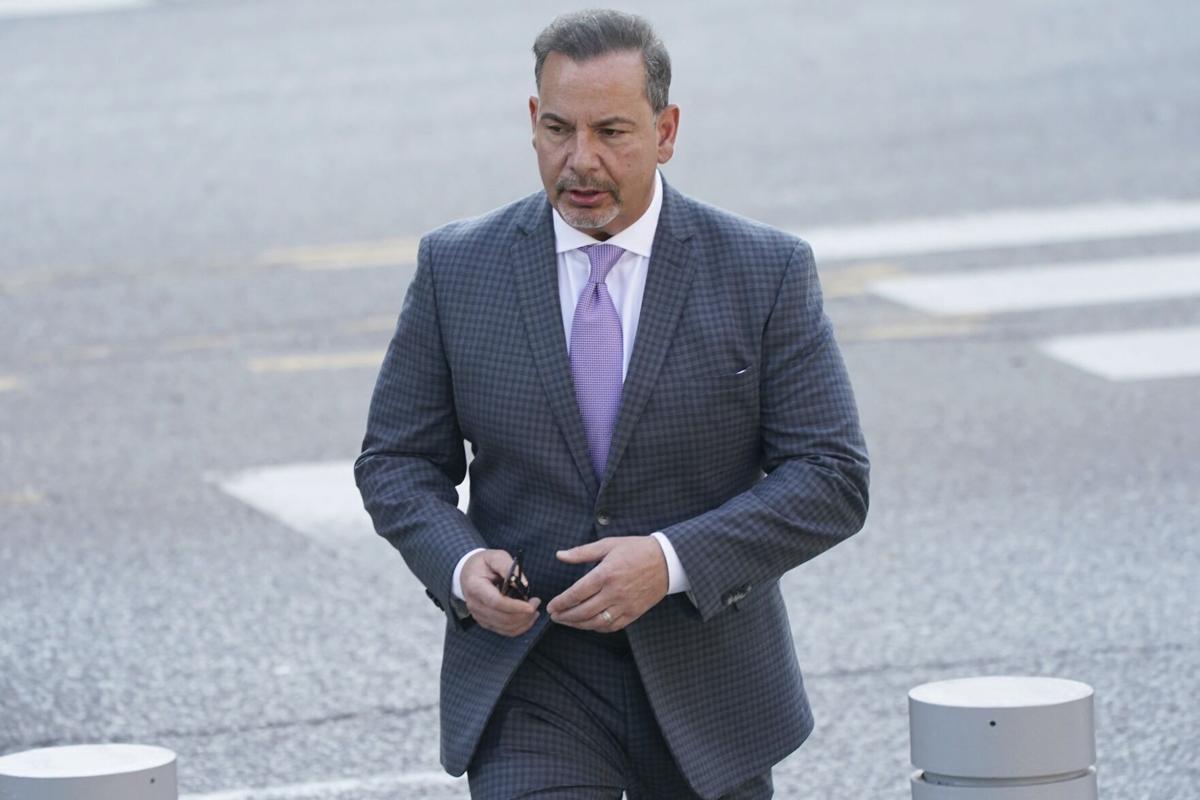
On the second day of testimony at Joseph Bongiovanni's corruption retrial, federal prosecutors Tuesday delved into what the former Drug Enforcement Administration agent told his former boss – apparently not much – about his relationship with Cheektowaga strip club owner Peter Gerace Jr.
Complete coverage: The case of ex-DEA agent Joseph Bongiovanni
What Bongiovanni withheld from his supervisors allowed him to protect Gerace and kill an FBI investigation as far back as 2009, after FBI agents searched Pharaoh's Gentlemen's Club, prosecutors have said.
Dale Kasprzyk, the former resident agent in charge of the DEA's Buffalo office, testified Tuesday that Bongiovanni never told him he had been a childhood friend of Gerace's. Neither did Bongiovanni ask to be recused from any investigation as a result of that friendship, Kasprzyk said.
As far as Kasprzyk knew, based on a Bongiovanni report he signed off on, Gerace already had been a confidential source of Bongiovanni's when the strip club owner offered to reveal information about narcotics trafficking in Western New York. After the Pharaoh's raid, Kasprzyk said he instructed Bongiovanni to turn Gerace over to the FBI to help in their investigations into drug trafficking in Western New York.
Gerace did not end up helping the FBI or DEA in any drug investigations.
The case: Bongiovanni, 60, faces 11 charges, including a bribery count alleging that he accepted at least $250,000 from a drug-trafficking organization that he thought was associated with Italian organized crime and shielded its members from arrest and provided them with information about investigations and cooperating sources.
Key witness: Dale Kasprzyk, former supervisor in DEA's Buffalo office.
Quote: "If you as an agent have identified a suspect of a drug investigation and that suspect is a friend, then you as an agent can't work that investigation."
Context: By October 2009, Gerace had come onto the radar of the FBI through dancers who reported Gerace was distributing cocaine. At the time, Gerace was on supervised release following a federal fraud conviction. So FBI agents and U.S. Probation officials searched Pharaoh's on Oct. 31, 2009, leading to a quick but uneventful talk between Gerace and then-FBI agent Thomas Herbst. Gerace also failed a urine test, jeopardizing his release from custody.
Bongiovanni wrote a report saying that he received a call Nov. 1 from Gerace, who in the past had acted as a confidential source, offering information about narcotics trafficking in Western New York. Bongiovanni said he met Gerace at DEA offices Nov. 2.
Bongiovanni's report indicated Gerace had provided information regarding individuals in past narcotics investigations and that Gerace "knew significant cocaine traffickers" of kilo-quantities of cocaine in North Buffalo and South Buffalo.
In exchange for the information, Gerace wanted a good-faith commitment from probation officials he would receive consideration for his failed drug test.
Given that FBI agents searched Pharaoh's, Kasprzyk called an FBI supervisor who managed the Safe Streets Task Force and asked if the FBI would be interested in talking to Gerace. The FBI said yes.
So Kasprzyk told Bongiovanni to refer Gerace to the FBI.
Why it matters: Prosecutors consider this incident an example of Bongiovanni killing an investigation. Bongiovanni, Gerace and Herbst met, but no real information is shared, prosecutors say. Instead, Herbst interprets the meeting as Bongiovanni essentially telling him that Gerace is Bongiovanni's informant, because Bongiovanni has known Gerace a long time. So what happens? Herbst "shuts down his investigation of Gerace," Assistant U.S. Attorney Joseph Tripi said earlier this year at Bongiovanni's first trial.
Prosecution angle: Gerace's phone records shows "years and years" of text messages and calls with Bongiovanni, leading prosecutors to believe the former agent misrepresented his relationship with Gerace with his DEA bosses.
What's more, Gerace had not acted as a confidential source for Bongiovanni, prosecutors say.
"He had duped his old boss, Dale Kasprzyk, by saying Gerace had acted as a confidential source before," Tripi said earlier this year.
"He got one past the goalie on his boss," Tripi said. "A boss who trusted him too much. He lied in that report. He lied because he was covering for Gerace."
And Bongiovanni "killed an FBI investigation before it got rolling," Tripi said.
At Bongiovanni's first trial, a Homeland Security Investigations investigator said Bongiovanni told him he recused himself when Gerace offered to cooperate because of their personal relationship.
Kasprzyk said Bongiovanni never mentioned recusing himself.
Defense response: At Bongiovanni's first trial, his defense lawyers cast what they called "a lot of doubt" about the DEA report and what happened at the Bongiovanni meeting with Gerace and Herbst.
There's no conclusive evidence that Bongiovanni's report was false, his lawyers said.
"We learned that Joseph Bongiovanni was directed by his boss to call the FBI, and that happened," defense attorney Robert Singer said during his closing argument at the first trial.
"We learned that there was a meeting that occurred with Peter Gerace to introduce him to Tom Herbst," Singer added. "And thereafter, what do we know? We know the FBI didn't act."
Herbst took no notes at the meeting. He filed no report, Singer said.
"His memory was foggy all over the place," Singer said of Herbst's testimony at the first trial.
The defense theory about why the FBI didn't investigate Gerace: "The FBI just basically dropped the ball," Singer said.

