



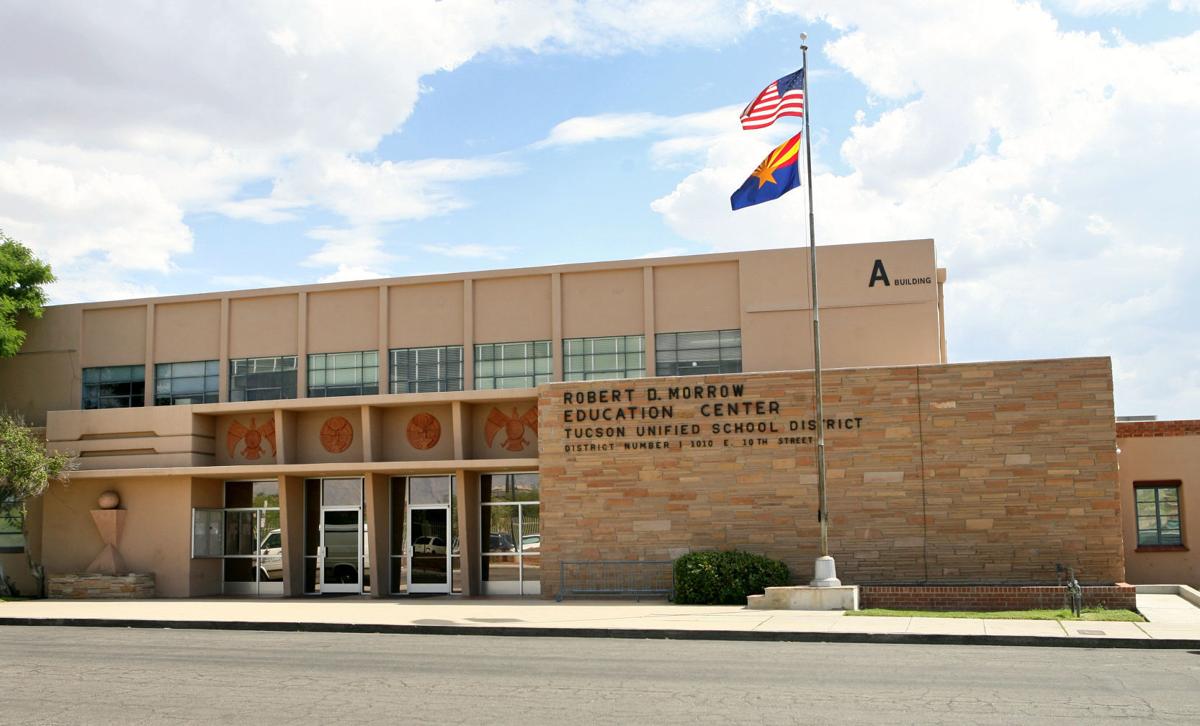
More than four decades after a federal court found Tucson Unified School District violated students’ civil rights with racist policies that created unequal education, the district still has not rooted out the vestiges of past discrimination.
But the court-appointed monitor in the district’s longstanding desegregation case said in recent court filings that the district is making strides. And he argued that TUSD should be declared in partial compliance with the desegregation plan — a major step toward earning “unitary status” and being removed from court supervision.
Willis D. Hawley, the court-appointed special master overseeing the desegregation mediations, wrote in his annual report filed in the U.S. District Court of Arizona last week that the court should no longer monitor the racial makeup of TUSD schools, except at magnet schools; and that it should give the district leeway on staff diversity, family and community engagement programs, and facilities issues. He also called on the court to stop monitoring the district’s International Baccalaureate, dual-credit and exceptional-education programs, and its culturally relevant courses.
But Hawley said the district wasn’t ready to go unsupervised in many other areas, including its disciplinary policies, extracurricular activities options, professional development and accountability and transparency efforts. And many individual programs, including the district’s Gifted and Talented Education programs, Advanced Placement courses, and dual-language programs, still need court supervision to ensure they’re managed without discrimination.
However, representatives for the African-American and Latino families who sued the district in 1974, worry that after 44 years of legal disputes, the court-appointed monitor, the judge and the district are determined to settle the case, regardless of whether the district is actually providing equal opportunities to all students.
Rubin Salter, the attorney representing the African-American plaintiffs, said while everyone is tired of dealing with the desegregation case, that’s not reason enough to end it if the district hasn’t made serious, sustainable gains toward closing the student academic achievement gap.
“Everybody wishes to get out from under this thing, and I can understand that after 40 years under court supervision, that it’s time. But they need to get it right,” Salter said.
In his annual report filed in the U.S. District Court of Arizona this week, Hawley said while TUSD still has a lot of work to do to achieve unitary status, he wants the court to approve partial unitary status to allow the district to focus more narrowly on the areas that still need significant improvement.
It’s clear Hawley wants the district to wrap up the longstanding case in the next two years — in the areas he didn’t suggest the district be declared unitary, his report repeatedly outlined steps TUSD needs to take over the next two years to get there.
But representatives for the plaintiffs say that after more than four decades and well over $1 billion in desegregation funding invested in the district, TUSD still hasn’t proved that it’s ready to take off the chains of the court and do the right thing by its students.
“The special master is not the only one who wants to end this. The district is pushing for it, and I get the clear and distinct impression that (U.S. District Judge David C. Bury) thinks it’s time to get this over with. And when you rush to judgment, you get it wrong,” Salter said.
Sylvia Campoy, the representative for the Latino plaintiffs in the case, said the district has been given ample time and money to prove that it’s acting in good faith to settle the court case.
“However, the reality is TUSD has failed to comply with the desegregation court order,” she said.
Campoy said many of the completion plans recommended by Hawley set a “low bar” for the district by aiming only to emulate other districts “that haven’t been allocated over $1 billion to get their acts together.”
And while TUSD’s new superintendent, Gabriel Trujillo, has adopted more positive rhetoric — calling the plaintiffs partners , for example, instead of vilifying them — the district has still failed to provide empirical evidence that it is moving in the right direction, Campoy said.
“Has it worked or has it not worked? It’s pretty simple,” she said.
Both Campoy and Salter said the district’s legal team has continually stonewalled their attempts to verify information provided to the court monitor — making it impossible for them to independently verify progress in the major areas of concern and making it difficult for the plaintiffs to trust the district’s claims.
Campoy said asking the district for empirical data to back up its claims that it is making progress is like “pulling teeth.”
“While board members say transparency, transparency, transparency, they should know that’s not what we’re getting” from the district’s legal team, she said.
Trujillo declined to comment, saying he hadn’t read the report. He didn’t respond to multiple requests to discuss the case, and the plaintiffs’ concerns, more broadly.
In his report, Hawley praised the district’s efforts to enhance school integration, noting that after much prodding from the court, the district has made gains toward ensuring that schools are racially balanced, rather than racially concentrated. But he held off on recommending full unitary status in that arena because the district has shown “limited interest” in strengthening and expanding its magnet schools, which Hawley described as the district’s “primary tools for integration.”
teachers, administrators
He said that over the past five years, TUSD has made “little progress” in increasing the proportions of African-American and Latino teachers and administrators, but the district has done what it was asked to attempt to increase those numbers and has been largely stymied by low teacher salaries. He recommended that the district be awarded partial unitary status on that front, that it continue efforts to attract and retain teachers of color and improve “grow your own” programs to increase minority administrators.
Hawley had some sharp words for the district’s discipline policies, noting that African-American students over the past four years have been more than twice as likely to receive short- or long-term suspensions compared to white students.
And he noted that the district has not reliably implemented its discipline practices and has not documented which problems confront which schools, or what has been done to address problems and with what effect.
He said there’s insufficient evidence to show it will be able to reduce discipline levels, especially suspensions, and further reduce the disproportionate discipline against African-American students.
When it came to quality of education, Hawley saw a mixed bag. He praised the school’s graduation, dropout and absentee rates, saying most large, diverse urban schools would be jealous. And he liked what he saw when it came to the International Baccalaureate, dual-credit, and exceptional-education programs, as well as the district’s culturally relevant courses. But many of the district’s other advanced-learning options, including its GATE, Advanced Placement and dual-language programs, fell short of deserving unitary status for a variety of reasons.
Hawley noted that the district still has stark racial disparities when it comes to access to and enrollment in advanced-learning options, but said that’s not necessarily the district’s fault.
He said the differences in enrollment are “not surprising and would be found in almost all districts where, as in Tucson, white families are more affluent and parents have higher education rates ... (than) families of other races.”
“The district cannot change the socioeconomic status of families in the short run,” he said.
But Campoy said that kind of thinking is part of an “old and insulting” paradigm that implies a lack of progress has more to do with the population being served than the district’s actions.
And Salter said that the court seems content to ignore the heart of the issue — that black and Latino students have received a lower quality of education and still suffer from the achievement gap.
African-Americans “are still at the bottom of the totem pole on math, reading, suspensions, dropouts, language. We started out 50 years ago at the bottom, and we’re still there,” he said. “The special master’s annual report doesn’t deal with the heart of the problem, which is efforts to close the achievement gap.”
Neither Campoy nor Salter wanted to discuss the plaintiffs’ opinions on Hawley’s specific recommendations, noting the plaintiffs have until March 27 to respond in court.
LOOKING FORWARD
The desegregation order is often blamed as the reason the district is slow to react and unable to change. Any major decision — such as boundary changes, school expansion and program changes — must be OK’d by the court, which demands costly and time-consuming studies on any proposal’s impact on black and Latino students. District insiders complain that lawyers run the district and that the court and plaintiffs essentially act as a second governing board.
But the desegregation order continues to be in place because, for more than four decades, the school district has failed to prove to the court that it is making a “good-faith compliance ... with the (settlement agreement) over a reasonable period of time” and has eliminated “the vestiges of past discrimination ... to the extent practicable,” as the court has ordered.
And the desegregation order allows the district to extract an extra property tax, bringing in an additional $64 million per year, which can be for any measures or activities designed to remediate racial discrimination, including academic-intervention specialists, culturally relevant courses and transportation to magnet schools.
Representatives for the plaintiffs worry that declaring the district unitary too quickly could backfire, as it has in the past.
TUSD was awarded unitary status in 2009, when Bury declared that the district had met the goals of its unitary status plan, but was rebuffed by the Ninth Circuit Court of Appeals, which stated the district had failed to demonstrate — not merely promise — good-faith compliance with the plan.
Both Salter and Campoy said they’re concerned if the district is declared unitary before it’s ready, it could fall back into old, discriminatory habits.
“We need to make sure that the vestiges of racism are uprooted for good, not just uprooted for this year,” Campoy said. Salter suggested that whenever the case is settled, the court should still keep an eye on TUSD for a few years to ensure it doesn’t backslide.
But when the district does finally achieve unitary status, Salter said, it will be a good day for not only for black and Latino students — who will finally receive the same quality education and opportunities as white kids that they are constitutionally entitled to — it will be a boon to all of Tucson.
“If you have a school district that is producing graduates who are exceptional kids, you’re going to get an economic boost in the community. You’ll have businesses who want to come here because we have an educated workforce. You’re going to have a lower unemployment rate, you’re going to have less crimes. The tax base will go up, the real estate prices, everything,” he said.

