





University of Arizona researchers say the Trump administration’s “stop work” orders on certain foreign aid — now temporarily blocked by a judge — would cost the UA more than $20 million and force an estimated six to eight layoffs.
But they’re far more concerned that it would stop emergency medical, food and disaster aid for countries across the world.
“The dollars lost to the university is a small, localized impact,” said Greg Collins, UA associate vice president of resilience and international development, who previously worked for the United States Agency for International Development or USAID, which President Donald Trump has vowed to gut and shut down.
“There’s much bigger impacts here that I think are much more compelling,” said Collins.
Late Thursday, a federal judge in Washington, D.C., ordered the Trump administration to temporarily lift the funding freeze that has shut down U.S. aid and development programs worldwide through USAID.
The preliminary ruling came in a lawsuit filed Tuesday against the administration by organizations contracting with USAID including Global Health Council, Democracy International and the American Bar Association, contending “an unlawful and unconstitutional exercise of executive power.”
President Donald Trump’s executive order, signed on Inauguration Day, said the U.S. foreign aid industry and bureaucracy weren’t aligned with American interests and were often antithetical to American values. “They serve to destabilize world peace by promoting ideas in foreign countries that are directly inverse to harmonious and stable relations internal to and among countries,” said his order. Trump has accused USAID of unspecified fraud and waste, the New York Times reported.
U.S. District Court Judge Amir Ali said administration officials have not justified “a blanket suspension of all congressionally appropriated foreign aid,” the Associated Press reported.
The UA has been doing work through USAID funding in Kenya, Bangladesh, Latin America, the Caribbean, the Western Pacific, the Pacific Islands, Niger, Burma and more, ranging from providing on-the-ground help to areas devastated by disasters such as a hurricane or a violent conflict, to measuring the effectiveness of U.S. foreign aid, to training young scholars and teaching agribusiness.
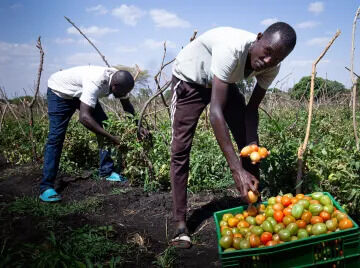
The University of Arizona’s Niger Resilience and Agribusiness Master’s Program, under USAID, “was trying to provide means for communities to be self-sufficient, for youth to be self-sufficient (and) independent, and also to avoid having them join terrorist organizations like Al-Qaeda and others, because young people tend to be vulnerable,” said UA’s Mamadou Baro, who headed the project.
“There’s always the question of why Americans should care about that. I mean, a lot of us operate on humanitarian principles, but there’s other reasons to care,” said Collins.
Among those reasons are the effects of climate disasters and wars and of lack of opportunities in other countries, he said.
“These are the very factors that motivate or force migration on an unprecedented scale — the factors that, even if we were only focused on America’s self-interest, USAID is one of the best bets in U.S. soft power in the foreign policy toolkit. USAID operates in places like Nigeria and Somalia. Every program that USAID implements has a logo on it, ‘USAID from the American people,’ and that’s hugely impactful on the hearts and minds of people who are being assisted by that assistance.”
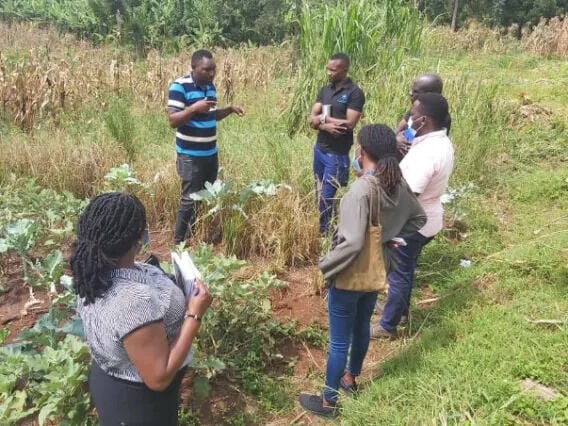
LEFT: The University of Arizona’s Climate Adaptation Research Program, part of the United States Agency for International Development, creates training opportunities in countries in Africa, Latin America, the Caribbean, the Western Pacific and the Pacific Islands on how to prepare for, respond to and recover from climate-based disasters including droughts, floods and cyclones. RIGHT: One location of the work done by the University of Arizona’s Climate Adaptation Research Program.
“To me, this is not a Republican or a Democratic issue,” said Mamadou Baro, chair of the UA’s Bureau of Applied Research in Anthropology, who heads one of the projects. “It’s a national issue, it’s a global issue. It’s an issue about humanity.”
Mamadou Baro
The Trump administration sent emails to universities including the UA on Jan. 29, “immediately” ceasing all work related to USAID programs for 90 days.
The UA has a total of six USAID projects affected: Enhancing the Evidence for Humanitarian Action, Climate Adaptation Research Program, Humanitarian Assistance Technical Support, Niger Resilience and Agribusiness Master’s Program, Climate Adaptation Support Activity, and a Development and Inclusive Scholarship Program for Burma.
The “stop work” orders could cost the UA $20 million to $25 million in total funds allocated for the six programs over the five to six years of their implementation, Collins said, in an interview before the judge’s ruling Thursday.

Greg Collins
The government said it will not reimburse any costs incurred for USAID work after Jan. 24, said Jeff Michler, an associate professor in UA agriculture and resource economics who co-investigates the Enhancing the Evidence for Humanitarian Action or EEHA project.
Jeffrey Michler
The project, in Kenya and Bangladesh, develops ways to monitor effects of the “emergency programming” part of USAID’s broader humanitarian assistance portfolio, said Zackry Guido, director of the Arizona Institute for Resilience’s International Resilience Lab, who leads EEHA.
These are largely projects and interventions set up in the aftermath of a disaster such as a hurricane, a long drought or a conflict, he said.
“Zack and I and others have spent years on this project, and now we can’t finish the research,” Michler said, speaking before the judge’s ruling. “…Then there’s the global impact of not giving people life-saving medication, of not continuing to engage with our global development community — we’re effectively seeding that space to China, Russia, others. So, there’s cascading impacts.”

Zackry Guido
Timothy Finan, a UA professor emeritus of anthropology, said it would be a shame to stop the Humanitarian Assistance Technical Support project, known as HATS, and the Climate Adaptation Research Program, known as CARP.
“I think, in my personal opinion, it will damage the reputation of the United States,” said Finan about long-term impacts of the stop work orders, in an interview before the judge’s ruling.

Timothy Finan
HATS focuses on managing and responding to humanitarian disasters. CARP creates networking and training opportunities for young and early career scholars in higher education in countries in Africa, Latin America, the Caribbean, the Western Pacific and the Pacific Islands.
The researchers were looking at how to prepare for, respond to and recover from climate-based disasters including droughts, floods and cyclones, Finan said.
“So, there are a bunch of short-term interventions such as saving lives, providing food, providing water, but also trying to protect people’s livelihoods, providing some support for people who have lost their assets and trying to provide some substitution of assets,” said Finan. “We were trying to understand that over this short-term — 12-month, 16-month to 18-month — period, whether those kinds of interventions had a longer-term impact.”
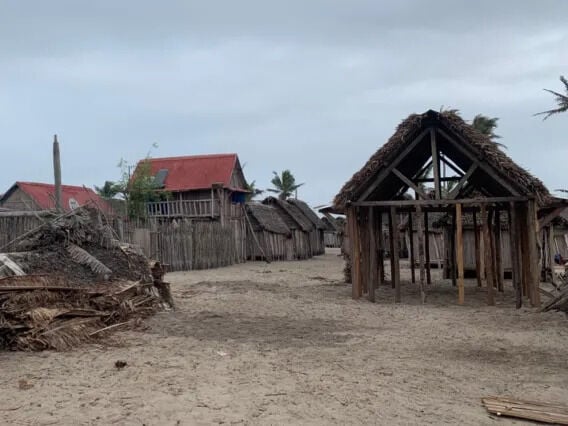
One location of the work done by the University of Arizona’s Climate Adaptation Research Program.
Baro, who leads the UA’s Niger Resilience and Agribusiness Master’s Program, known as N-RAMP, said it is known and popular in West Africa. He was in Niger when the stop order came, in fact.
N-RAMP is a joint effort to help young people get a degree and be productive in advanced agribusiness in a country facing significant environmental challenges, he said.
“It was trying to provide means for communities to be self-sufficient, for youth to be self-sufficient (and) independent, and also to avoid having them join terrorist organizations like Al-Qaeda and others, because young people tend to be vulnerable,” said Baro, also speaking before the judge’s ruling.
“It was a true humanitarian and collaborative effort to do something meaningful, so people also can see the United States is engaged in something helpful in the long run — not only for Niger but also the United States.”

