



Two University of Arizona faculty members have been awarded prestigious 2026 Guggenheim Fellowships: Award-winning playwright Elaine Romero and Arizona Space Institute Director Erika Hamden.
The Guggenheim is an annual grant for exceptional mid-career artists, scholars and scientists to give them the time and creative freedom to pursue their work. The fellows get awards averaging $40,000 to $55,000.
Romero, whose next play is based on the politics of the U.S.-Mexico border, said, “I find the work of my lifetime has met a very difficult moment here on the border, and those things have come together and coalesced into this recognition. And this recognition gives me a bigger platform, a louder voice in which to express what I’ve sensed and seen here on the border (in Arizona) since relocating here shortly after grad school in my 20s.”

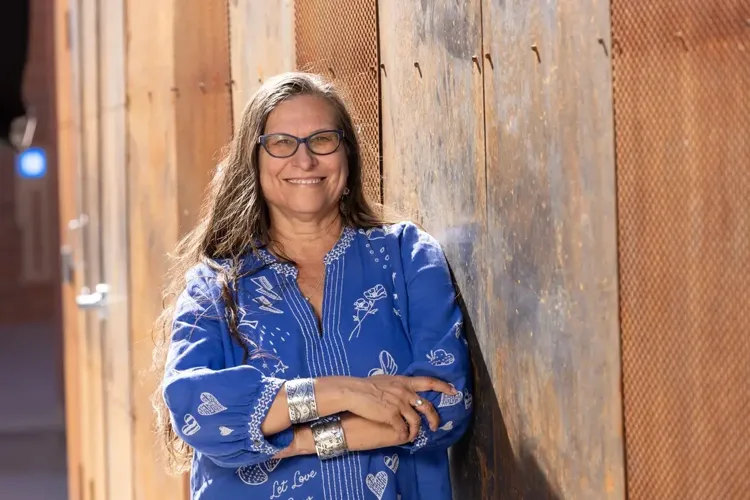
Elaine Romero
Hamden, who serves on the State of Arizona Space Commission, said a huge part of her job is to make big proposals to NASA (the National Aeronautics and Space Administration). Some get funded, and others don’t, and all you can do is make the best proposal possible, she noted. So applying for and winning the Guggenheim on a first try, she said, is "such a treat.”

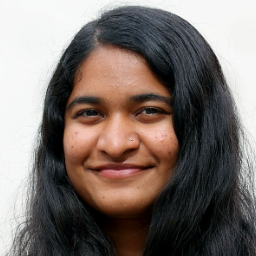
Erika Hamden
The two UA faculty members are among a pool of over 200 people across 55 disciplines awarded the Guggenheim Fellowship in 2026 from the John Simon Guggenheim Memorial Foundation. Since its founding in 1925, the foundation has awarded nearly $450 million in fellowships to more than 19,000 fellows.
Romero teaches playwriting and dramaturgy at UA’s School of Theatre, Film and Television, and Hamden is an associate professor of astrophysics.
Both were chosen from a pool of nearly 5,000 applicants.
Finding precise ways of sensing light
Hamden said she will use the award to continue her pursuit of finding better and more precise ways of sensing light “in order to measure every atom that exists.”
Hamden’s research spans different areas related to observing “super faint parts” of galaxies and star-forming regions. She said the work she does includes developing telescopes to observe those regions better, and conducting detector technology development that's important for future astronomical observations.
Her research investigates how stars and galaxies are formed from primordial hydrogen by developing and creating space technology with a focus on detectors and telescopes.
“I have been working on different types of light sensors for the last two decades and the detectors that I work on are actually very similar to what’s in your cellphone camera,” Hamden said. “They are like silicon semiconductors, but we use them for astronomical imaging. … One of the cool things about doing astronomical technology development is we are always trying to see farther and see fainter objects and see something that no one has ever seen before. And so, we’re always pushing the limits of what the technology can do.”
Hamden is the author of the science book “Weird Universe” and hosts the television show “New Frontiers” on PBS. She’s also the principal investigator of the Eos Mission and deputy principal investigator of the Aspera Mission, NASA astrophysics missions that will include space telescopes designed to observe distant stars and galaxies from low-Earth orbit.
Developing her latest play
Romero said she will use the award money to support the development of her latest play, “Diablos Aquí.”
Romero, who has applied for the fellowship many times over the years, said she decided on a different strategy this year, which was to write the words “Guggenheim Winner” on a sticky note and place it on the altar outside her home office.
When she heard that the decision would be made soon, she ran to a church to light a candle, but didn’t have one and had to pretend to be holding one instead, she shared. That went along with being a writer and a storyteller who imagines things, she said.
“Diablos Aquí” borrows its name from William Shakespeare’s “The Tempest” — “Hell is empty and all the devils are here.” The story is about a father and daughter born on either side of the U.S.-Mexico border who must deal with the consequences of their political reality. The story will also further her exploration of “vertical time,” a technique that allows the past, present and future to intertwine in unexpected ways and guide audiences through moral questions and life lessons, she said.
Romero most recently closed out the New Directions Festival, an annual event that allows advanced dramaturgy students to develop, cast and perform their own short performances on a professional stage. The festival was hosted at the Tornabene Theatre on the UA campus and featured nine performances by up-and-coming playwrights.
What the Guggenheim means to them
Romero called the fellowship a “life-changing opportunity.” She said what she loves most about the fellowship is that it’s equally valued among artists and scholars.
Hamden said one of the best things about applying to a prestigious fellowship like the Guggenheim is getting to meet, engage with and learn from other fellows across different disciplines. She said it’s enriching, motivating and inspiring to see people excelling in their fields and in something totally different than her own work.

