



In the midst of federal funding cuts by the National Institutes of Health under the Trump administration, the primary agency for medical and public health research in the U.S. is now funding a joint seven-year $43.6 million grant split between the University of Arizona and the University of New Mexico.
The NIH grant has been awarded “to fund a broad range of research programs aimed at improving the health of people living in Arizona and New Mexico, while also training a new generation of scientists and staff,” the UA announced Friday.
The two universities will track the outcomes of their efforts in four areas: economic, policy, clinical and public health benefits.
“We are excited to leverage our clinical and research strengths in a new partnership with the University of New Mexico,” said Tomás Díaz de la Rubia, UA’s senior vice president for research and partnerships, in a news release. “Our long history of academic and research collaboration promises to bring innovative programs and medical advances to improve the lives of people across both states.”
As of May, the NIH under the Trump administration had given out stop-work orders on two grants at the UA, leading to the loss of over $326,000.
In the new award, the primary amount of approximately $38.8 million for seven years from NIH’s National Center for Advancing Translational Sciences will be spent on supporting translational science, which helps biomedical advances reach patients and communities faster.
An additional $4.8 million K12 Research Training and Career Development Award will be put towards training and mentorship of early-career translational scientists.
UA’s Banner University Medical Center will be the university’s primary implementing partner in clinical and translational research.
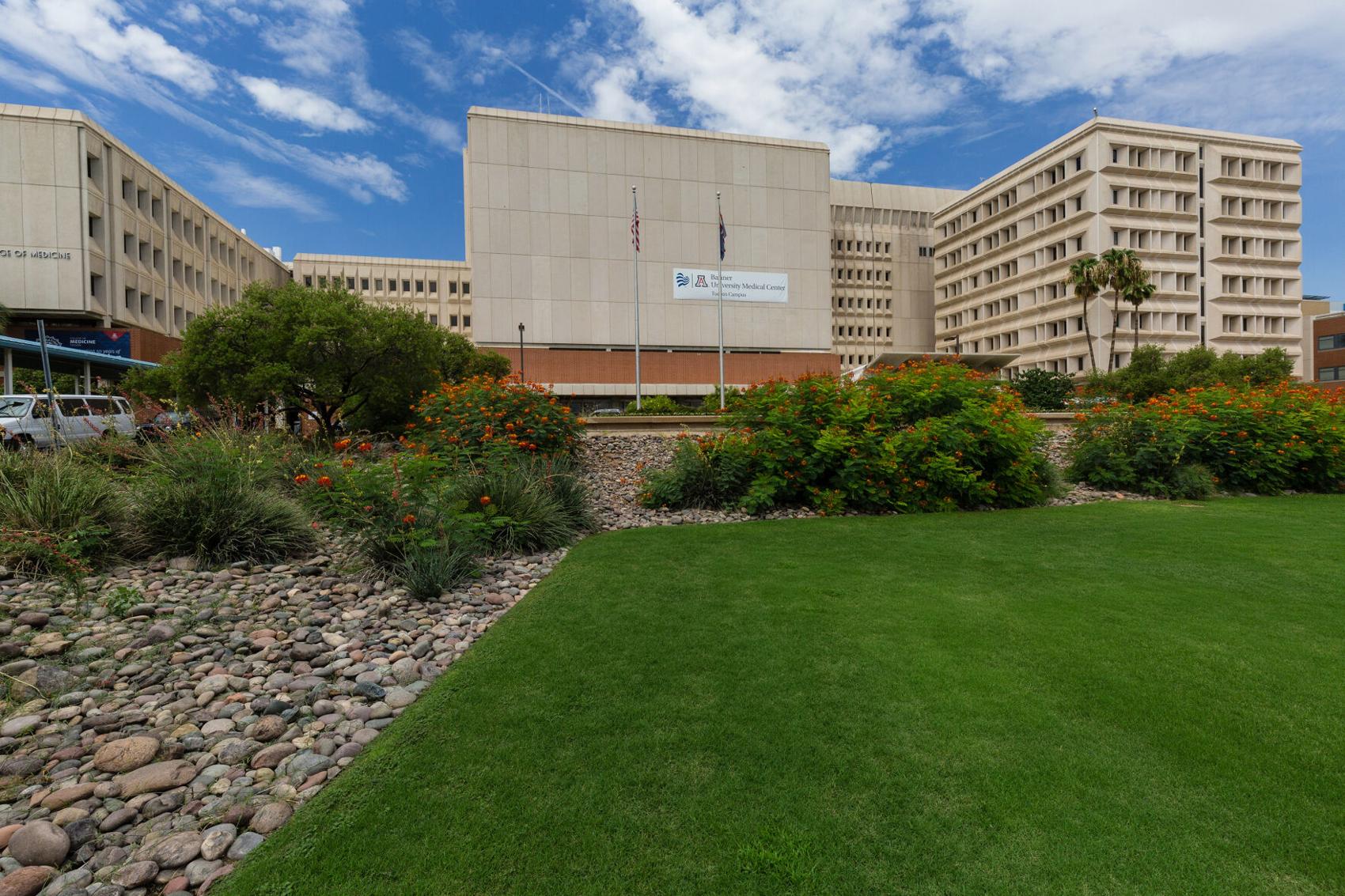
Banner — University Medical Center Tucson.
The partnership “will be invaluable in helping Banner enhance its capabilities in clinical research, accelerate research innovations to Banner patients and beyond, grow a workforce of outstanding clinical researchers, and continue to engage our community in the conduct of clinical research that is best suited to their health,” Corey Casper said in the news release. Casper is chief research officer for Banner Health and a professor at UA’s College of Medicine — Tucson.
The Southwest Center for Advancing Clinical and Translational Innovation, led by Sally Radovick, will also award pilot funds to researchers based on merit for new scientific breakthroughs. Half of the funded pilot projects will be conducted at either the UA or UNM, and the other half will include collaborations of investigators at the two institutions.
Radovick said the research award provides critical resources and support in areas including clinical trial recruitment, medical data access and community engagement.
“Arizona shares many similarities with New Mexico, as both states have significant Native American and rural populations,” Radovick said.
“We share common challenges in health care delivery. A partnership broadens the reach of CTSA (Clinical and Translational Science Awards) programs and expertise in the Southwest. We’ve now more than doubled the number of clinical trials that investigators can participate in and that are open to the populations of both states.”
In the Southwest Center, two areas of joint focus for the researchers will be substance use disorders and rural health initiatives.
“Both Arizona and New Mexico are dealing with an opioid use crisis, and this program will extend opioid care to rural hospitals focused on promoting knowledge about opioid addiction treatment,” Radovick said. “Our plan is to provide additional opportunities for clinicians and practitioners to access addiction programs and medications.”
Nancy Pandhi — a UNM professor in family and community medicine and the university’s Health Sciences Center assistant vice president of research for clinical translational research — said the team of translational scientists will start by studying the rollout of a new addiction consultation service. Pandhi will serve as SW CACTI’s contact principal investigator.
Their study will include evaluating whether the new service makes more people with opioid use disorder follow up with outpatient care after they leave the hospital, and the lessons learned from the first study will be compared to those when partnering with a rural hospital, said the UA news release.

