



A small town on the coast of Cyprus was destroyed in an earthquake in the early 4th century.
Archaeologists beginning in the 1930’s started to excavate the town of Kourion but two of them died from unusual circumstances, leading people to believe there was a curse. One died from a heart attack, and another was killed by his capsized yacht near Kourion on a clear skied day.
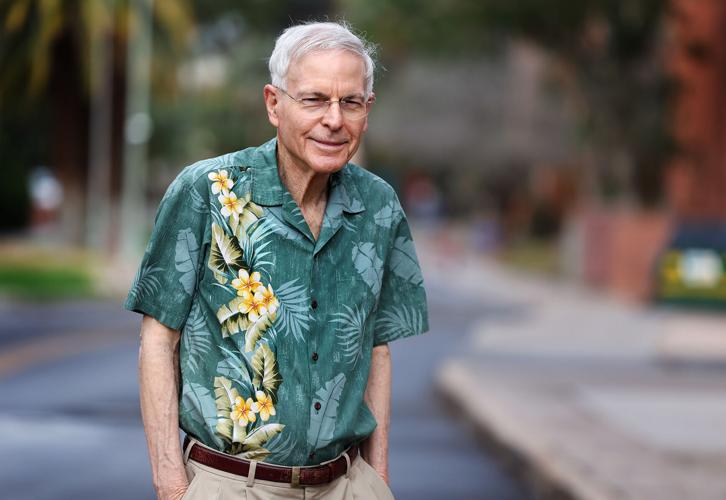
University of Arizona Professor David Soren worked on the site and didn’t believe in the “Curse of Kourion”, even when he caught the Coxsackie virus, more commonly known as hand-foot-mouth disease.
“I almost died and had two trips to the emergency room,” Soren said. “I couldn’t work for a long time after that, that almost did kill me.”

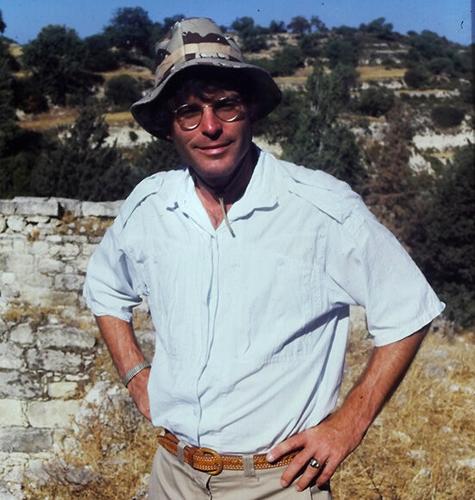
David Soren at site of Kourion in Cyprus during his excavation, 1985.
Soren and his team risked the “curse” and re-excavated Kourion in the 1980s.
Their findings are now going to be featured in the upcoming Cyprus national Museum opening in 2027.
Connecting with Kourion
His wife, Noelle Soren, is an archaeologist and was in Cyprus before him, working on a different site called Idalion.
She found Kourion to be the perfect spot for him, and scored a meeting for him with the Director of Antiquities of Cyprus.
“Our careers never un-twined from the moment we met,” she wrote to the Star when describing how they worked together.
The director said David Soren could have only a small section to put a trench, so he did research to find out where he should dig and found that the earlier excavators made many errors in prior field books.
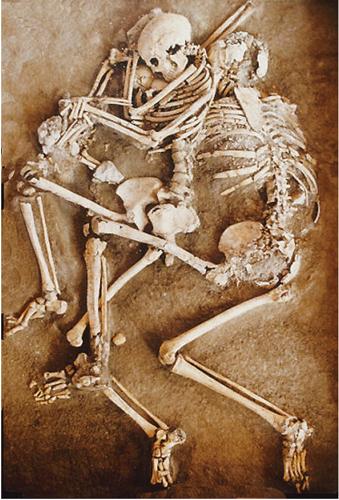
The research proved fruitful when they immediately found a mule trough and the skeleton of a 12-year-old child. After widening the trench, they discovered a three-member family.
During their summer Cyprus digs, he had to fire six photographers. So, having a background in field archaeology, Noelle Soren took over.
She took photos of the findings and excavation, including skeletons they uncovered.
“The photo of the couple and child were everywhere,” she wrote. “It was even stolen and used at least twice by supermarket tabloids.”

Photo of the 3 member family found at Kourion that will be the center of new Cyprus national museum.
As seen in National Geographic, the photo of the 25-year-old man, 19-year-old woman, and one-and-a-half-year-old child became famous.
“If you ever actually physically see the bodies, the family, you never forget it. As long as you live,” David Soren said.
Currently in a local village museum, the discoveries at Kourion will be the centerpiece of the new museum.
They pinpointed the largest earthquake in the Mediterranean that was recorded to be on July 21st 365 A.D., by Ammianus Marcellinus, a fourth century historian.
After this dig, his discoveries continued as he began more excavations around the world.
In Tuscany, Italy, his team found the Springs of Chiusi where the Emperor Augustus, along with the poet Horace, drank water to heal his stomach pains about 20 B.C.
Later, Soren was in Lugnano, Umbria, where he found an infant cemetery and a roman Villa by the hill of Poggio Gramignano.
The story went viral on the news for his findings of possible witchcraft practices and malaria, one of the proposed reasons for the downfall of the Roman Empire. The news nicknamed the location a place of vampire burials, though Soren refers to it by its Roman name.
“There were bodies in it that had stones put over their hands and feet and, in their mouths, and it there were all these magic rituals,” he said.
The cemetery is estimated to be from 450 A.D. and the Roman villa from 30 B.C.
His work in Lugnano connected him with the people of the small town, and they bestowed honorary Italian citizenship in 1990.
The excavations were widely successful, and he attributes most of it to his in-depth research before stepping foot on site.
“A lot of it was chance, but a lot, an awful lot of it, was just research and hard work,” he said.
From doo wop to Tunisia
Soren says he didn’t intend to be an archeologist.
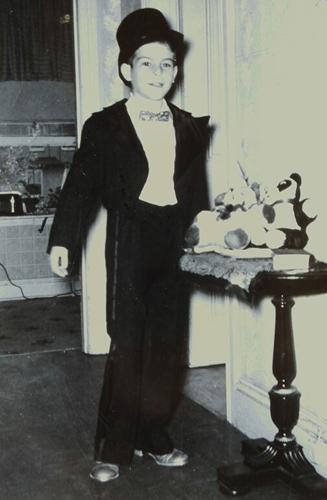
In fact, he grew up in the entertainment business in Philadelphia and was on a popular television show called “The Horn and Hardart Children’s Hour.”
“I didn’t have a very good family, and I spent a lot of time alone, or working at singing and dancing,” he recalled.

David Soren grew up in the entertainment business and was an actor on the “The Horn and Hardart Children's Hour,” 1955.
Saturdays of his 1950s childhood in the movie theatre consisted of watching archaeological horror movies like “Journey to the Lost City”. He watched alone, wondering what it would be like to wear a pith helmet and a khaki outfit, being like the actors.
“I’m sitting there in the dark thinking, well, this is the best way to run away from home,” he said.
In Philadelphia, he belonged to a singing group on his street corner and fell in love with doo wop.
This type of music thrived in the 50s with mixed rhythm and blues music. It was often sung by young people on their street corners and in neighborhoods.
When he got into Dartmouth, he took the opportunity to move away from home to the farthest Ivy League school and study Greek and Roman Studies.
And although his passion for music and performance endured, he focused on school.
In 1967 a band formed called Wind in the Willows. He was recognized for his voice in a Boston coffee shop and was called to sing for the band.
He was talented singer, dancer and guitarist, but turned down the opportunity with the band, which included Deborah Harry, the soon to be lead singer for Blondie.
Instead of going toward his rock-and-roll dream, he pursued a graduate program at Harvard for more stability.
“I figured with my luck, I’d probably get, maybe at the most one hit record and then I’d be parking cars or something,” he said through laughter. He decided his odds were better to continue with school.
He found ways to pursue music through other methods. David and Noelle Soren ended up in a rock band he started called Sphinx, where he got to write a lot of original songs.
Soren decided to go to Harvard for graduate school to study fine arts and classical anthropology in graduate school. Nobody in his family had gotten an education past high school, so he knew he had to go.
Once at Harvard, his professors were all intense, accomplished and important in the archaeological field. He was eager to impress them, so when the late Ernst Kitzinger, a German American historian at Harvard, asked for students to join him in Tunisia, he volunteered and went with Noelle Soren.
“I’ll do anything, anything you want, put me up for it,” he said he remembered being his mindset while in school.
The dig was funded by the Smithsonian, but the lead excavator ended up being horrible, according to David Soren.
They eventually fired the lead, and he was asked to take over.
“I hadn’t ever actually been in charge of a trench before that,” he said.
From there he worked for Smithsonian at many other sites where he also helped write and publish books on their work. The pair spent seven years together in Tunisia, though he stayed longer when she left to go to Cyprus.
After this experience, he wanted to finally lead his own dig and run his own project, leading him to Noelle Soren in Kourion, Cyprus.
The couple, talented in music and archaeology, first met during his undergrad years, while they were on a summer dig at Winchester Cathedral near Oxford in England.
His love for England at the time stemmed from the magic he saw there in the media. From the Beatles to flower children and Sherlock Holmes, he knew he wanted to be a part of it.
But that all changed when he saw Noelle.
“She exploded into the room, I mean, it was like she was on a cloud sort of riding into the room,” he said. “And I turned to my friend and said, ‘that’s the one I’m gonna marry.’”

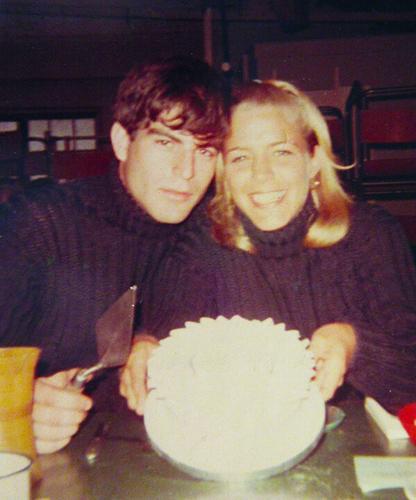
David and Noelle's engagement in June 1967 at Winchester, England. They were engaged during a dig near Oxford at Winchester Cathedral.
Soren said he proposed three days later. Noelle Soren says she believes it was five days.
They were both engaged to other people at the time, but broke it off for each other.
“The attraction was immediate, really like a jolt,” she wrote.
They got married around Christmas in 1967 in St. Louis, right before he completed undergraduate studies.
She helped put him through the rest of Dartmouth and Harvard graduate school by going on digs with him and taking up various jobs like in clothing stores and in a library. Noelle Soren completed her undergraduate studies in archaeology and later, advanced degrees in archaeology and art history.
Where they are now
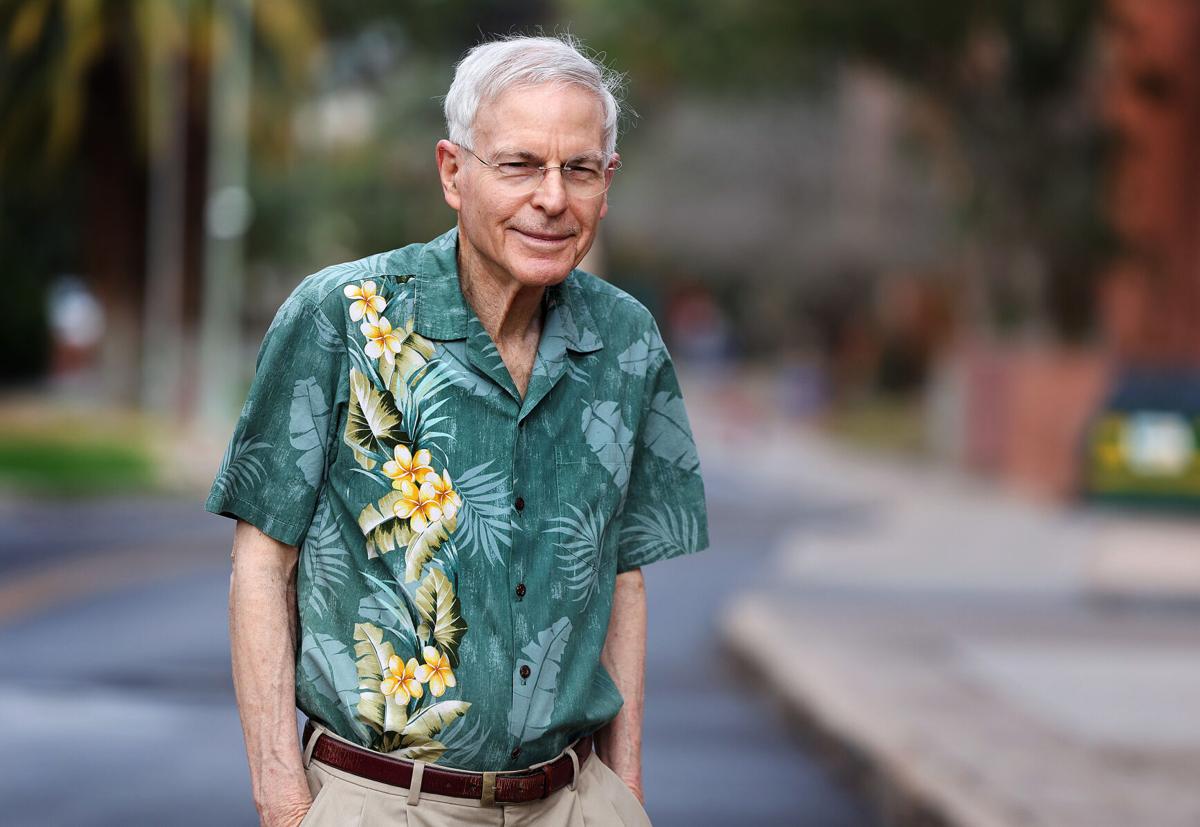
David Soren is currently Regents Professor of Anthropology and Classics at UA and still enjoys his love for the arts and entertainment by teaching a few film and fine arts classes along with archeology. Their lives have slowed down with travel, but both Noelle and David Soren are spending time writing books.
Noelle Soren is on her third archaeological thriller novel, while is writing a book about Taylor Swift’s use of classics in her lyrics.
This summer, he is the principal investigator for UA Archaeological Excavations at Lugnano, Umbria, Italy. Soren will oversee, via zoom, specialists from Italy and Arizona as they finish the excavation of the infant cemetery and reconstruction of the Roman villa.
Although his career has been prosperous and well renounced, he said he was surprised his work was continuing to get recognized in Cyprus 40 years later. He donated his research to the museum, including illustrations, documentation and the family of three.
“I would say the family is one of the things that most brings tears to my eyes,” David Soren said. “It makes it seem like their death touches people today, and even though they lost their lives so young and their child, it brings something wonderful to people to make some reevaluate, in some cases, their relationships.”

