



It should come as no great surprise to learn John Schaefer, who at 36 would become president of the University of Arizona, always dreamed big.
This might raise an eyebrow, though.
“My first ambition in high school was to play center field for the Brooklyn Dodgers when Duke Snider retired,” he confessed last week, but the call never came.
Instead … well, it’s a long story, one that Schaefer has decided to tell himself in a new memoir, “A Chance to Make a Difference,” which releases Oct. 14 from the University of Arizona Press.
In it, Schaefer takes us from the streets of Queens, where he grew up, through his evolution as a scientist and academic, to his 65 years in Tucson since arriving in 1960.
And that dream of playing baseball?
“The teachers in New York went on strike when I was a senior, so we didn’t have any sports teams that entire year,” Schaefer said. “I pretty much used that time to think about colleges, instead.”
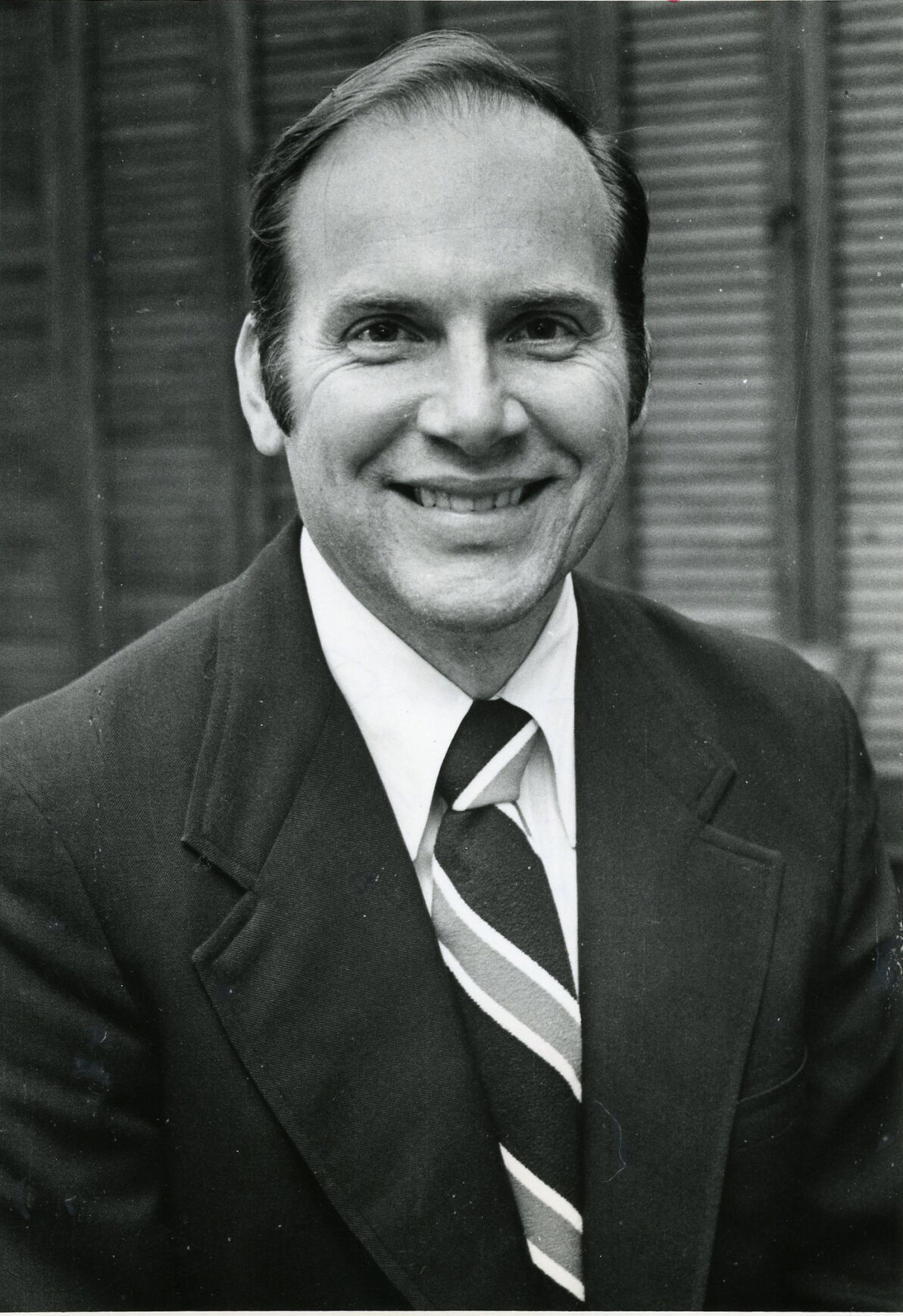
John P. Schaefer became president of the University of Arizona in 1971.
Not to spoil the plot here, but it proved to be a judicious choice. Schaefer would earn advanced degrees in organic chemistry from the University of Illinois and Cal Tech, begin his teaching career at the UA in 1960, and quickly move up the org chart, from associate professor to department head to dean.
As president from 1971-82, Schaefer would oversee one of the most spectacular growth spurts in the history of the university.
From 1982-2005, he headed the locally based Research Corporation for Science Advancement, which funded the research and development of drugs now used to treat such conditions as diabetes, cancer and shingles.
Then there is John Schaefer, award-winning photographer, whose pictures of cactus flowers became U.S. postage stamps in 2019.
His was a story begging to be told, and luckily for us he decided to tell it.
“I started talking to the people at UA Press a couple of years ago,” Schaefer recalled. “They warned me that presidential memoirs could usually be found at the bottom of everyone’s sales list, but I told them I had a big family — and I really wanted to do it.
“I thought I could color in some of the blank spots in the university’s written history, and I hoped it might help my kids understand some of the struggles we went through when they were young.”
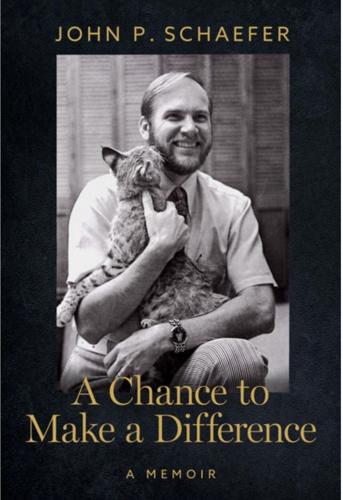
Schaefer’s narrative is rich with personal detail, and even the cover comes with a story.
It pictures a young university president, cuddling a friendly bobcat, presumably Wilbur and Wilma’s grandson.
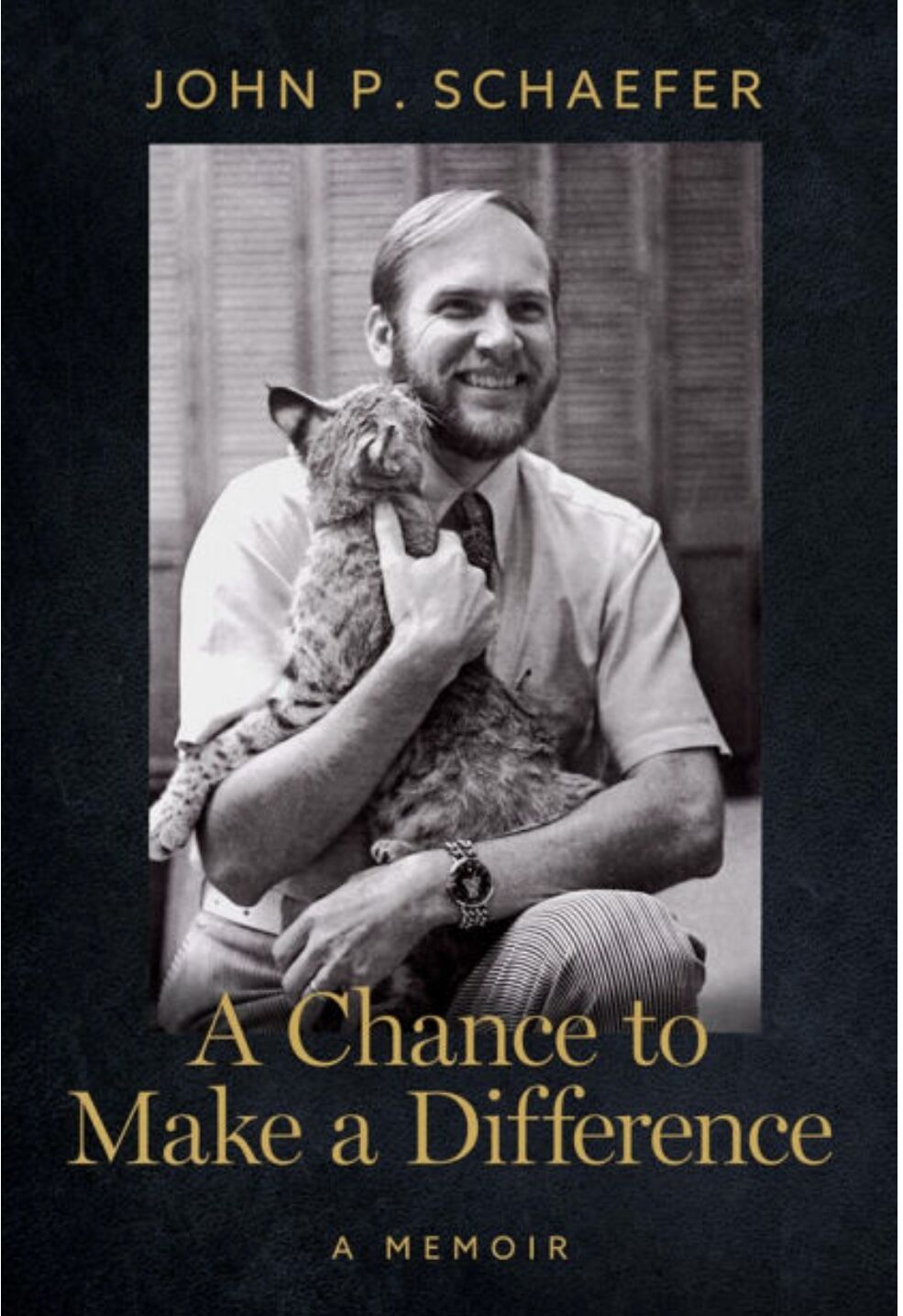
Even the cover of John P. Schaefer’s new book comes with a story. It pictures a young University of Arizona president, cuddling a friendly bobcat, presumably Wilbur and Wilma’s grandson.
“Awww,” you say?
“Oh no!” is what members of the Arizona Legislature said.
“The Legislature didn’t like that picture one bit,” Schaefer said. “It was the beard. People with beards back then were seen as hippies, and the Legislature didn’t want one of their university presidents to be seen as a hippie. It really became an issue. I wound up shaving it off just to quiet things down a little.”
In Chapter 11, Schaefer recounts his decision to build the Flandrau Science Center and Planetarium, which opened in 1975.
“That was my first big project,” Schaefer said. “Grace Flandrau had left the university $2 million, to be used any way the president saw fit. We were becoming pretty darned good in astronomy, and I remembered my own experience in New York City. As kids in grammar school, we went to Hayden Planetarium two or three times. The shows we saw about the stars and the sky got me hooked on science.”
Schaefer describes the challenges surrounding the new university library, which opened in 1977. “Construction took five years,” he recalled. “The university had no bonding authority then. It was pay as you go, so it took awhile.”
It was Schaefer who insisted that the Wildcat basketball team recruit Fred Snowden as America’s first Black head coach in 1972, and it was Schaefer who led the effort to move Arizona and Arizona State into the Pacific 10 Conference in 1978.
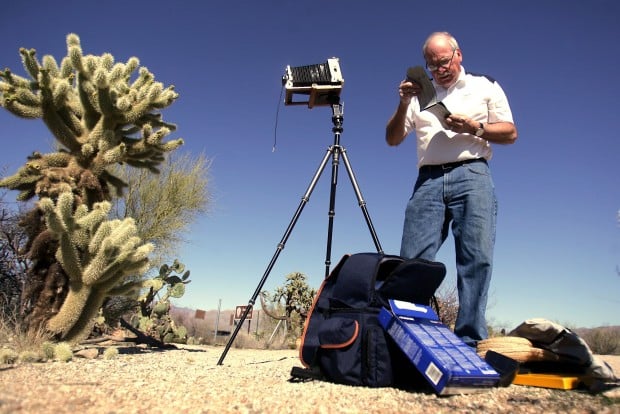
Schaefer, a distinguished photographer, checks a test Polaroid while shooting at Saguaro National Park East in this 2010 photo.
“I wanted us to be associated in people’s minds with schools like Stanford, Berkeley and UCLA.”
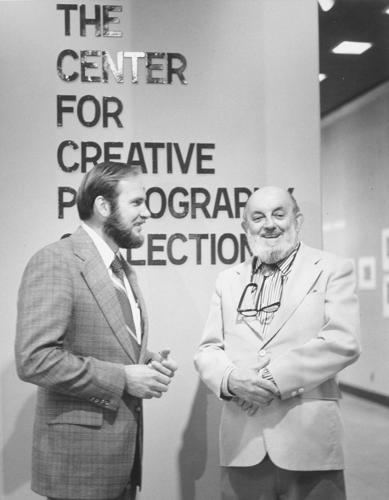
All that said, the project nearest and dearest to Schaefer’s heart was the Center for Creative Photography, which now archives the life’s work of Ansel Adams.
“I’m not sure how he did it, but William Steadman and the university’s museum of art managed to schedule a big one-man show of Ansel Adams photographs in 1974,” Schaefer recalled. “It was spectacular. Three or four hundred prints. Ansel and his wife came to Tucson for the opening, and while we were walking over, I naively asked if he wouldn’t want to think about giving his archive to the University of Arizona.
“I hadn’t planned to say it, and I probably shouldn’t have, but after a minute or two he said we should talk. He invited me to his home in Carmel the following month. I went, stayed a week, and things came together pretty quickly after that.”
The Center for Creative Photography opened the following year and remains one of the university’s biggest attractions.
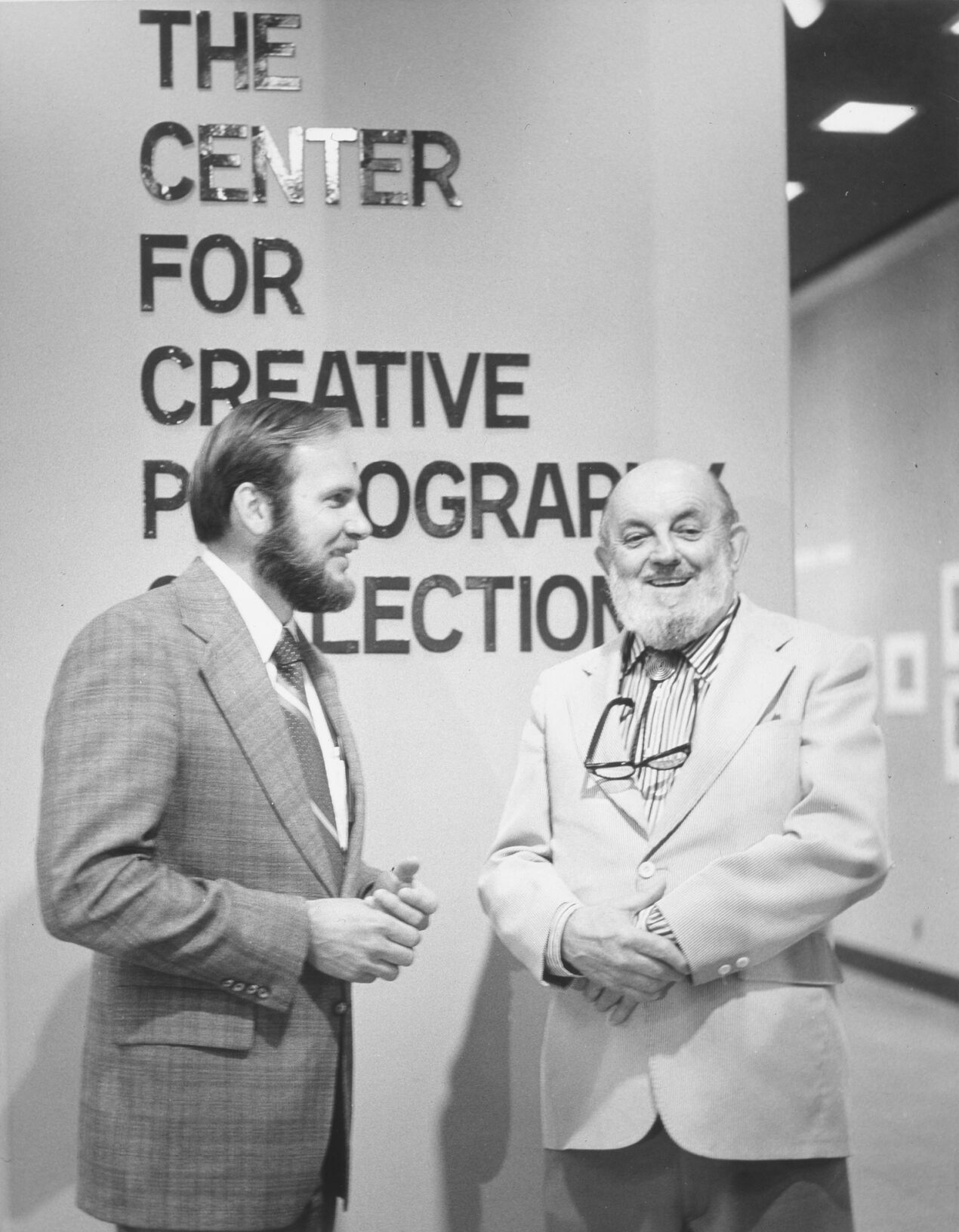
John P. Schaefer and Ansel Adams at the Center for Creative Photography in Tucson in the 1970s. Creating the center, which archives Adams’ life work, is the project dearest to Schaefer’s heart.
Fifteen years ago, a story in the Arizona Daily Star suggested John Schaefer made your everyday Renaissance Man look like a slacker, and even at 91, he still finds plenty to do. Next up?

A story in the Arizona Daily Star 15 years ago suggested John P. Schaefer made your everyday Renaissance Man look like a slacker, and even at 91, shown here, he still finds plenty to do.
“I’m cleaning up my darkroom at home so I can get back to my own printing again,” he said. “I miss the smell of chemistry.”
The University of Arizona was established in 1885. The first building was Old Main, completed in 1890.
Footnotes
- University of Arizona Press will celebrate the release of Schaefer’s new book with a launch party scheduled for Tuesday, Oct. 21, in the Special Collections wing of the UA Library. The event will be free and open to the public, beginning at 4 p.m. To RSVP, visit uapress.arizona.edu/events.
- Poet Richard Siken has become the latest Tucson author to become a finalist for a National Book Award. Siken and his new collection, “I Do Know Some Things,” were among the five books of poetry shortlisted by the National Book Foundation on Tuesday. Winners of this year’s prize will be announced Nov. 19 in New York City.
- The Murphy-Wilmot branch of the Pima County Public Library will celebrate its 60th anniversary Saturday, Oct. 18. Activities are scheduled all day, from 10 a.m. to 4 p.m. The library is at 530 N. Wilmot Road.

