




The University of Arizona’s new West Region Native American Language Resource Center is leading a national effort to empower tribal communities in language revitalization.
The resource center received $1.7 million in funding last fall through a five-year grant from the U.S. Department of Education. It is one of four new centers designated by the federal department to serve Indigenous communities.
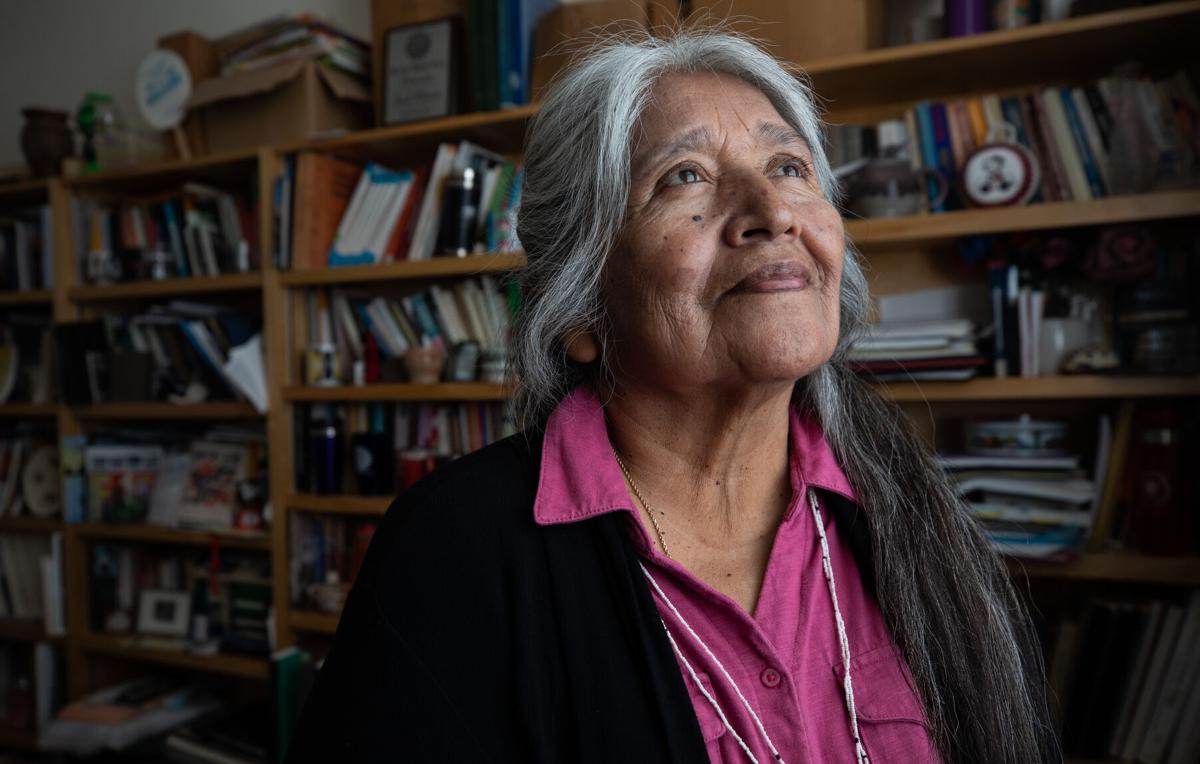
“When we were writing the proposal and bringing all these materials together, I saw this as sort of an historic event,” said Ofelia Zepeda, a Regents Professor of linguistics in the College of Social and Behavioral Sciences and director of the American Indian Language Development Institute. “It is a call from the federal government to centers across the U.S., primarily for serving language, indigenous languages, and that has never happened before.”
She said the federal project is a test to see how well these centers will function in meeting the needs of educators and community members in all areas of language work, including language teaching, language revitalization, and policy surrounding language education.
According to Zepeda, the new Resource Center functions as a network of partnerships with the American Indian Language Development Institute and other Arizona colleges.
“The bulk of the center sits, of course, at the University of Arizona, but we also have the three tribal colleges who will also be doing their own work as well,” Zepeda said.
That includes the Tohono O’odham Community College, San Carlos Apache College and Diné College.
Zepeda said the center’s primary mission is to develop training, provide language education, and assist educators and communities in language revitalization projects in Arizona, California, Nevada and Utah.
“One of the goals, of course, is to work with language educators,” she said. “The language teachers and support staff for language projects, and what they call resource people, which are usually elders and traditional knowledge holders.”
Aresta Tsosie-Paddock is an assistant professor of American Indian Studies at the University of Arizona. Her emphasis is on the displacement and dispossession of cultural heritage, and the Navajo language.
“The Navajo language is my first language,” she said. “I just have such a passion for it.”
Tsosie-Paddock has worked to establish a mentor-apprentice language project to connect students to other Navajo language speakers. She said the West Region Native American Language Resource Center will allow her to expand her existing project.
“It’s been really heartwarming,” she said. “It provides more confidence, and in some cases, they’re teaching their siblings, or other family members, or they’re learning about cultural aspects.”
Tsosie-Paddock said the kind of support and resources offered by the West Region Native American Language Resource Center are important to mitigating the loss of languages.
“This is important, to have a center like this serving our native communities,” she said.
Tsosie-Paddock said the new language resource center can be a way of developing new relationships and strengthening existing networks.
Zepeda said she also hopes they can bring more awareness to Native American languages and ongoing revitalization efforts.
“Having the center and doing this work and being in this part of the country, I think, is going to help do that,” she said. “You know, develop more awareness of the type of work that’s been going on quietly in many places.”
Get your morning recap of today's local news and read the full stories here: tucne.ws/morning

