





The University of Arizona Faculty Senate approved a resolution calling on the UA to reject the White House’s compact requiring ideological, political and financial commitments in return for federal funding advantages, while the provost told the faculty “no decisions have been made” by UA administrators.
“The university leadership, in coordination with the Arizona Board of Regents, is carefully reviewing the compact to truly fully understand what is its content, what is its scope, what are the legal ramifications, what are the potential implications?” UA Provost Patricia Prelock told the Faculty Senate Monday afternoon.
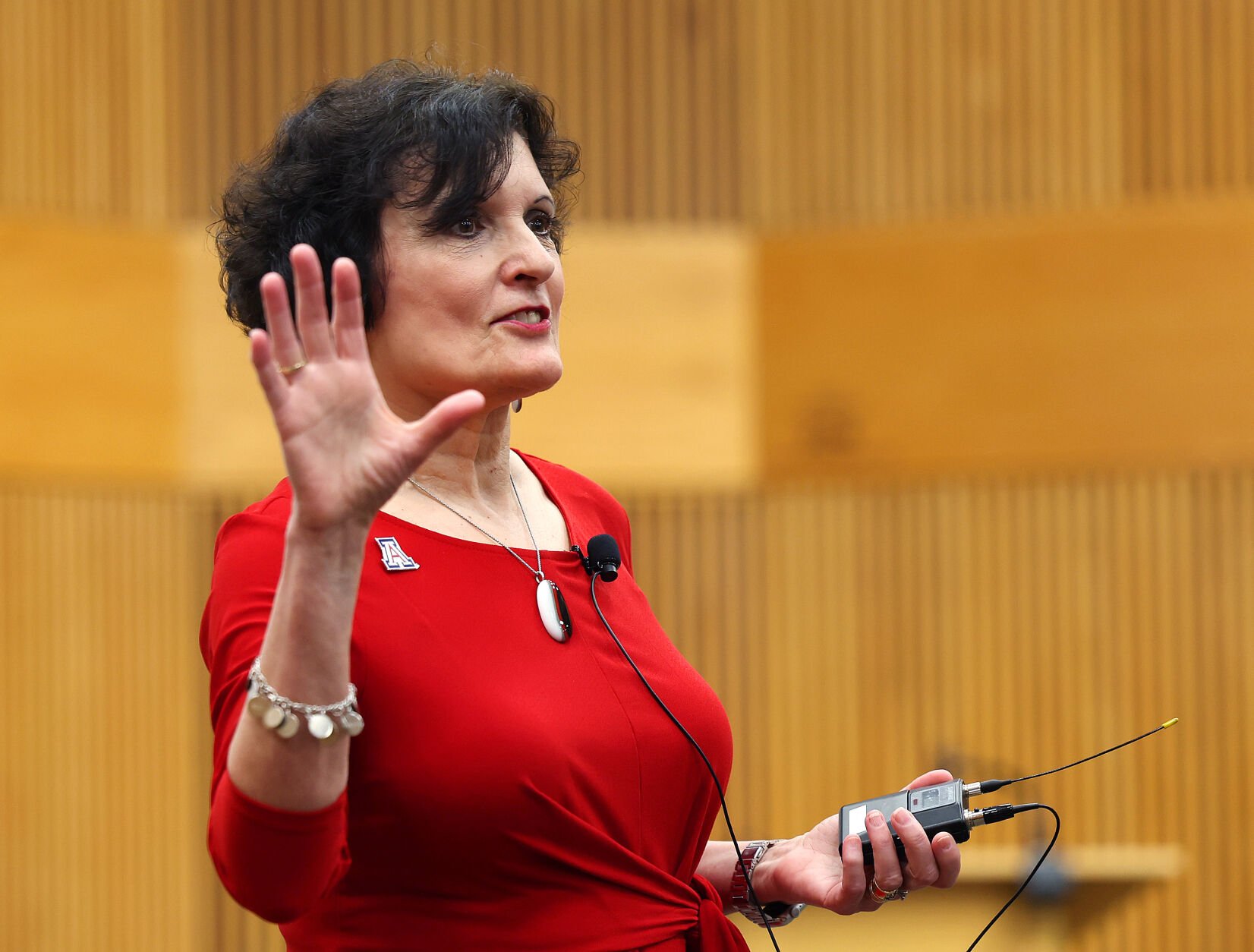
University of Arizona Provost Patricia Prelock.
“We’re in communication with shared governance tomorrow and other universities that have received the compact,” Prelock continued. “No decisions have been made. We will communicate further once we have more details and once we do our consultation with the government’s groups.”
The Faculty Senate resolution passed Monday with 40 votes in favor, eight votes in opposition and one abstention. UA President Suresh Garimella did not attend the meeting.
“This compact contains provisions which endanger the independence, excellence, and integrity of the University of Arizona and infringe on the constitutional rights of members of the University of Arizona community,” the resolution by faculty leaders says. “Be it resolved that the Faculty Senate of the University of Arizona opposes this compact and calls upon President Garimella and the Arizona Board of Regents to reject this compact as well as any similar proposal compromising the mission, values and independence of the university.”
Tucson City Council members Rocque Perez and Lane Santa Cruz said Monday they were asking Mayor Regina Romero and the all-Democratic City Council to approve a similar resolution also urging the UA and the Board of Regents to reject the compact. Their resolution calls the compact “an unacceptable act of federal interference that undermines local control, academic freedom, and opportunity for our residents.”
The council members’ resolution also says the deal would harm Tucson families, “reducing their opportunity for economic mobility, weakening the workforce pipeline critical to Arizona’s competitiveness and undermining the educational access and equity that residents rightly expect from their public institutions.”
The 10-page compact sent by the White House Oct. 1 asks for the signatures of nine universities including the UA in return for “multiple positive benefits for the school, including allowance for increased overhead payments where feasible, substantial and meaningful federal grants, and other federal partnerships.”
Prelock said university leaders were in a late-night meeting when the White House compact and cover letter came to their email. Prelock said she contacted UA Chair of the Faculty Leila Hudson the next morning to set up meetings with the university’s shared governance groups.
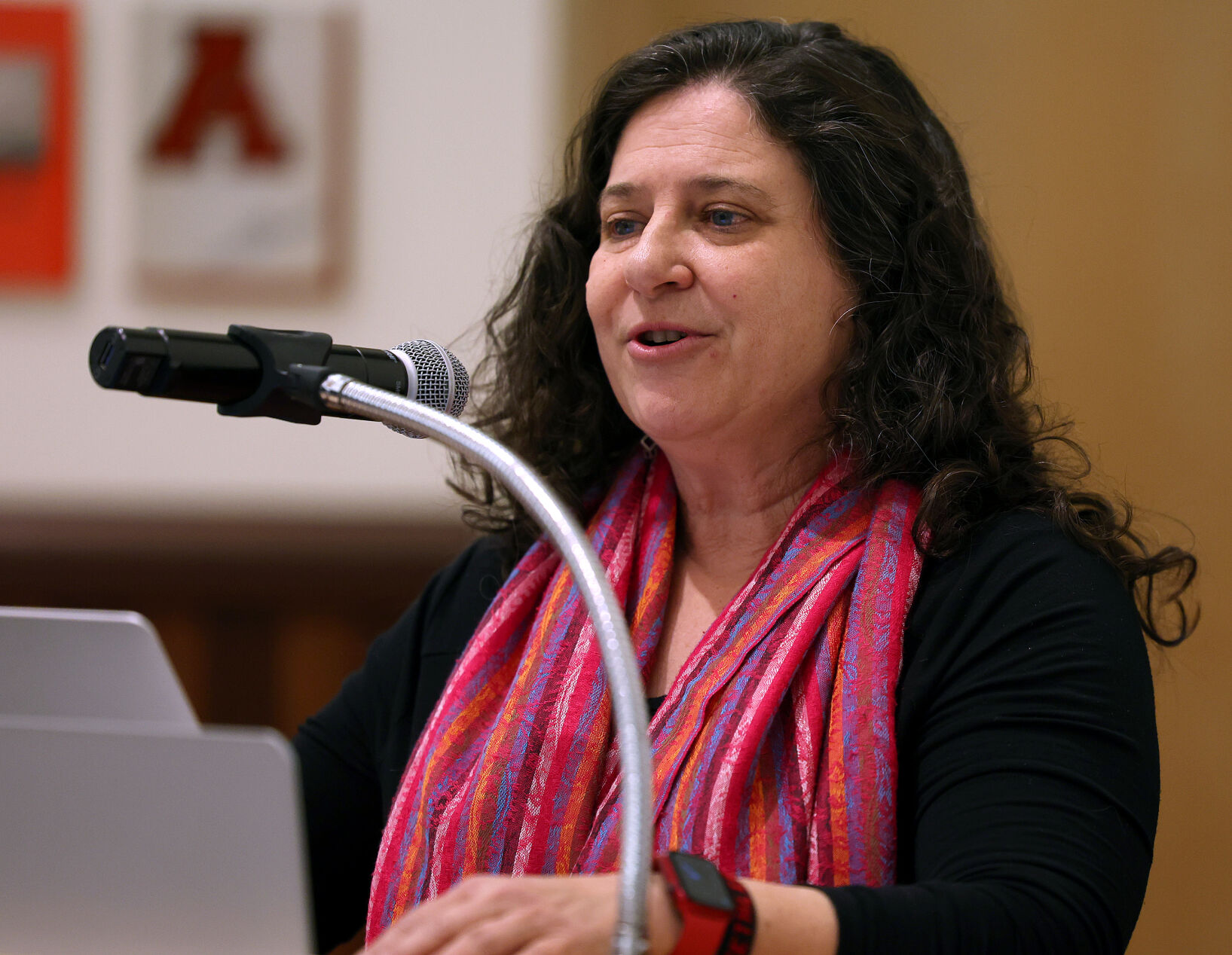
Chair of the Faculty Leila Hudson.
Hudson said academic colleagues around the country and the local community were looking to UA’s faculty leaders with “trepidation” to see if they would stand up — not for a political position that many might share, but for the fundamental commitment to academic and constitutional freedom, academic excellence and integrity, she said.
“There are ideas in the compact that actually unite people across the political spectrum, inside and outside the academy. There are recommendations that are in actual complete alignment with our values, practices and aspirations,” said Hudson, not elaborating on which of the proposals she believes do so.
“The problem is when a program is implemented by the federal government to condition funds, to vaguely threaten unspecified targets and behaviors, to suggest that some are more equal than others, and to offer research and other funding on the basis of anything other than peer reviewed expertise in scientific merit and integrity — that’s a problem.”
Hudson said federal money is not a drug the university needs a quick fix of, to be “forever extortable.”
She introduced the resolution opposing the compact, noting that the Faculty Senate of the University of Virginia had already passed such a resolution and that the president of Dartmouth, Sian Beilock, had become the first president among the nine to voice opposition to the compact. Beilock wrote to her campus community: “We will never compromise our academic freedom and our ability to govern ourselves.”
The White House letter to the UA asked Garimella for “limited, targeted feedback” on the compact by Oct. 20, but said the compact is “largely in its final form” and the Trump administration wants a signed agreement no later than Nov. 21.
The compact would require the UA to ban the use of race of sex in hiring and admissions; freeze tuition for five years; cap international undergrad enrollment at 15%; apply a strict definition of gender to campus bathrooms, locker rooms and women’s sports teams; transform or abolish departments that “belittle” conservative ideas; bar employees from speaking out as university representatives on external societal and political events; and other requirements. It also calls for a diverse mix of political voices on campus and for cutbacks to university administrative costs, among many other requests.
Any university that agrees to the deal and breaks any of its provisions, as determined by the U.S. Justice Department, would have to return all federal money received during the year of any violation. The document also suggests universities that don’t sign will lose federal benefits: “Institutions of higher education are free to develop models and values other than those” in the compact, it says, “if the institution elects to forego federal benefits.”
The other universities are Brown, Dartmouth, Massachusetts Institute of Technology, the University of Pennsylvania, the University of Southern California, the University of Texas, Vanderbilt University and the University of Virginia.
The lone UA faculty senator to speak against the resolution opposing the compact at Monday’s meeting was Joellen Russell, a Distinguished Professor of Biogeochemical Dynamics. She said that while the university is in a tough spot, the risk it faces would leave it hanging, compared to better-endowed universities like Harvard. Harvard has gone to court against Trump administration orders but is not among the first nine universities to be sent the higher education compact.
“So, personally, and I’m going to say this .... Wait to see what shakes out,” said Russell. “I know that can sound to some people like cowardice, and to other people like, ‘Why don’t we seize the moment?’ But I gotta tell you, if we go against our much better-endowed colleagues, we are going to be left out of the herd. And I think in this case, that would be awful.”
UA Secretary of the Faculty Katie Zeiders said she is concerned what the compact means for the UA as a land-grant university, and wonders how solutions to real issues in higher education can be reached without the federal government’s imposition.
“On the surface, the compact outlines goals that many of us support and that I personally advocated for, like making college more affordable, helping students who leave college with debt, and curbing administrative growth. And I also see the growing value of different perspectives, that we create a university that protects all faculty’s academic freedom and students’ free speech,” said Zeiders.
“But the compact, in my view, is the wrong avenue and wrong mechanism for meaningful change, and it’s disappointing that higher education has come to a point where genuine reform — something that faculty, students, communities have long called for — is being replaced by top down federal directives.”
Faculty Senator Marvin Slepian said the compact is “one-sided” in content and has a definite, deep conservative agenda, but that the important point for the university right now is to have a transparent mechanism internally so everybody understands the situation and has all the information.
Faculty Senator Ted Downing said the UA has already had a “social contract” with the people of Arizona for the last 140 years that’s far more important.
Downing said there are parts of the White House compact that, as Hudson said, are very good, but also parts that are very different from the university’s values. Some, he said, are “terrifying, because some parts of that compact involve a test of political ideology.”
Faculty Senator Carol Brochin said she, first of all, wanted to speak to the faculty and students on UA’s campus who are transgender, non-binary and represent multiple genders, saying this is one of the pieces of the compact that people are afraid to speak about. She said she is determined “to stand by you, to stand in front of you, behind you, besides you, whatever it means,” inciting a round of applause from the packed room.
Faculty Senator Lucy Ziurys said the compact “kills excellence, not supports it, because the minute you take away free competition for grant money and the peer review process and just give money away randomly, the motivation to work and to do excellent research goes away.
“I asked President Garimella to say no to this compact, and not just no — ‘hell no,’” she said.

