



The University of Arizona is continuing its tradition of hosting graduation ceremonies for diverse communities after the Trump administration ordered universities to eliminate diversity, equity, inclusion and accessibility programs and activities.
While UA’s main commencement ceremony is Friday night, the weeks leading up to it have been filled with graduation and convocation ceremonies hosted by specific colleges as well as by diversity and cultural resource centers.
The diversity ceremonies include the Asian Pacific American “Lotus Laureate Celebration,” the Disability Cultural Center Celebration, the LGBTQ+ Affairs “Rainbow Graduation,” the Native American Student Affairs Graduation, the American Indian Studies Convocation, the Adalberto & Ana Guerrero Student Center Graduation, the African American Student Affairs Celebration, and the Veterans Education and Transition Services Celebration.

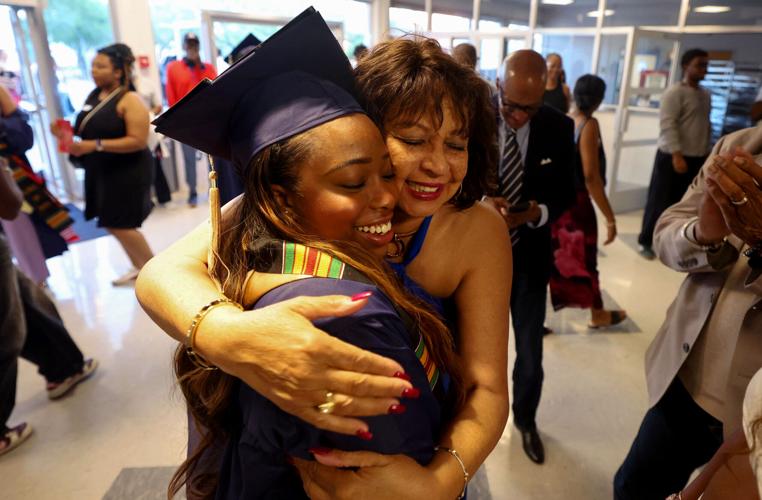
Bella Victoria Henderson, an Eller College of Management graduate, hugs her grandmother Julia Henderson after the African American Student Affairs celebration and award ceremony at Crowder Hall on Wednesday, May 14.
“The University of Arizona takes great pride in honoring the achievements of our graduates through celebrations that are open to everyone,” said UA spokesperson Mitch Zak, when asked about these celebrations taking place despite the federal order banning DEIA activities.
“These events bring the Wildcat community together — faculty, staff, fellow students, and guests — to recognize our graduates and wish them well as they begin the next chapter of their lives as proud U of A alumni. These gatherings are student-centered celebrations that align with the university’s values, (and) remain consistent with applicable laws and guidance,” Zak said.

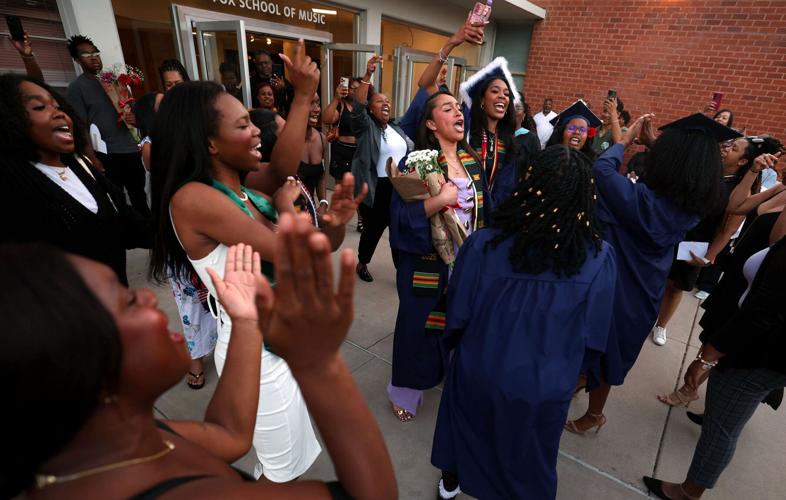
A group of graduates celebrate together after the African American Student Affairs celebration and award ceremony at Crowder Hall on Wednesday.
When asked if these ceremonies will continue to be held in coming years, Zak responded with a similar statement to past questions about federal executive orders. He said UA administrators will continue to monitor all programs and activities to ensure compliance with federal and state guidance, but also are committed to celebrating students in ways which “reflect (their) values, foster community, and are open to all.”
UA President Suresh Garimella has announced the UA administration will take inventory of DEIA-related activities and programming, and has deleted its diversity and inclusion website, among other steps.
Also, a Diversity, Equity, Inclusion and Accessibility Collective at the UA previously said the interim provost told staff in February, after the Trump administration order, that the UA plans to centralize six of the campus’ seven cultural and resource centers, which could lead to layoffs. The six are: Asian Pacific American Student Affairs, African American Student Affairs, the Guerrero Student Center, LGBTQ+ Student Affairs, the Women & Gender Resource Center, and the Disability Cultural Center.
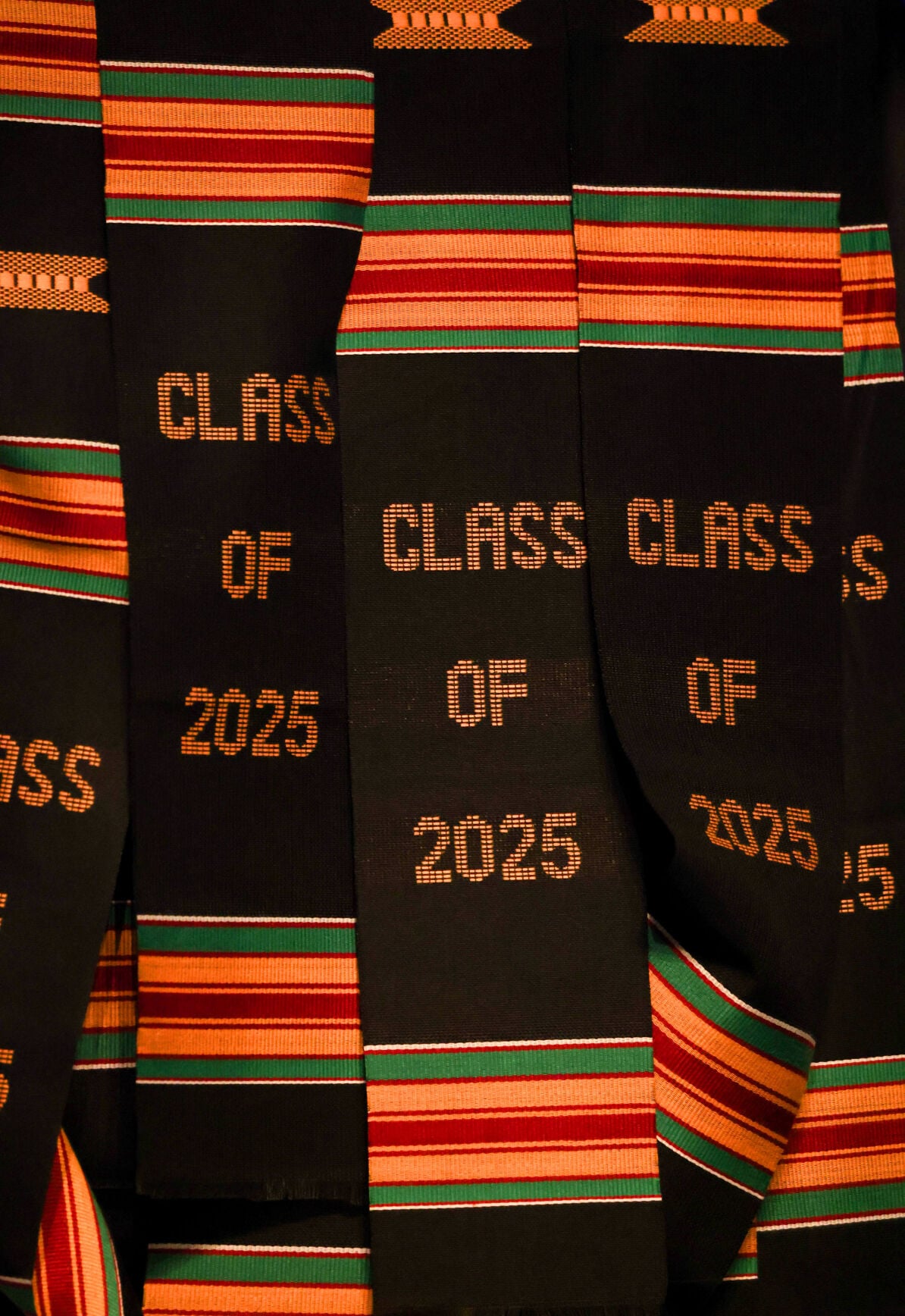
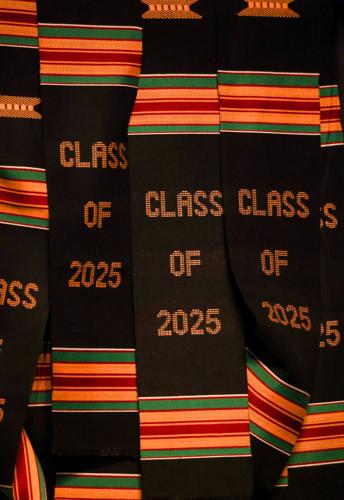
Graduation stoles at the University of Arizona African American Student Affairs celebration and award ceremony.
“We appreciate the input from our community as we consider the changing policy landscape. As we work to comply with the laws that govern us, we are guided by the compassion and respect we have for all members of our university community,” Zak previously told the Arizona Daily Star when asked about the collective’s claims.
UA faculty member Vanessa Perry, who has been pushing to keep all of the cultural and resource centers or CRCs open, said that cancelling the individual centers’ convocation ceremonies this year would have suggested they are likely being dismantled and would have given the community more grounds to organize and fight back.
“I am happy the CRCs will engage in celebration of graduation for communities that have faced so many barriers to their success,” Perry wrote to the Star. “Graduation is such a monumental achievement!”
Perry said for larger ceremonies like the Adalberto & Ana Guerrero Student Center Graduation, which are expecting approximately 400 graduates this year, those communities will find a way to celebrate graduation in future years, “regardless of what Garimella’s stance is on cultural centers, even if it means taking celebrations off campus.”
“It’s smaller celebrations, smaller in number but in no way less meaningful or worthy, about which I worry,” she wrote. “I worry these celebrations will disappear if CRCs disappear. How sad for UA to lose the legacy of these celebrations!”
UA faculty member Nolan Cabrera, who has also been vocal that the CRCs should stay open, said that while the diversity graduation ceremonies are “beautiful,” they are not a sign “one way or another.”
“University administrators make unpopular decisions during the summer,” Cabrera said. “That will be the time we know the UA’s plans for the cultural centers.”
“We cannot get a straight answer,” said Perry, “from Garimella or senior leaders on the future of the CRCs.”
Historic photos: A look back at University of Arizona Commencement ceremonies

University of Arizona Commencement May 27, 1953.

University of Arizona Woman's Day May 1965

Arizona elder statesman Barry Goldwater gives his best wishes to Rebecca Wood, who received her degree in medicine at UA commencement exercises. Goldwater, who presented the commencement address, advised the graduates to be honest in everything and cherish freedom. May 13, 1989.
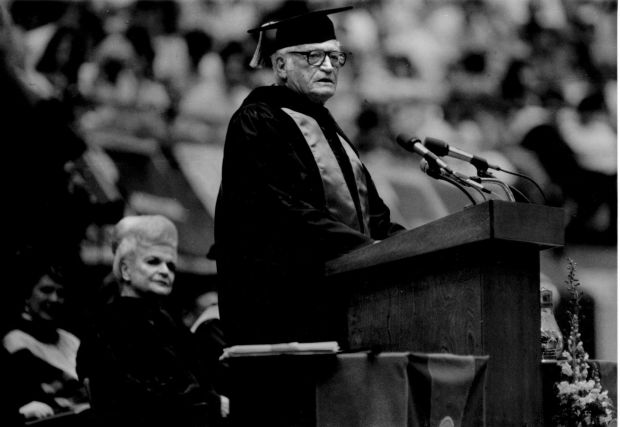
Senator Barry Goldwater at UA Graduation speaking at the graduation ceremonies at McKale Center on May 13, 1989.

Fine arts graduate Tim Brigham waits for commencement to begin Dec,. 19, 1992, at the University of Arizona, as he wears his sentiments on his head.
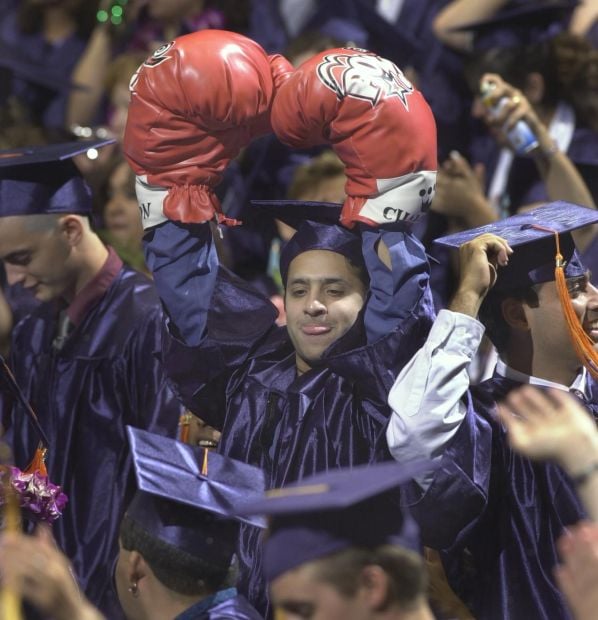
With boxing gloves on ready to fight the outside world, computer science major Mohit Bhapia celebrates graduating along with his classmates at McKale Center on May 12, 2001.

University of Arizona head basketball coach Lute Olson, who gave the commencement speech to UA's 124th graduating class May 12, 2001, laughs as he recalls how preparing for this speech was harder than preparing for Illinois, Michigan State, and Duke, all teams that UA had to play against in the this year's Final Four.

UA students break out "Silly String" to celebrate their graduation during the UA 115th Commencement at McKale Center Dec. 19, 1996.

Some of the 1,607 graduating students who took part in the UA's 116th commencement May 17, 1997, spelled out their joy during the ceremony at McKale Center.

More than 1,700 students attended 1998 UA graduation ceremony at McKale Center.

Members of the UA Class of 1948 whoop it up during the commencement of the class of '98 at McKale Center. They were honored on their class's 50th Anniversary. Graduates use silly string to celebrate 1998 UA graduation ceremony at McKale center.

UA President Peter Likins congratulates graduates during commencement ceremony at McKale Center on May 13, 2000.

Bachelor's party: Espree Kessler gets a lift from fellow grad David Ellis. Both got bachelor's degrees.

Tortillas litter the floor of McKale Center following commencement at the University of Arizona May 15, 2010 in Tucson, Ariz. Once a proud tradition, tortilla throwing is now banned, but a few snuck their way past security.

Graduates get one last celebration on the floor of McKale Center following the Spring 2012 Commencement at McKale Center, Saturday, May 12, 2012. Dr. Peter Rhee, the trama surgeon who worked on Rep. Gabrielle Giffords during last year's shooting, was the honorary guest speaker. A total of 4,206 undergraduate degrees, 882 master's degrees, and 298 doctoral degrees were conferred.

About 6,000 students graduated from the UA on May 17, 2014.

The thousands of bachelor’s degree eligible students and their decorated mortar boards, shuffle through the southend of Arizona Stadium towards seats on the field for the 151st Commencement ceremonies for the University of Arizona, Saturday, May 16, 2015, Tucson, Ariz. Kelly Presnell / Arizona Daily Star

A graduate sports his Arizona state flag with a UA block A logo during the 152nd University of Arizona Commencement.

Graduates, including psychology major Kayla Holder at right, cheer as the fireworks go off during the 153rd University of Arizona Commencement ceremony on May 12, 2017, at Arizona Stadium in Tucson, Ariz. UA president Ann Weaver Hart conferred about 6,800 degrees on the Class of 2017. Mike Christy / Arizona Daily Star

Ryan Valenzuela, receiving his bachelor’s degree in business administration, whoops as he walks in with fellow graduates during the 154th University of Arizona Commencement.

Arizona Stadium played host to 4,500 graduates and an estimated 40,000 guests during the 154th University of Arizona Commencement .

The University of Arizona President Roberts C. Robbins speaks during The UA's 158th Commencement Ceremony at Arizona Stadium in Tucson, Ariz. on May 13, 2022.

Jane Korjenek, right, takes a selfie with her daughter Abbie Korjenek before the University of Arizona’s 158th Commencement Ceremony at Arizona Stadium.

