


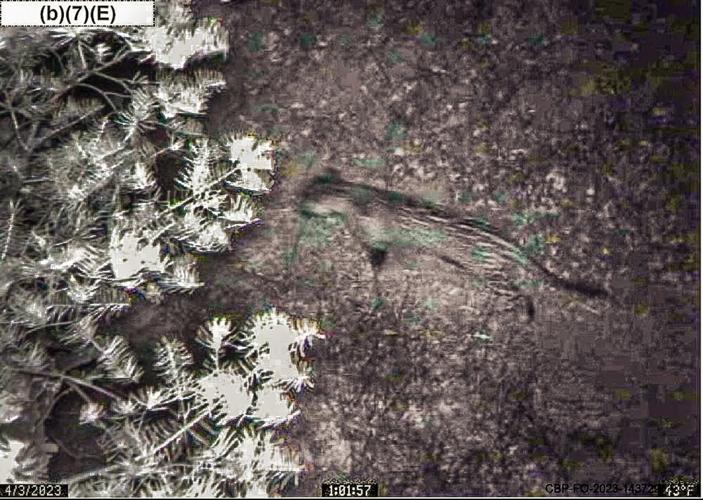


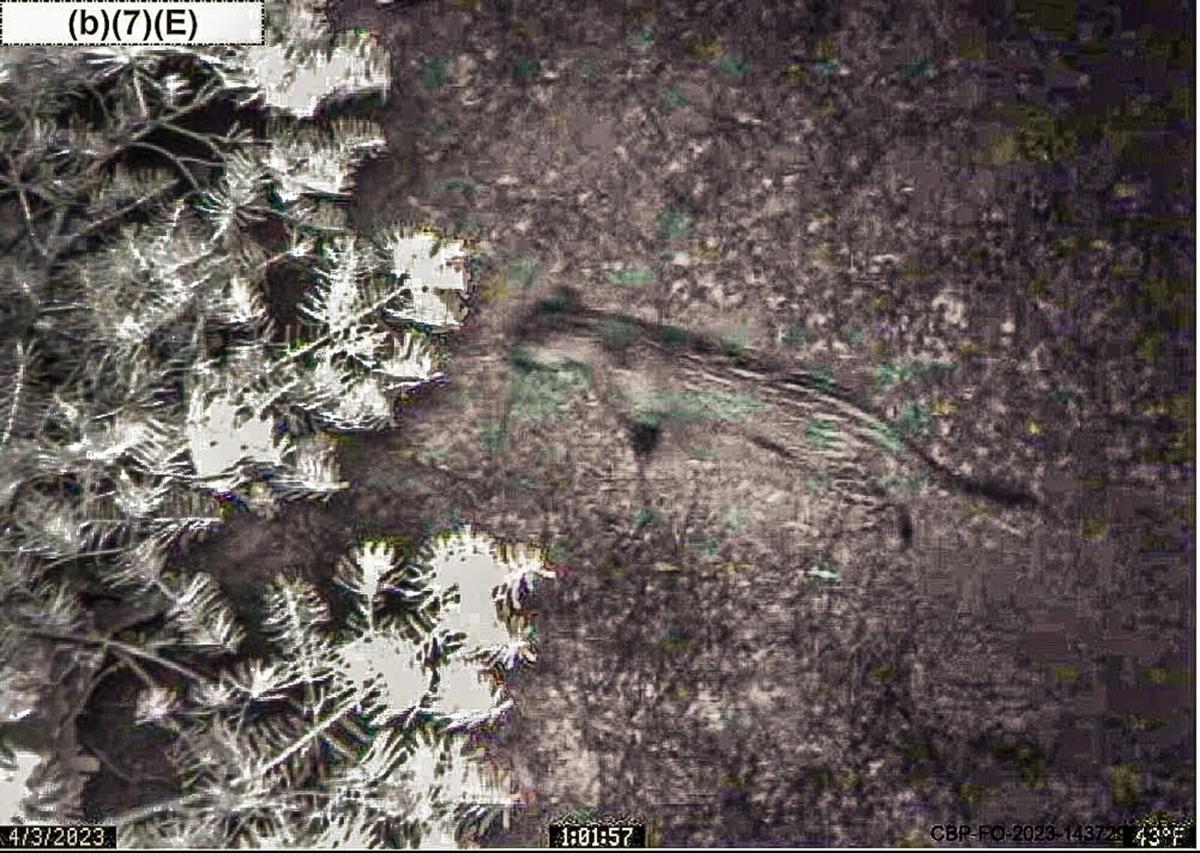
The latest jaguar to be caught on camera in Southern Arizona now has a Tohono O’odham name.
As part of a months-long process, almost 1,000 students, elders and other tribal members cast their votes for one of 10 possible names for the endangered spotted cat, which was first documented last year in the Huachuca and Whetstone mountains southeast of Tucson.
The winning name, unveiled Thursday, is O: had Ñu:kudam, which means “jaguar protector” in the O’odham language.
It’s pronounced OH-shahd NOO-KOO-dum, but you can call the cat OH-shahd for short.
“The return of jaguars to our land is a source of immense pride and profound hope,” said Austin Nunez, chairman of the tribe’s San Xavier District, in a written statement.
“Since time immemorial, the Tohono O’odham have shared our homelands with the jaguar. We are committed to working to ensure a safe and thriving future for O: had and one day hope to see the return of a breeding population of jaguars to this region.”
Experts believe the new jaguar is a young male that was born in northern Mexico and wandered into Arizona in early 2023.
Since then, advocates say, the cat has shown up more than a dozen times — most recently in February — on remote cameras operated in the Huachucas and the Whetstones by researchers, conservationists, hunters, hobbyists and U.S. Customs and Border Protection.
It is the eighth individual jaguar documented in Arizona and New Mexico since 1996. Four of those cats have been spotted in the past nine years and given nicknames: El Jefe, Yo’oko Nahsuareo (Yaqui for Jaguar Warrior), Sombra and now O: had Ñu:kudam.
Of course, some people had already taken to calling the latest jaguar something else: Cochise, a nickname given to it months ago by Jason Miller, the Vail wildlife videographer who was the first to release footage of the cat in January.
Since there are no official rules governing the naming of individual jaguars and no designated group in charge of the practice, what this cat is ultimately called will be decided by popular opinion.
The process of selecting an O’odham name began with nominations from tribal school students and community members. Their suggestions were translated into O’odham and pared down by tribal elders to the final list of 10.
Before the finalists were put to a vote, Elizabeth Ortega, culture and language teacher at the San Xavier Education Center, provided oversight on the correct spelling of each name.
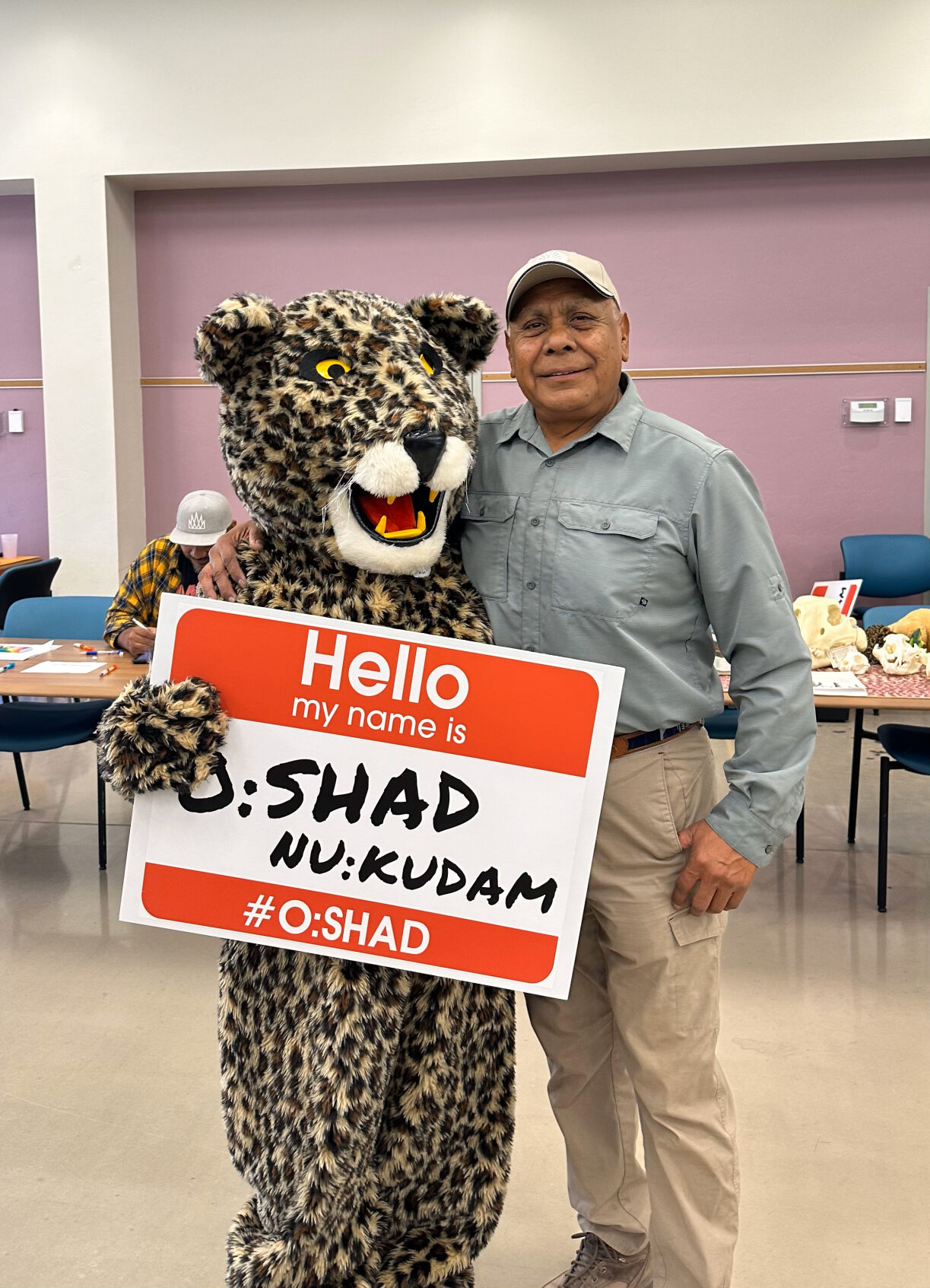
Austin Nunez, chairman of the Tohono O'odham Nation's San Xavier District, poses with a jaguar mascot at an Earth Day event at the San Xavier community center on April 27.
Cedric Lewis, a 12th grader at Tohono O’odham High School, said he was honored to vote on the jaguar’s name alongside his community.
“Using our language to describe such a special animal shows respect for the traditional knowledge and connection the Tohono O’odham have with the land and animals,” Lewis said.
The naming campaign was spearheaded by Tohono O’odham leaders, tribal school officials and two Tucson-based conservation groups that advocate for jaguar protection, the Center for Biological Diversity and Conservation CATalyst.
Environmentalists say giving names to individual members of an endangered species can be a powerful conservation tool, because it helps the public relate to — and root for — the animals.
“Naming O:shad continues the Tohono O’odham’s deep history of regional land stewardship for which we’re deeply grateful,” said Russ McSpadden, Southwest conservation advocate for the Center for Biological Diversity. “These mighty cats once roamed all the way northward to the Grand Canyon. They’re vital to the web of life in the region, and they keep coming back because they belong here. O:shad’s story should inspire us to restore a thriving population of jaguars across their native habitat.”
Vail videographer Jason Miller captured this clip in the Huachuca Mountains in late 2023. The same jaguar was caught on camera again in Arizona in June and July.

