


The state’s water agency announced Friday it will usher in “a critical milestone” of groundwater pumping limits and regulation to the Willcox Basin by formally designating a state-run Active Management Area there.
The Arizona Department of Water Resources made the decision in the face of severe declines in groundwater levels, reports of drying wells, and clear patterns showing increased sinking and cracking of land due to unregulated pumping.
But it also faces sharp criticism from numerous Willcox-area farmers who say the regulation will hurt if not cripple their livelihoods and seriously damage a rural economy that runs almost exclusively on agriculture.
In a news release Friday morning, Gov. Katie Hobbs’ office characterized the state decision as “historic action to secure Arizona’s water future and protect rural Arizonans from unchecked groundwater pumping.”

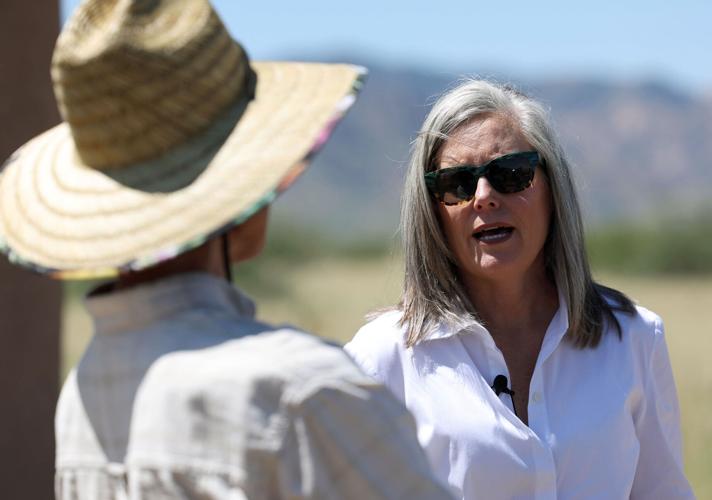
Local homeowner Steve Kisiel gave Gov. Katie Hobbs a tour of his property before she met with a group of Willcox homeowners on Sept. 5 to discuss groundwater issues.
“Rural communities deserve to have their groundwater protected, and today’s action is a critical milestone for the people of southeastern Arizona,” Hobbs said in the release. “For too long politicians have buried their heads in the sand, refused to take action, and caved to out-of-state special interests profiting off Arizona’s water.
“I’ve heard from families, farmers, and businesses who have experienced the devastating impacts of unchecked pumping by unaccountable, big corporations. Their wells are running dry, their homes are damaged by fissures in the earth, and their farms are barely able to get by. This newly designated AMA at the Willcox Basin will bring much-needed relief to Arizonans and protect their water for generations to come,” the Democratic governor said.
The Willcox Basin AMA will be the seventh AMA the state has created since it enacted the groundbreaking Arizona Groundwater Management Act in 1980. Five of them encompass urban areas including the Tucson and Phoenix areas. Douglas Basin voters living south of the Willcox Basin voted to create an AMA in November 2022.
But the path to a Willcox Basin AMA has been the most contentious if not most rancorous process for any of them.
Many basin homeowners, some farmers and conservationists have been pushing hard for regulation of pumping for a decade or longer, only to be turned back repeatedly. Not only did the Arizona Legislature decline to pass any legislation establishing a formal mechanism to regulate rural groundwater, but Willcox Basin residents themselves voted overwhelmingly in 2022 to turn down a citizens initiative to create an AMA there.
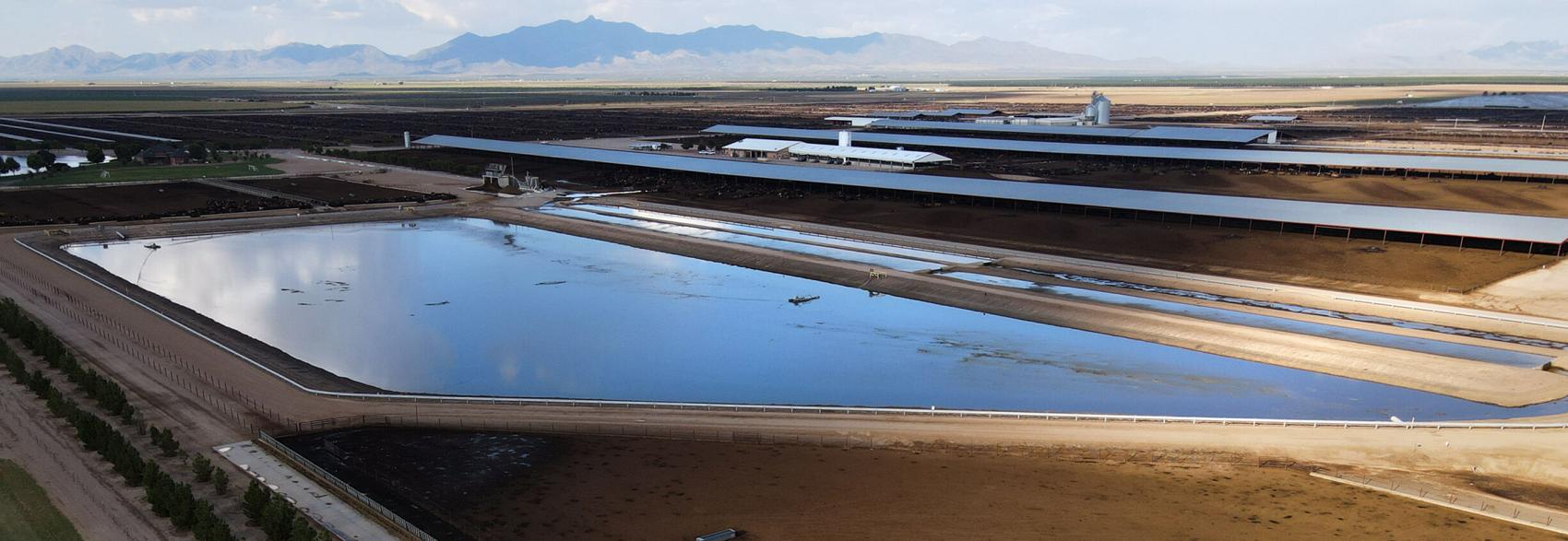
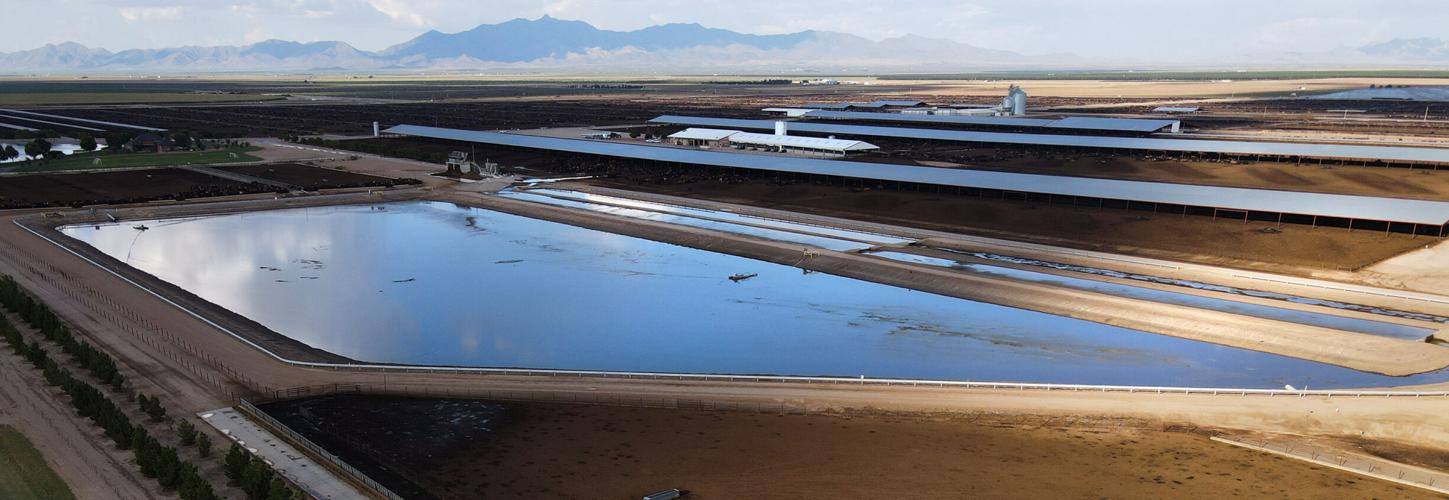
Water basins at Coronado Dairy in Willcox, which pumps groundwater for its operations.
At a public hearing last month in Willcox, about 85 miles east of Tucson, a majority of speakers made it clear they thought an AMA was the wrong solution for the basin, not least because most AMAs like Tucson’s are served by surface water supplies such as the Central Arizona Project — which don’t exist in the Willcox area.
At that Nov. 22 hearing, Barbara Pierce, a Willcox-area vineyard owner representing the Arizona Wine Growers Association, testified that creating an AMA would have a “devastating” effect on the region’s “vibrant” wine and grape-growing industry, preventing it from realizing its potential. She was one of several farmers including a number of grape growers and vineyard operators to issue similar warnings that day.
The industry’s development has been with the intent of developing grapes with low water usage, Pierce said.
“Establishment of an AMA would have serious, irreparable negative consequences, not only to our members, and severely diminish their ability to grow grapes, manufacture its wines and produce high quality economic development in rural Arizona,” Pierce testified.
But in its news release Friday, the Hobbs administration said the action will protect more than 8,100 people and the local economies that rely on Willcox groundwater, allowing existing users to continue using water, and putting in place conservation requirements to help protect the aquifer.
The Willcox Basin AMA will also protect Arizona families, farmers, businesses, and private property owners from additional large, out-of-state corporations locating to the Willcox Basin to exploit groundwater supplies, the Governor’s Office said.
“This decision by me goes to the heart of our state’s landmark 1980 groundwater protection legislation which invests in the ADWR Director the duty to take necessary steps to defend our groundwater supplies for future generations,” said ADWR Director Tom Buschatzke in the news release.
A former ADWR Director, Kathleen Ferris, told the Arizona Daily Star Friday, “While this is a courageous decision, it is the only one possible given the severe groundwater depletion and land subsidence in the Willcox Basin. Regulation of groundwater pumping will benefit all of the residents of the Basin and give them a chance for a sustainable future.”
The basin meets two of three state requirements for proving an Active Management Area is needed, Buschatzke wrote in his order Thursday designating the AMA. One is that active management is needed to protect the basin’s groundwater supply so it can meet future needs, the order said.
The other is that land subsidence or earth fissuring in the basin is endangering property or potential groundwater storage capacity, Buschatzke wrote.
The Willcox Basin covers 1,911 square miles, including the Sulphur Springs Valley of eastern Cochise County near the Chiricahua Mountains, and a swath of southern Graham County. The basin is roughly as arid as the Tucson area, getting 10 to 12 inches of rain annually in its flatlands on the valley floor, and 14 to 18 inches annually in the surrounding mountains.
Most immediately, creation of the Willcox Basin AMA makes permanent a ban on all expansion of irrigation that’s been in place since ADWR proposed this measure in late October.
Also, from now on, all owners of wells pumping more than 35 gallons per minute must measure their water use and submit annual reports about it to the state. Well owners must install state-approved measuring devices by March 31, 2025 and file their first annual report of water usage a year later, Buschatzke’s order said.
The new AMA will also require those drilling wells of that pumping volume to limit their impacts on existing wells and to conduct analysis of their pumping’s projected effects on the existing wells.
The AMA will also establish conservation requirements for farmers, city residents and industries, and set management goals and a management plan for governing the basin’s pumping.
Existing farmers will get “grandfathered rights” that protect their legal ability to pump, but they’ll still be subject to conservation requirements that will ultimately reduce their pumping.
In its presentations at public meetings and public hearings on the AMA proposal, ADWR has said water levels in parts of the Willcox Basin have fallen more than 400 feet since the 1950s and that pumping in the basin far exceeds the rate of natural recharge of the aquifer by rainfall.
An estimated 5.7 million acre-feet of groundwater — equivalent to nearly six years worth of Central Arizona Project deliveries to Phoenix and Tucson from the Colorado River — was pumped from storage between 1940 and 2015.
ADWR has said that if all pumping in the basin were to immediately stop, it would take more than 280 years for the aquifer to recover.
“Our community is facing difficult decisions as Arizona moves forward with an Active Management Area for the Willcox Basin,” said Willcox Mayor Greg Hancock in the governor’s news release. “While there are a range of views on the AMA, the urgency of addressing our water challenges cannot be overstated.
“Governor Hobbs has demonstrated a strong commitment to protecting Arizona’s precious water resources. We recognize the perspectives many residents and stakeholders have raised, and we are committed to ensuring that our community’s voice is heard throughout this process,” the mayor said.
At the November public hearing, farmer Sonia Gasho said the state’s plan is “a dictatorial position.”
“It won’t put water back in anyone’s wells. It will adversely affect the local economy. Agriculture is the main economic driver in this valley, besides government-related jobs,” Gasho testified.
On Friday, Gasho pronounced herself "very disappointed" at the new AMA designation, particularly since Willcox Basin residents voted so overwhelmingly against the idea in 2022.
"It’s insulting ton constitutuents of the Willcox Basin to move forward on this so soon . . . i think the governor and Tom Buschatzke completely ignored the will of the people."
If the AMA goes through and "we don't have some action in the Legislature to come up with another option, it wlll put the Sulphur Springs Valley out of business," Gasho said.
"Agriculture is the first economic driver in the valley and second in Cochise County to government as an employer. It's no small thing," Gasho said.
But also on Friday following the governor’s announcement, Willcox Basin chile grower Ed Curry reacted much more favorably to the decision.
“It stops any new drilling right now. It stops expansion. We needed to stop that, bad. It really pushes the conversation: ‘Do we really want an AMA order or do we want something else?’”
Now, state officials, legislators and local residents will have 21 months before a new Willcox Basin management plan must be completed to either come up with ways to improve the AMA or to come up with legislation that would override it with a different management structure acceptable to all parties, Curry said.

