


Come November, Tucson city voters will have their say on Ward 6’s third representative in less than two years.
Republican Jay Tolkoff, a former businessman and a longtime Tucson resident, and Miranda Schubert, who won a three-candidate Democratic primary in August, will face off in the Nov. 4 general election to represent the midtown ward that spans the areas around the University of Arizona and on to Armory Park downtown.
In March last year, four-term councilman Steve Kozachik, a Democrat, resigned from the post, resulting in Karin Uhlich being appointed in May 2024. A former City Council member for Ward 3, Uhlich is not seeking a full term.
Tolkoff
Jay Tolkoff moved to Tucson in the 1970s to attend the University of Arizona, but quickly found himself working as perhaps “the second delivery guy in the state of Arizona” for Domino’s Pizza, he says.
He quickly became the store manager for the second Domino’s based in Tucson. Then the third store opened up, and 14 years later, Tolkoff says he left as president of the franchise. He’s the former owner of PJ Subs, which closed in 2022.
Tolkoff says he previously weighed a run for a Pima County supervisor seat two years ago, but waited to run for a City Council seat this year. Tolkoff said, as a voter, he was never registered with a party but when it came time to run for office, registering as a Republican was a strategic choice: since the Democratic ticket was so crowded with candidates likely to have party connections, it only made sense to him to run on the other side of the ticket.
“I knew that I was going to have to run as a Republican. And I knew the odds are, you know, 42% registered Democrats, 22% registered Republicans. I’m a math guy. That doesn’t look good. So, you know ... I decided that, if I were going to do it, I would need to do it differently than everybody’s done it before,” he said. “I have some Republican values. I believe that people should take accountability for their actions. I’m more about small government, letting people, you know, live their lives in freedom. That’s almost libertarian. ... I have Democratic values. I give a damn about people.
“But I mean, I don’t really have Democrat values, I don’t really have Republican values. I kind of have Tucson values. I’ve been here for 50 years, and I know my community, and I know what it needs,” Tolkoff said.

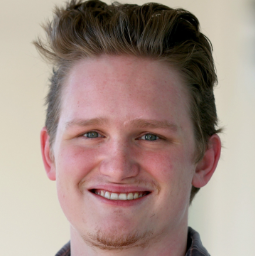
Democrat Miranda Schubert, left, and Republican Jay Tolkoff, the two candidates running for the Ward 6 seat on Tucson’s City Council.
What the community needs, Tolkoff says, is a City Council that protects the environment while also responsibly managing residential growth, that properly funds and fully staffs first-responder agencies, and one that targets investments into areas that sorely need it, such as infrastructure, economic development and public health. “I want to work together with people for things that matter to all of us.”
But what the city needs most is a “diversity of thought” on its council, he said. The mayor and council are all Democrats.
“If there’s anything I learned in business, it’s that a good idea is a good idea. Its doesn’t matter who came up with it, and that’s my philosophy,” Tolkoff said.
One of the “good ideas” Tolkoff wants to see expanded is the city’s Violence Intervention and Vitalization Action (VIVA) program, which focuses city resources on disrupting “criminal networks” at focused locations across the city that have experienced high levels of gun-related violence. The city says VIVA has resulted in a reduction in gun violence of up to 80% at some focused locations.
Another program Tolkoff wants to see expanded is the Pima County Transition Center, which connects people being released from jail to services they may need on their way out, such as housing, drug rehabilitation or transportation. Since the county runs the Transition Center, Tolkoff says the city should look at helping to expand it by opening a kiosk or smaller location near midtown that could be more accessible, as the Transition Center is currently located near the Pima County jail.
“How much could that cost, just to be a contact point? I think, if something’s working, let’s go ahead and maximize it,” he said. “And sure, you get to a point where a program can’t be maximized (and) you’re getting as much bang for your buck as you can get out of it, and that’s where you pull the plug. But we’re seeing good results out of the Transition Center.”
Another big focus for Tolkoff is protecting neighborhoods from zoning changes because of efforts like middle housing, or housing that bridges the gap between single-family homes and larger apartment buildings.
Under a new state law that takes effect next year, cities, including Tucson, must allow for the development of multi-family residents on all lots zoned for single-family use within one mile of the city’s central business district. In Tucson, those boundaries are roughly Prince Road on the north, Silverlake Road on the south, Country Club Road on the east and Silverbell Road on the west.
While Tolkoff says the effort has the potential to work well in some areas, he thinks middle housing also has the potential to damage Tucson neighborhoods severely.
“There’s evidence that it works pretty well in certain communities, and (there’s) also pretty good evidence that it doesn’t work well in other communities. ... What always seems to be in common is that middle housing has to have certain guide rails and guidelines that go along with it,” he said. “There has to be things about the quality of the building, the looks of the buildings. (The city is) not proposing anything like that. They’re just like assuming that people will build what’s appropriate. No, you can’t do that ... it’s those type of guardrails that protect the integrity and the characteristics of the neighborhoods.”
Tolkoff also wants to reinstate bus fares in Tucson’s transit system, a hot topic in recent years. He says while the goal of keeping fares free is to allow people in need to get around, people in need of public transportation “aren’t even using the buses because they’re afraid to.” And the fact that the transit system has remained free for so long points to a larger problem Tolkoff sees.
“An investment, you do it with an expectation that you’ll have a (return). We’re not doing that here,” he said. “(The city) is just spending money and we’re not getting anything back.”
Schubert
Miranda Schubert, an avid cyclist who helped found the Transit for All Coalition, serves on the city’s Board of Adjustment and the Complete Streets Coordinating Council.
Winning the Aug. 5 primary election handily “affirms that the priorities I’m running on are reflective of what Ward 6 wants,” she said, and now her goal heading into November is increasing voter turnout, ensuring Tucsonans “are civically engaged” and building out a coalition with community partners.
“I’m really proud of the fact that our canvassers’ ages range from 18 to 73-74. (A perfect coalition) looks like all ages, different generations and walks of life. It looks like union members coming out, environmentalists, activists, neighborhood leaders,” she said.
“Democrats and voters aren’t monoliths, but we have a lot more in common than not. We want the same things for Tucson. We want safer roads, nice neighborhoods for our kids, good amenities, access to drinking water and shade,” she said. “My priorities definitely haven’t changed (since the primary). Most often these days, what I hear has more to do with what’s happening federally and nationally.”
Daily canvassing has given Schubert more insight into priorities she was already campaigning on, such as middle housing and the public transit experience, she said.
“It really shapes the way I talk about housing issues, to be able to talk to people who are more suspicious of things like middle housing, maybe even scared, because they’re worried about their neighborhoods changing and losing control over the ability to have a say in what goes on around them. And so it makes me more sensitive,” she said. “It’s like, okay, now I’m thinking about the folks that I’ve talked to who maybe expressed concerns, or, you know, like in terms of housing, strengthening my idea that we do need housing of all different types.”
“Bus safety, transit safety is a big one. I’m so pro-transit, and I’m so passionate about fare-free. I’ve been very impacted by hearing from people who have concerns and realizing, ‘okay, when I talk about these things, I need to be very clear that I also very much think that we need to improve our transit system, that we do need to address safety,’” she said. “These two things are not mutually exclusive, in fact they’re intimately tied. Every time I’m talking about transit funding, I’m also thinking about the transit experience, and that’s not only for riders, but that’s for bus drivers and operators.”
After the primary election, Schubert was able to go for a ride-along with Tucson police on the south side. It strengthened her feeling that, like her opponent’s view, the city’s VIVA program and the Transition Center need to be expanded.
“It confirmed to me that we cannot rely on the police to solve everything that comes up, and that it’s very clear that we need to be investing more in the social safety net and access to mental health, substance abuse treatment and rehabilitation,” Schubert said. “The response is a really important part of it, and it’s really important to me that first responders are fairly compensated, that they are properly equipped, that they have safe vehicles and positive working conditions.
“In terms of treatment for substance addiction, we have pretty ready access to 30-, 60-, 90-day programs. My understanding is that we have very little access to longer-term treatment, which is really what a lot of these folks need if they’re truly going to be rehabilitated,” she said. “The police aren’t making up the fact that they have a lot of work on their hands and need more staff.”
But unlike Tolkoff, Schubert says keeping the transit system free — despite it being a contentious topic for some — is “a winner at the doors.” It’s been a point of disagreement politically in Tucson because “we’re operating in an environment of scarcity,” she said.
“We perpetually don’t have enough money for things. I really can’t think of anything else that the city is doing for people that they could be charging for, but are not.” So bus fares are “one of the only things people can think of, as far as generating money, or easing that scarcity,” she said.
“Related to that is that there’s not enough energy being devoted to solutions to solve the scarcity problem. A big one for me is the fact that ... it’s very rare to have no dedicated transit funding source. We’re just not investing. It’s like the roads, the reason most of our roads are failing is because we spent so long not investing in them,” Schubert said.
That funding source for some time had been the Regional Transportation Authority and the RTA Plan. The next iteration of that plan is heading to a vote in March next year, but “when you actually crunch the numbers,” it’s not a great deal for Tucson or its transit system, Schubert said.
Schubert said the city should look for a dedicated funding source for its transit system moving forward, such as a taxing district “like an overlay zone” in which businesses could pay in via property taxes. She said she also likes the idea of a ballot initiative that pairs funding for housing and transit, or looking to the state level for Local Transportation Assistance Fund dollars funded by the state lottery.
Schubert came out strong against the City Council’s decision to adopt an ordinance banning camping in city-owned washes, a frequent resting place for homeless people in Tucson. She said she thinks the council could be in favor of repealing the ordinance if she wins.

