


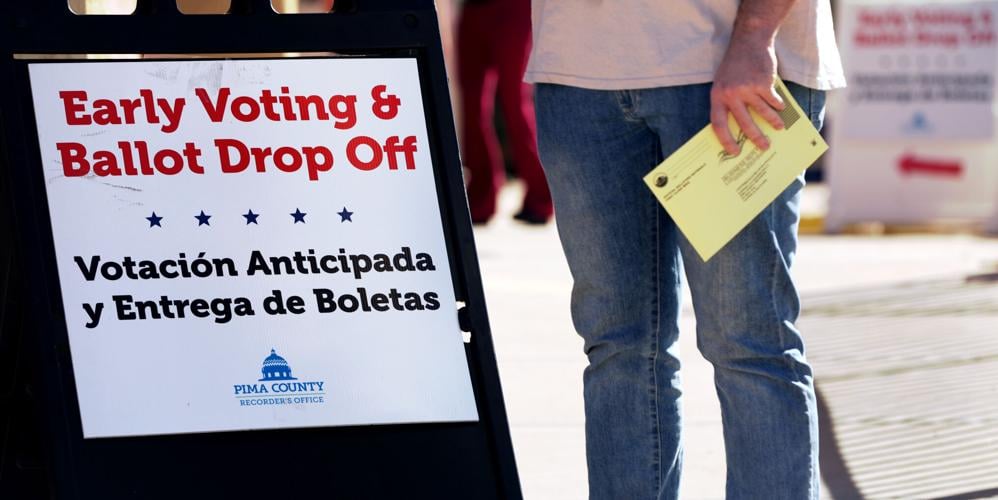
PHOENIX — Republican state lawmakers are making yet another try to tell Tucson — and all the state's charter cities — when they can have their elections.Republican state lawmakers
On a party-line vote, the Senate Committee on Judiciary and Elections has approved a measure that would spell out that elections of candidates for all cities, towns and school districts have to occur on the first Tuesday after the first Monday in November, and only in even-numbered years.
SCR 1027, approved by the committee Friday, awaits a vote of the full Senate.
It's not the first effort by GOP lawmakers to override local laws on when voters go to the polls, elect their officials and decide on ballot issue.
Lawmakers have tried this several times before, only to be slapped down by the Arizona Supreme Court.
In the most recent ruling in 2021, Justice Ann Scott Timmer, writing for the majority, said the Arizona Constitution clearly gives cities that have adopted their own charters "autonomy over matters of purely municipal concern.''
And she said when cities run local elections, that fits the definition.

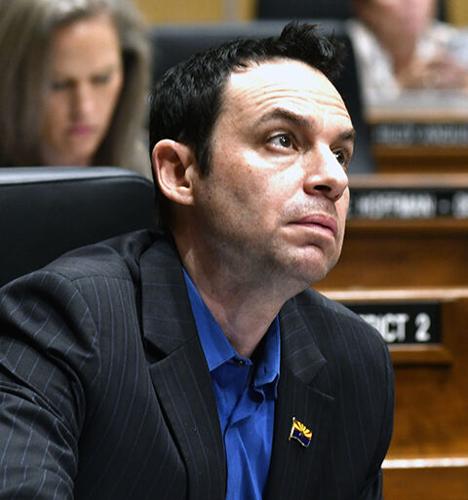
Sen. J.D. Mesnard
So, Sen. J.D. Mesnard, the architect of prior efforts, has come up with a work-around.
The Chandler Republican wants to put the requirement for a single election day for all into the Arizona Constitution. And that, Mesnard said, would override the right of charter cities to go their own way.
But there's a hurdle.
Even assuming Mesnard can get it through the Republican-controlled House and Senate, it still would require approval of voters statewide in November. Democratic Gov. Katie Hobbs could not stop it since she has no role in what goes on the ballot.
Mesnard said he's convinced it would pass. And he even believes it would get support in the cities whose vote schedules would be overridden, a list that currently includes not on Tucson but tempe, Prescott, Douglas, Holbrook and Winslow.
"We do think the voters would prefer to have a single election date,'' he said.
The fight actually goes back to 2012 when legislators said cities have to have their elections at the same time voters choose federal, state and county officials. But that was struck down by the state Court of Appeals which said that lawmakers had no statewide interest in interceding in what charter cities decide is a local matter.
The 2018 revision sought to get around the earlier ruling with a declaration calling it "a matter of statewide concern'' to boost voter turnout. It directed that cities have to scrap their election dates if turnout at a local-only election was 25% less than the most recent statewide election.
The Tucson turnout in 2019 was 39.3% versus 67% of Tucsonans who had voted in the regular 2018 election.
But the council ignored the law, with local voters rejecting a 2019 ballot measure to conform to a statewide schedule. And they specifically set the 2021 primary vote for Aug. 3, with the general election for Nov. 2, 2021.
So Attorney General Brnovich, at Mesnard's request, asked the state's high court to rein in the city, declare the ordinance void and put city elections on an even-year cycle.
Timmer, in rejecting the lawsuit, said the issue goes beyond the right of charter cities to make their own decisions. She also said that cities may have legitimate reasons for conducting off-cycle elections.
One issue, Timmer said, is the possibility of "voter fatigue,'' where discussion of local issues get buried during a statewide election.
"Weighing those considerations implicates a city's choice for how best to elect its officers,'' she said.
Now Mesnard is trying a different approach: Ask voters statewide to amend the Arizona Constitution to override the right of cities to decide when to hold their elections.
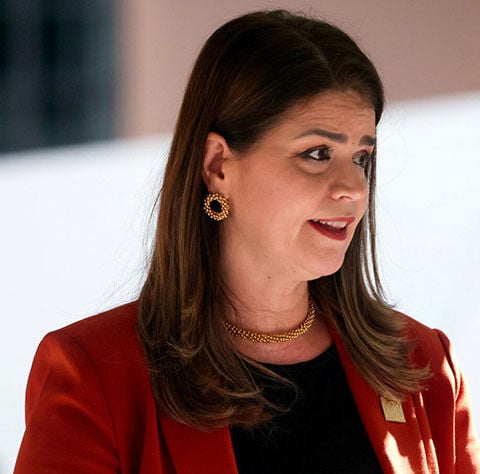
Tucson Mayor Regina Romero
The entire legislative exercise annoys Tucson Mayor Regina Romero.
"State legislators have tried to manipulate elections for years,'' she told Capitol Media Services. "Everyone from our own voters to the state Supreme Court has agreed that these are our decisions to make.''
One of the arguments Romero has advanced — and Tucson voters have so far approved — is there's a good reason for the city to have its own election on its own date. What that does, the mayor said, is allow for "city-focused campaigns and robust public discourse on local issues that would otherwise be overshadowed by federal and state elections on even years.''
By contrast, moving the local elections to November would mean that city candidates — and any city issues — would end up at the bottom of the ballot, below the statewide and legislative candidates and below any initiative and referendum measures.
And all the publicity and all the commercials for local candidates and issues would have to compete with what is being put out in far more expensive campaigns for statewide — and, in some years, national — offices.
"As a charter city with power over our own local affairs, and with many of our state and federal officials being unreliable partners, we plan to continue holding elections to maximize a focus on local issues now more than ever,'' Romero said.
Mesnard has not been convinced.
"I don't have a lot of sympathy for the idea that folks can't break through the noise, given that legislators face a similar phenomenon,'' he said in advancing prior efforts, noting they, too, have to run during consolidated elections. And he said the alternative of multiple election dates is worse.
"You would have these happening throughout the year, constant commercials or ads or whatever, that I don't think voters really want,'' Mesnard said.
All that still leaves a practical issue for Romero and backers of letting cities set their own election dates.
Mesnard's SCR 1027 would go on a statewide ballot in November. And that means the issue of when Tucson elects its officials would be decided not by a court but by a majority of those who turn out in a state where a majority do not live in cities with local election dates.

Republican state lawmakers are pushing a change to the Arizona Constitution to for Tucson and charter cities in the state to have their elections on the same day.
"The mechanics are different this year, but the story is the same,'' Romero said. And she believes that voters statewide can be convinced this is a bad idea.
"This is another case of Phoenix politicians overreacting and interfering in local Tucson elections for their own political gain,'' she said. "They have already wasted taxpayer money pursing this and they're trying to waste more.''

