


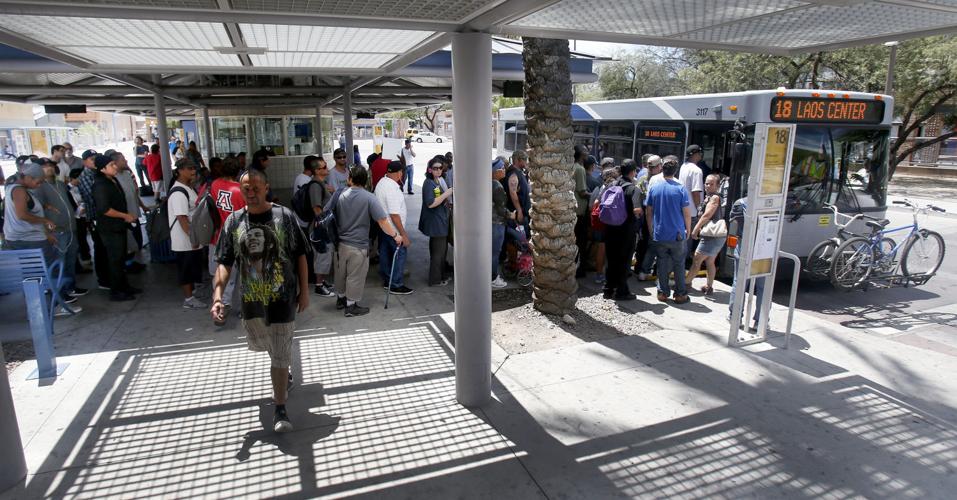
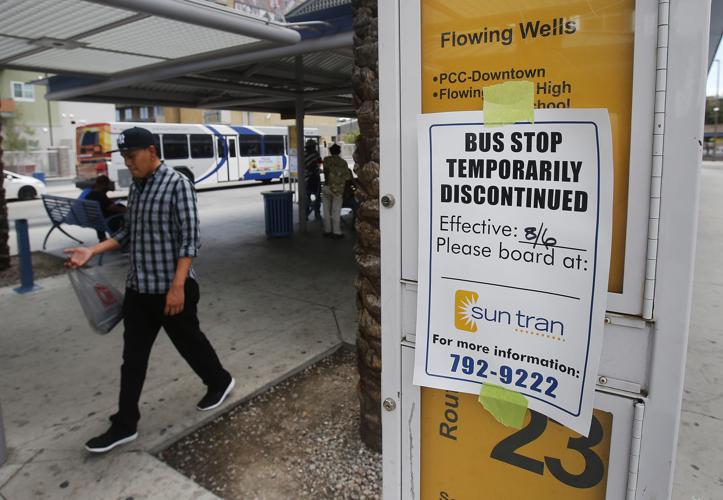
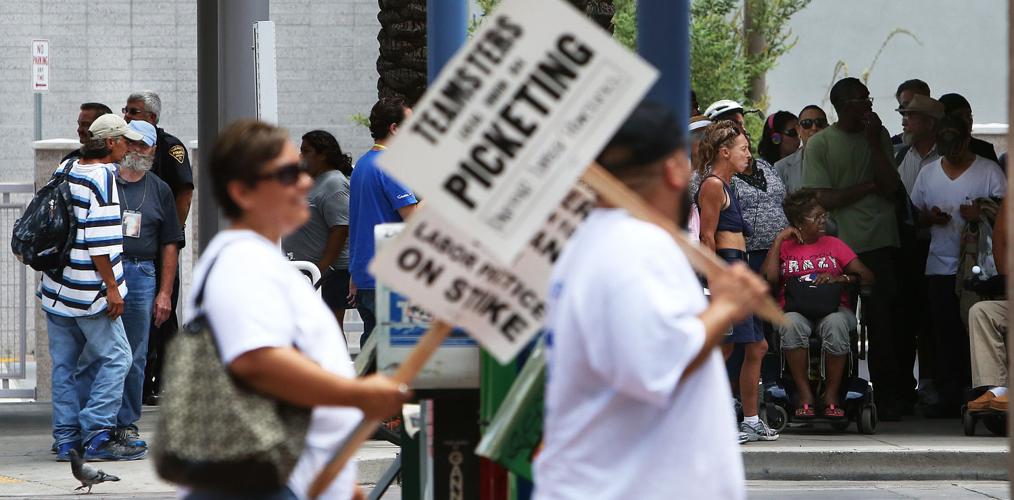
As the Sun Tran bus workers’ strike enters a second week, the effects limited bus service has on the community is growing clearer.
Nate Schuller had to walk from the Motor Vehicle Division office on 22nd Street near Fourth Avenue to the Ronstadt center Monday morning to catch the bus home.
“I was taking my CDL (commercial driver’s license) test,” Schuller said.
He’s been taking courses for his license at Pima County’s One-Stop Career Center.
Schuller said he rides Sun Tran buses most days to and from his home near North Oracle Road and Glenn Street. From Ronstadt, he normally has three bus routes to get home, but that’s reduced to one since the strike.
The waits have been longer and the buses are increasingly too full, Schuller said.
They’ve been so packed, Schuller said, that on Friday he chose to walk home from downtown rather than wait for a bus that might have been too full for him to squeeze into.
For others, the strike is adding extra time to meet their daily obligations.
“It took me about two extra hours,” said Sun Tran rider David Rich, who was among dozens of people waiting for a bus at the Ronstadt Transit Center downtown on Monday morning.
Rich, who said he’s currently homeless, has a broken foot and uses crutches to walk. Rich said he rides the bus most days, often to get physical therapy or to weekly appointments at city court. But the limited bus schedule has made those trips more difficult.
So far the reduced weekday bus service hasn’t caused him to miss a court date — and he hopes it stays that way.
“I do not want to make that lady angry because right now she’s on my side,” Rich said of the judge.
Other people have not been as lucky as Rich in meeting their court obligations.
The strike has begun to cause difficulties for many defendants, said David Sanders, the chief probation officer in the Pima County Adult Probation Office.
Officers tell him many probationers have missed meetings, court dates or appointments for drug testing as a result of the limited bus schedule.
“Based on the limited route service, they can either go to work or drug testing — they can’t do both,” Sanders said.
Sanders said probationers should call their probation officer if they are having transportation problems. In situations like now, with limited public transportation options, officers can work with defendants.
Domingo Corona, with Pima County Pretrial Services, said his office also has heard from defendants who were unable to make court dates because of the strike.
Corona said Pretrial Services is able to work around the transportation issues with some defendants — for example, having them meet caseworkers at field offices or possibly reporting for drug testing at locations closer to their homes.
For some people attending court programs, the options are more limited.
Defendants who take nighttime GED courses at Adult Probation field offices face similar transportation issues. “Most of the people who participate rely on public transportation,” Sanders said.
Teamsters Local 104, the union that represents Sun Tran drivers and mechanics, held a rally Sunday in continued support of the strike.
Officials said communication with management has ceased since the strike began Thursday.
The union also has filed an unfair labor practices complaint against the Sun Tran management company, Professional Transit Management, with the National Labor Relations Board.

