




Tucson city leaders are expressing concerns about how the regional transportation plan is working and have said they’re willing to drop out of the sales-tax-funded program unless significant changes are made to next 20-year plan.
In 2006, voters in Pima County approved a $2 billion package of regional transportation projects funded by a half-cent excise tax to be carried out over a 20-year period. The plan comes from the Regional Transportation Authority, which implements and oversees the projects.
With about five years remaining in the original RTA package, the board overseeing the projects promised in 2006 is also laying the groundwork for the next 20-year plan that voters will have to approve again.
However, Mayor Regina Romero, who represents the city on the board, has concerns about delivering the rest of Tucson’s share of RTA projects in the current plan as well as how the process of drafting a new RTA plan is carried out. The mayor says she’s received few answers.
Romero said Tucson is ready to address its transportation needs without participating in the regional effort.
“I don’t think my colleagues on the council are afraid of taking that step, and I am certainly not afraid of taking that step,” she said. “I know that we stand in a place of fairness and knowledge of what our residents want, we’re just asking for what we want, what we need and what’s fair.”
Nine representatives sit on the RTA board and are from the jurisdictions where projects are being implemented — Tucson, Pima County, South Tucson, Marana, Oro Valley, Sahuarita, the Tohono O’odham Nation, the Pascua Yaqui Tribe and the Arizona State Transportation Board. Each jurisdiction, no matter the size, has an equal vote on matters before the board, including funding for projects.
Tucson has initiated its own transportation master plan called Move Tucson. If it drops out of the next RTA, Romero said the city will be fine on its own.
“I think the other jurisdictions would have to think of moving without the city of Tucson. We paid for and had more than a year of a conversation of engagement with the community with our Move Tucson plan,” she said. “We can take that information as the city of Tucson, and we can create our own path forward in terms of transit, transportation and mobility in our city.”
Based on those concerns, the Tucson City Council unanimously approved last week setting conditions for the city’s participation in the next RTA:
Holding a “comprehensive discussion” as to how the city’s underfunded projects will be delivered during the current RTA.
Revisiting the voting structure of the regional council to consider a weighted voting system where jurisdictions with higher proportions of the population have more say.
Ensuring the Citizens’ Advisory Committee responsible for drafting the next RTA plan is demographically and geographically representative of the region.
Creating a regional board discussion focused on categories of transportation improvement needs instead of named corridor projects in the next RTA plan.
The city plans to take its concerns to the RTA and the Pima Association of Governments, which works with the RTA as a metropolitan planning organization. The next RTA board meeting is scheduled for May 27.
Most of the money funding projects comes from the RTA sales tax, of which Tucson says it contributes about 62%. Without the city’s participation, the success of a new RTA plan would be at stake.
Keeping promises
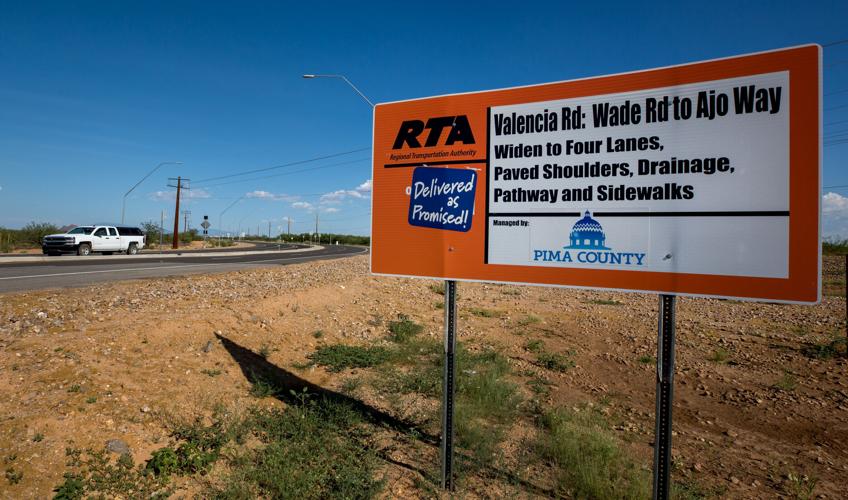
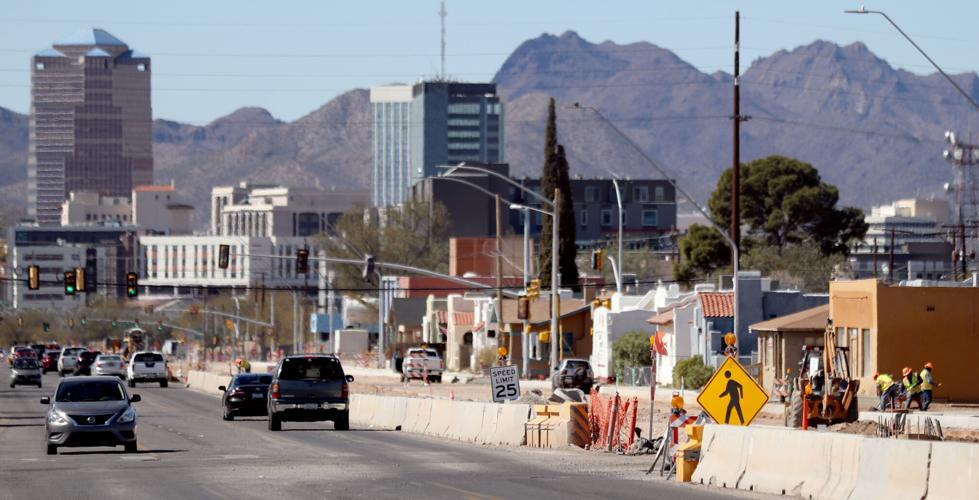
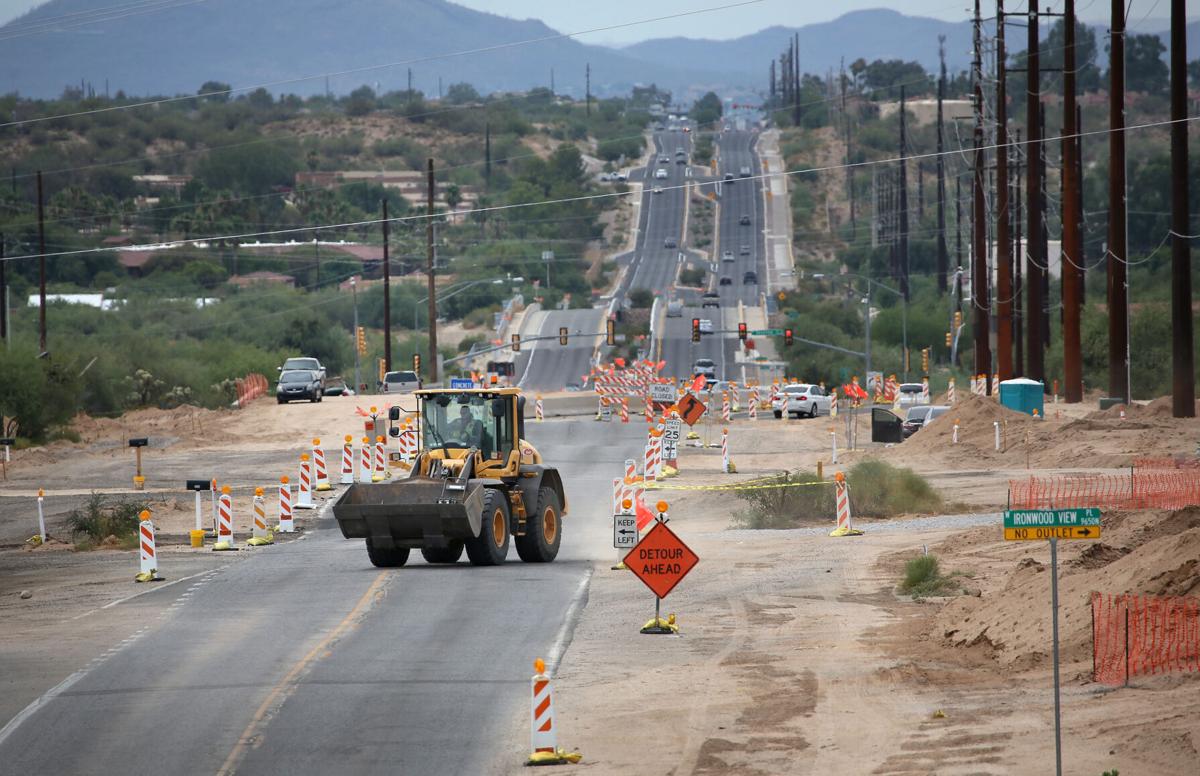
The initial ballot voters approved in 2006 included 35 roadway corridor improvement projects. So far, 17 have been completed, three are being constructed and nine are still in the planning phases, according to PAG. Six of the projects are being phased into smaller segments of construction.
Of the projects being planned, two-thirds are in the city of Tucson. According to cost estimates from the Tucson Department of Transportation and Mobility, the city needs $282 million in RTA sales tax revenues to complete at least nine of its RTA projects.
Farhad Moghimi, RTA executive director, said the funding amounts listed on the ballot for all projects promised to voters in 2006 will be fully met by 2026. But the city said there’s a difference in what projects cost now compared to their price tag in 2006, and the projected revenues from the RTA sales tax don’t cover the increasing costs of construction.
Romero said while the initial project costs were to be adjusted for inflation over the 20-year period, the RTA board is sticking to original 2006 project costs.
“The executive director of the RTA keeps saying the city of Tucson has to build those projects that we still have to build with 2006 tax dollars. That’s what’s creating that huge $300 million gap,” Romero said. “You have to allow for inflation when you have a 20-year plan in front of the voters.”
As for factoring in inflation, Moghimi said dollars are set aside annually to provide additional funding on a case-by-case basis. However, it’s up to the board to decide if projects qualify for that increased funding.
“As part of our policy, if there are projects that need supplemental funding above and beyond that budget, that’s a RTA board decision,” he said. “Individual projects would have to be reviewed by the board, and then the board can make a decision to what level they’re able to supplement additional funding for each project.”
The RTA board sticks to the voter-approved costs listed in 2006, but cost increases may be funded by supplemental RTA funds left over in the yearly budget and regional dollars dedicated to the projects.
As for why six Tucson projects have yet to start construction, Moghimi said the RTA projects were scheduled into four five-year construction periods. Some of the more complex city-based projects were scheduled in the last construction period.
“It just happens to be that the plan that was approved at the time had some of these larger, more complex projects in the urban area in the later years of the plan,” he said.
While the RTA said it will meet its obligation to fund all 35 projects at the costs listed on the 2006 ballot, whether Tucson will be able to complete the remainder of its projects depends on if the city gets the additional funding it says it needs beyond the approved ballot amounts.
Romero: Not “trying to be bullies”
Tucson is also asking for a change to the RTA board’s voting system. Currently, each member jurisdiction gets one vote regardless of the population it represents. Romero says implementing a weighted voting structure based on population would be more equitable when making transportation decisions for the region.
“Sahuarita has 20,000 people and their vote weighs as much as the city of Tucson, which has 560,000 people, who, by the way, produce most of the sales taxes generated to fund the projects in the RTA,” she said. “It’s not about throwing our weight around and trying to be bullies. My first instinct is to work collaboratively, but I want to make sure that we have a fair process and a fair return on an investment for our taxpayers.”
Tucson points to the Maricopa Association of Governments, Maricopa County’s forum for local governments, as an example of using a weighted voting system.

Nine representatives sit on the RTA board and are from the jurisdictions where projects are being implemented. Each jurisdiction, no matter the size, has an equal vote on matters before the board, including funding for projects.
Eric Anderson, MAG’s executive director, says the weighted voting policy has been in place for about 30 years, but weighted voting has only been used a couple times.
It only takes one member to call for a weighted vote. If called, a motion only passes with a majority numerical vote and population-based weighted vote.
“Effectively, it’s a blocking action,” Anderson said. “It keeps the smaller communities from ganging up on the big cities.”
He said a weighted vote is rarely called because controversial items are worked out behind the scenes.
“We try to resolve these sorts of conflicts before we get into a public meeting. That usually is successful,” Anderson said. “Even though it hasn’t been used very often, the fact that we have it causes people to come to the table to talk, and that’s what we want to do. We want people to resolve their differences in a reasonable way and not fight about it.”
But Moghimi said the one-vote-per-member structure is built into the state statues that formed the RTA. As far as Tucson’s request, he said the RTA board would have to “consider looking at that,” but contends the current voting structure works.
“There’s definitely a really nice guideline there for them to ensure compliance with the plan, and I think it’s been very productive so far,” he said.
Committee representation
Tucson’s conditions for participating in the next RTA include taking a comprehensive look at the Citizens Advisory Committee. The city wants to make sure members are demographically and geographically representative of the community.
The committee is tasked with anticipating the region’s transportation needs for the next 20 years and eventually drafting a new RTA plan.
The current committee was formed in 2018 after an open application process for residents in Pima County. The RTA board selected 35 members.
“The distribution was a nice representation of the distribution of the geographic area, as well as different diverse opinions on how we address our transportation needs,” Moghimi said.
The current committee will expire at the end of June when the process of forming the committee will commence again. Of the 35 members, 23 have requested to stay.
Of those 23 members, 11 live in Tucson, seven in unincorporated Pima County, two in Marana, two in Oro Valley and one in Sahuarita.
Moghimi says the members’ demographic information is unavailable, as federal law prohibits selection of members based on characteristics such as race and age. Romero says her preference is to let the current committee expire and create a new one with previous members present to advise new members.
“You need experience, but you also need other thoughts,” she said. “That diversity makes it so much richer in how decisions are being made.”

Most of the money funding projects comes from the RTA sales tax, of which Tucson says it contributes about 62%. Without the city’s participation, the success of a new RTA plan would be at stake.
underway east of Euclid Avenue in 2020.
Categories of transportation improvement
Tucson is asking for a reconsideration of the types of projects jurisdictions submit for consideration in the next RTA. Instead of named corridor improvements that specify exactly where construction will take place on a road or highway, the city wants room for transportation categories such as pedestrian improvements, high-capacity transit projects and technology upgrades.
“Safety improvements, mobility, pedestrian and bicycle safety, all of these different categories are not being discussed now,” Romero said. “I want to make sure that we see that as we move into the future.”
While most of the projects on the 2006 ballot specified locations of construction, they were grouped into four categories: to improve roadways, add safety elements, expand transit services and expand environmental and economic vitality.
Listed projects included $100 million for “intersection safety and capacity improvements” and $60 million for “greenways, pathways, bikeways and sidewalks.”
Moghimi said there is room for categories of transportation initiatives, but specificity on the ballot is a result of RTA statutes.
“The RTA statutes require for the ballot to go to the voters to identify individual corridors, identify the needs within the corridor, and then have a budget and a scope,” he said. “If there are any other elements, you want to identify what those elements are, and be very specific on what those dollars are going to be spent on.”
While the process of drafting the next RTA is in the beginning stages, Moghimi said the initial draft plan will be available about a year after each jurisdiction submits its project requests. The committee is waiting on Tucson to do so.
According to Moghimi, the next RTA plan could cost anywhere from $2 billion to $4 billion. But without Tucson’s share of the sales tax, the scope and success of a new plan lies in question.

