


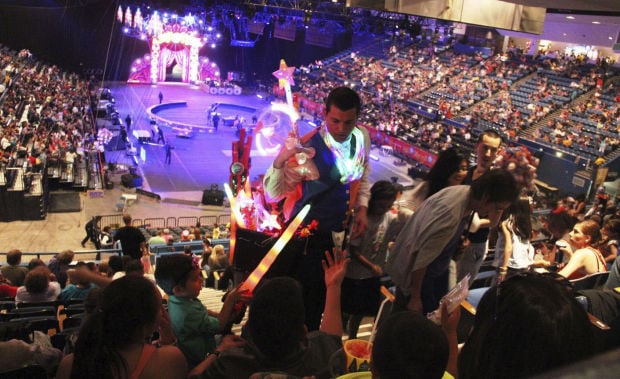
The Tucson Convention Center could soon be managed by a private firm that promises to cut into its annual operating deficit, but not eliminate it.
The city entered into contract negotiations earlier this summer with SMG, a Pennsylvania-based venue management company, to operate the arena.
While city officials won’t comment on specific terms because the negotiations are ongoing, the plan could pay SMG $135,000 a year plus a cut of up to 6 percent from its in-house vendor’s food and beverage sales, according to city records.
SMG’s food and beverage profit was projected to range from $51,000 the first year up to about $78,000 in a decade, records show. Further, SMG could double its base fee by meeting a series of performance objectives that could include receiving high marks on customer satisfaction surveys, filling hotel rooms and keeping up on repairs and maintenance.
The city hopes to have a deal in place by Oct. 1, said Marcheta Gillespie, director of the city’s procurement department.
The city hoped it wouldn’t have to pay about $3.5 million a year to cover TCC losses once a private management group took over. However, SMG’s estimates show it could only trim the city’s subsidy down to $1.8 million in the first year and keep it at about $1.5 million a year thereafter.
The city has always put money into the convention center and justified covering deficits by highlighting the increase in tax revenue events generate. But the TCC’s public image absorbed many blows over the years as dilapidated facilities and lackluster customer service became a frequent gripe among some promoters, vendors and visitors.
As a result, the city watched coveted shows and conventions flee to other cities or to local suburban resorts and casinos, where the city gets no benefit.
City officials remain optimistic the TCC can rebound. That’s largely due to a $7.8 million makeover the arena is getting from Rio Nuevo along with the private management.
“They will be able to bring in more quality shows and reduce substantially what the city pays from the general fund for providing the community service,” said Mayor Jonathan Rothschild. “If we add the increased sales tax the activity will generate we may finally turn the center into a community asset, both culturally and financially.”
But some on the council feel the proposed contract is too favorable to SMG.
“They’re selling us a fix that’s not going to fix us,” said Councilman Steve Kozachik.
Kozachik believes the incentives the company suggests can’t be quantified.
“They’re building incentives into the contract that they can’t demonstrate are the result of SMG,” he said. “Just because a hotel fills up doesn’t mean they’re responsible for it.”
In addition, the city’s ignoring revenue opportunities through vending, ticket sale fees and advertising by entering into a management agreement, he said.
Kozachik said he won’t support a final contract if those issues aren’t remedied.
NOT A PANACEA
By hiring SMG, Tucson would be following a path other cities such as Chicago, Detroit and Philadelphia have taken in an attempt to reverse the fortunes of their convention centers.
Still, while a private management company can decrease a city’s costs, no one should expect miracles, said Heywood Sanders, a public policy professor at the University of Texas-San Antonio.
A dwindling number of events, coupled with an abundance of available convention center space nationwide, have made it nearly impossible for cities to attract more visitors to their arenas.
Even in Las Vegas, which doubled the size of its convention center a few years ago, still attracts about 1.1 million people, the same number it received in 1996, Sanders said.
In Phoenix, where the state spent millions to triple the size of the convention center, attendance dropped from a projected 310,000 in 2009 to 118,000 last year.
Some states, such as Illinois, have subsidized groups to hold their events at their convention centers. The state doled out $26.5 million the past three years for events in Chicago.
“You have everybody across the country offering free rent or even offering to pay for an event,” said Sanders, who has published papers on convention centers and their use as an economic development tool. “The prospect of generating new (shows) is modest at best.”
And when convention centers underperform, cities turn to either SMG or the other leading management company, Global Spectrum, to run things, he said.
Global Spectrum bid on the TCC as well. If a deal with SMG doesn’t materialize, the city could open talks with Global Spectrum.
Sanders said private managers keep their costs low by hiring fewer workers or keeping more of them employed part-time and by implementing other efficiencies.
They also focus on filling convention centers with local events.
While holding private events like weddings might generate some revenue to the in-house food vendor, they don’t pack hotels or surrounding restaurants, Sanders said.
“There’s nothing wrong with SMG running a lean, smooth operation” and saving the city some money, Sanders said. “But don’t expect hordes of people from out of town coming to Tucson.”

