

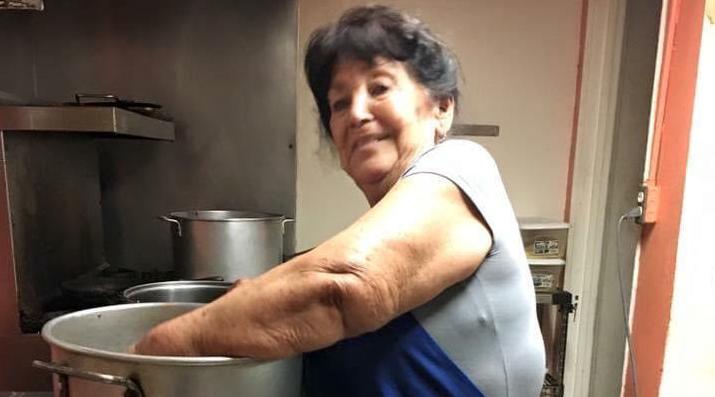



A shrine with flowers, candles and other mementos sits outside Anita’s Street Market in the historic Barrio Anita, just north of downtown.
Neighborhood residents, customers and relatives of Grace Soto are mourning her death from COVID-19. The 80-year-old owner of the market died Dec. 17 at Banner-University Medical Center Tucson.
She was hospitalized in early December and fought the virus, breathing on her own for more than a week.
Walking tour of the historic Barrio Viejo neighborhood south of downtown Tucson. Text by Bobbie Jo Buel. Photos by Mamta Popat. Produced by Rick Wiley / Arizona Daily Star 2020
Her 12-year-old great-grandson, Xavier Ortiz, spoke to her before she went on the ventilator. “I am here at the store Little Nani. I am just waiting for you to come home.” Grace Soto took a deep breath and her last words to Xavier were: “Te quiero mi rey (I love you my king),” said her granddaughter Gracie Soto.
“I got to FaceTime with her. It hurt. I felt so helpless. My grandmother is my world. The virus robbed me of my grandmother,” said Gracie, 35.
“I don’t know how she got the virus. We were all so careful and wore masks around her and protected her,” said Gracie, explaining that all employees at the market tested negative for the virus. “She stopped going to the store in November because it was too cold and she was staying home. She also suffered from an autoimmune disorder that was weakening her muscles.”
“We are in shock,” Gracie said. “We all prayed and we believed she was going to get through this. Her death happened so fast and it was unexpected.”
The elder Grace, who was born in Nogales, Sonora, on May 29, 1940, was known for her Mexican dishes and flour and corn tortillas — attracting Tucson residents, tourists and travelers to the market, 849 N. Anita Ave., that she and her late husband, Mario, purchased 37 years ago. For decades, it had been a Chinese market.

Grace and Mario Soto on their wedding day. As the pandemic worsened, Grace gave thanks to God for her market’s survival.
Grace and Mario married in 1978, a second marriage for both, and their blended family consisted of seven children. The couple supported their children for years doing janitorial work, including for Tucson Unified School District and the Arizona Children’s Home, and then they put their efforts into the market.
In 2020, Grace won First Place for tortillas in the Best of Tucson contest by the Tucson Weekly. She was very proud of that honor, said her granddaughter.
She also was known for her annual Christmas toy drive that was carried out by the businesswoman’s family this year in which more that 400 gifts were distributed to children. Her relatives vowed to continue the tradition.
Granddaughter Gracie, who knows all the recipes and the operation of the business, will continue her grandparents’ legacy and run the business with the help of relatives. She lovingly spoke about how Grace’s red chile con carne burros brought customers to the market. The couple expanded the business to include a tortilla factory and fast-food restaurant, causing a rebirth of clientele.
Tourists and others passing through Tucson who read in travel magazines, including Arizona Highways, about Grace’s tortillas and her cooking from memorized recipes handed down over the generations would stop at the market. They ordered dozens of tortillas and popular foods, including quarts of the famous red chile con carne, chimichangas, red chile beef and green corn tamales, chorizo and tacos, both soft and hard shell. Tacos sold for 99 cents on Taco Tuesday.

Anita Street Market, 849 N. Anita Ave., serves as a grocery store for the neighborhood and is a widely known tortilleria patronized by people from all walks of life.
The tortillas are shipped by some customers to relatives and friends across the United States. There were even tortillas sent abroad to families living in Spain, said Gracie.
The family matriarch’s food was a hit to local customers and neighborhood residents for decades — attracting people from all walks of life to wander into the market. Grace turned a patio into a colorful garden with pink, red, yellow, white and purple roses, bougainvilleas and hibiscus. The lunch crowd would eat outdoors, or pick up their orders to go. Construction workers, carpenters, plumbers, students, lawyers, judges, politicians, office workers and generational families are regular customers.

For decades, the building near the railroad tracks north of downtown had been the site of a Chinese market. Here, children mill about the Anita Street Market in the 1970s.
Since the coronavirus pandemic, people place orders by phone and receive their food at the curb. This started in March. “She cried when she would hear about small family businesses closing. She prayed and sprinkled holy water inside and outside the store. She gave thanks to God for the survival of Anita’s Street Market,” recalled the granddaughter.
“I was born into this business,” said Gracie. “I grew up here. I celebrated my first birthday here. This is my home. My grandparents molded me. They taught me to be thankful, respectable and to make sure to always help others when I can, and to never be ungrateful.”
“I know I have some big shoes to fill. I will give it all I have and will do the best I can to keep their legacy and their hard work alive,” said Gracie, president of Barrio Anita Neighborhood Association.
Grace Soto’s wake was at her home in Barrio Anita. Her funeral Mass was at St. Augustine Cathedral on Dec. 29, and she was buried at Holy Hope Cemetery. The family hopes to have a celebration of life in honor of Grace in May at the market — depending on the status of the pandemic.
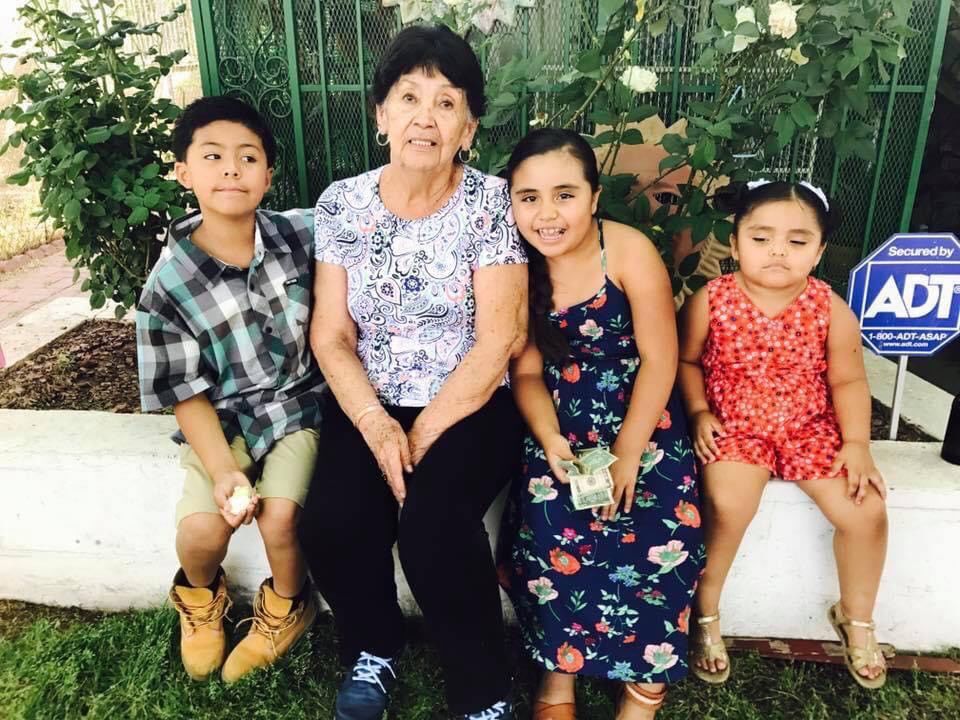
Grace Soto with her great grandchildren.
30+ historic photos of the Santa Cruz River through Tucson
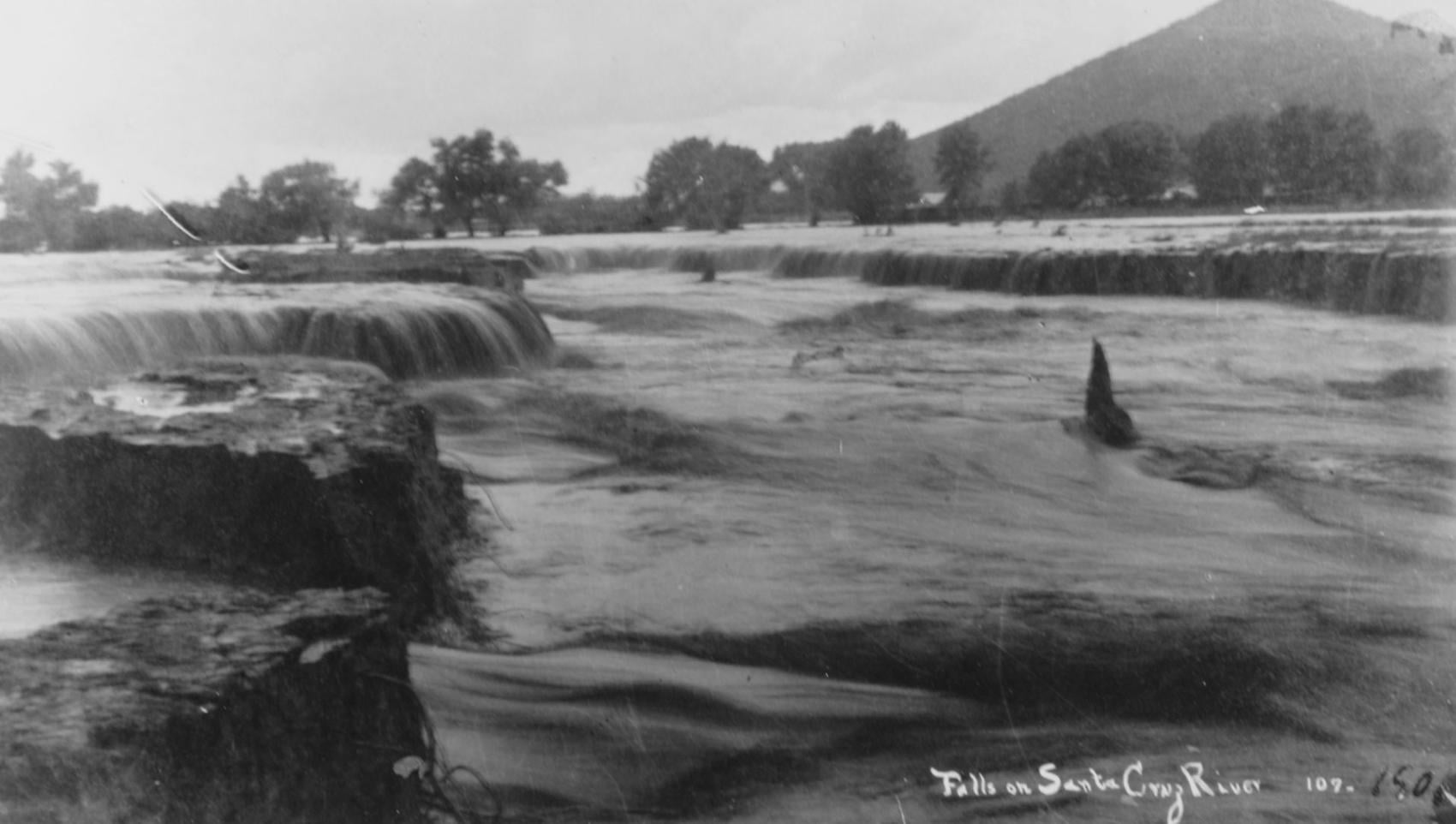
Waterfalls on the Santa Cruz River in 1889 near Sentinel Peak in Tucson.

Girls in Santa Cruz River,1889-1890.
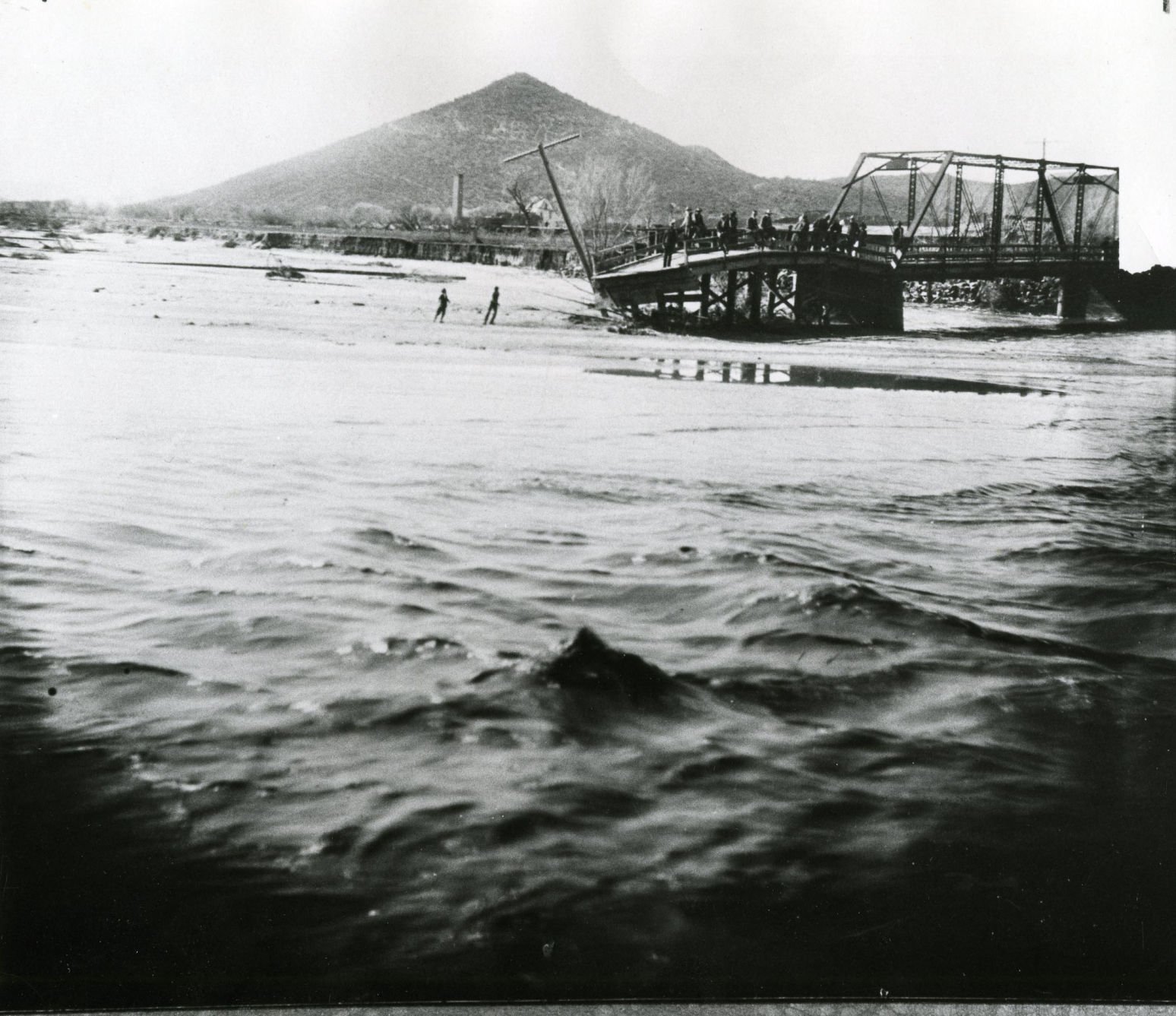
A bridge over the Santa Cruz River near Sentinel Peak in Tucson washed out during flooding in 1915.
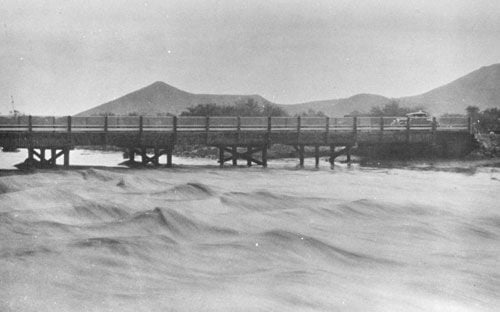
Santa Cruz River at St. Mary's Road bridge in 1931.
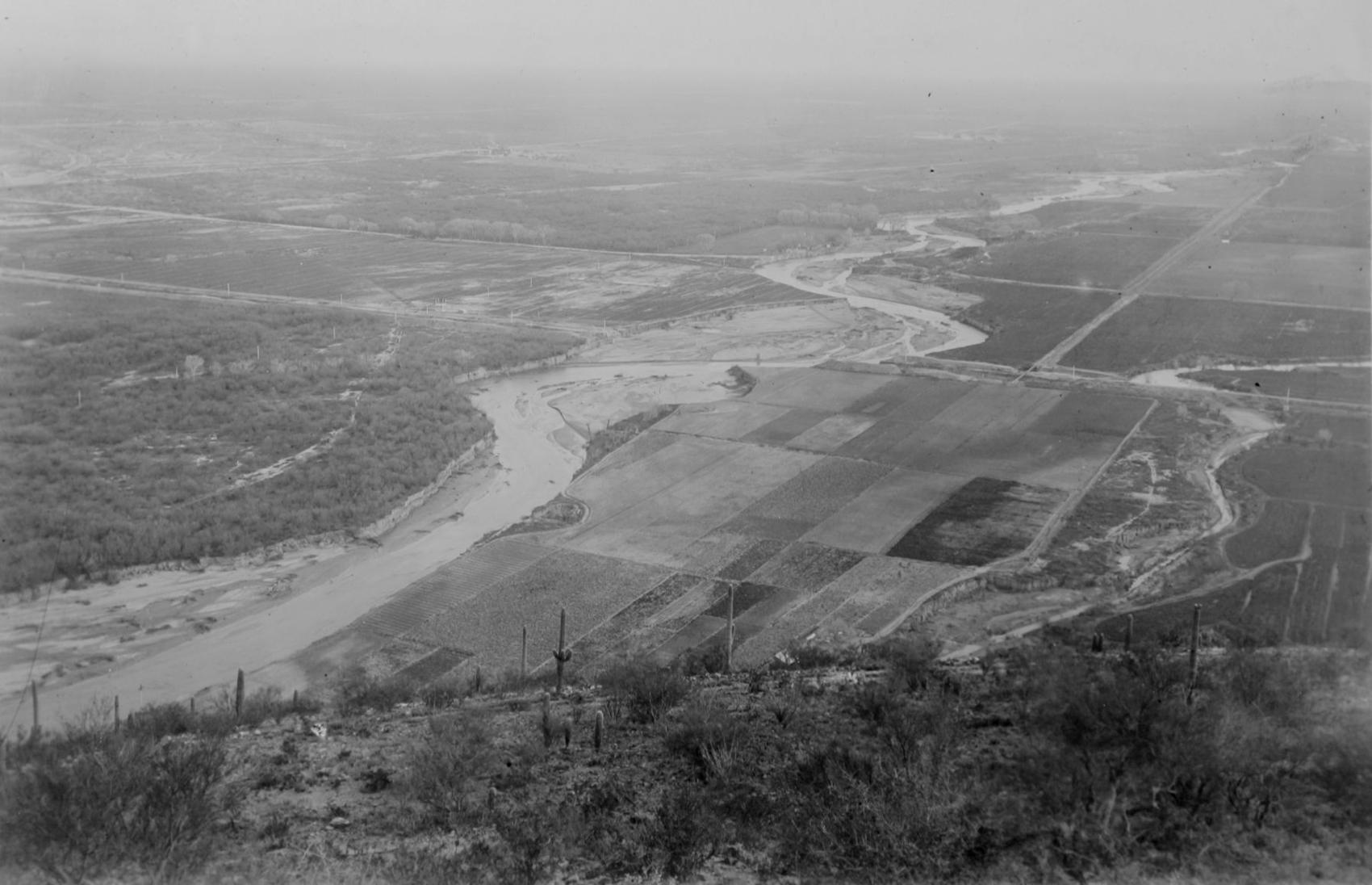
The Santa Cruz River flows north as seen from Sentinel Peak in Tucson in the early 1900's.
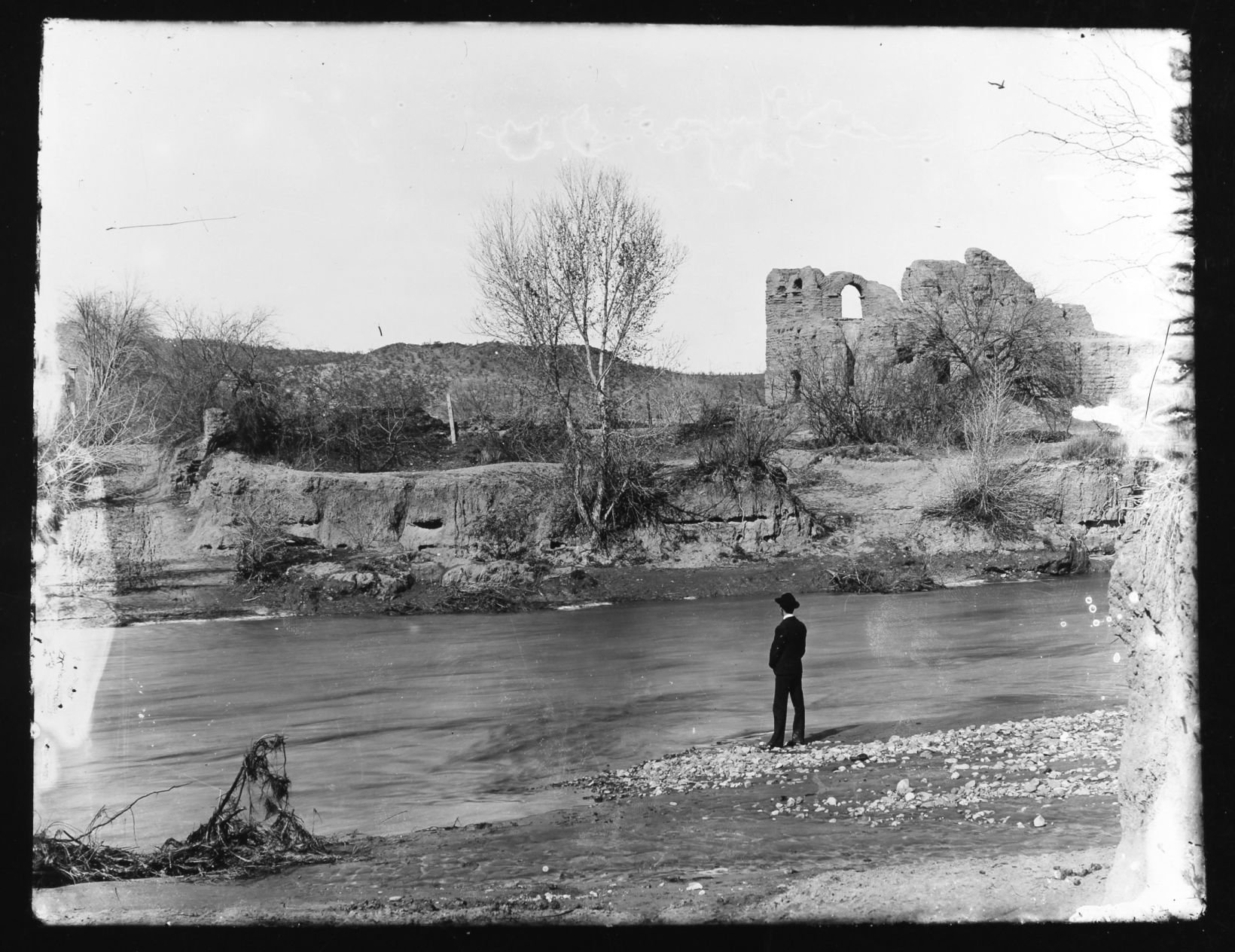
El Convento along the Santa Cruz River, ca. 1910.
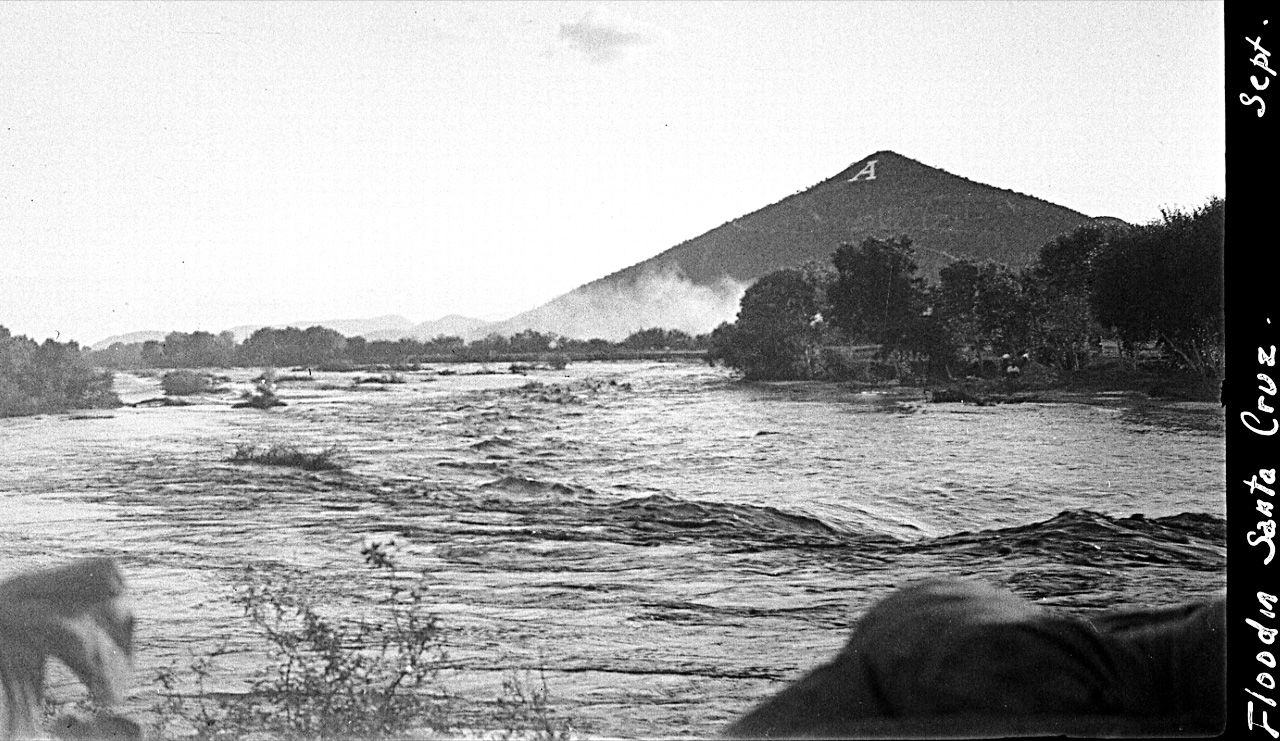
Flooding of the Santa Cruz River, Tucson, in September, 1926, from “Letters from Tucson, 1925-1927” by Ethel Stiffler.
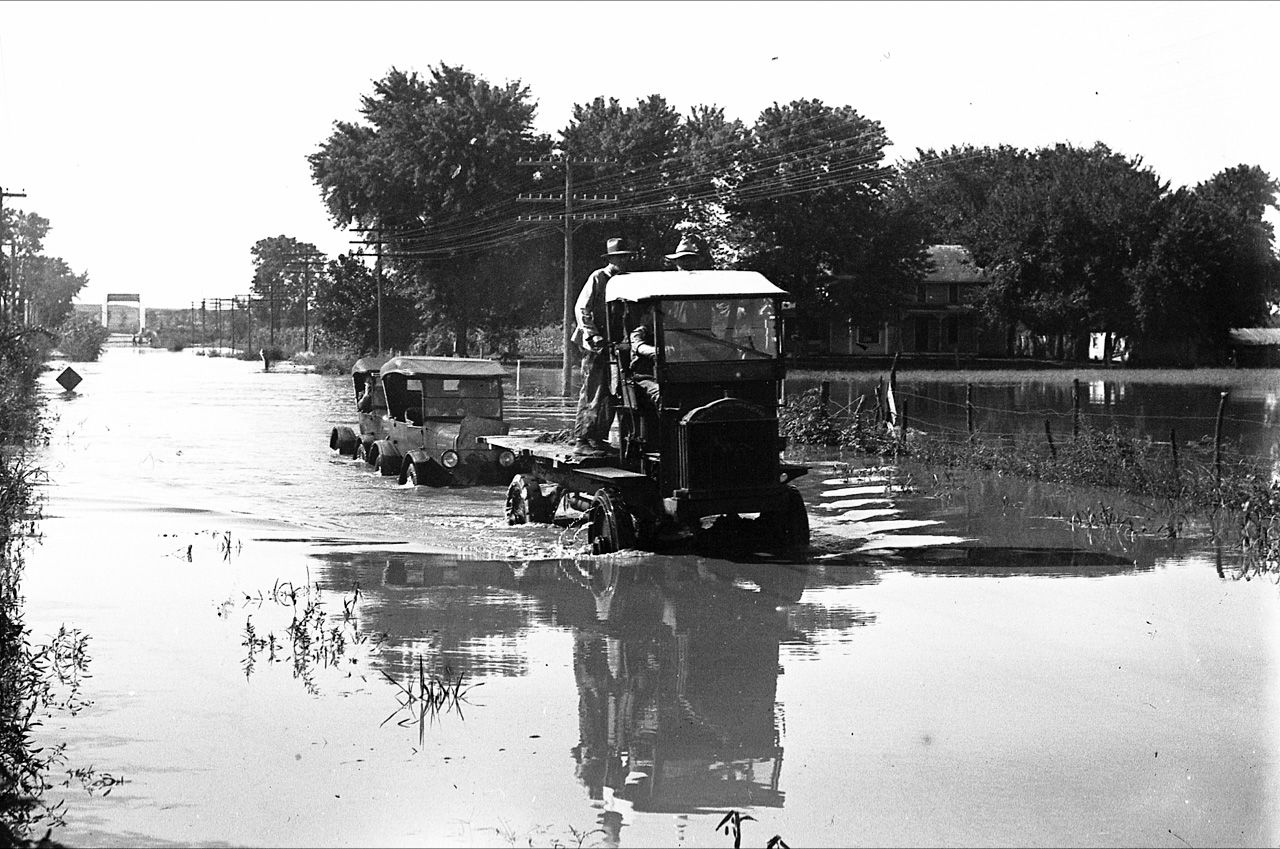
Flooding of the Santa Cruz River, Tucson, in September, 1926, from “Letters from Tucson, 1925-1927” by Ethel Stiffler.

Aerial view of the Santa Cruz River as it winds its way through Pima County north of Cortaro Road in 1953. The county was considering a bridge at several locations, but had to contend with the ever-changing course of the river.

The Tucson Citizen wrote in 1970, "The Santa Cruz River is a garbage dump" and "even marijuana grows in it." City leaders were pushing to upgrade and beautify the channel. The U.S. Army Corps of Engineers was studying the possibility.
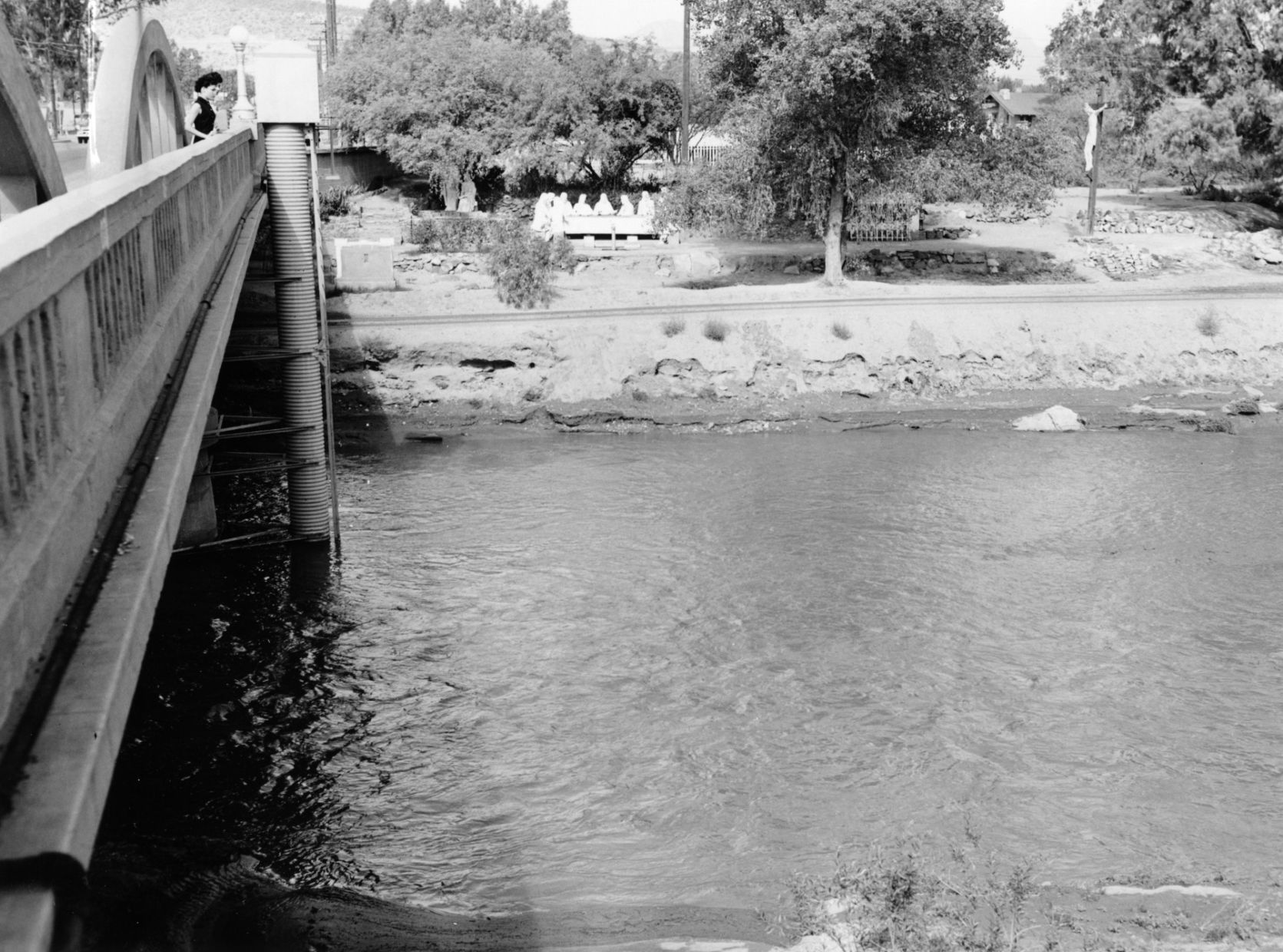
The Santa Cruz River flowing under the Congress Street bridge in August, 1952. The Garden of Gesthemane is in the background.
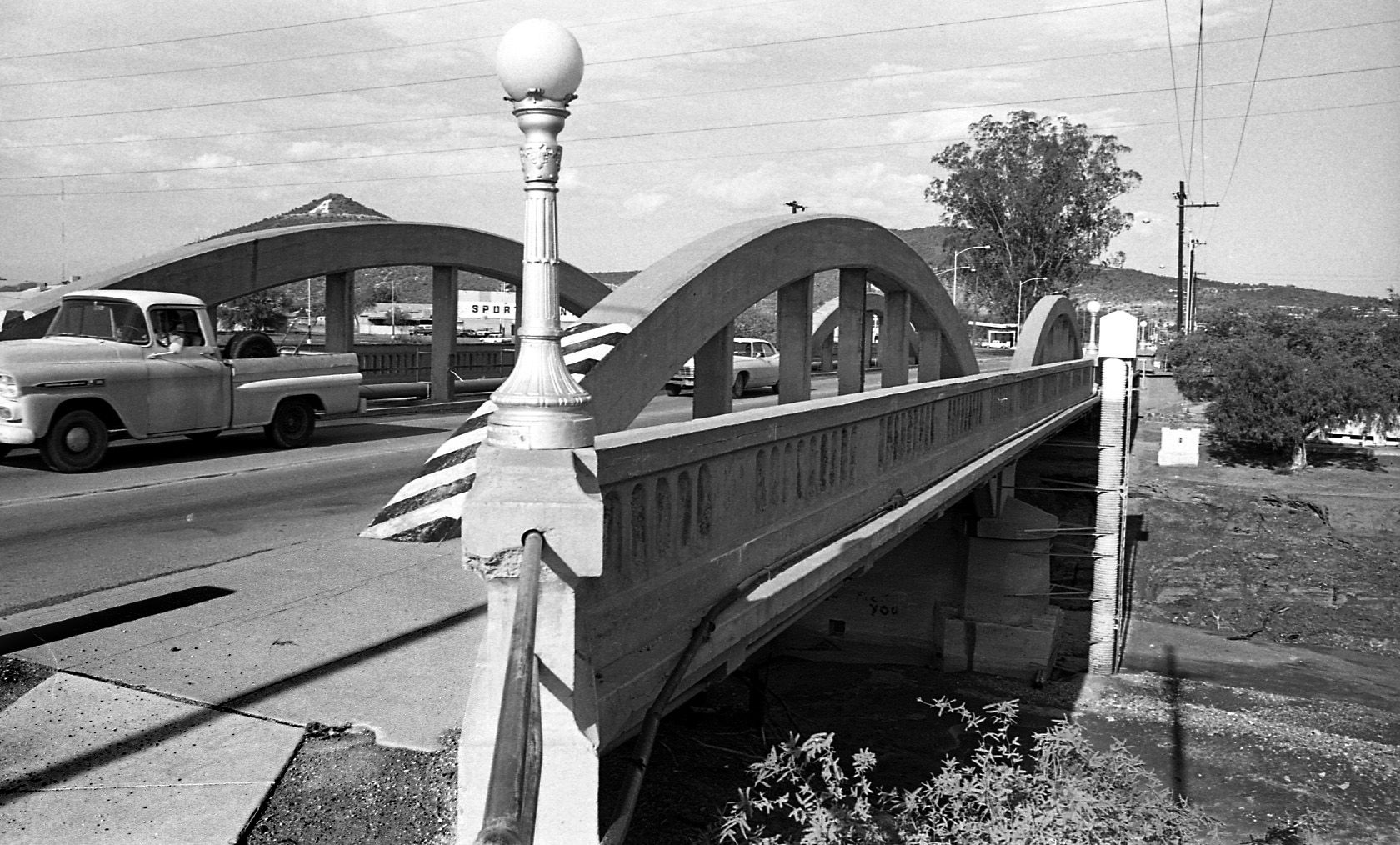
By July 24, 1970 the old bridge on West Congress over the Santa Cruz River had to go and be replaced by a new bridge.

By July 24, 1970 the figures from Felix Lucero's Last Supper had been on the west side of the Santa Cruz River for more than 20 years. City authorities had decided to leave it in place while a new bridge on West Congress Street was to be replaced.
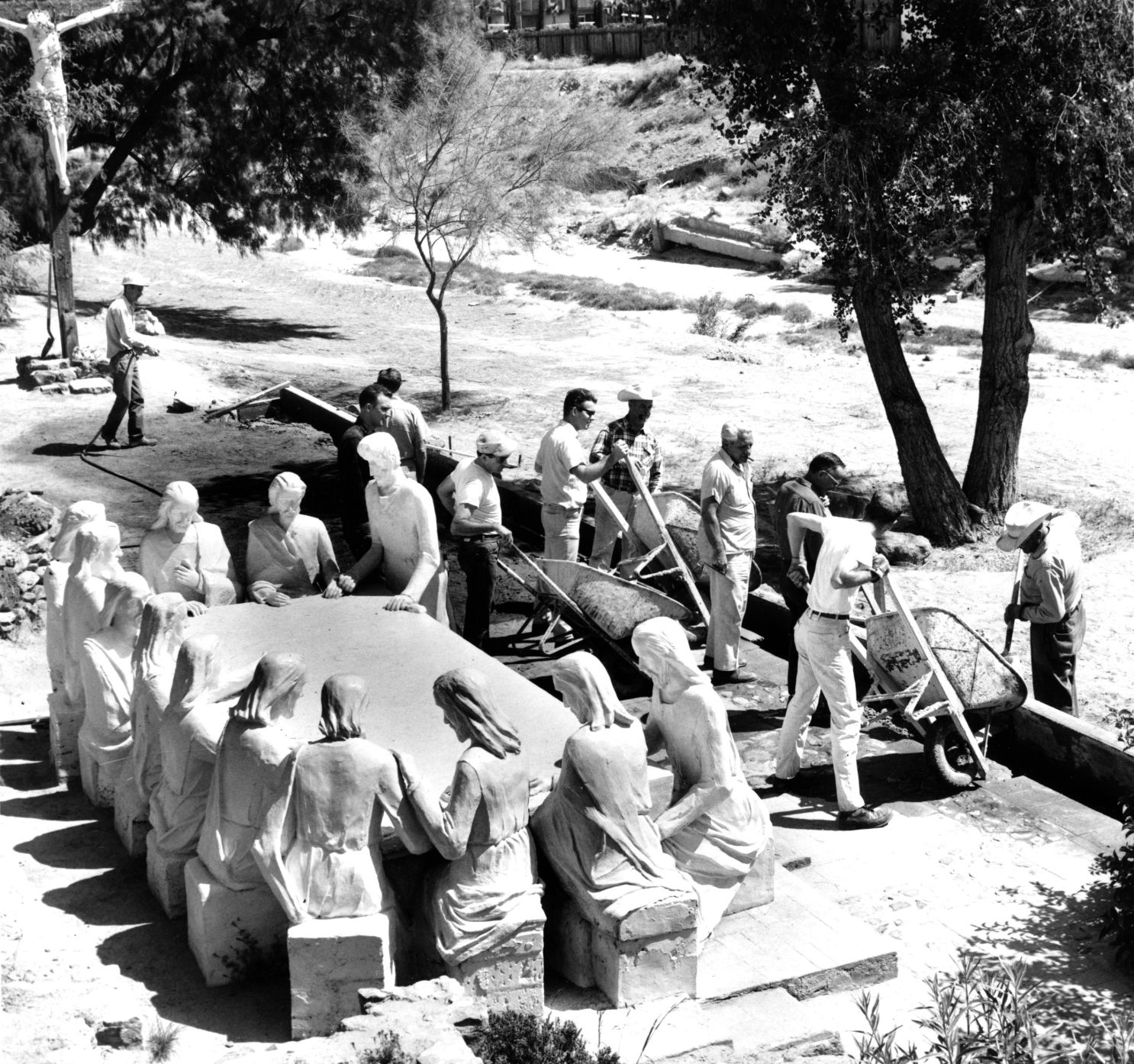
Volunteers from the Tucson Jaycees and Junior Chamber of Commerce finish restoration of the statues and grounds of the Garden of Gethsemane along the Santa Cruz River in May, 1964. The statues were ravaged by vandals and weather. The city parks and recreation department worked with the volunteers. Artist Felix Lucero began sculpture project in 1938 and finished it nine years later.

Drought in June, 1974, turned the Santa Cruz riverbed into crunchy chunks of dried mud.

The Santa Cruz River flowing under Silverlake Road in August, 1970.

Children play in the Santa Cruz River near Speedway Blvd in August, 1970.
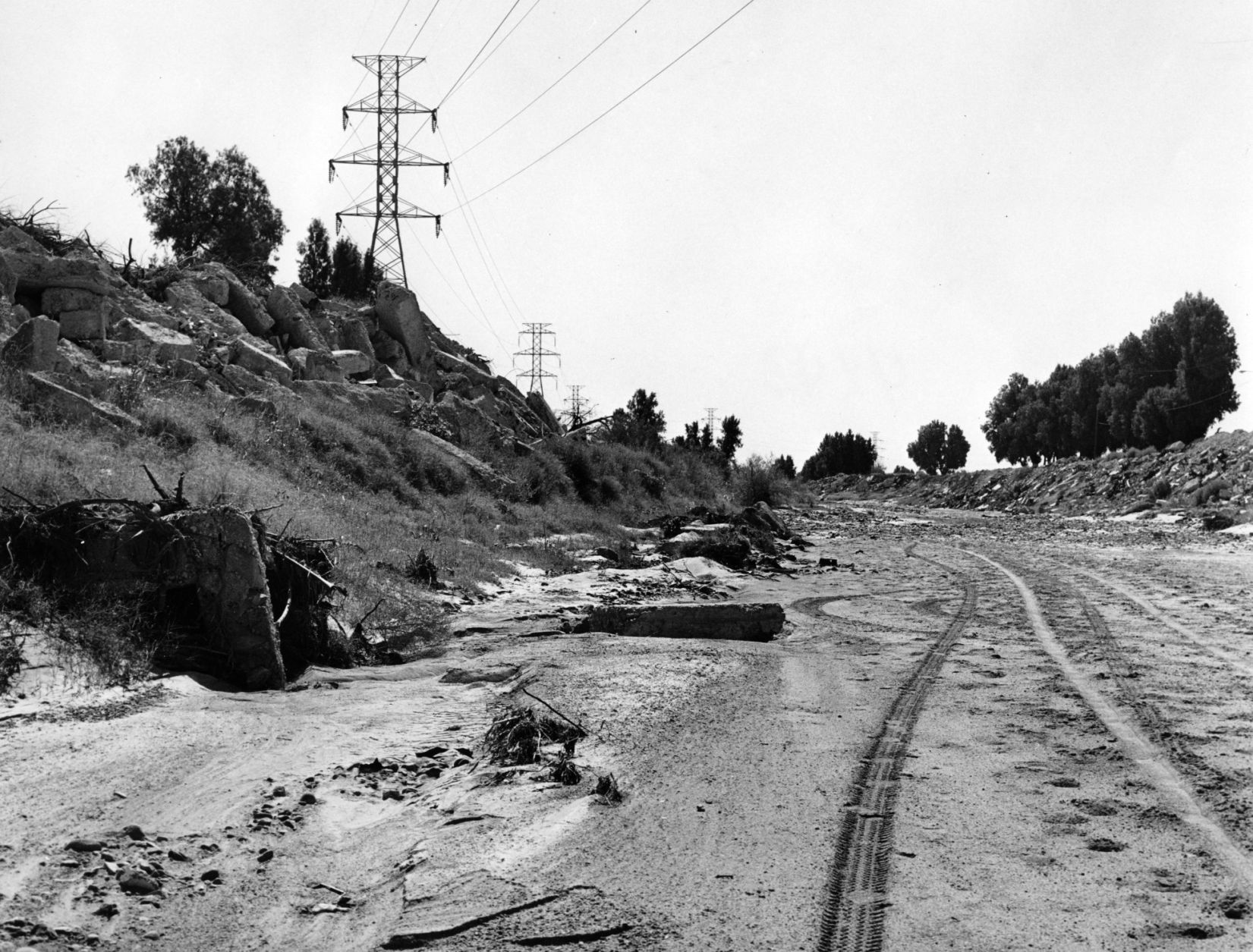
The Santa Cruz riverbed at Congress Street in November, 1967.

After years of waiting, crews began clearing debris and channeling the Santa Cruz River in November, 1977, and constructing what would become a 14-mile river park. The Speedway Blvd. bridge is in the background.

After years of waiting, crews began clearing debris and channeling the Santa Cruz River in November, 1977, and constructing what would become a 14-mile river park.

The Santa Cruz River looks peaceful flowing underneath Speedway Road after days of flooding in October, 1977.

Adalberto Ballesteros rides along the Santa Cruz River west of downtown Tucson in 1980.

The Santa Cruz River looking north from Valencia Road in July, 1974.

Junked cars and trash spill into the Santa Cruz River, looking south, just south of Grant Road in July, 1974.

Road graders scrape the Santa Cruz River channel between Speedway and Grant roads during bank stabilization construction in May, 1991.
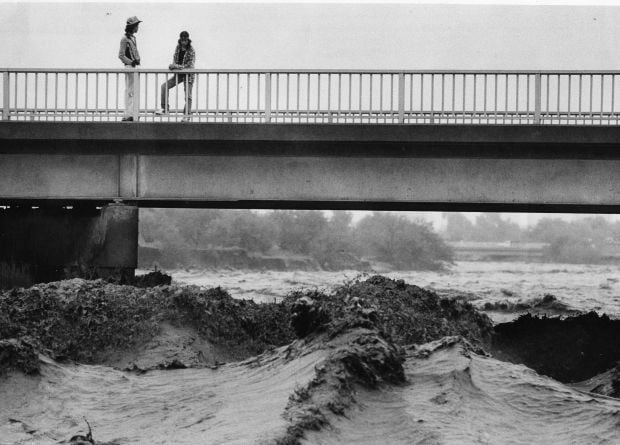
Water surges in the Santa Cruz River at the St. Mary’s Road bridge on Oct. 2, 1983.

Flooding in Marana after the Santa Cruz River overflowed its banks in Oct. 1983.

A bridge on the Santa Cruz River northwest of Tucson washed out during flooding in October 1983.

Residents watch the surging Santa Cruz River rush past West St. Mary's Road on January 19, 1993.

Tucson firefighters are standing by and waiting for two kids floating in the Santa Cruz River on some type of object during flooding in July, 1996.

As the Tucson Modern Streetcar rumbles across the Luis G. Gutierrez Bridge, water flows bank to bank along the Santa Cruz River after a morning monsoon storm on July 15, 2014.

Johnny Dearmore skips a rock in the Santa Cruz River as reclaimed water is released into the channel at 29th Street as part of the Santa Cruz River Heritage Project on June 24, 2019. The release of effluent is the city’s first effort to restore a fraction of the river’s flow since groundwater pumping dried it up in the 1940s.

The Santa Cruz River flows Friday morning July 23, 2021 after an overnight monsoon storm passed over in Tucson, Ariz.

Betsy Grube, center, with Arizona Game and Fish Department, releases longfin dace fish into the Santa Cruz River at Starr Pass Boulevard on March 23, 2022, as Mark Hart, right, takes a video and Michael Bogan, a professor in aquatic ecology at the University of Arizona, picks up more fish to release. The 600 fish were captured from Cienega Creek in Vail.

