





Senior Vice President for Research Tomás Díaz de la Rubia told the Faculty Senate the UA has received nine stop-work orders and seven termination orders on federal grants.
In turn, faculty senators blasted UA administrators for not providing more updates and concrete plans on how to navigate the many executive orders and funding cuts from the Trump administration.
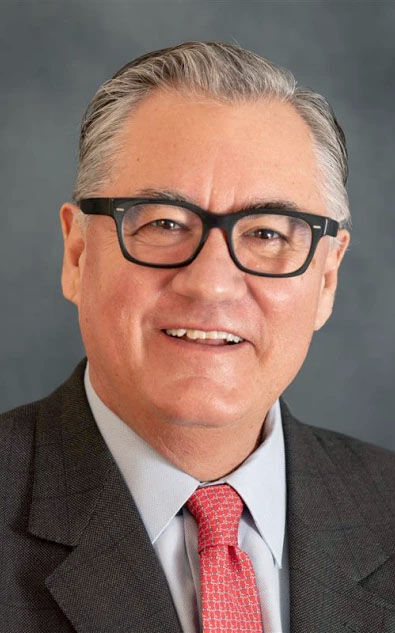
Tomás Díaz de la Rubia
“The vice president for research is not doing anything, as far as we can tell,” Keith Maggert, a UA professor of molecular and cellular biology and a faculty senator, told Díaz de la Rubia in response to his report Monday to the senate on federal funding orders.
“I’m sorry to be so blunt. The (UA) president has not announced anything to help research. It’s down to the department, who is the least able to cover this,” Maggert said.

Keith Maggert
Díaz de la Rubia told faculty senators the seven terminations were mostly from the State Department and the U.S. Agency for International Development (USAID) and that there was no going back on that. USAID canceled four foreign aid projects at the UA last week, which led to the loss of $8.5 million in unspent federal research funds.
He said there is also a $3 million impact so far from the stop-work orders.
“We don’t know what’s going to happen,” said Díaz de la Rubia, who appeared to be taken aback by the blunt questions.
He said the administration is in “constant communication” with officials in Washington, D.C., and colleagues at the federal funding agencies, and repeated his advice that UA faculty and researchers keep in touch with their program managers because they are the ones with the most information.
In response, Maggert said program officers weren’t returning emails or communicating with researchers so Díaz de la Rubia’s advice didn’t get them anywhere.
“If I don’t get bridge funding, I will have to shut my lab in about two or three months,” Maggert said.
“I have graduate students that can’t be paid. I have organisms that need to be fed. I haven’t heard anything about any of these ideas or bridges that you’re talking about. So, it may be occurring in your office, but it’s not matriculating out to the people who (have) research programs, the students that rely on them, and the staff that helps support them,” he continued.
“And so, what specifics can you give us other than broad statements that have yet to turn into action? How can the University of Arizona support the research infrastructure that it has created, that we have invested in, that our lives and careers depend on?”
Díaz de la Rubia said his office and the university administration were tracking every project and having meetings with a campus advisory group three times a week to listen to all issues and concerns.
He said they are looking at bridge funding mechanisms and plans to help the UA’s research infrastructure as it is affected. The Trump administration is attempting to slash funding from agencies including the National Institutes of Health (NIH) and USAID.
NIH, one of the biggest contributors of federal funds to the UA, announced it was capping indirect or overhead costs for research grants at 15% across the board, which at the UA would reduce it from 53.5%.
Díaz de la Rubia said Monday the UA is still operating on the 53.5% since there is no decision from a federal judge on the 15% cap.
“We continue operating, we tell everybody to put in your proposal. If the portal is open for your agency, we will send your proposal (and) we negotiate it,” he said. “So, you know, that’s where we’re at. It’s something new everyday, but we’re trying to be agile and dealing with data and provide as much information as we can on a daily basis.”
However, when asked by Maggert if administrators could give researchers a specific date for announcing a bridge funding mechanism, Díaz de la Rubia said “no.” He said they expect to have something to announce shortly, but couldn’t say when.
The Faculty Senate meeting took place two hours after UA President Suresh Garimella announced that UA will devote $20 million to research in space sciences, water and energy, biomedicine and health care, and mining as a one-time investment as part of its “strategic imperatives” initiative.
Maggert told the Arizona Daily Star Tuesday that the only communications researchers receive from UA administration are “passive posts” to the website set up by Díaz de la Rubia’s office, which is hidden behind university ID access and isn’t open to the public.
“His advice to me yesterday (contact my program officer, keep submitting grants) and his inability to answer when a bridge funding program would be available were shocking — this is not business-as-usual, and his responses came across as naïve. Or aggressively indifferent,” said Maggert.
“Many, many, many labs rely on federal funds, and any disruption to that can be the end of us. We’re supposed to be discovering things, treating and curing diseases, and training the next generation of scientists. That may seem trite or quaint, but I (and my colleagues) take it seriously,” he wrote in an email. “It does not seem that the university is helping, has no idea what to do, and does not care to support the faculty, staff, and students who are already here. Frankly, hearing (Díaz de la Rubia’s) non-responses on the heels of the president’s announcement of $20 million in new initiatives — and not a word on the current crisis — was demoralizing.”
UA spokesperson Mitch Zak said university officials recognize the significance of the changing federal research landscape and are working with faculty and researchers to navigate these changes.
“We will do our best to protect our research operation that is among the best in the country and to continue to partner with our state and federal governments on critical appropriations, which includes financial aid that many of our students rely upon,” said Zak. He did not state specifics on how they would carry out these partnerships.
Lucy Ziurys, a UA professor of chemistry and biochemistry and a faculty senator, said she wanted to encourage the bridge funding program as soon as possible, since other universities such as Yale were doing it. She said UA needs to put this in place so researchers don’t have to fire graduate students midway through their PhD careers.
The Yale School of Medicine announced at the end of February that it would provide bridge funding, which is basically temporary financial support provided to researchers facing gaps in funding.
“I think the frustration expressed by Keith is really real, and we need to get going on this,” said Ziurys Monday. “It’s just impossible for the departments — they’ve already been squeezed dry of funds for them to do this.”
“What I found a little strange was that they don’t have the money, they’re not making any promises yet, but they have $20 million to give out to other grants,” Ziurys told the Star Tuesday. “If I had money, I would just first put it towards helping these researchers out for the bridge funding, as opposed to new initiatives.”
Faculty Senator Suzanne Eckert, a UA professor of anthropology and curator at the Arizona State Museum, said the UA has had budget crises before and the university has multiple plans going simultaneously during those fast-changing situations.
“Your office and the president’s office should be creating multiple simultaneous working models to kind of plan ahead for what the possible federal and state level changes are going to be,” Eckert told Díaz de la Rubia.
“And what I’m hearing is, you don’t even have a single plan yet,” she said. “And we are not just panicking, we are on the verge of shutting down our ability to do research and to support graduate students, which is the main aspect” of a top research university. “... I understand that this is all new administration, but you guys have got to get going and have these plans in place.”
Faculty members said they are concerned research support staff will also lose their jobs.
Secretary of the Faculty Katie Zeiders said at Monday’s meeting, “Importantly, there needs to be some guidance on how they (researchers) handle sudden termination of awards or awards that are frozen. It’s not only leaving PIs (principal investigators) and staff in really difficult positions, but actually college administrators as they try to navigate what to do financially and through HR.”
Maggert said he knows this is a confusing time and everyone is scared, but UA leaders should be interacting with researchers, assuring them, listening to them, analyzing their situations and explaining what they are doing to help, plan and anticipate what might be coming.

