



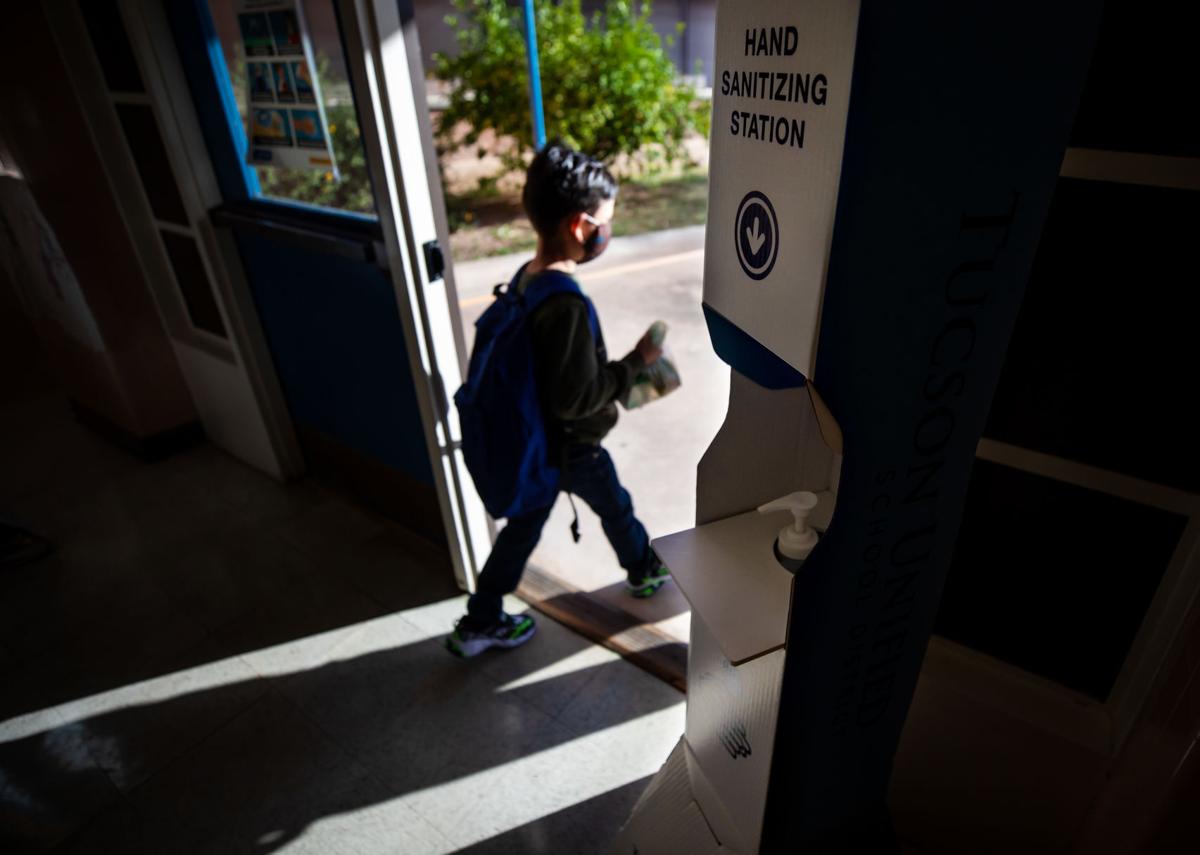
Tucson Unified is implementing a program that will regularly test willing students and staffers for COVID-19 in an effort to catch positive cases before they spread.
The state is offering the K-12 pooled testing program to all Arizona schools, funded from a pot of $219 million in federal funding for COVID-19 monitoring and prevention in schools.
Parents can choose whether their children participate in the program. The way it works is once a week all the participating students and staff in a classroom will do a lower nasal swab on themselves — this is a gentle, noninvasive swab that even a kindergartener can do. Everyone drops each swab into one container, and the firm running the program Ginkgo Bioworks, tests the pool of swabs all together.
If there is a positive, then everyone who participated will get an individual test, and the positive COVID-19 case can be found in about 24 hours from the time the pool tests were taken.
What this method provides, rather than just testing people with symptoms, is finding both people who are asymptomatic and who just haven’t exhibited symptoms yet, says Tim Lyden, the national lead for the company’s K-12 testing program. This process could identify positive cases before they spread and allow more classrooms to stay open.
As of Monday, the Pima County Health Department had already closed down 15 classrooms since July 20 due to COVID-19 spread.
With about 500 positive cases identified in Tucson schools, 84% of them were among children, with 219 of those in children under 12 and so too young to be vaccinated.
“You have students walking around who have no idea they have COVID, and they’re interacting, most likely without masks, with many other students in close proximity, and then you also have students that eventually exhibit symptoms, but for the three to five days before they exhibit symptoms they’re contagious,” Lyden says. “If you regularly test classrooms of students, you’ll be able to detect those asymptomatic and pre-symptomatic students and pull them out of the school sooner so that you can keep the most number of students in class.”
TUSD is starting the program with a pilot of 20 schools with the intention to increase that to the whole school district by Sept. 29, when the law goes into effect banning mask mandates in schools. The district will talk more about which schools they will start the program in and when at a meeting next week.
While this is a free service to school districts across Arizona, in Tucson only Sunnyside and TUSD are starting the program so far, though the company is in talks with other schools. Across the state, 17 school districts and 33 private or charter schools are participating for a total of 278 schools, and the company is offering the program to more than 1,000 schools across the country.
But some local school districts are opting out of the program, like Catalina Foothills because of the interruption to class time and because results wouldn’t produce a complete picture of the class, said district spokeswoman Julie Farbarik.
“Families can opt in or out of the program each week,” she said. “Therefore, only the students who are tested are part of the class results. It’s still possible to have an unknown positive case because the student wasn’t tested.”
The company tests between five to 25 samples in a single pool, and studies have found that even with as little as 10% to 15% of a classroom, the testing can be effective, Lyden says
“It’s still better than not testing and you do get an effective public-health read, if you will, on what’s going on in that classroom as long as you’re testing on a regular basis, on a weekly basis,” he said. “Especially when most schools and classrooms are back to 100% in-person learning, and in most places mask use is going to be variable, this is a key tool in the toolkit that can help understand what’s going on at the school level.”
As well, after doing it for two or three weeks and everyone gets used to it, it only takes about five minutes, Lyden says. The company provides clinicians with a certified medical background to handle onsite support on the testing day. And students’ personal information is not collected by the company.
“Overall it just instills confidence,” Lyden says. “For a relatively small investment, per classroom, of time, you get a big benefit of public-health information and also a sense of confidence, especially when looking around at variants like delta that are highly contagious and more contagious in children than previous variants we’ve seen.”

