


The state legislator from Snowflake, a town five hours’ drive from Mexico, described confidently the way things go in the borderlands.
Supporting his bill to let police officers shoot down drones within 30 miles of the border, Rep. David Marshall suggested there’s no innocent explanation for flying drones near the Arizona-Mexico line. Since some might be carrying drugs, they all must be carrying drugs.
“If the drones are flying near the border, they’re not children out there doing this,’’ Marshall said in a February press conference covered by Capitol Media Services.
Arizona Daily Star columnist Tim Steller
“What are you out there looking for? Tortoises?’’ he continued. “Cactuses? No.”
“Most likely it’s going to be drones with narcotics on it.’’
It was just one small example of a phenomenon that’s been going on for years and hit a peak Tuesday with Pres. Trump’s new tariffs: Outsiders hurting the borderland’s people because they see the region through the prism of crime.
In the case of drones, it’s obvious that innocent residents would fly unmanned aerial vehicles within 30 miles of the border — the same as people do anywhere in Arizona, including Snowflake. For example, Tucsonan Myles Traphagen, borderlands program coordinator for the Wildlands Network, flew his drone over much of the international line around 2021, mapping the border walls.
“I took the drone out there and flew it to every place I could, to get endpoints (of wall segments). You snap a picture, and a drone geotags it. I did that in California, New Mexico and Arizona, and put that all together for a ground-truthed border-wall map.”
It was a cool project. But outsiders like Marshall, most importantly including federal officials in Washington D.C., keep treating the border region like a place where crime and misconduct is the default setting and normal behavior is an aberration.
The factor that makes a place like Nogales, Douglas or San Luis a viable community — the border — is also the thing that makes them a target for unequal and punitive treatment.
Nogales exists because of the border crossing. A forward-thinking merchant named Jacob Isaacson founded a trading post there in 1880, anticipating the arrival of the railroad, which happened two years later. The downtown port of entry opened in 1903 and the U.S. and Mexican towns called Nogales grew around the border crossing.
In Tucson’s early decades as an American city, trade with Mexico was as common as the bright sun. Tucsonans traveled back and forth to ranches and mines in Mexico, and Mexican customers came north to shop at suppliers like the F. Ronstadt Co. downtown.

The tariff impacts will be felt doubly in the border region, in places like Nogales, because it depends so much on trade and also must absorb price increases like the rest of the country.
But now, because fentanyl is smuggled across the border from Mexico, along with thousands of tons of legal merchandise, towns like Nogales must be punished. President Trump justified the 25% tariff on all imports from Mexico by citing fentanyl smuggling, but of course it won’t just hurt Mexico. It will hobble the economies of places like Nogales by reducing the trade that the community is built on.
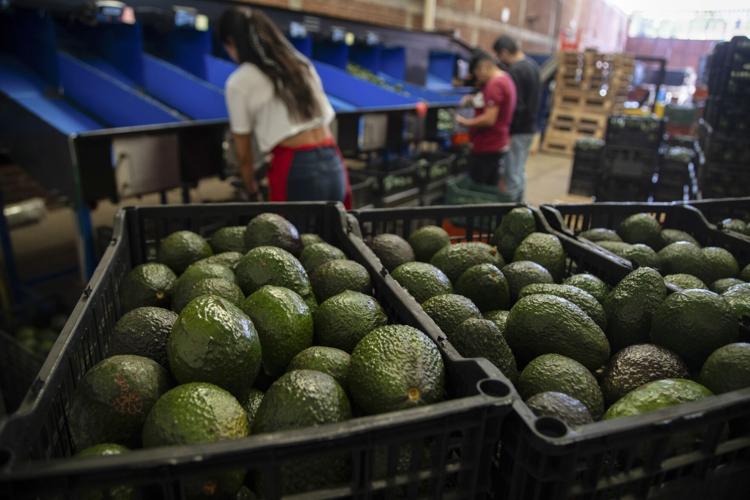
These are communities where much of the populace is employed in cross-border commerce. There are the customs brokerages, the produce warehouses, the maquiladoras. There are even specialized businesses like Port Devanning Services, a logistics company that specializes in unloading trucks for U.S. Customs inspections. They employ 50 people.
The Nogales U.S. Customs Broker Association has donated more than $2 million over the last 10 years to groups like the local Boys and Girls Club, the Santa Cruz County Rodeo and Fair Association and the Santa Cruz Valley Unified School District.
But 25 percent tariffs will have a tendency to suppress trade, as consumers choose not to buy more expensive products.
“Where we could see the most impact is in the produce industry,” said Joshua Rubin, chairman of the Greater Nogales Port Authority.
It’s something that Nogales Mayor Jorge Maldonado, a veteran of the produce industry, is worried about.
“The less trucks we see, the less employees we’re going to have,” he said.
There's also a potential impact on local tax revenue. In addition to the sales taxes collected from Mexican shoppers, which could be endangered by higher prices in the United States, the city collects about $450,000 per year in overweight-vehicle fees for the trucks entering the city.
Those, of course, are just local impacts. Nationally, we’ll be paying more for all kinds of winter produce — tomatoes, asparagus, cucumbers. And that’s just the food. Auto parts, medical devices and many other manufactured products also are imported through Nogales, even Ford cars from Hermosillo.
The tariff impacts will be felt doubly in the border region, because it depends so much on trade and also must absorb price increases like the rest of the country.
It’s just another price paid for living in an area colored by criminality in the view of outsiders. Drugs produced much further south and consumed much further north pass by, and that means neither cross-border trade nor piloting drones can be considered innocent activity.

