




Arizona is Mexico’s No. 1 trading partner and vice versa. The same goes for the U.S. as a whole — it’s Mexico’s top trading partner and Mexico is its top trading partner.
That’s why consumers and producers of produce and other goods on both sides of the border have a lot to lose in the form of higher prices and diminished employment if an 11th hour, pre-election threat by President-elect Donald Trump to impose stiff tariffs on all Mexican imports becomes reality once he’s in the White House, economists and other experts say.
Trump told two campaign rallies the day before the Nov. 5 election that he would slap such tariffs on imports unless Mexico agreed to take steps to curb the flow of undocumented migrants and illegal drugs into the U.S. The size of the tariffs could range from 25% to 100% of the goods’ value, he said.
Any tariffs imposed on imports of Mexican-made goods will be partially or completely felt by by consumers in Arizona and nationally, three academic economists and the head of a Southwestern produce trade organization told the Arizona Daily Star.
“We are in an inflation situation. President-elect Trump ran on a platform of dealing with inflation,” said Lance Jungmeyer, president of the Fresh Produce Association of America,” a Nogales-based trade group representing 120 companies operating along the Southwest border that import and distribute Mexican produce.
“If he puts tariffs on imported produce and food, it would be completely counter to his campaign pledge to tackle inflation, and would send prices through the roof.”
Because of that and because tariffs on Mexico could trigger Mexican retaliation of slapping tariffs on U.S. imports, the idea of this country imposing such tariffs is “stupid,” said longtime University of Arizona economist George Hammond.
But Jungmeyer and two other experts inside and outside the produce industry expressed confidence in interviews with the Star that such an outcome can be avoided through negotiations.

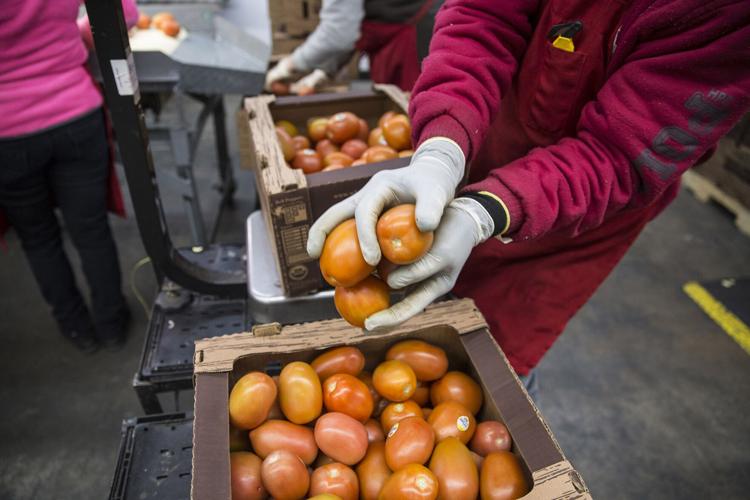
Tomatoes grown in Mexico are sorted, weighed, and boxed for shipping at the Wholesum Family Farms distribution center in Nogales, Arizona.
One reason they think that is that a Trump threat to slap tariffs on Mexican imports more than five years ago was staved off after the U.S. and Mexico reached agreement on how Mexico would move to curb the flow of Central American migrants into their country, they said.
“I’m not concerned with this at all. I look at what you say is a threat, I say is a negotiation tactic,” said Jaime Chamberlain, president of Chamberlain Distributing Inc., which for 54 years has been importing Mexican fruits and vegetables including tomatoes, squashes, bell peppers, cucumbers and beans and tomato items for distribution to North America and Europe. “It’s a strategy he’s used with many other institutions and other countries as well, as leverage to negotiate what you’re looking for.
“That makes this an opportunity; I don’t look at this as a hindrance. I look at this as an opportunity for two new administrations to do (more) business with each other,” Chamberlain said, referring to new Mexican president Claudia Sheinbaum.

Jaime Chamberlain, the president of Chamberlain Distributing Inc. and chairman of greater Nogales and Santa Cruz Port Authority.
“I look at it as an opportunity for us to grow our economic health, and to solidify the North American trade pact agreement that has worked so well.”
Context has changed since 2019
Jungmeyer said he’s pretty optimistic major tariffs on Mexican goods can be avoided this time around, “but I do think the country is in a slightly different place than it was last time. In 2019, more voices were willing to stand up and say ‘free trade is helpful and it benefits my community’.
“Is the environment now amenable for people to speak up?” he asked.
Professor Lucinda Vargas, a New Mexico State University economist, agreed that a negotiated settlement to avoid tariffs is possible, but her outlook generally was more cynical than Chamberlain’s.
“It is still conceivable that the two countries come to terms — but these terms will be a quid pro quo basically almost dictated by Trump,” said Vargas, associate director of the university’s Center for Border Economic Development. “It will be a setting where Trump will exert sufficient pressure to come away with a substantial ‘prize’ by way of his demands on the immigration and/or security fronts.”
Mexico will sell this outcome not as having caved in, but as having avoided punitive tariffs, “as a victory of its own to keep its exports flowing to the U.S., a critical source of economic growth for the country,” she said.
The reason Trump can pull something like this off “is a matter of clout, derived from the fact that the U.S. is Mexico’s top market for its exports representing about 80% of the country’s total exports,” Vargas said.
Also less confident that tariffs on Mexican imports can be avoided this time is Jeremy Slack, an author and an associate geography professor in El Paso who got bachelor’s and master’s degrees and a doctorate at the University of Arizona
“The big question on this is can Mexico slow undocumented immigration to the level that Trump wants; I would say the answer is probably no,” said Slack, of the University of Texas at El Paso. He thinks Trump “will come in with much higher expectations right now. He knows he was successful in using the threat of tariffs to get them to do what he wants.
“He seems more excited about tariffs now. It’s not as easy for Mexico to negotiate it away,” Slack said.
“I’ll put 200% or 500% — I don’t care”
One of Trump’s pledges to impose tariffs came Nov. 4 at a campaign rally in Raleigh, North Carolina. He pledged to impose gradually escalating tariffs, ranging from 25% to 100%, on Mexico if it doesn’t take more steps to curb illegal immigration and drug traffic into this country.
The once and future president told crowds in Raleigh and in Pittsburgh that day that the tariffs are needed to stop “this onslaught of drugs and criminals coming into this country,” according to national press accounts.
If a 25% tariff doesn’t work, “I’ll make it 50, and if that doesn’t work, I’ll make it 75. Then I’ll make it 100,” Trump was quoted by the Washington Post.
“Now we have a new president of Mexico,” Trump said. “Supposed to be a very nice woman, although I haven’t met her. I’m going to inform her that on Day 1, or sooner, that if they don’t (stop) this onslaught of criminals and drugs coming into our country I’m going to immediately impose a 25% tariff on everything they send into the United States of America.”
Last month, Trump also said he would implement a 100% tariff on Mexico’s auto industry, as border trade includes many vehicles and parts that are sent both ways during production and assembly.
“All I’m doing is saying, I’ll put 200% or 500% — I don’t care,” Trump said in a Fox News interview, the Reuters news service reported in mid-October. “I’ll put a number where they can’t sell one car. I don’t want them hurting our car companies.”
But a significant share of Arizona’s trade with Mexico is cross-border production sharing, in maquiladoras (twin plants) on both sides of the border, said Hammond, director of the Economic and Business Research Center at UA’s Eller College of Management.
“That means that auto parts (for instance) flow back and forth across the border as part of making a car that is finished in Michigan. Tariffs on that share of trade would obviously be self-defeating,” Hammond said.
Vargas agreed, saying, “If he imposed tariffs on Mexican goods coming into the U.S., a lot of the goods are made by U.S. companies. He would actually be taxing U.S. products. These companies, Chrysler, Ford, electronics companies, you name them, they will be in Mexico.
“So when they get ready to export to the U.S. and the U.S. slaps tariffs on them, they’re really hurting their own U.S. industry,” she said.

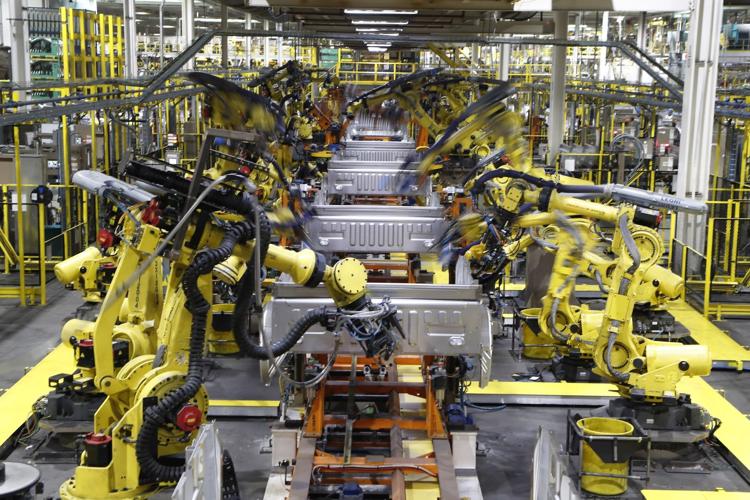
A Ford assembly plant in Mexico.
Trump has long been an outspoken, unstinting advocate of tariffs, notwithstanding opposition to them from economists, many conservative Republicans and Wall Street executives. While they see tariffs as threats to economic growth and an invitation to foreign government retaliation, he sees them as ways to protect existing U.S. industries and to promote future industrial growth.
In his first term, Trump imposed very strict tariffs on some Chinese imports, and despite the criticism they drew, President Joe Biden kept them after Trump left office.
The Post reported last week the president-elect is readying the most extensive tariffs the U.S. has seen in nearly a century. But some of those levies will probably be used as bargaining chips in new trade negotiations, the Post quoted investors, executives and his Republican allies as saying. Generally, Trump favors high tariffs to rebalance global trade to favor domestic manufacturing and to raise additional government revenue that could help reduce income taxes or pay for other programs.
Food prices would likely go up
But if those negotiations don’t succeed and the Trump Administration charges tariffs to companies that import Mexican produce and other goods into the U.S., “then it’s a question of how much they can pass onto consumers,” said UA agricultural economist George Frisvold.
“With agriculture commodities, the demand … is called price inelasticity. If you raise the price a lot, it doesn’t change the amount of the food that is consumed. Agriculture is is fairly ripe for having a big chunk of those costs passed on” to consumers.
One of the defenses of Trump is that he’s not actually going to do this stuff, Frisvold said, so “I guess we’ll see what he does.”
Trump’s campaign said everyone is concerned about high prices. If he imposes these tariffs, “This is going to make it way worse than what we’ve seen,” Frisvold said.
Following through on a threat of a huge increase in tariffs might cause Mexico to do more on immigration and drug problems, said UA’s Hammond. “But maybe not. The point is that there would be a significant cost paid by U.S. companies and consumers by using tariffs for that purpose. I don’t know if the benefits would outweigh the costs. I’m not sure anyone knows,” Hammond said.
Hammond noted that Arizona imported $11.8 billion worth of goods from Mexico in 2023, a figure that accounts for about one-third of all imported goods into the state. The same year, Arizona exported $8 billion worth of goods to Mexico, accounting for 27.6% of all Arizona exports worldwide, he said.
The current trinational North American treaty binds all three countries not to act unilaterally to impose tariffs, Vargas said.
“If he does that unilaterally, he would be breaking that agreement, not that he might care. He could say, ‘I’ll invoke national security concerns’, and then he can unilaterally go apply some of these tariffs.”
2019 deal between US, Mexico
At the end of May 2019, Trump announced he would impose a 5% tariff on all goods imported from Mexico beginning June 10 if Mexico did not take action to stop the flow of migrants from Central America into the U.S.. After that, he said, the tariffs would go up an additional 5% each month until reaching 25%, unless the administration was satisfied with the Mexican government’s efforts on immigration.
But on June 7, 2019, the two governments announced Mexico would assist the U.S. in curbing migration across the border by deploying its national guard troops through the country, especially its southern border, among other steps.
On Thursday, Nov. 7, Nogales produce importer-distributor Chamberlain recalled that Mexico ultimately put 25,000 soldiers at its southern border with Guatemala, in Papachula, to stem the flow of migration to the U.S.’s satisfaction.
“That’s what great partners do with each other. The U.S. helps Mexico on many, many different fronts,” Chamberlain said.
This time, the situation is different at the border, he said. While the Biden Administration very recently managed to stem the flow of migrants into the U.S. with tougher enforcement tactics, “meth, fentanyl and heroin” are coming in.
He said he has no idea what kind of measures Trump will request, but “he may ask, ‘I would like for the DEA (federal Drug Enforcement Administration) to be much more involved with the Mexican law enforcement to help with this issue which affects our country’.
“Through negotiation, anything and everything can be accomplished,” Chamberlain said.

