


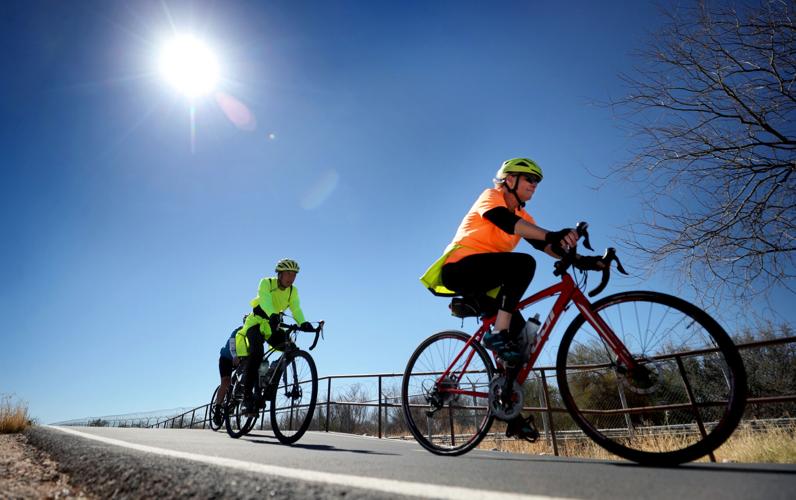

Tucson bicyclists have made the Saturday morning ride a ritual.
Most of the time, it’s a beautiful experience of cool air, rewarding exertion, light traffic and maybe a coffee or pastry with friends at the end.
One of those rides ended in catastrophe Saturday about 9:45 a.m. when a driver wielding a Cadillac Escalade struck Kenneth and Gretchen Cook, an athletic, married couple riding along East Sunrise Road. Kenneth, 74, and Gretchen, 62, both died.
While it’s appropriate to call their deaths tragic, catastrophic, or shocking, the fact is such deaths are not really unexpected these days. In the Tucson area and around the country, since the pandemic began in 2020, drivers have been killing pedestrians, cyclists and each other at alarming rates.
Consider that in the city of Tucson traffic fatalities of all types have risen from 46 in 2010 to 69 in 2018, 89 in 2020 and 88 in 2021.
So far this year, the numbers are much worse than last year. Already this year, 25 people — walking, cycling, driving motorcycles or driving other vehicles — have been killed in Tucson. That’s a 79% increase over the same period last year, which was a bad year.
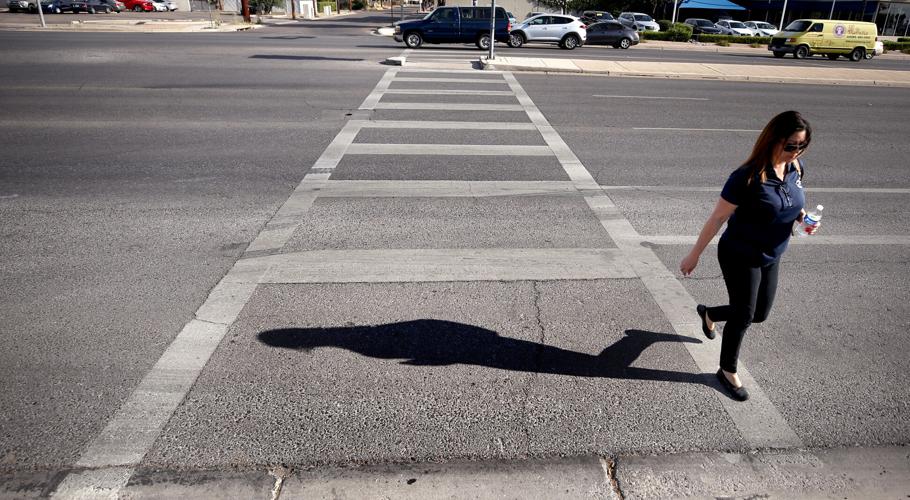
Pedestrians have accounted for the bulk of the increase in Tucson’s traffic deaths this year. Already, 12 people have died while walking Tucson’s streets, up from seven at this time last year.
Impaired driving is on the rise
The Cooks died in unincorporated Pima County, the same area where, on March 14, a man died flying off the hood of a car as a woman, accused of being intoxicated, drove on Ina Road. In the Cooks' case, 26-year-old Ryan Machado fled the scene, but deputies arrested him nearby and charged him with manslaughter and DUI.
Nationwide, aggressive and impaired driving seemed to worsen with pandemic lockdowns and have accelerated, even as normal traffic returned to the roads. Among other factors, many people started abusing alcohol and other substances more, said Lt. Lauren Pettey, who oversees the Tucson Police Department’s traffic division.
That’s been a factor in many of the collisions that have killed pedestrians this year, she said.
“A lot of these pedestrians are under the influence of alcohol or narcotics,” Pettey said.
But they’re also being struck by people who may be driving intoxicated. That could be an explanation for why there have been so many cases of drivers fleeing the scene of the accident, and sometimes never found.
That was the case in a fatal New Year’s Eve collision, one of two that happened that evening on East Fort Lowell Road near North Stone Avenue. The victim was Cari Ann Conway, 35.
Conway was homeless, schizophrenic and did drugs, her mother, Katherine Welsh, told me. She likely did cross mid-block, a frequent factor in this year’s pedestrian deaths, Welsh said. But she suspects, considering it was New Year’s Eve and the driver fled, that wasn’t the only factor.
“Probably somebody hit her and they were screwed up,” Welsh said from Michigan, where she lives now after many years of living in Tucson. “I know my daughter was killed, that’s all I know. I know a pedestrian gets killed dang near every day, because I follow it.”
Paint isn’t protection
Local authorities aren’t unaware of what’s going on. The new police chief, Chad Kasmar, has prioritized traffic enforcement, including reestablishing the traffic division that Pettey oversees.
The motorcycle officers, who had been reassigned to normal patrol divisions in 2020, are back under a single command, Pettey said. Their numbers are set to rise from 20 to 28, though that is down from about 50 motorcycle officers about five years ago.
The city’s Move Tucson plan, too, incorporates dozens of ideas for improving pedestrian and bicycle safety, which add up to a total cost of about $515 million in road projects. Some of them would mean reducing traffic lanes in order to add bike infrastructure, continuous sidewalks and other safety features.
It won’t be without controversy. Scott Egan, a Barrio Hollywood resident and local activist, sent out an email over the weekend opposing proposed road narrowing on the west side, characterizing it as part of “gentrification.”
But those West Side proposals are just listed in Move Tucson, not funded or near happening. Another one in midtown is actually likely to occur. The city surveyed residents earlier this year about ideas for reconstructing East Fifth Street between North Country Club Road and North Wilmot Road.
The proposal that received the most support from neighborhood groups would reduce the street from four traffic lanes, two each way, to one lane each way with a center turning lane and protected bike lanes on either side.
Physical protection from vehicles, it turns out, is a desperate need right now. Unprotected bike lanes mean little or nothing. The Cooks were bicycling in a bike lane, albeit one where the line was obscured by recent road work, when struck Saturday.
Bike route aggression
Even bike routes without protection can lead to trouble. Carissa Sipp was taking her usual ride to school Monday morning along the East Third Street bike route with her two children when a driver came up close behind them and started honking.
She posted a short video to Twitter, in which a driver slams on his horn, then whips around them as Sipp’s daughter says “Mommy he’s getting really close.”
A helmet-mounted camera captured the moment a woman and her two children were honked at and passed by a driver along the 6.5-mile Third Street bike route in Tucson on March 21. Video courtesy of Carissa Sipp.
“He laid on the horn, laid on the horn, then followed us for like 200 yards. The kids were freaking out. He was like an inch from my trailer” carrying the family dog, Sipp said.
This was, of course, on a supposed bike boulevard, a wide, usually empty street. Pettey later had officers take a police report on the incident.
“It’s been one thing after the other with traffic,” said Sipp, a daily bicyclist. “These last three years it’s been scary.”
The Cooks were outdoors exercising all the time, former neighbor Sherri West told me.
“They were so tanned. They walked everywhere. They rode their bikes everywhere.”
Steve Morganstern, who maintained the Cooks’ bikes occasionally at his shop called The Bicycle Ranch, told me the couple previously did triathlons and rode mostly on roads. Lately they had transitioned toward riding more on trail or gravel roads.
But any trip on an unprotected Tucson-area road these days carries a big risk. Even a beautiful Saturday-morning ride.

