


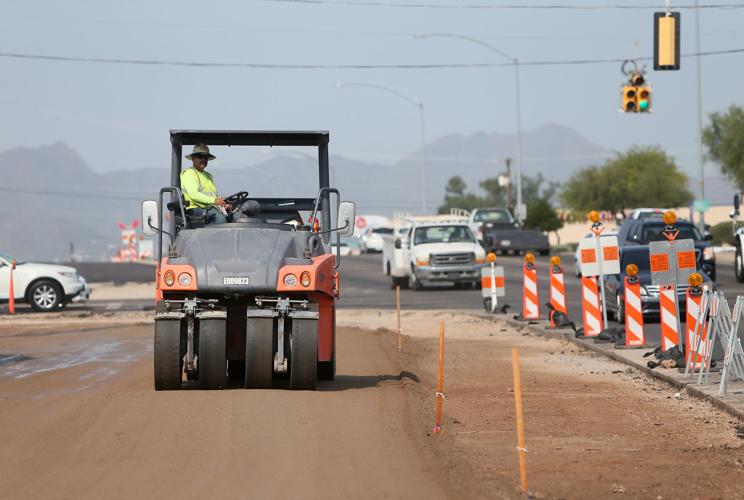

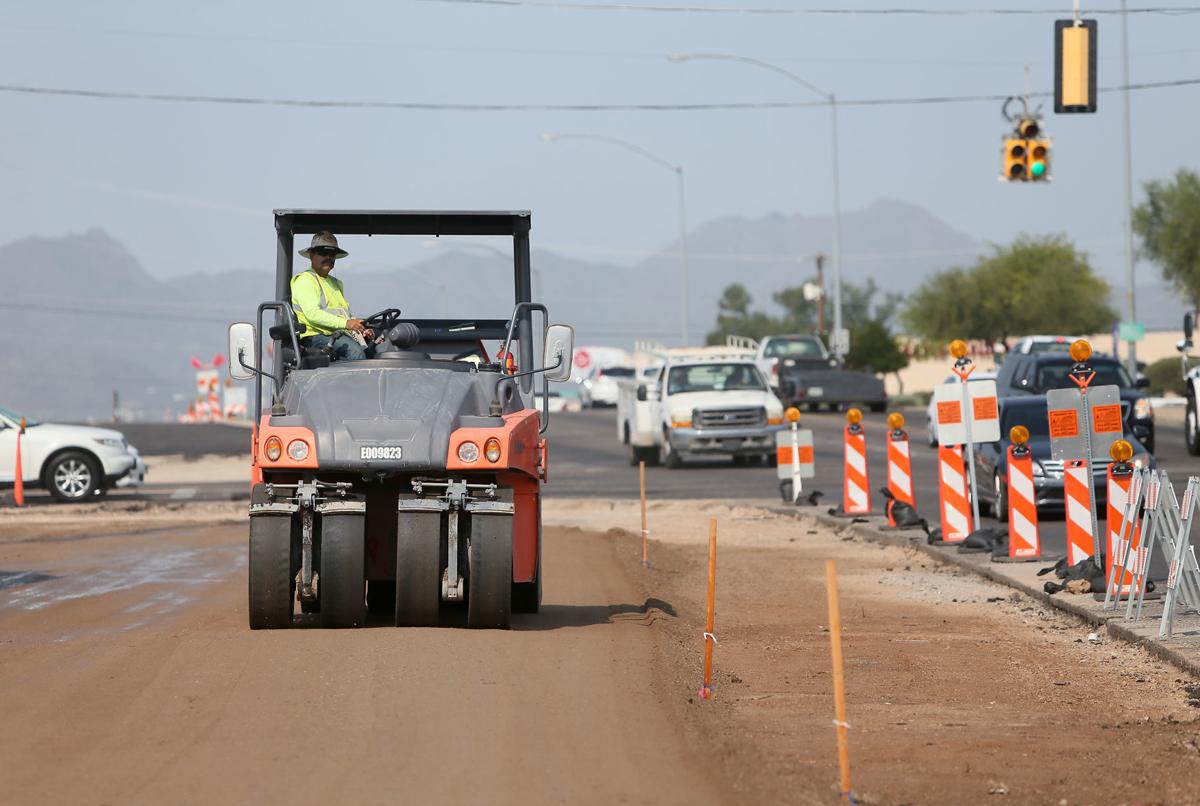
You remember the Grant Road project, right?
That’s the one that is supposed to improve Grant, from west of North Oracle Road all the way to North Swan Road, by widening it, putting in medians, improving the intersections, bike lanes and sidewalks. It’s a glaring need in the heart of Midtown.
For Tucson residents, the Grant Road project was a key piece of the original Regional Transportation Authority plan that Pima County voters passed in 2006. Still, most of the Grant Road project remains undone. The last stretch, between approximately North Mountain Avenue and North Country Club Road, isn’t scheduled to begin construction until 2026.
Yes, it will be about 20 years after we passed a county-wide, half-cent sales tax to improve transportation around Pima County, before we begin construction on one of its key projects in the city.
This is just one of many reasons that Tucson residents, and our City Council, should be highly skeptical of supporting a new RTA transportation plan, dubbed RTA Next, extending the countywide half-cent sales tax another 20 years before the current one expires in 2026. RTA Next proposals are in refinement now with hopes to bring one to voters soon.
The city doesn’t have formal veto power over the RTA Next plan, but if the mayor and City Council oppose the plan, it probably wouldn’t pass a countywide election, as required and might not even come to a vote.
City representatives are right to be hesitant about RTA Next, and not just because of the extreme delays in funding projects like the Grant Road improvement. The city should be prepared to bail on the RTA altogether because, among other good reasons, it can likely do better on its own, by asking city voters to approve a citywide half-cent sales tax for transportation when the countywide RTA tax expires in 2026.
A crucial moment for RTA
We’re in a crucial moment in RTA Next planning. The Citizens Advisory Committee, formed to create a single new plan, couldn’t find consensus on one. In early December, it passed along two ideas to the next boards: The RTA’s Technical Management Committee, and its top board, made up most of the elected officials of each local town and city, along with the tribal nations, Pima County and the Arizona Department of Transportation’s representative.
They’re trying to figure out how to either combine the plans or pick one of them. At first glance, neither looks like a justifiable deal for the city, where residents make up 52% of the county’s population and which contributes around 65% of the RTA’s sales tax revenue.
An analysis conducted by local transportation advocates shows that the two remaining RTA Next plans, called 4.2 and 5.1, along with a hybrid of the two plans, would likely only spend 40 percent to 45 percent of all RTA funding on projects in the city of Tucson. This includes big road projects, the successors to the Grant Road rebuild, as well as transit spending and the vast majority of RTA funding for safety improvements.
The raw numbers, according to this analysis: Under the current proposals, $896 million to $970 million would be spent in the city, out of a total of approximately $2.3 billion in projected revenue, countywide, over 20 years. That’s far short of the approximately $1.3 billion to $1.5 billion in revenue that the city could hypothetically collect on its own.
So, as it stands, the city could ask voters for a sales tax applicable only in the city and receive up to $500 million more in revenue out of it than it would get in the existing RTA Next plans.
If these figures pan out in the chosen RTA Next plan, the question for Tucson officials becomes how they can justify staying in the RTA, not how they can justify leaving.

Tim Steller, opinion columnist for the Arizona Daily Star.
The regional argument
Now, one of the main arguments against leaving is regionalism. The idea is that there is an intangible value in the city and the other Pima County jurisdictions gathering to plan and spend money together.
I think that’s true.
Ted Maxwell, the retired Air Force general who is the vice-chair of the RTA board, has banged this drum repeatedly and justifiably.
“Any real issue that will impact the region in the future needs to have some kind of regional master plan,” he told me Thursday.
As to transportation, he said, “I don’t think any of the municipalities, and/or Pima County can do it alone. Getting an improved system has to be coordinated.”
Pima County Supervisor Rex Scott, also a member of the regional board, put it simply: “None of us, working alone, is going to be able to accomplish as much as all of us working together.”
Conceptually, I agree. But the thing is, the Regional Transportation Authority is not the only option for regional planning. The Pima Association of Governments is run by the same people and exists to serve a regional purpose. In fact, PAG describes itself as “a metropolitan planning organization for the greater Tucson region.”
What the RTA does is impose a tax for transportation purposes and decide how to spend it. Yes, it’s probably better if we coordinate that, but it’s not our only option for regional planning. We can spend tax money separately if we wish.
I seriously doubt that we will, for example, have a six-lane road in Marana become a two-lane road in Oro Valley. We’re smart enough to figure those things out without a RTA.
A pattern of disrespect
The other thing that argues for the city leaving RTA is what I would describe as a pattern of disrespect and opposition coming from the staff of the entity. It starts at the top with longtime executive director Farhad Moghimi, a veteran administrator who previously worked for Sahuarita and Marana.
Over the last couple of years, he has tried to expel city of Tucson appointees to the Citizens Advisory Committee. He has made criticism risky by declaring that he is not a public employee and RTA is not a government entity under defamation laws. He has resisted the city’s well-founded proposal to change the plan for North 1st Avenue, ultimately losing that fight. He has fought the city’s effort to make maintenance of RTA’s previous projects part of the RTA next plan.
And he has steered conversation away from the more transit-heavy proposals favored by some city of Tucson representatives. One city appointee, vice-chair of the Citizens Advisory Committee Carolyn Campbell, tried to make a presentation to the Transportation Management Committee in December, only to be stopped by Moghimi.
He claimed her presentation on ideas for the RTA Next violated the open-meeting law because it was not specifically on the agenda, although discussion of RTA Next was the main thing the committee was doing.
Tucson City Manager Michael Ortega, the chair of that committee, incredulously questioned Moghimi’s opinion on this, but ultimately let him prevail. Campbell is supposed to get the chance to present her ideas at a committee meeting next month.
“I think Farhad has demonstrated he’s part of the problem,” Tucson City Council member Steve Kozachik said. “He and (Marana Mayor) Ed Honea have controlled a lot of the dialogue, a lot of the agenda. We shouldn’t have to fight to get something on the agenda.”
Leaving aside the financial issues, it would not be too much for the city to demand a new executive director in exchange for its support of any RTA Next.
Two projects delayed
Finally, the city has had two important projects, on 22nd Street from South Kino Boulevard to Interstate 10, and North Houghton Road from East Speedway Boulevard to East Tanque Verde Road, removed from the current RTA plan and put in RTA Next. They are two of four projects, approved by voters in 2006, for which the RTA has not raised enough money to cover the projects’ inflated costs.
With all this baggage, city residents and officials ought to expect something more from RTA Next than what they got in the original RTA. But the way it’s shaking out, that doesn’t appear to be happening. So far, it looks like a net transfer of tax money out of the city, managed by people who resist the city repeatedly.
If this remains the case, the mayor and City Council don’t need to justify rejecting an RTA Next proposal. It’s what the situation will demand.

