



The University of Arizona’s faculty chair says President Suresh Garimella’s letter to a White House official was a clear rejection of the proposed higher education compact, while state schools chief Tom Horne counters that Garimella clearly did not reject the compact.
The disagreement is about whether the UA president’s letter Monday to U.S. Education Secretary Linda McMahon said “no” to the compact — which offers preferential funding in return for committing to the White House’s ideological, political and financial agenda for universities — or opened the door to negotiations.
“I think it was a rejection of the proposal put on the table,” UA Faculty Chair Leila Hudson told the Arizona Daily Star. “But I’m glad and I think it’s consistent with the University of Arizona’s principles that we don’t exclude the possibility of further discussion and dialogue around principles as part of our education mission,” she added.

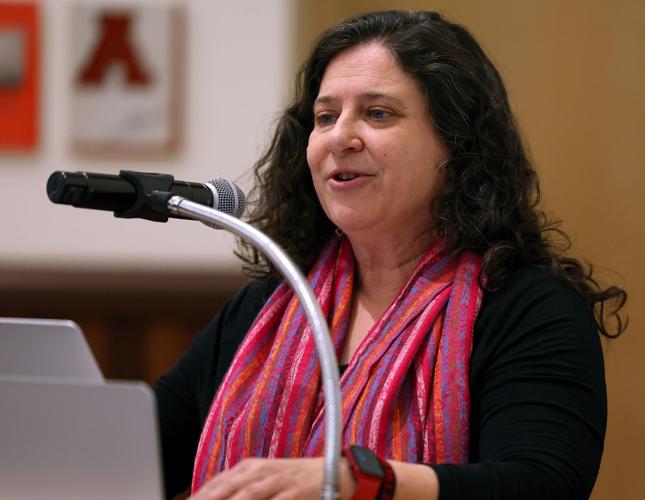
Leila Hudson, chair of the University of Arizona faculty.
Garimella wrote to McMahon that the UA “seeks no special treatment” and will continue to compete on merit for federal research funds.
But he also attached a Statement of Principles “as a demonstration of our commitment to collaboration with the federal government” and said he looks forward to further discussion.
Rather than stating a hard “no,” Garimella’s letter to McMahon promoted discussion and partnership, UA associate professor Mark Stegeman said Monday.
Horne, an elected Republican who is Arizona superintendent of K-12 public instruction, pointed out that Garimella’s letter to McMahon “explicitly” states the UA shares the Trump administration’s vision for strengthening the U.S. higher education system. Garimella also wrote that this is “a vision rooted in a merit-based pursuit of excellence that directly or indirectly benefits all Americans.”
Horne also pointed to Garimella telling McMahon that UA has “much common ground with the ideas your administration is advancing on changes that would benefit American higher education and our nation at large.”
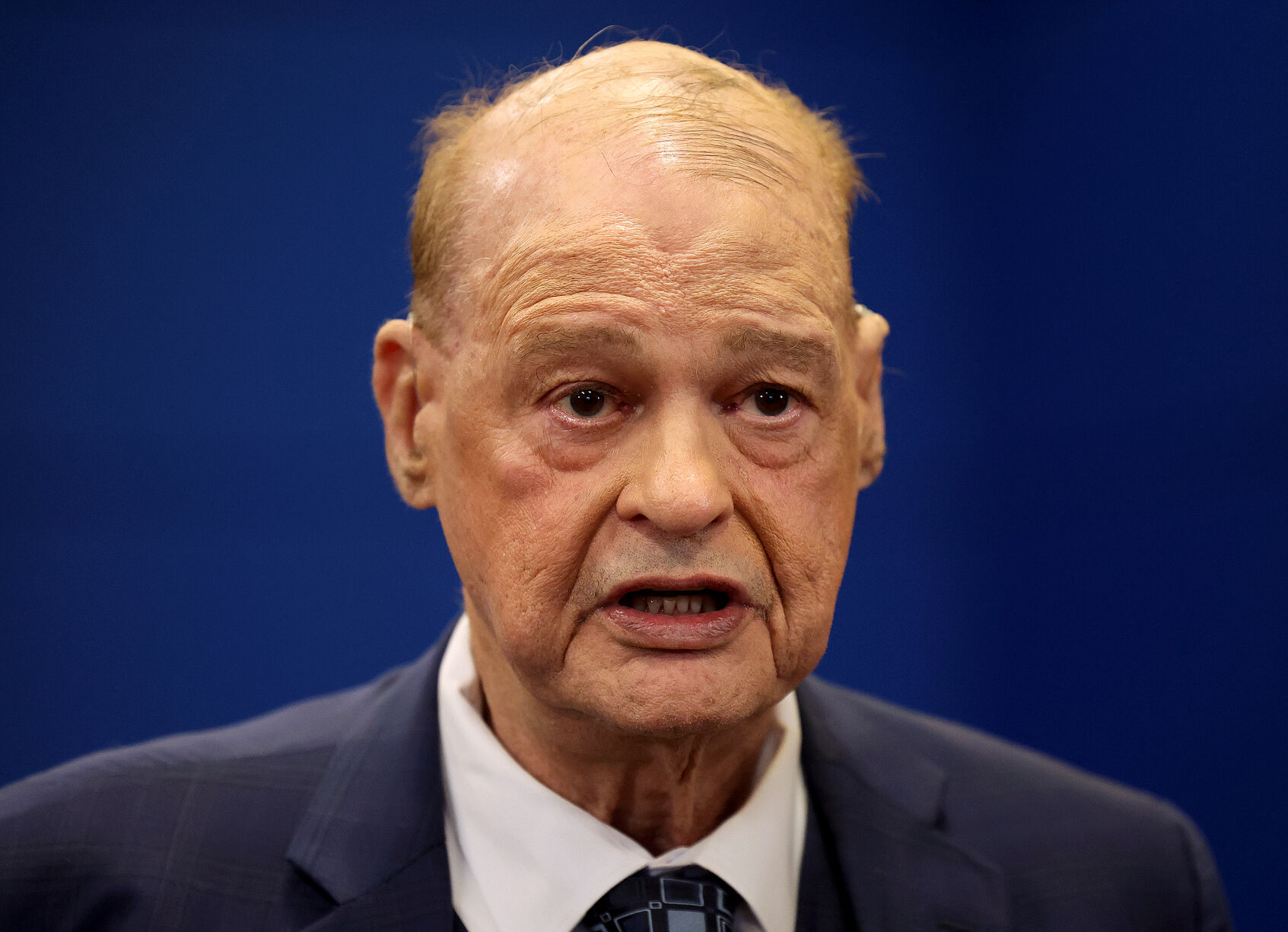
Horne
“Those statements clearly are not a rejection of the compact,” Horne said in a written statement Tuesday. He is a member of the Arizona Board of Regents, which oversees the state’s three public universities, although as an ex officio member, he, like Democratic Gov. Katie Hobbs, rarely attends meetings or votes.
“Reports that the U of A has rejected this compact are untrue,” Horne emphasized, as he praised the compact for “fighting against racial entitlements.”
UA spokesperson Mitch Zak, when asked whether Garimella rejected the compact, said, “The president wrote that ‘the university has not agreed to the terms outlined in the draft proposal.’ I would use his direct statements.”
The statement Zak referred to was made by Garimella in a separate email to the UA community on Monday, but not in his letter to McMahon.
UA President Suresh Garimella
Hudson, meanwhile, responded to a question about how much Garimella’s list of principles differs from the compact itself.
“I haven’t put the two documents side by side and done (a deep dive), but the key thing for me is the difference between an agreement to be signed — which was clearly unacceptable — versus a declaration of principles that announces what we do and what our aspirations are,” Hudson said.
“That is the critical difference to me — the difference between a binding deal, especially when presented under the sort of terms that the compact initially did, versus a statement of our principles which I think serves as the basis for ongoing good faith, level-playing-field discussions that all are free to participate in, learn from, comply or not comply as any particular institution sees fit,” she said.
In addition to the UA, Arizona State University has also been “engaged in dialogue” with the White House and “offered ideas,” regents’ spokeswoman Megan Gilbertson confirmed Tuesday. Gilbertson, the regents’ associate vice president for public affairs, also said Arizona’s universities have a responsibility to provide thoughtful feedback to the federal government, since it is their largest single funder.
ASU officials did not respond to a request for comment or to confirm if the White House has officially invited them to sign onto the compact. ASU was included in a phone call last Friday with White House officials about the compact. That call also included officials from the few universities — including UA at that point — among the first nine invited to join the compact that hadn’t yet decided. Seven of the first nine universities, including UA, have declined to sign the document.
Horne said he’s pleased the UA and ASU are “in talks about implementing the agreement.”
However, faculty and student reactions to Garimella’s decision have focused on his statement that the UA has not agreed to the compact’s terms.
The proposed compact says universities may gain priority access to federal money if they commit to 10 pages of rules proposed by the White House, including: banning the use of race or gender in hiring and admissions, freezing tuition for five years, capping international undergrad enrollment at 15%, changing or abolishing units that criticize “conservative” ideologies, and banning university employees from speaking about any societal or political event unless it directly impacts the university.
Garimella’s statement of principles includes: “The University of Arizona steadfastly believes in a merit-based pursuit of excellence in fulfilling its mission of education, research and engagement, with a vibrant marketplace of ideas and perspectives and equal treatment of all.”
Faculty leaders Hudson, Katie Zeiders and Mona Hymel sent an email to faculty Tuesday saying they appreciated the UA administration approaching the compact decision by “consulting, listening and defending (UA’s) shared values — actively engaging faculty, staff, students and community members, and maintaining communication throughout the process.”
“We, as faculty elected representatives, are encouraged by this transparency and collaboration,” and “by the support of ABOR in this effort,” the email said.
“Faculty governance and shared governance remain strong and indispensable at our university. Higher education must continue to evolve, and it is our faculty, our students, our staff and our community who will lead the way in advancing and strengthening higher education for all Arizonans.”
Gary Rhoades, a UA professor in the College of Education, said he applauded Garimella’s decision to stand up for scientific excellence, independence and academic freedom in the face of a federal administration that he said — in his personal and professional view as a higher education scholar — has “consistently denied and defied science and advanced junk science views about climate change and public health.”
He said he appreciated UA’s inclusion of its own principles of commitment to access, inclusion, equity and justice in the face of an administration he said is “assaulting the civil rights of multiple marginalized communities, and is seeking to privilege and give preferential treatment to a particular view of ‘conservatism’ that whitewashed the nation’s past and present reality.”
“I would also have hoped that President Garimella and ABOR’s ‘Statement of Principles’ would defend our university’s aims as an HSI (Hispanic-Serving Institution) as part of our strategic plan, and as a commitment, not to discriminate against non-’Hispanic’ students, but rather to ensure we better serve a population we have clearly underserved,” said Rhoades.
The Trump administration announced last month that the U.S. Education Department is ending a grant program for federally designated Hispanic-Serving Institutions, which include the UA and Pima Community College, that were eligible for extra federal dollars because they enroll high numbers of Latino students.

