


PHOENIX — State lawmakers are moving to undo a pending rule meant to provide more humane treatment of laying hens, claiming that stopping it will hold down egg prices.
The measure, already approved by a Senate panel, would strip the Arizona Department of Agriculture of its authority to enact the rule requiring farmers to move to cage-free operations. The rule was supposed to be in effect now but got delayed until 2026 amid concerns of effects on farmers in what has now become a multi-year outbreak of the avian flu.
The legislation from Sen. Shawnna Bolick, R-Phoenix, to overturn the rule before it takes effect would allow hens to be kept all their lives in cages as small as 67 square inches of usable floor space.
The department adopted the rule amid threats that animal rights groups would put the issue directly to voters, and in a way that would force farmers to more quickly change their practices or face criminal penalties. Hickman’s Egg Ranch, the state’s largest producer, gave its blessing to the state rule as a compromise.
Now, however, the industry is lobbying to scrap the rule. If that happens, the same groups whose initiative threat spurred the rule could be back — this time with something less to the industry’s liking and which lawmakers could not override.
“I can’t say exactly what we would do regarding a ballot measure,’’ said Chris Holbein, public policy director for farm animal protection at Humane World for Animals, the group formerly known as the Humane Society of the United States. But he said the organization is “committed’’ to getting a regulation enacted.
“We will continue to explore all of our options on it,’’ Holbein said.
In 2020, what was then the national Humane Society floated the idea of putting a measure on the ballot to require all eggs sold in Arizona to come from cage-free hens.
The idea so concerned the main farms, including Glenn Hickman, president of the company that bears his family name, that he agreed to a deal: Have the Legislature adopt the standard, but with a delayed effective date.
That measure faltered. But the Department of Agriculture picked up the issue and, with the support of the farmers, adopted its own rule phasing in the change: Go first to 144 square inches and, by the beginning of this year, have all major producers be cage-free, meaning free to walk around inside a barn. It does not mean free-range hens that can go outside.
That then quashed any plans to put the question to voters.
But now the industry is backing away from its agreement to spend the extra money for cage-free barns.
Patrick Bray, lobbyist for the Arizona Farm and Ranch Group, is using the bird flu — and the price of eggs — to tell lawmakers to kill the rule.
“Now we’re in a whole new situation,’’ Bray told the Senate Committee on Regulatory Affairs and Government Efficiency, noting the removal of 30 million birds nationally due to the latest round of avian flu.
“We are in a complete deficit of egg-laying hens,’’ he said. That is complicated, Bray said, by the flu spreading into the pullets — chickens younger than one year — that were supposed to replace the egg-laying hens.
“So it is going to be quite a while to play catch-up and to get back online and get enough supply in the chain so we can lower prices,’’ he said.

Arizona farmers are now lobbying to scrap a pending cage-free rule for laying hens that the industry previously agreed to.
Sam Richard, who lobbies for Humane World for Animals, told lawmakers they should not interfere with the Department of Agriculture’s effort to implement the rules. He pointed out that the department, showing it is sensitive to any potential effects of the flu on supply and price, has agreed to delay implementation until 2026.
As to the price of eggs, “There’s also no direct correlation right now the cost of eggs is because of the restriction on their housing size,’’ Richard said.
“Avian flu is a serious epidemic,’’ he continued. “And confinement has not yet been proven to have any relevance or correlation.’’
Bolick, the legislation’s sponsor, said killing the rule for cage-free eggs will help consumers.
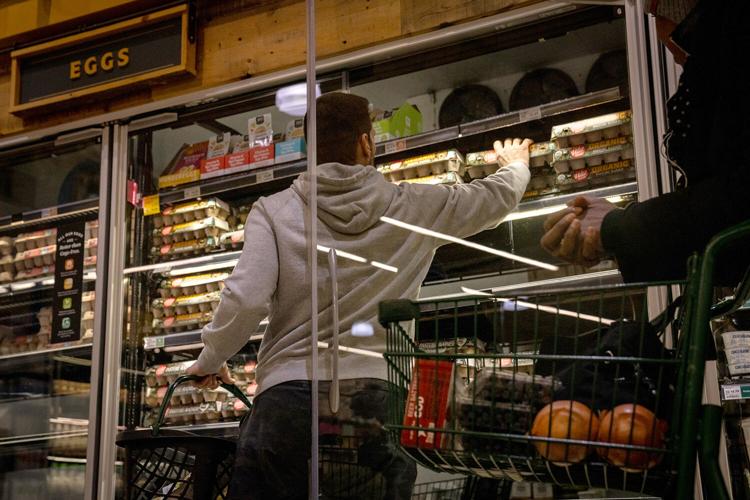
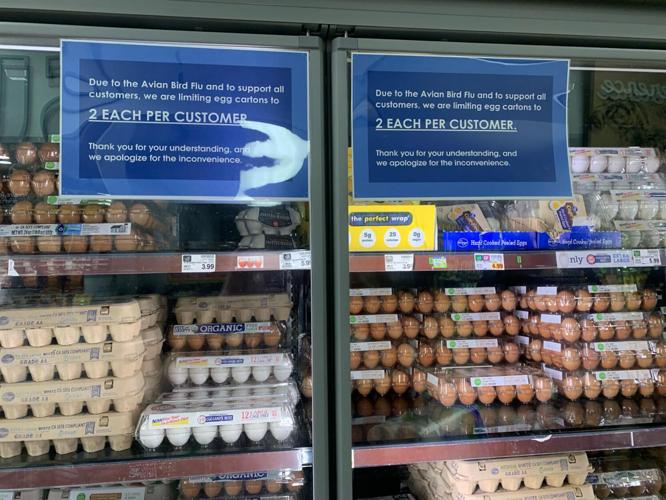
“As someone who goes grocery shopping for my household, I have seen the price of a dozen eggs more than double during the past four years,’’ she said in a written statement. “While we can’t solve the cause of bird flu, we can pass a law for Arizonans to see some relief on their grocery bills, and hopefully, eradicate the daily limits imposed on consumers at grocery stores due to high demand.’’
Speaking to lawmakers in 2021, Hickman pointed to a 2006 example, when Arizona voters approved a ban on “gestation crates’’ for pig and cattle ranchers. He said it was “pure luck’’ that his laying hens weren’t part of that successful initiative. The Department of Agriculture reached the same conclusion in justifying the rule, citing “the success of recent animal welfare ballot initiatives in Arizona and elsewhere.”
Hickman told lawmakers at the time his company already had been moving into the cage-free market. He said that some clients, including McDonald’s and Costco, already were demanding cage-free eggs.

Arizona lawmakers are moving to undo a pending state rule meant to provide more humane treatment of laying hens. Whether that would hold down egg prices, as the legislation’s sponsor says, is in dispute as avian flu rages.
Messages left last week and Monday for Hickman and the company were not returned. But Bray told lawmakers at the most recent hearing that the situation has changed in the face of avian influenza.
“Someone like Hickman’s would have to take a million more birds off the market as they retrofit these barns,’’ Bray said. “And we just don’t have the luxury of doing that at this point in time. We want every egg possible on that market to bring down prices.’’
Bray conceded it was the fear of a successful initiative that led producers like Hickman to accept the less-onerous rule, but said he’s less concerned about that now.
“The price of eggs was the epicenter of this last (presidential) election,’’ Bray said. “If you go to the ballot now, with the price of eggs where they’re at, I think people are going to go, ‘I think we’ve had enough of that.’”
Not everyone was convinced that allowing producers to keep hens in 66-square-inch cages will do much to make eggs more affordable. Sen. Mitzi Epstein said there are other options.
“One of them is slowing down the growth of retail monopolies who are just raising the prices higgily-giggily,’’ said the Tempe Democrat.
The Department of Agriculture, in adopting the rule — albeit before avian flu — concluded that eliminating cages would add anywhere between a penny and 3.25 cents per egg. Using an estimate of annual per capital consumption of slightly more than 270 eggs a year, that penciled out to somewhere between $2.71 and $8.79 per person.
Farm Action, a national group that targets corporate monopolies, last month asked the Federal Trade Commission and the U.S. Justice Department to investigate egg prices, suggesting that producers were being deliberately slow to replenish flocks to keep profits higher.
It also noted the U.S. Agriculture Department provides payment to farmers who have to destroy birds and eggs.
There also is a bit of history. A federal jury in Illinois two yeas ago ordered $17.7 million in damages for food manufacturers who sued major egg producers over what they said was a conspiracy to limit the price of eggs in the 2000s.
If lawmakers quash the ability of state agriculture regulators to enact and enforce the rule, that effectively would end the efforts of a Tucson restaurants owner to have a judge do the same thing.
Grant Kruger filed suit in 2023 saying the department is exceeding its authority. Krueger said he is affected because of the economic harm to his three restaurants: Union Public House, Reforma Modern Mexican Mezcal + Tequila, and Proof Artisanal Pizza and Pasta. No date has been set for a trial.

