

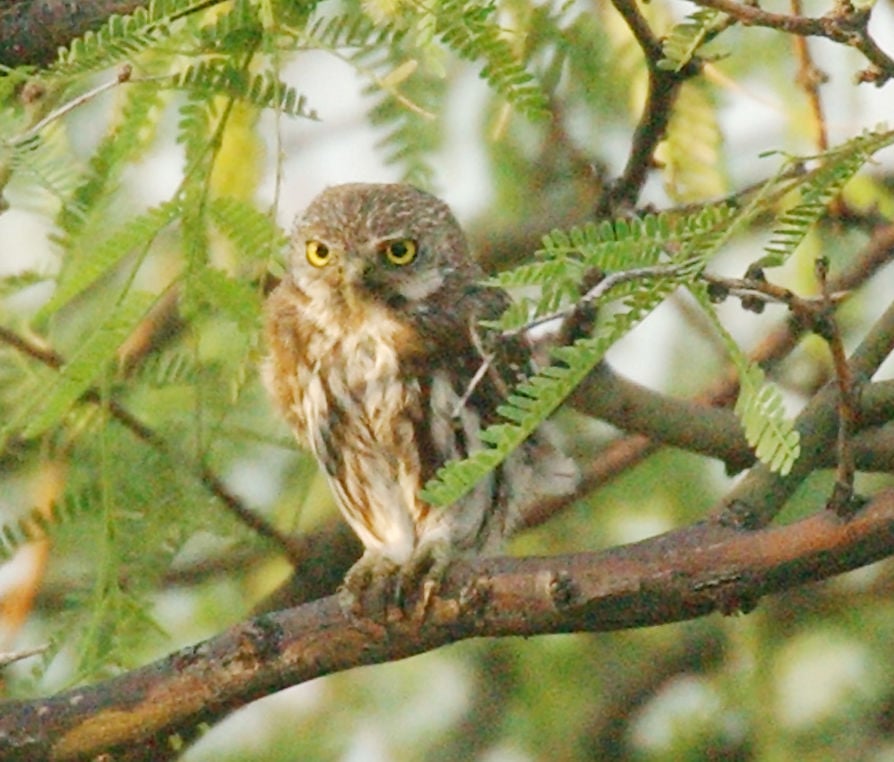

A Tucson environmental group filed suit Thursday to try to force the federal government to move faster on protecting the once-endangered pygmy owl and a flock of other species it says are imperiled.
The Center for Biological Diversity lawsuit alleges that, specifically for the cactus ferruginous pygmy owl, the U.S. Fish and Wildlife Service is now six months past its formal, legal deadline for deciding whether to list the tiny bird as a threatened species.
The wildlife service proposed listing the owl as threatened in December 2021, saying it is imperiled due to loss of habitat, proliferation of invasive, non-native species, and climate change. The center said in its lawsuit that the service should have made its decision 12 months after it proposed the listing, meaning by Dec. 22, 2022.
The lawsuit also listed 12 other species for which service decisions on whether to list or not are running behind schedule.
“These fearsome little owls and many other species have waited too long for lifesaving protection,” said Noah Greenwald, endangered species director at the center, in a news release announcing Thursday’s lawsuit.
Wildlife service spokesman Al Barrus didn’t return a phone call seeking comment on the suit. Typically, service officials decline to comment on pending litigation.
Greenwald said, “The Fish and Wildlife Service’s program for protecting species is badly broken and the administration is doing nothing to fix it. The Endangered Species Act is our best tool for addressing the extinction crisis, but it only works if we actually use it.”
Center: Biden administration lags
Suing over missed federal deadlines for endangered species protection has long been a common tactic of the center, one that has resulted in numerous listings of various plants and animals as endangered or threatened.
Indeed, the center successfully sued under similar grounds to force the wildlife service to list the cactus ferruginous pygmy owl as endangered back in 1997. It had first petitioned the service to list the owl in 1992.
In its news release Thursday, the center said the Biden administration is lagging behind other, recent Democratic administrations in listing imperiled species. The Biden administration has protected 11 species per year compared to 65 species a year under the Clinton administration and 36 species each year under the Obama administration, the center said.
Many critics of the center have said its litigation on endangered species diverts service officials from carrying out other important duties. But center officials have said their lawsuits forced the wildlife service to carry out a basic responsibility — listing and protecting imperiled animals and plants.
The original pygmy owl listing had major impacts on development on Tucson’s northwest side for many years, forcing developers to delay and in some cases scale back their projects to accommodate the owl’s presence. In many instances, the developers set aside land to preserve owl habitat.
But that protection disappeared in 2006, when a lawsuit filed by various homebuilder groups led to a service decision to “de-list” the owl. The homebuilders groups, including the Southern Arizona Home Builders Association, said the owl didn’t deserve protection in the United States because it was far more common in northern Mexico.
The center fought back, petitioning and suing once again, and in 2017, a federal judge ruled that the service’s opposition to re-listing the owl was not valid. That led to the service’s proposal to re-list the owl has threatened four years later.
Habitat loss
The service in 2021 proposed to list the owl as threatened in Southern Arizona, south Texas and in parts of northern Mexico, including northern Sonora.
It concluded at the time that the owl was threatened by habitat loss from development and other urbanization, invasive species and either crop production or forest-based timber harvesting. It also said the bird could be affected by hotter, more arid conditions throughout much of its range, due to past, present and future climate changes.
In Arizona, the service said the bird’s potential range covered eight counties, including Pima, Santa Cruz, Cochise and Yuma counties in Southern Arizona.
The pygmy owl tops out at 6.7 inches long and weighs 2 to 2.6 ounces, depending on its sex. It’s colored reddish brown overall, with a cream-colored belly streaked with reddish brown. Its eyes are yellow and its tail is relatively long for an owl, the wildlife service said in its 2021 proposal to list the bird as threatened.
The owls nest in cavities in various trees and cacti, including the saguaro. In Arizona and northern Sonora, they are known to live in Sonoran desert scrub and semi-desert grasslands, and have been known to concentrate in riparian areas along rivers and washes.
In addition to the pygmy owl, the new lawsuit also seeks federal decisions on protecting the Mt. Rainier white-tailed ptarmigan, the Peñasco least chipmunk, the Humboldt marten, the tall Western penstemon, six Texas mussel species, the pyramid pigtoe mussel and four distinct populations of the foothill yellow-legged frog.
The female great horned owl is seen taking a quick dip in a watering hole in the yard of a Tucson resident who shared the video online last week.
Another male owl, thought to be this one's mate, has also routinely visited the trough, said Cindy Kelton, who filmed the video. Kelton has been filming desert animals as they stop by her backyard trough since 2014, including coyotes, javelina, roadrunners, and hawks. Video courtesy of Cindy Kelton.

