

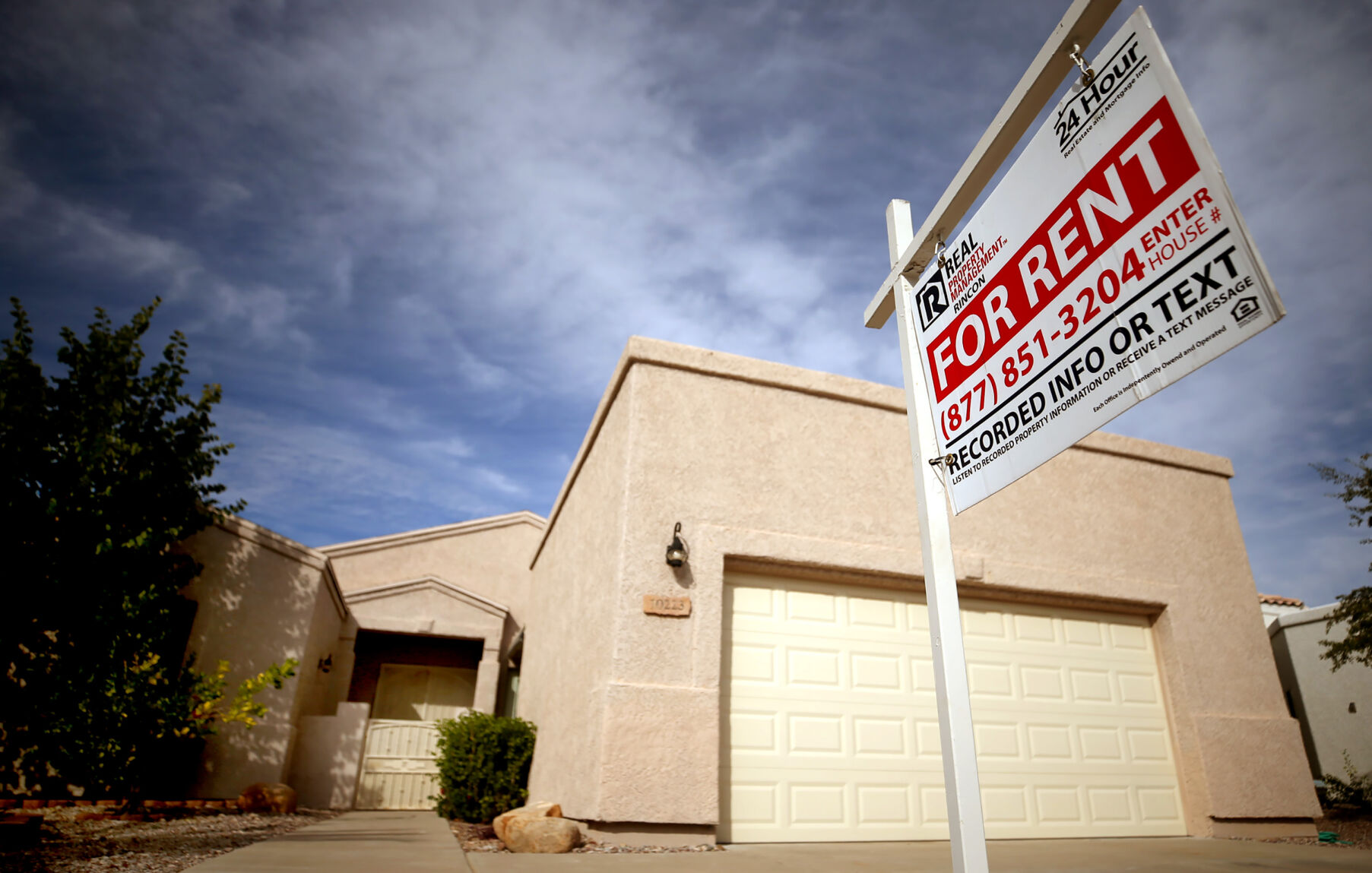

Rents in the Tucson area are stabilizing after more than two years of significant spikes.
In January, there was no measurable increase in average rental prices from December locally, but rents in the Tucson area are still up by 38.1% since the start of the pandemic for all rentals in March 2020, according to Apartment List data.
The current median rent is $987 for a one-bedroom and $1,299 for a two-bedroom, putting Tucson in 67th place in the nation, among the country’s 100 largest cities.
Irvine, California, has the highest median rent at $2,996 for all rentals and the lowest of the 100 largest cities is Cleveland with a median rent of $773.
The median rent in the nation as a whole is $1,148 for a one-bedroom and $1,316 for a two-bedroom.
Tucson rents are 6.7% lower than the national average and comparable to prices in places such as Greensboro, North Carolina, and Reno, Nevada, the data shows.
Rent levels, coupled with Tucson’s continued lack of housing means this is still an appealing market for investors.
“Investor interest is strong,” said Allan Mendelsberg, a multifamily specialist with Tucson’s Picor Commercial Real Estate Services. “Many see Tucson being a safe investment as we are affordable compared to neighboring markets.”
He said many cities are experiencing big declines in monthly rental prices, but Tucson is holding steady because of the local housing shortage.
An influx of west coast residents during the pandemic fueled the shortage of homes, both for sale and for rent.
“Tucson has a major housing issue,” Mendelsberg said. “While other markets see significant drops in rents, Tucson will see little to no change.”
Joe Boyle, a multifamily specialist with Joseph Bernard Investment Real Estate, recruits investors to the Tucson market and agreed.
“Investors are going to pay half the price of what they’re going to find in Phoenix,” he said. “Rents won’t keep rising at the rate that they were going in the last couple of years because that was an anomaly.”
He said the 3,000 rental units expected to come online in the Tucson area this year, as a result of new construction, still won’t make up for the demand.
“The economics around Tucson have improved a lot in the last few years,” Boyle said. “Rents will stabilize but still grow a little bit, but soften up to only $10 or $25 a month.”
He said investors look at the difference between buying in Phoenix and Tucson.
“Buying in Phoenix is similar to California right now,” Boyle said. “In Tucson, you don’t have to go in and change things up on day one to make money.”
What that means for Tucson renters is likely a temporary reprieve from escalating rent, but a significant drop in rents is not expected.
Tucson's Department of Transportation and Mobility shared an aerial view of the latest progress in phase three of the Downtown Links project on Jan. 6. The new roadway and multi-use path are part of the lengthy city project that will connect Barraza-Aviation Parkway and Interstate 10. Video courtesy of Tucson Department of Transportation & Mobility.
Aerial photos of Tucson, Pima County, in 1980
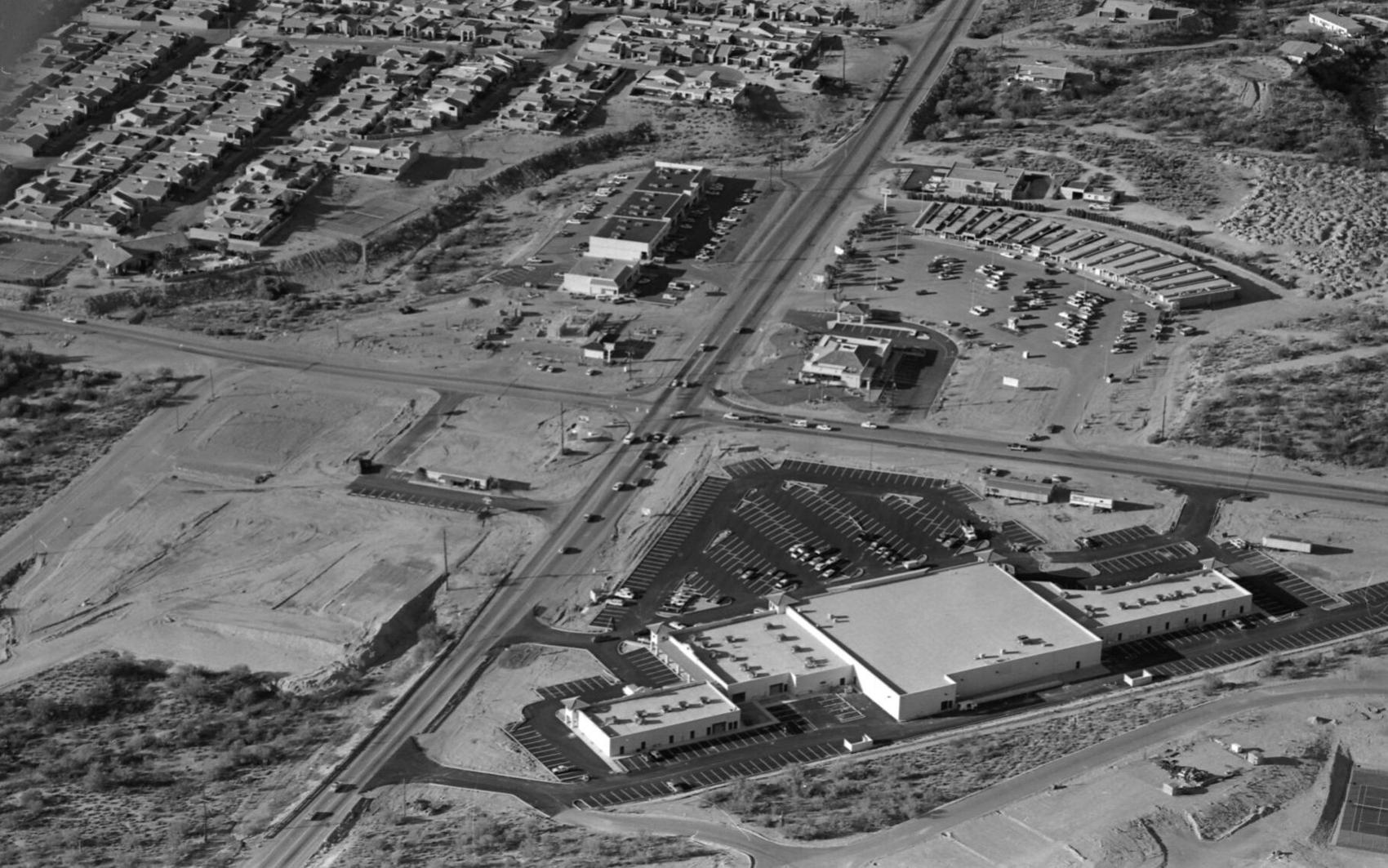
Swan Road and Sunrise Drive in February, 1980. The new Safeway Plaza is bottom right. Catty-corner from the Safeway, a Burger King restaurant is under construction. Across the street, land bladed for a Valley National Bank (now Chase Bank), a restaurant, retail and apartments. The old Rural Metro fire station is behind the street mall at top right.

Oracle Road (left to right) and Ina Road in February, 1980. There were gas stations on three corners of the intersection. All have been demolished. The venerable Casas Adobes Plaza is lower right, now anchored by Whole Foods. The open land at upper right is now the Safeway Plaza. The bank on the corner is still there, but the existing buildings to the right were demolished to make way for parking for the new plaza. Lower left is the property for the Haunted Bookshop, now Tohono Chul Park.

Oracle Road and Magee Road north of Tucson in February, 1980. Plaza Escondida is at right, now anchored by Trader Joe's. The open land at bottom of the photos is now the large retail plaza anchored by Kohl's, Sprouts and Summit Hut. The Circle K (sitting alone, upper left) is now a ballroom dance studio. Note the new asphalt on Oracle Road. In 1977, the state approved a project to widen Oracle Road (a state highway) to six lanes from Ina to Calle Concordia. That may be the last time the road was paved.

Tucson Medical Center in February, 1980. The intersection of Grant and Craycroft roads is at bottom left.

O'Reilly Chevrolet (cluster of cars), then Park Mall (center left) and Broadway Road in February, 1980. The open land at top left is now Williams Centre.

The FICO pecan orchards, bisected by South Nogales Highway, looking north to Sahuarita Road in February, 1980.

Tanque Verde Road (bottom left to upper left) and Wrightstown Road in February, 1980, before the City of Tucson constructed the grade-separated interchange. The first units of the Tanque Verde Apartments are lower left. The Circle K facing Wrightstown at the intersection is now Pair-A-Dice Barbers. The large parking lot and building to the left of the Circle K was the O.K. Corral Steakhouse, which was established in 1968. It closed in 2008. It's now Borderlands Trading Company.

Corona de Tucson Baptist Church, lower right, on Houghton Road south of Sahuarita Road in February, 1980. With exception of some infill housing and a few more trees, the neighborhood looks pretty much the same.

IBM (International Business Machines) on south Rita Road, looking north to the Santa Catalina Mountains in February, 1980. In 1988, IBM began phasing out data storage products manufacturing in Tucson, resulting in the loss of nearly 2,800 workers in Tucson, part of a $600 million consolidation plan.
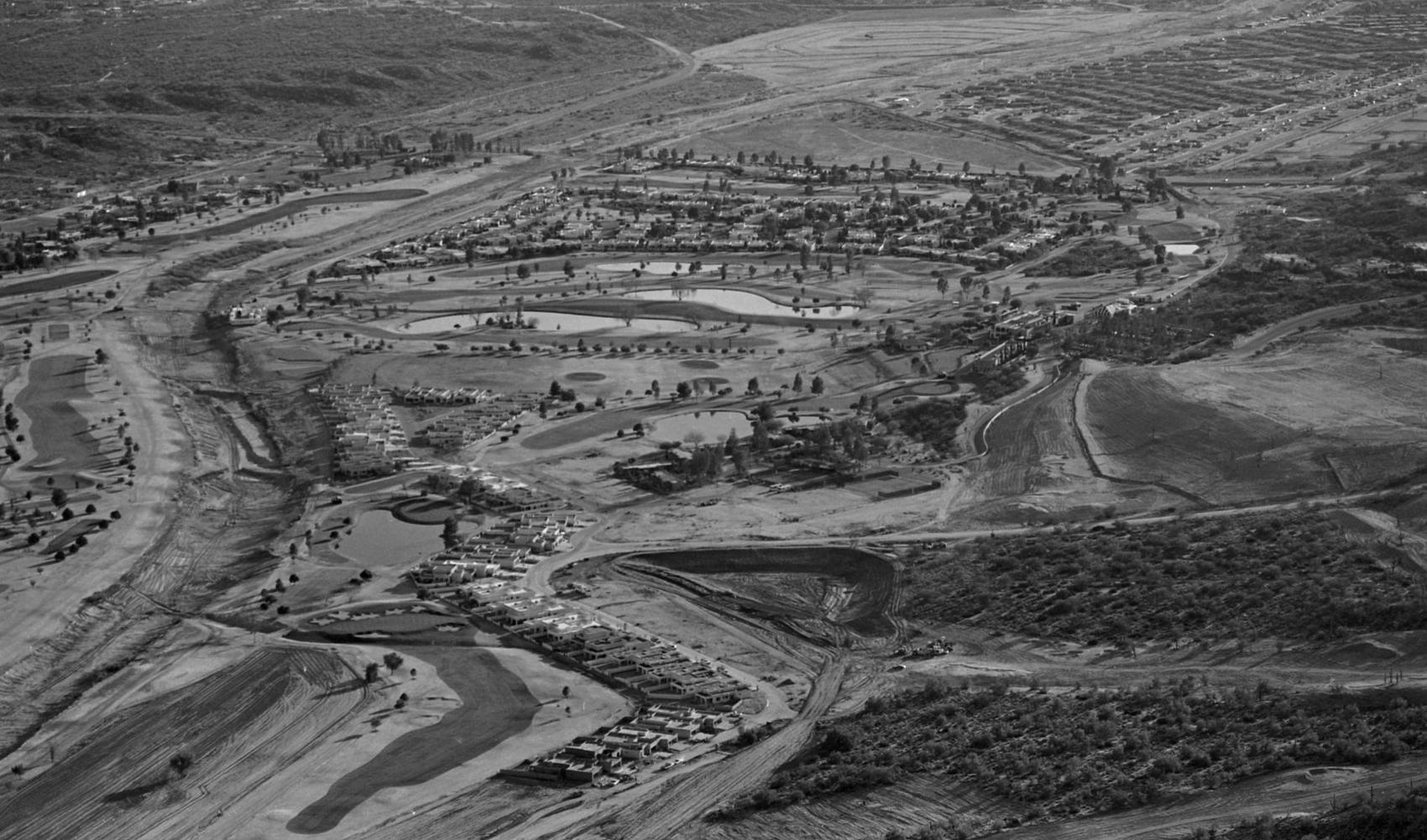
Tucson National Golf Course north of Tucson, looking south, in February, 1980. The Cañada del Oro Wash is at left. Magee Road goes left to right at the top of the photo. Shannon Road curves to the left at top of the photo. That open land is now home to Pima Community College and the YMCA.

