

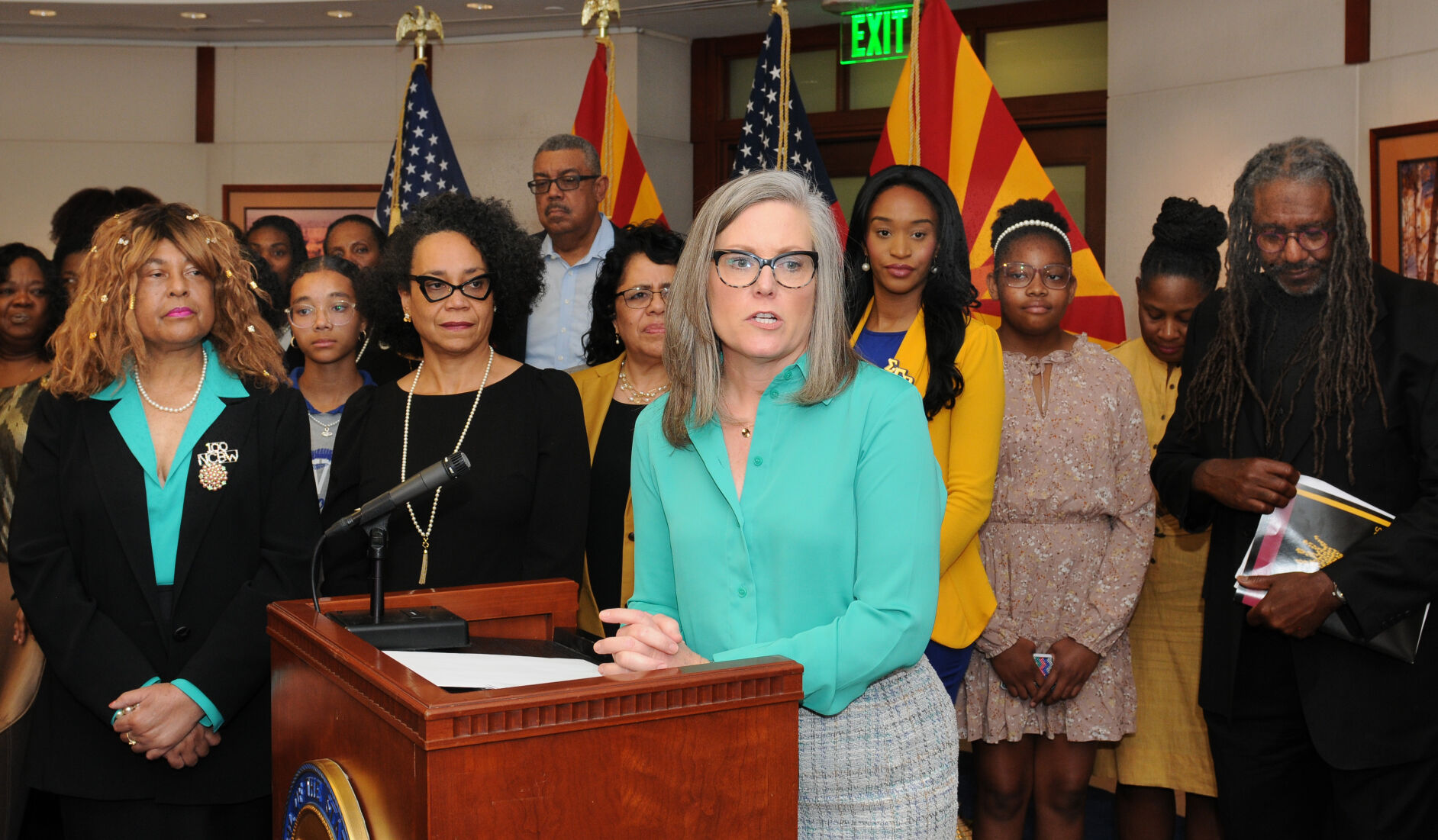
PHOENIX — Gov. Katie Hobbs has forbidden all state agencies under her control from discriminating against workers based on their hair texture and style.
In signing the executive order Friday, Hobbs said she wants to make sure Black state employees as well as workers for companies that contract with state government “will be able to wear their natural hair without fear of discrimination.’’
“More importantly is the message this sends to all Black women, men and children that you deserve to be comfortable wearing your natural hair at school and in the workplace without being perceived as unprofessional or suffering other negative consequences,’’ the Democratic governor said.
Nothing in her order affects the policies of other levels of government, or of private employers, which are beyond her unilateral control. Nor does it preclude schools from establishing their own rules and regulations about hair for staff and students.
But Hobbs said it could provide a basis for action by others.
“I’m hopeful that this order will set an example for other employers also committed to building an Arizona for everyone,’’ she said, as well as for the Republican-controlled Legislature “to address these inequities for all Arizonans.’’

‘Willing to look into more’
Hobbs acknowledged her order is focused on Black hairstyles and does not address how other employees can be discriminated against because of their hair.
Hobbs said there already are certain protections in state law, such as a 2021 law that allows Native American students to wear tribal regalia to graduation ceremonies. But nothing in that measure addresses hair.
“We’re certainly willing to look into more,’’ she said when asked by a reporter about other groups, including Rostafarians with dreadlocks, Sikhs who must maintain uncut and untrimmed hair, and Hasidic Jews with side curls known as “payos.’’
She repeated her hope that her executive order will spur legislation “to end this kind of inequity across the board.’’
The governor made it clear she was acting because there appears to be a special problem for Black workers and contractors.
“A Black woman is 80% more likely to change her natural hair to meet social norms or expectations at work,’’ Hobbs said. “Black women are 1.5 times more likely to be sent home, or know of a Black woman sent home from the workplace because of her hair. And one in two Black children have experienced hair discrimination as early as 5 years old. And the impact can last a lifetime.’’
‘Hair is part of who we are’
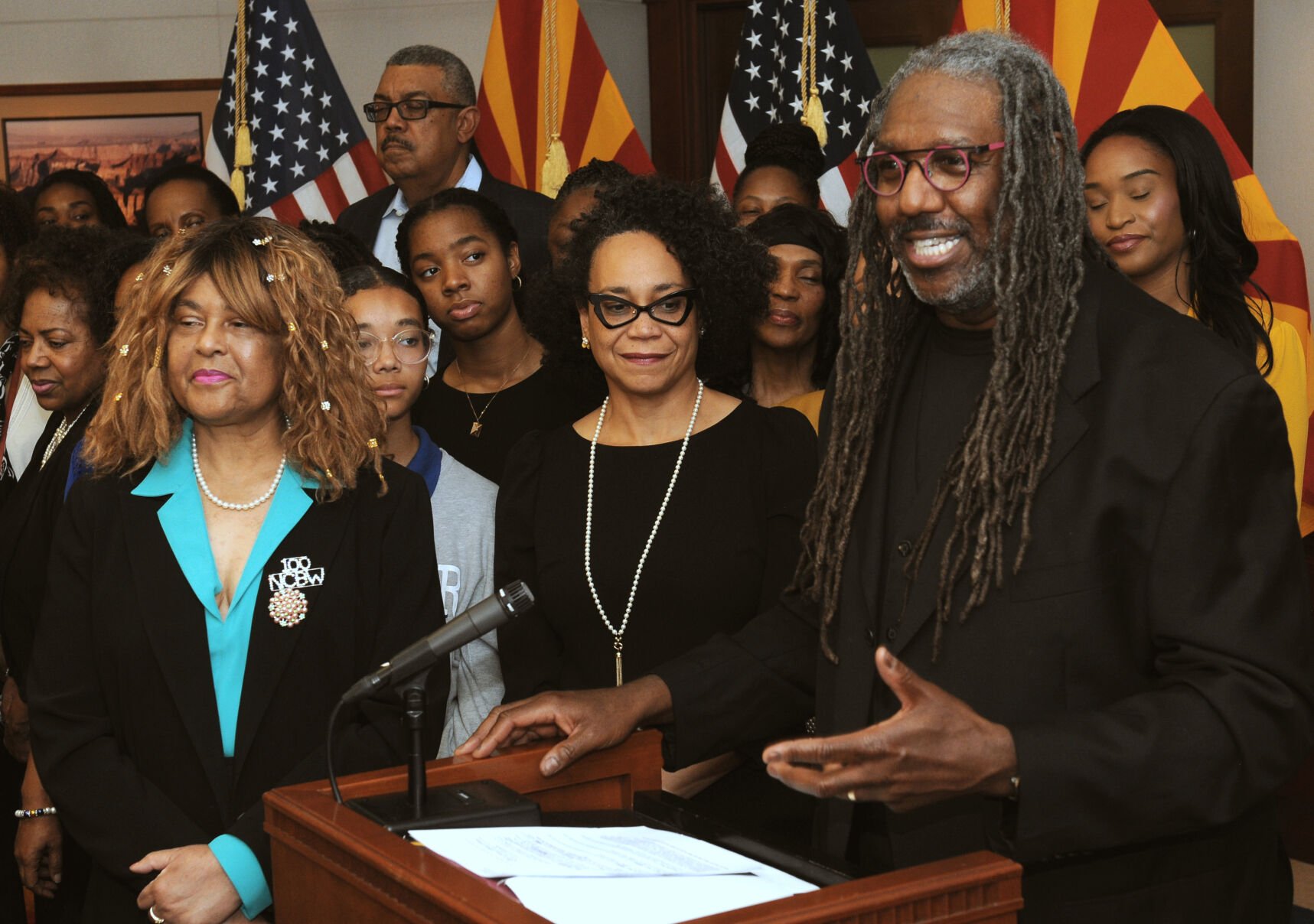
The move was praised by Neal Lester, a professor at Arizona State University who specializes in African-American literature and cultural studies. Lester, the co-author of “Hair Stories,’’ a catalog prepared for the Scottsdale Museum of Contemporary Art, said the order recognizes the reality of discrimination that occurs now based on how some Black people are perceived.
“All this is to say, we are not our hair,’’ he said at the signing of the executive order. “But our hair is part of who we are and how we are.’’
Lester read off a litany of situations across the country where people were turned away from restaurants because of their hair and students were forced to cut it.
“Thank you, Governor Hobbs, for making Black folks and our hair (have) one less hurdle to jump over in many workplaces and social spaces,’’ he said.
Hobbs said the provisions should take effect by June 1, giving the state Department of Administration, which oversees state employees and contracts, time to write the necessary rules.
CNN reports that on March 18, the U.S. House passed the CROWN Act by a vote of 235-189. The legislation's acronym stands for "Creating a Respectful and Open World for Natural Hair".

