




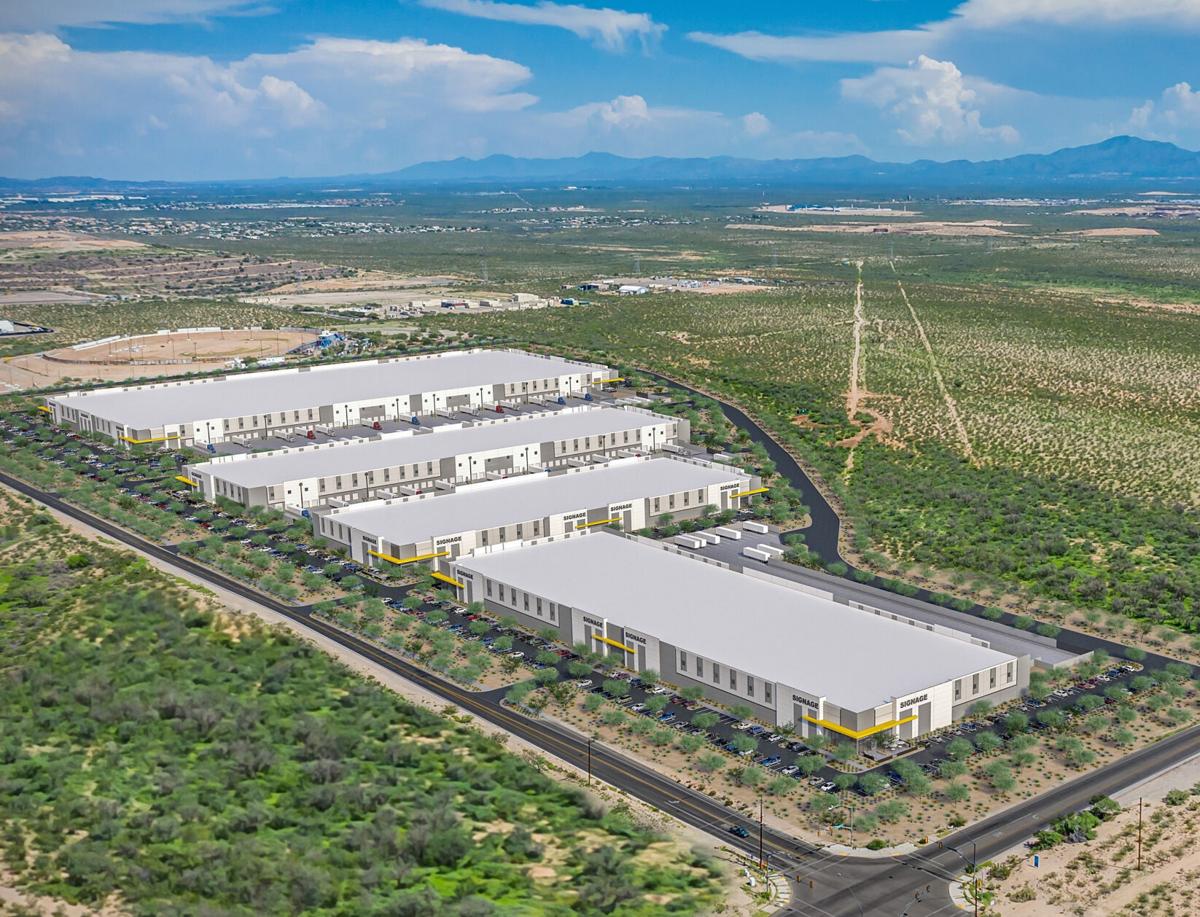
Interest in developing industrial properties in the Tucson area remains strong, albeit with a smaller footprint.
Two driving forces resulted from the COVID-19 pandemic, said Jesse Blum, an industrial specialist with Picor commercial real estate.
“First, the pandemic increased Tucson’s population as employees worked remotely, and individuals had the chance to choose where they lived,” he said in a recent economic forecast. “The pandemic also resulted in a rise in online purchasing, which led to the need to decentralize the supply chain and replace mega, centralized warehouses with smaller warehouses throughout the country.”
Today, Tucson’s industrial market is booming, with a vacancy rate of 2.6%, Blum said, noting there is little modern industrial space on the market.
“With low vacancy rates, a national spotlight on Tucson, and a growing diversification of the user base, the city has received an influx of institutional developers interested in participating in the growing market,” he said. “This is an ideal setting for developers, and Tucson’s industrial market is poised for continued growth.”
Several projects are underway in the Tucson area.
“A record breaking 1.8 million square feet of industrial projects are under construction in Tucson,” according to CBRE research. “An additional 844,000 square feet of construction broke ground (in the last quarter of 2022), adding to the 921,000 square feet of active development.”
Average lease rates rose more than 46% from 2021 to 2022.
Activity has been concentrated in the area of the Tucson airport, the northwest side and recently the southeast side, near Vail — all of which draw attention to the local market.
A Sacramento-based industrial development company, Buzz Oates, recently bought 95 acres of land on Old Vail Road, in Rita Ranch.
“One of the things that we really liked about some of these markets close to the border is we saw the demand and not a lot built,” said Walker Durant, asset manager for Buzz Oates, who was represented in the sale by Stephen Cohen, with Picor.
“We were thriving in our El Paso portfolio with the shift to near shoring, manufacturing and increased reliance on trade with Mexico,” he said. “We’re very confident in the market, location and ability to utilize foreign trade zones.”
Durant said the plan is to build smaller buildings for purposes such as distribution, warehousing and manufacturing with smaller footprints of 12,000 to 15,000 square feet.
The first phase of the company’s project is expected to be ready in mid-2024.
“We have a lot of flexibility to do what we want to do in the markets,” he said. “It’s a big chunk of land and we intend to stay committed to the market.”
You've probably heard the term Great Resignation, which referred to the 25 million Americans quitting their jobs at the beginning of 2022. Now, experts are shifting the concept to the Great Reshuffle or Great Rethink, as this trend is far from over.The Great Resignation created the idea that people were leaving the labor force forever, but new hard data is proving differently. People didn't quit working altogether. Instead, they are switching jobs."Our society has been fundamentally changed by this disease, and I think this has given people pause about, 'Is this how I want to live my life?'" said David Blustein, a professor of counseling psychology at Boston College.In many cases, people left jobs that gave them little ability to have control over their lives. For quite some time, this seemed temporary, but experts are saying this shift is just the beginning of the next chapter of the workforce.A new study indicates that about 81% do not regret leaving their previous job and are generally happy about their workplace decisions. Blustein points out people are putting life before work something that up until this point has been foreign to the American workforce."What's going on is, I mean, I guess we can call it a 'Great Rethink' about work," Blustein said. "I think we're going to see this continue to evolve as the years and decades ensue."The reality, he says, is the newest generation of the workforce will avoid industries and companies that aren't providing flexibility. The focus is no longer on paying dues.SEE MORE: US added a strong 517,000 jobs in January despite Fed hikesDavid Bechtold is an associate professor of business management at Metropolitan State University in Denver. He says what's new is that people's trajectories have changed. The typical model of retirement is on the road to extinction."Though I still think there will be opportunities for people coming out to have a lot more control over what they are going to do and what they want to get out of their first job," Bechtold said. "So, we're really into a very unusual dynamic with a lot of uncertainty and a lot of erratic behavior."The pandemic opened up opportunities for untraditional work settings, but 2023 is proving those opportunities are now becoming models for how workplaces need to operate."The level of flexibility and freedom I think is a good thing because it requires employers to think through how are they going to acquire, manage and retain their employees," Bechtold said."It allowed people the experience that they could combine their personal and work lives. It will never go back," said Cristina Banks, the director of the Interdisciplinary Center for Health Workplaces at the University of California Berkeley.Banks says while more employers are getting on board with this shift, there is still a disconnect."Employers want it one way, and the newly empowered workers want it a different way," Banks said. "Employers are going to suffer by not evolving."She points out that employers are the ones currently at a disadvantage because at this moment, the options are plentiful for workers."There are still more jobs out there than employees to fill by significant number," Bechtold said.According to the Bureau of Labor Statistics, in November of 2022, there were about 10.4 million jobs available, but just 6 million people were looking for a job."That will be the great equalizer. When there are more people entering the job market and there are fewer jobs to be filled," Bechtold said.The Great Resignation is in the past, but now, we are facing the Great Rethink, giving an opportunity for employees and employers to get on the same page about changes to the workforce that aren't going anywhere.SEE MORE: WTKR: Scammers luring job hunters with fake remote jobs

