




In 1922, the Colorado River Compact that divided the river’s water rights among seven U.S. states and Mexico left tribes out of the picture.
No water was allocated to them, even though the U.S. Supreme Court had already issued a precedent-setting 1908 ruling that a Montana-based tribe had rights to use enough water to fulfill the purposes of its reservation.
Tribes were left out of the process again in 2007, when the states and the U.S. government drew up operating guidelines for the river that remain in force today.
Despite this history of exclusion, a number of tribes scraped their way, through lawsuits, threats to sue and pushing Congress, to obtaining water rights — to the point that they now control about one-fourth of all rights on the river.
But they’re worried state and federal officials will squeeze them out in trying to deal with the long-term drought and climate change imperiling the Colorado’s future.
Now, the tribes have written a pointed letter to the feds seeking to protect those existing rights and to gain a stronger, more formal voice in the negotiations over who will get future access to river water. The seven river basin states and the feds are thrashing out how to revise the river’s operating guidelines when they expire at the end of 2026.
Sixteen of 30 tribes living in the river basin, including eight in Arizona, signed the March 11 letter to the U.S. Bureau of Reclamation.
Specifically for Arizona, they ask that the federal government find other water supplies to replace whatever cuts are made in Central Arizona Project supplies to tribes that either have or could have legal water rights settlements.
That could prove a knotty and controversial issue, given the limited availability of alternative supplies to Colorado River water such as groundwater.
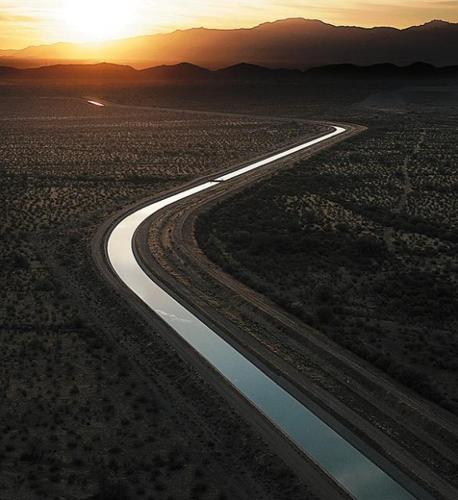
The CAP, the canal system that delivers Colorado River water to Central and Southern Arizona, plays a huge role in the tribal water rights issue. About 46% of the project’s total supply is or will be reserved for tribes, the project says on its website.
The Tohono O’odham Nation in and west of Tucson, the Gila River Indian Community in Sacaton southeast of Phoenix, and the White Mountain Apache Tribe in eastern Arizona are among Arizona tribes with river water rights today that were obtained through settlements.

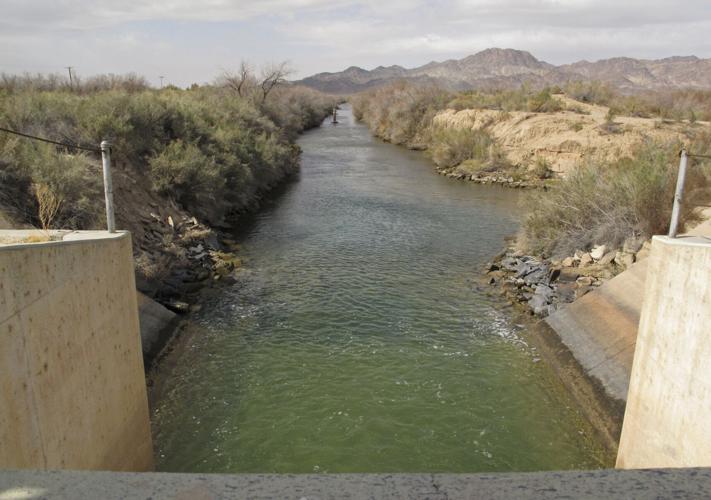
Colorado River water flows through farmland on the Colorado River Indian Tribes reservation in Parker.
“We have an opportunity now, in which most states understand the importance of tribal water rights, and there’s finally understanding and recognition of the need for inclusion,” said Daryl Vigil, co-director of the Water and Tribes Initiative, which seeks to build water-using capacity for all 30 basin tribes.
The tribes’ legal share of the water rights will grow as river water diminishes, because many or most of those rights pre-date the rights of other users, tribal leaders have said.
Hard-won rights
A long-debated congressional water rights settlement brought CAP water to the Tohono O’Odham in the 1990s — enough CAP that because less groundwater is pumped on the tribe’s San Xavier Reservation south of Tucson, the long-dormant Santa Cruz River has started flowing again there.
Vigil himself recalls his own Jicarilla Apache tribe’s struggle to gain water rights, through threats of litigation that led to an agreement through settlement negotiations.
When the Colorado River Compact was signed in 1922, “our tribe was living on subsistence rations on land that wasn’t part of our homeland,” Vigil said.
The group agreed to a settlement based on Colorado River in 1992, after giving up prior claims to rights on the Arkansas, Pecos and Rio Grande Rivers, he said.
In winning those rights, “we only had a short bit of time to try to develop and utilize those rights, given 100 years of existing legal structures that had been built,” he said.
Generally, tribes in the basin are starting to build the capacity to put to use the water rights won in settlements on their reservations, he said.
“Without water, you can’t build economies. Without access to clean water, you die during a global pandemic. If you don’t have access to waster rights, you don’t have access to develop,” Vigil said.
Vigil, a former Jicarilla Apache tribal water administrator, said efforts toward producing this month’s letter date back to late 2021. That’s when 20 tribes wrote a similar missive to newly named Interior Secretary Deborah Haaland. They sought to be formally included in the process of drawing up the new guidelines and to have their water rights protected.
“The reason that’s important is that there is a track record of what tribes have been asking for,” Vigil said about the 2021 letter. “They can’t use the smokescreen that ‘We don’t know what the tribes want.’ We’ve been telling you and you’re not listening.”
One purpose of the new letter is that rather than trying to propose a single tribal alternative that takes a position in disputes between the Upper and Lower states of the Colorado River Basin, “we want to think holistically in terms of realities, of the things, that as tribal sovereigns, we feel need to be included in any alternative that is developed,” Vigil said.
“The spirit is about doing this together and about planning a water future together,” Vigil said.
The letter was generated by a 14-tribe group known as the Basin Tribal Initiative.
Threading the needle
Overall, “we collectively have to thread the needle as to how to get to a place that is a more stable system that everyone can live with,” said Jason Hauter, a Gila River community tribal attorney who helped draft the new letter. “The community is well aware of the difficulties in this.
“it’s looking for practical solutions, not winning. There’s no way to be a winner in this situation. The scope of the problem is too big,” Hauter said.
“It’s one thing to say you need to meet your trust responsibility to tribes,” he said, referring to the U.S. government’s legally enforceable obligations to protect tribal treaty rights, lands, assets, and resources.
“If you don’t define that, the tribes and the U.S. are just sitting there, scratching their heads,” Hauter added. “Each tribe will have its own specific issues and demands. We want to lay out basic principles.”
States locked in standoff
The letter comes as the Upper (Colorado, Wyoming, Utah and New Mexico) and Lower Basin (Arizona, California and Nevada) states are locked in a standoff over the future guidelines.
Five days before the tribes sent their March 11, the two groups of states submitted to the Bureau of Reclamation dramatically different proposals. The Lower Basin states want both basins to share the cuts and the Upper Basin states want all cuts to fall upon the Lower Basin.
In addition, the Gila River Indian Community will submit its own plan to the bureau, its chairman Stephen Roe Lewis said this month. The community didn’t sign onto the tribes’ new letter but Hauter said it’s likely to sign later.
The bureau is launching an environmental review of the proposals, and wants to approve a final plan to take effect when the current operating guidelines expire.
Asked to respond to the tribes’ letter, Tyler Cherry, a spokesman for Reclamation’s parent agency the Interior Department, cited a detailed statement affirming federal tribal obligations Acting Deputy Interior Secretary Laura Daniel-Davis made during a call with reporters on March 5.
Daniel-Davis noted federal regulatory efforts such as the push to revise the 2007 guidelines can be long and slow-moving. But because the process will be transparent and inclusive, she said, its path forward is strengthened by “public input, interest group participation, the best-available science and Indigenous knowledge, and accountability.”
“This is especially true in our work with tribal governments and communities, who are indispensable partners in our work to address the climate crisis. Tribes in the Colorado River Basin not only have long-standing rights to water resources that we must honor and uphold, but they also have millennia-worth of Indigenous knowledge that will help us to conserve and protect precious water resources.”
The department is particularly proud to have launched last year what it called the first formal partnership of the federal government, the states and tribes “to insure that tribes have a seat at the table at the beginning of this journey,” Daniel-Davis said.
The Arizona Department of Water Resources and the CAP staff declined to comment on the tribes’ letter.
“Moral obligations”
The tribes’ new letter to Reclamation Commissioner Camille Touton keys in on three basic principles:
— The feds “must take actions to actively protect tribal water rights,” whether or not they’re formally quantified in a legal settlement.
The tribes say this is part of the federal trust responsibilities to them. Besides legal obligations, the trust responsibility consists of “the highest moral obligations that the United States must meet to ensure the protection of tribal and individual Indian lands, assets, resources, and treaty and similarly recognized rights,” said a 2014 order by then-Interior Secretary Sally Jewell.
— Give tribes power to determine how and when they use their water rights, by adopting and supporting what the tribes call “flexible tools.”
One suggestion is that the feds insure that when water conservation programs are established to carry out the post-2026 rules, the eligibility and participation requirements maximize the tribes’ ability to take advantage of them without incurring “onerous” financial burdens.
Another is for the feds to enhance tribes’ ability to lease or otherwise market their water supplies off their reservations, by clarifying their legal authority to do that.
— Create a “permanent, formalized structure” for tribes to participate in to implement not only the expected post-2026 guidelines, but “in any future Colorado River policy and governance.”
“At a minimum, anything in the Post-2026 Guidelines that formally triggers an obligation on the part of Reclamation to consult with the Basin States should trigger a similar obligation to the basin tribes,” the letter said.
This should be in addition to, not in place of, existing consultations between the feds and individual tribes, the letter said.
Tribes in the Upper Basin took a step forward on that issue on March 4, when the four-state Upper Colorado River Commission signed an agreement with six Upper Basin tribes to meet every two months to discuss shared interests on the Colorado.
Although tribes won’t have voting rights or permanent seats on the commission, the agreement is a mark of progress because it formalizes the requirement for continued discussions among tribes and states in the Upper Basin, observed the University of Colorado Law School’s Getches-Wilkinson Center.
Also last year, the federal government, the seven basin states’ officials and 30 tribes formed the 38 Sovereigns Group to give tribes more of a voice in water issues. The group meets regularly.
Still, when it comes to the formal, governmental process of drawing up the new guidelines, “We have no inclusion, not at the state level, not at the federal level, not at any level,” Vigil said. “The Law of the River, the compact, the Boulder Canyon Project Act (which in 1928 authorized Hoover Dam’s construction), the CAP, we were not included in those discussions.”
Ramifications for Arizona
The first of the three tribal principles carries significant ramifications for Arizona tribes and CAP.
Of 22 federally recognized tribes in Arizona, 10 have fully or partially resolved federal water rights claims that rely on Central Arizona Project water, CAP says. Eight others have unresolved claims.
Overall, CAP is “the largest single supplier of Colorado River water to tribal water users in the Colorado River system,” the project’s website says.
The tribes’ letter also calls for the post-2026 plan to reject any alternative imposing “involuntary or uncompensated cuts” on five tribes whose rights were decided in the 1963 Arizona vs. California decision that also awarded Arizona 2.8 million acre-feet total.

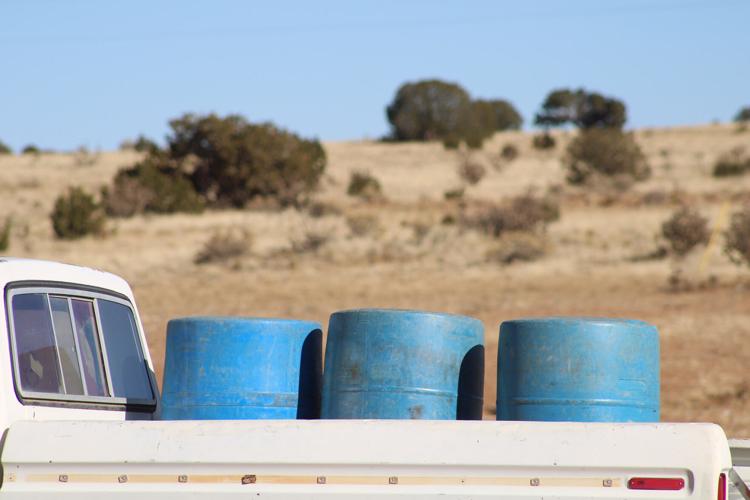
Tribal communities around the Southwest often lack access to clean running water like that filling barrels in a pickup truck in To'hajiilee, New Mexico. Some of the 30 federally recognized tribes that use Colorado River water say they’re still being kept out of rooms where important water policy decisions are made.
The Cocopah Tribe lies wholly within Arizona., while the Chemehuevi Tribe lies wholly in California. The Colorado River Indian Tribes,which have the largest water rights of the five, and the Fort Yuma Quechan Tribe, have land in Arizona and California. The fifth tribe, the Fort Mojave, has portions of its reservation in Arizona, California and Nevada.
The tribes’ letter also calls on negotiators for the new guidelines to reject any alternative that would put limits on tribes’ ability to develop their river water rights by building pipelines and other infrastructure to make use of the water.
That provision is particularly important for tribes in the Upper Basin states, which typically use far less than their total river water supplies. Tribes there, like state officials in the Upper Basin, have resisted the idea of limiting future development of their water rights despite the river’s limits.
Carrying out a settlement for the Navajo tribe’s water rights claims means “connecting 70,000 people who are still hauling water on a daily basis,” Vigil said.
“How can you cap a tribal water right when to connect (to a water system) is to connect to someone to flush its toilet?” Vigil said. “When you say put a cap on developing water rights, you’re saying you can’t hook up someone with clean water.”
As for water to replace what’s cut from tribal CAP-based water settlements, the only location tribes have mentioned publicly is the Butler Valley, a heavily rural area in Western Arizona’s La Paz County that’s dominated by agriculture. It’s one of three basins in the state from which groundwater can be legally transported to cities in other basins under a 1990 state law that sought to protect other basins from having their groundwater sold out from under them.
Butler Valley is best known as a basin where Saudi-based Fondomonte had until recently been pumping groundwater to grow alfalfa on leased state-owned land. Gov. Katie Hobbs terminated that lease last month.
The valley’s groundwater is being pumped by farmers four times faster than it’s being replenished by natural forces, a recent Arizona Department of Water Resource report shows.
Otherwise, Hauter said he’s uncomfortable discussing at this time what areas are being looked at as potential replacement water sites.
“There is no single project that is going to solve this problem. There’s going to be a lot of water projects,” the Washington, D.C.-based tribal attorney said. “We all are looking collectively in the state at a lot of options. They could be something that may not be practical, for whatever reason.
“I don’t want to generate any sense of expectation or concern,” by disclosing other potential project sites, he said.
“There’s always people talking about desal, but that’s probably years away. It could be something in the future. A lot of cities are looking at reclaimed water reuse,” he said.
He acknowledged it’s a challenge for the U.S. to try to meet all the diverse demands from tribes.
“How do you meet your trust responsibility when rights are in conflicts with one another because of the nature of water rights, whether through settlements or by decree?”
Difficulty finding other supplies
Eric Kuhn, a Colorado-based author and retired water official, said “I would guess it would be very difficult to come up with that amount of water” to replace whatever’s lost in Arizona, due to cuts in water right settlement supplies.
Arizona State University water researcher Sarah Porter said, “With enough money, you could find alternative supplies. That would be the sticking point. Where would the money come from?”
Kuhn and Porter agreed this tribal position could draw pushback from other states’ officials
“You’ll have a lot of folks who say they don’t have a lot of sympathy for tribes in Arizona who cut a deal for CAP water,” said Kuhn, co-author of a book on how the Colorado River Compact was drawn up. “They’ll say (the tribes) did a deal knowing CAP was a junior water right on the river. Also, a lot of states will look at it as an internal issue within Arizona.”
Responding, tribal attorney Hauter noted that at the time of the Gilas’ water rights settlement in 2004, the sense was that future cuts in CAP supplies would be much smaller than they’ve turned out to be.
“The time of settlement matters. A blanket statement like that fails to understand that at the time we weren’t in the situation we are in now.”
CAP water was provided to address tribal settlements, because non-Indians didn’t want to give back the water their ancestors took from tribes, he said.
“You can blame the victim for taking water when political forces are so stacked against you it’s the only water you can get,” Hauter said.
Generally, tribes make a very strong argument that they should be treated differently in these negotiations from non-tribal water users because of their trust relationship with the U.S. government, said Porter, director of ASU’s Kyl Center for Water Policy.
“They are different, they need to be treated with special consideration, that’s how it is. These kinds of negotiations put the bureau and the Department of the Interior in an awkward position,” Porter said.
Everybody wants to find an agreement that will avoid litigation, she said, but “the tribes are raising some points that will essentially say at bottom there could be litigation over some of these principles.”
Tony Davis graduated from Northwestern University and started at the Arizona Daily Star in 1997. He has mostly covered environmental stories since 2005, focusing on water supplies, climate change, the Rosemont Mine and the endangered jaguar. Tony and David talk about the award winning journalism Tony has worked on, his journey into journalism, Arizona environmental issues and how covering the beat comes with both rewards and struggles. Video by Pascal Albright/Arizona Daily Star
Tony Davis graduated from Northwestern University and started at the Arizona Daily Star in 1997. He has mostly covered environmental stories since 2005, focusing on water supplies, climate change, the Rosemont Mine and the endangered jaguar. Tony and David talk about the award winning journalism Tony has worked on, his journey into journalism, Arizona environmental issues and how covering the beat comes with both rewards and struggles. Video by Pascal Albright/Arizona Daily Star
Tony Davis graduated from Northwestern University and started at the Arizona Daily Star in 1997. He has mostly covered environmental stories since 2005, focusing on water supplies, climate change, the Rosemont Mine and the endangered jaguar. Tony and David talk about the award winning journalism Tony has worked on, his journey into journalism, Arizona environmental issues and how covering the beat comes with both rewards and struggles. Video by Pascal Albright/Arizona Daily Star

