




Tucson entrepreneur Jeremiah Pate is scaling up his startup, Lunasonde, which makes microsatellite systems to scan the Earth for valuable mineral deposits from space.
Since launching its first tiny “cubesat” prototype last November aboard a SpaceX rocket, Lunasonde has struggled to hire the engineers and other professionals his growing company needs, Pate said.
“We’ve been pretty aggressive about scaling up the team, and overall it’s been a hard-fought success,” said Pate, who got the idea for Lunasonde during his graduating year in high school in Oro Valley.
Lunasonde has a staff of 20, with current openings for several engineers, a geophysicist and a geologist.
“The biggest bottleneck to Lunasonde’s growth isn’t anything to do with technology, nothing to do with regulations, or customers even, it’s all been getting the right talent on our team. And as much as I love Tucson, it hasn’t been a great landscape for hiring folks.”
Pate’s experience is not surprising amid a very tight labor market, especially for tech talent like engineers.
But some significant efforts are under way to both to train a new generation of skilled workers, as well as to attract new talent to the Tucson area.
Joe Snell, president and CEO of the local economic development agency Sun Corridor Inc., said the talent issue is critical. Hiring enough qualified workers remains the No. 1 concern for companies looking to set up shop or expand in Tucson, Snell said.
“We’re really all about talent wars at this point, because we have an unemployment rate that’s below the national average and basically anybody who wants a job, has a job,” Snell said.
“I think engineers are right at the top and the problem is, they’re so sought after nationally. That’s where there’s really a talent war coming.”
Besides engineers, nursing and other skilled heath care workers also are in short supply, Snell said.
Job expo targets health care, engineering

Mingyu Ding looks through the South32 Hermosa information pamphlets during the Medical and Engineering Job Fair.
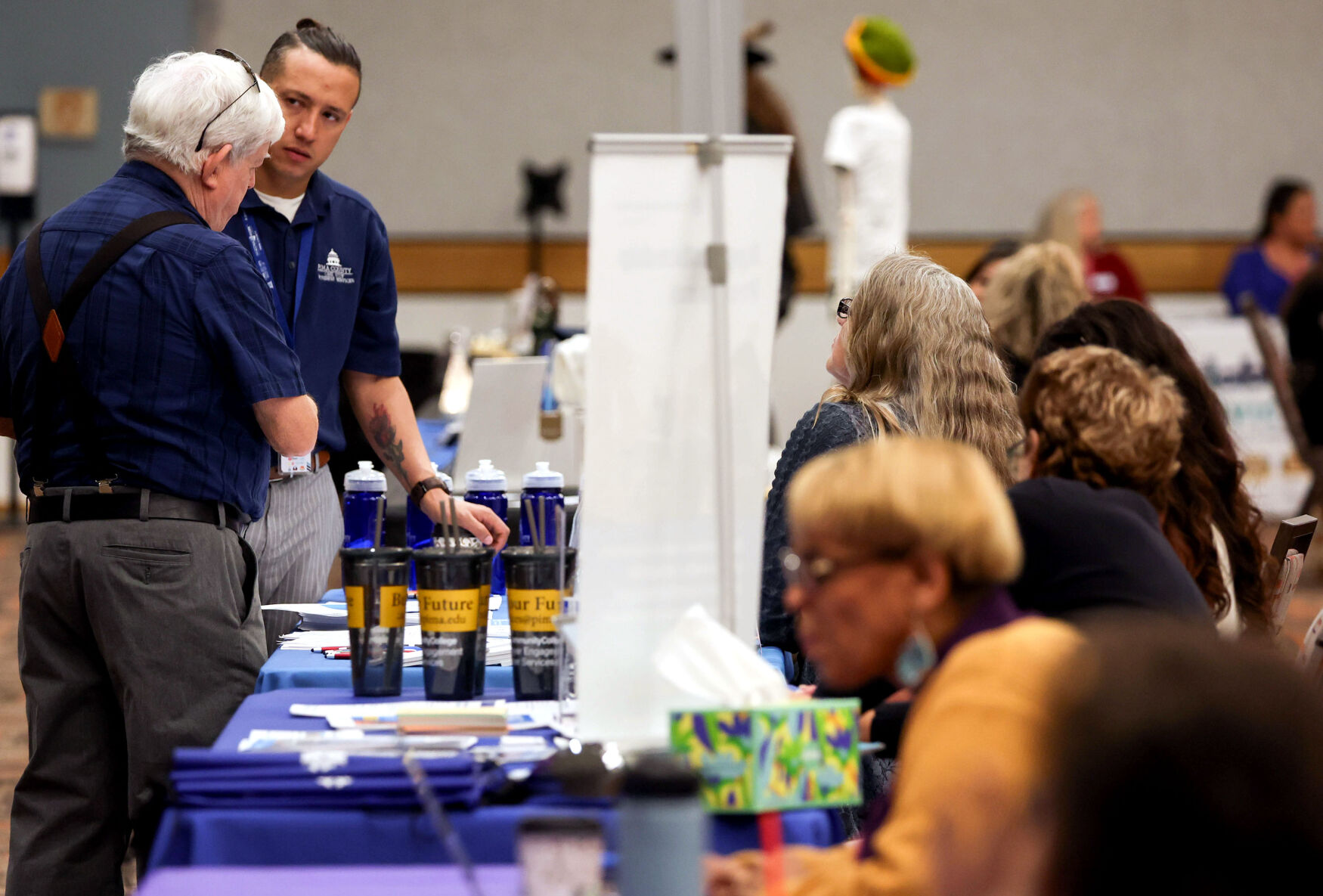
To help find workers and get the word out, Lunasonde recently partnered with longtime Tucson-based home health-care provider Dependable Health Services to launch the first Medical and Engineering Plus (ME+) Job Expo earlier this month at the Tucson Convention Center.
Besides Lunasonde, sponsoring participants included the Southern Arizona Sports, Tourism and Film Authority, the Southern Arizona Regional Science and Engineering Fair; mining firms Asarco and South 32; with about a dozen other health care, mining and other employer exhibitors, and Pima County OneStop.
Tom Pepping, president of Dependable Health, said his company has had to turn away prospective clients because it can’t hire enough workers for its in-home health care, hospice and caregiver services.
Founded in 1992, Dependable Health has about 600 employees in Arizona and Nevada, including part- and full-time registered and licensed practical nurses, occupational and physical therapists, as well as home caregivers.
Pepping, who also serves as chief financial and operating officer for Dependable, says the company offers competitive wages and sign-on bonuses for licensed positions like nurses, but the biggest challenge is finding enough home caregivers willing to work for $15 to $16 per hour.
“We always need caregivers because there’s a huge demand for that,” Pepping said. “Those are always hard to find because they’re not paid real well because it’s a non-skilled service. So there’s a lot of competition, whether it’s from fast food or hotels or whatever.”
The company pitches its jobs as a way for those with medical skills to impact clients’ health in a personal way, and it offers flexible work schedules.
The ME+ Job Expo drew a variety of attendees, though attendance was lower than organizers had hoped for.
Joshua Bass, who will graduate from Pima Community College’s industrial automation technology program in December, came to the job expo to get a jump on getting a job or internship.
“I might end up moving, but I’d like to stay local,” said Bass, who grew up here. “It’s not that I’m not looking at things in Tucson, but if the need arises to move because I’m not happy in the place I’m at, I’d consider moving.”
Hannah Montague, a freelance medical and scientific illustrator, was looking for opportunities in marketing and graphics locally though she has interviewed for jobs out of state.
“I would really like to get into patient education, where you walk through and (help patients) understand what’s happening to you and take control of your health,” she said. “I’d love to do stuff here, and thankfully a lot of my work is remote.”
Competing for top talent
Tucson companies compete nationally in a very competitive job market for engineers and other top tech talent.
Pate said he wants to hire locally for most positions, but he conducts national searches for key professionals.
Tucson has made efforts to tout the region as an ideal place to work and live, with initiatives including Thrive in Tucson, a website and digital marketing campaign launched by Sun Corridor and community partners last fall.
Plans are in the works with local hospitals to launch a Thrive campaign focused on health-care careers.
Snell sees the competition for workers only accelerating as the population ages into retirement.
“This country has a math problem. We have more 65-year-olds than we do kindergarteners next year,” he said. “That’s not in our favor as a country, so everybody’s fighting for the same limited number of employees.”
But Snell said so far Arizona is doing better than most states, citing figures showing overall net migration from places like California.
In 2022, Arizona ranked fourth among the states for net migration of people 25 years old and up, and sixth for net migration of persons with a bachelor’s degree or higher, with a net gain of 23,000 in that category, according to Census data cited by the University of Arizona’s Economic and Business Research Center.
And in 2023, Tucson ranked 13th on CBRE’s list of up-and-coming North American tech-talent markets in its annual Scoring Tech Talent report, which ranks 75 U.S. and Canadian markets according to their ability to attract and grow tech talent.
Check out the labs where Tucson startup Lunasonde is developing its microsatellite technologies.

