


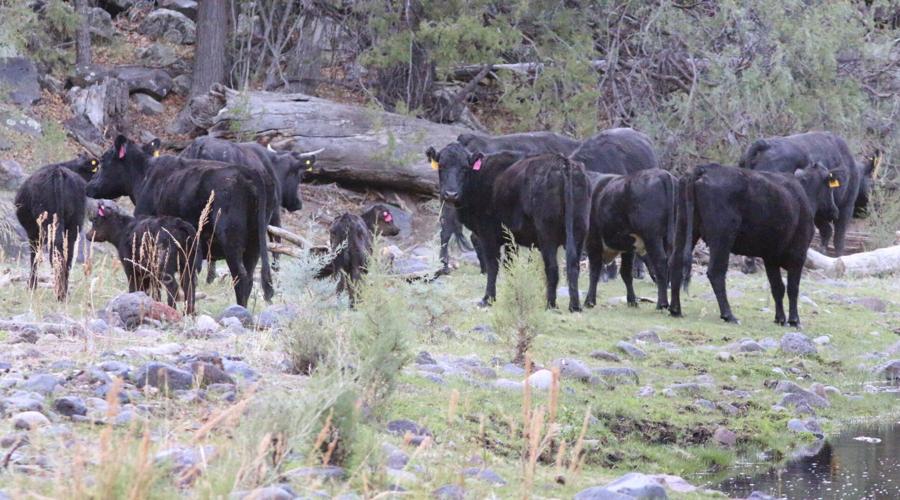
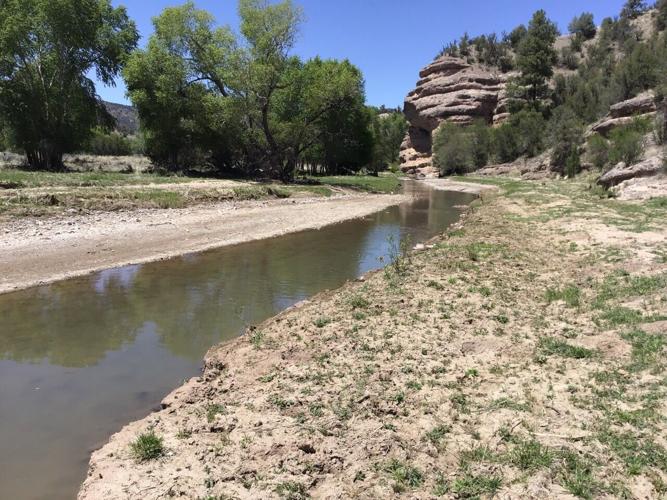

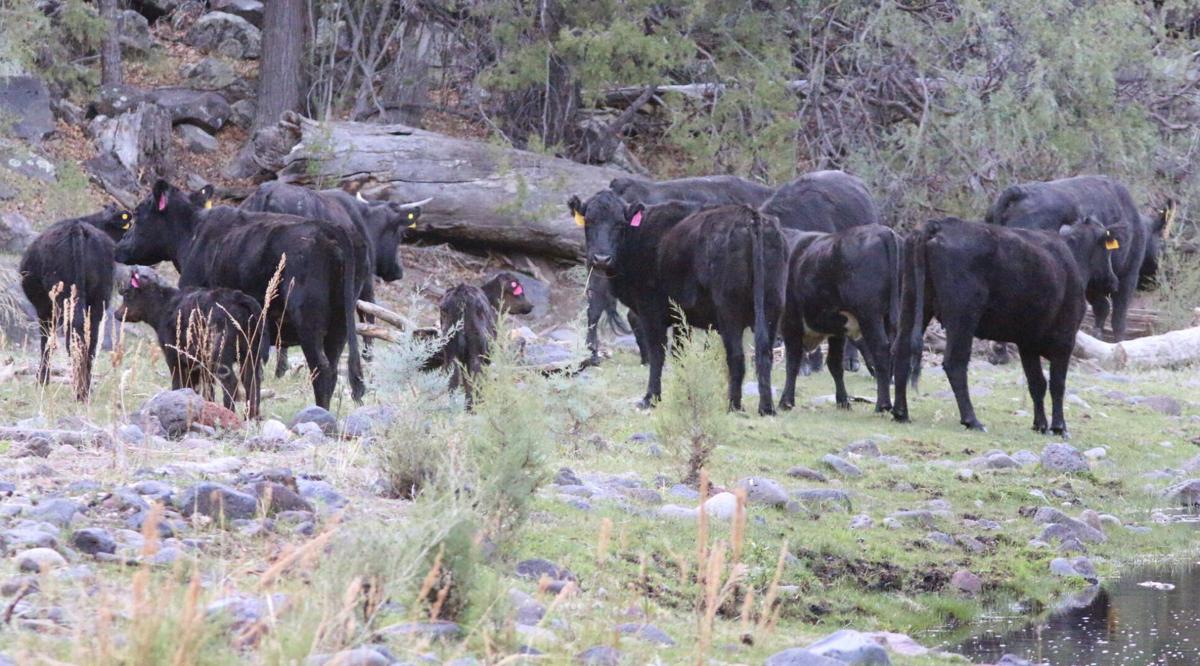
The U.S. Forest Service will step up its efforts to keep cattle away from fragile rivers in Arizona and New Mexico, under a settlement with the Tucson-based Center for Biological Diversity.
The three-year agreement, finalized last week, calls for the federal agency to conduct regular inspections of streamside habitat in Arizona’s Apache-Sitgreaves National Forest and New Mexico’s Gila National Forest and to respond within days to any reports of cows where no cows should be.
The center first sued the Forest Service in 1997 over livestock damage to riparian areas that harbor several federally protected species in both states.
Under a 1998 settlement of that case, the agency agreed to immediately remove cattle from such sensitive areas.
That led to roughly a decade of real recovery in those desert watersheds, but the cows have since made their way back in because “nobody’s been minding the store,” said Brian Segee, endangered species legal director for the center.
Environmentalists sued again in January 2020, after they conducted a multi-year survey that showed downed or nonexistent fences and widespread livestock damage on all major waterways in both the national forests.

According to the Tucson-based Center for Biological Diversity, years of unauthorized streamside cattle grazing have left the San Francisco River in the New Mexico’s Gila National Forest devoid of willows, cottonwoods, alders and other native vegetation.
That lawsuit, filed in U.S. District Court in Tucson, accused both the Forest Service and the U.S. Fish and Wildlife Service of violations of the Endangered Species Act.
“The government agrees with us that livestock grazing and endangered species don’t mix,” Segee said. “It’s too bad it took another lawsuit to force the Forest service to keep cows off Southwestern rivers, but let’s hope this time it’ll stick.”
The move is part of a broader campaign by conservation groups to rein in what they see as errant livestock and lax land management across the region, including parts of the Coronado National Forest and the San Pedro River closer to Tucson.
“We do have a renewed push, but it is in response to what we’re finding on the ground across the Southwest,” Segee said. “Everywhere we’re looking, we’re seeing the same issues on public lands throughout Arizona and New Mexico. Livestock are all over these riparian areas.”
The Aug. 18 settlement applies to 42 grazing allotments and more than 150 miles of riparian habitat in Eastern Arizona and Western New Mexico. The area includes portions of the Gila, San Francisco, Tularosa and Blue rivers.
Those waterways are home to numerous threatened and endangered birds, fish, amphibians and reptiles, including the Southwestern willow flycatcher, yellow-billed cuckoo, Gila chub, loach minnow, spikedace, Chiricahua leopard frog and the narrow-headed and northern Mexican garter snakes.
The agreement gives the Forest Service three months to conduct initial inspections of the habitat and the fences protecting it. After that, the agency must revisit those areas up to twice a year, depending on whether there are cattle in nearby grazing allotments.
The service also agreed to investigate reports of unauthorized livestock within two business days, work quickly to remove stray cows and repair or replace downed fences within 14 days.
Forest Service managers will be required to provide the center with quarterly reports on the activities outlined in the settlement and pay the environmental group $47,500 in legal fees.
Segee said livestock have a “highly negative impact” on rivers and streams, because they trample the banks, foul the water with their waste and eat vegetation faster than it can grow.
Luckily, the damage is easy enough to stop, he said.
“It can be remedied through the simple task of getting the cows off the river.”

