





For 4-year-old Mateo, the world has become a bit smaller since President Donald Trump took office, according to his father Antonio, a 31-year-old Tucson home painter who is undocumented.
Though he works long hours, Antonio spends much of his free time playing with his son, who is a U.S. citizen. Typically, they’d go to the neighborhood park to play baseball, to the mall for ice cream or to movies, said Antonio, speaking in Spanish in a west Tucson home, while Mateo played around on an electric keyboard nearby.
But this year, as the presence of immigration agents has increased in Tucson, “I don’t take him out much anymore. We’re just at home,” said Antonio, who was born in Nogales, Sonora, and said he crossed the border near Nogales in 2019 to join family in Arizona. He met his wife through family friends soon afterwards, and they had Mateo in 2021.

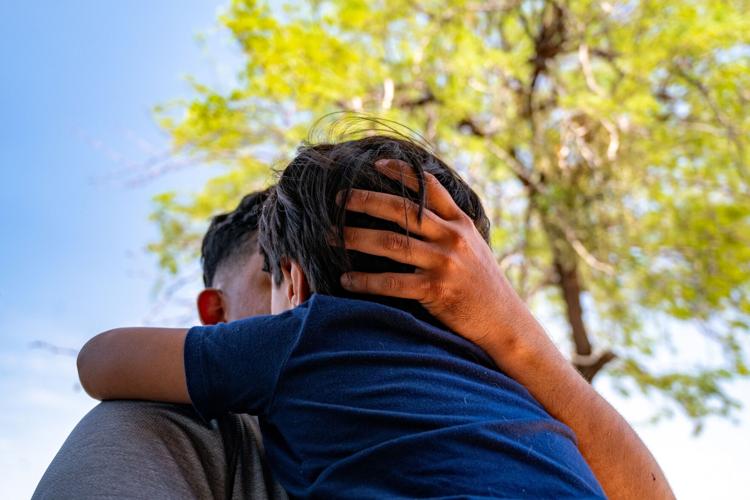
Tucson father Antonio, who is undocumented, says he spends much of his free time playing with his 4-year-old son Mateo, a U.S. citizen. Typically, they’d go to the neighborhood park to play baseball, to the mall for ice cream or to movies. But this year, as the presence of immigration agents has increased in Tucson, they’ve been staying at home. “Nothing’s the same anymore, honestly,” said Antonio, 31, pictured here with Mateo in west Tucson. “For my family and me, we’ve changed our lives because of fear.”
“Nothing’s the same anymore, honestly,” said Antonio, who asked the Star to use his middle name due to his fear of being detained. “For my family and me, we’ve changed our lives because of the fear.”
Under Trump’s mass-deportation campaign, immigration operations in Tucson haven’t reached the scale of those in more populated urban centers, like Phoenix, Los Angeles and Chicago, community organizers say.
But the increased immigration-enforcement activity here has a chilling effect on those vulnerable to detention, causing some to become isolated at home and to avoid activities like grocery shopping or going to doctor’s appointments, advocates say.
So far this year, organizers say much of the immigration-enforcement activity in Tucson appears to be targeted arrests that have been carried out quickly.
The targeted individuals are often taken away before observers with a volunteer “Rapid Response” network can arrive, said Lucia Vindiola, a former social worker who is heading up the emotional support committee for Coalicion de Derechos Humanos, a network of human rights advocates in Tucson.
Immigrant-rights activists in Tucson are watching with concern amid reports of a nationwide shake-up of leadership in Immigration and Customs Enforcement field offices. ICE officers in major cities, including Phoenix, have been removed to make way for new leaders from the Border Patrol ranks, according to national news reports, first reported by conservative outlet the Washington Examiner.
The Department of Homeland Security did not respond to the Star’s request to confirm reports that ICE Phoenix field office director John Cantú has been removed and will be replaced by a Border Patrol official. (An ICE spokeswoman declined to comment, directing the Star to DHS.)
DHS spokeswoman Tricia McLaughlin told The Arizona Republic the story was overblown; she would not confirm the leadership changes.
“Talk about sensationalism,” McLaughlin said in an email to The Republic. “Only the media would describe standard agency personnel changes as a ‘massive shakeup.’”

Antonio, pictured with his son Mateo in west Tucson, used to routinely work 60 to 70 hours a week as a home painter. But now he’s working about half that. He’s not sure if it’s due to the economy, and fewer people doing home improvements, or that potential clients are fearful of hiring immigrants, he said. “Things aren’t the same as before. You can’t go to work comfortably anymore. You struggle more, much more for work,” he said.
Traditionally, border agents work close to the border while ICE carries out more targeted enforcement in the U.S. interior. But Border Patrol agents have been deployed throughout the U.S. this year.
Advocates expect Border Patrol-led enforcement will become more aggressive and indiscriminate, pointing to the violent confrontations and arrests‚ including of U.S. citizens, in Los Angeles and Chicago, where Border Patrol Commander Gregory Bovino has led immigration raids.
In Chicago, agents have deployed chemical munitions at peaceful protesters, including a clergyman, according to a lawsuit filed by protesters and journalists.
The federal judge in the case said Thursday she’ll issue an injunction prohibiting Chicago immigration officers from using tear gas and pepper spray on people who don’t pose a threat, saying agents’ use of force in Chicago “shocks the conscience,” the Washington Post reported.
DHS Secretary Kristi Noem has falsely claimed DHS has not arrested U.S. citizens, despite first-hand and video accounts, and an investigation by ProPublica that identified 170 cases of DHS arresting U.S. citizens this year.
‘Can’t stop my life’
Meanwhile, undocumented immigrants in Tucson say they’ve been trying to balance fears of being detained with continuing to live their lives.

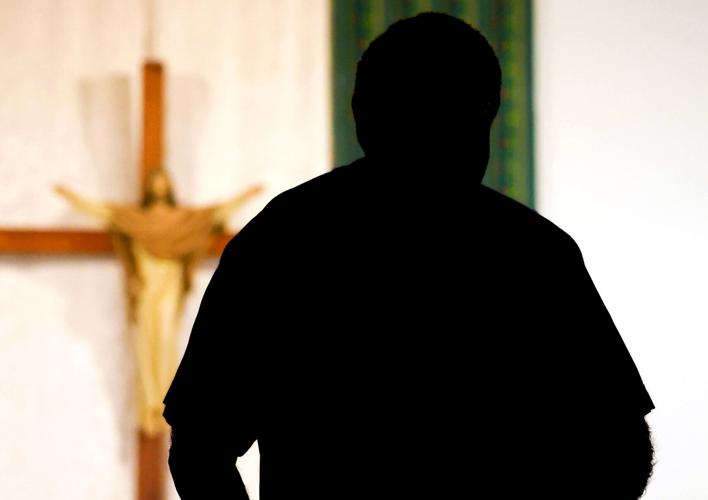
At a Spanish-speaking Lutheran church in Tucson, the pastor said his congregation has still been attending in large numbers, although he’s offered remote services via Facebook since the pandemic. “Some of them have shared with me that they can’t just be sitting and waiting for the worst to happen,” said the pastor, who asked to be identified only by his first name, Mateo, to protect his congregation. “It’s kind of influenced my preaching in that I really emphasize that we are in God’s hands. The care God gives us is bigger than any of the government’s actions.”
At a Spanish-speaking Lutheran church in Tucson, the pastor said his congregation has still been attending in large numbers, although he’s offered remote services via Facebook since the pandemic, he said.
“Some of them have shared with me that they can’t just be sitting and waiting for the worst to happen,” said the pastor, who asked to be identified only by his first name, Mateo, to protect his congregation. “It’s kind of influenced my preaching in that I really emphasize that we are in God’s hands. The care God gives us is bigger than any of the government’s actions.”
Pastor Mateo said he’s asked volunteers with English-speaking sister churches to attend his services to act as witnesses, in case there should ever be an ICE raid at the church. The Trump administration has reversed prior ICE guidance limiting enforcement in “sensitive locations,” including hospitals, schools and churches.
“Our people are very appreciative of these visitors,” he said, noting they’ve attended almost every Sunday service in recent months. “If something should come to pass, they’d be there to witness it.”
Among his congregants, Pastor Mateo said there’s a sense of foreboding but a desire to stay positive.
“It’s kind of a weird feeling. ICE hasn’t really put its foot down in Tucson, I don’t feel,” he said. “We’re been pretty much trying to keep people’s spirits up, and just hunkering down and seeing what happens.”
Church secretary Anabel — whose parents brought her to the U.S. from Hermosillo, Sonora, when she was 16 — said she’s told herself that if she starts living in fear, she’ll relocate herself and her three kids back to Mexico. But she’s not there yet.
“I can’t see myself there,” said Anabel, who is 36. “When my parents brought me here, I started a new life here.”
Anabel recently started seminary training to become a pastor. Standing at the altar, “I feel like I belong there,” she said. “I feel different, even when I start writing the sermon. You feel something inside of you that tells you what to say.”
That inspiration is stronger than fear, she said.
“If I’m gonna lead this life afraid, it’s not living,” she said. “I have to live. I have to work. I have to take my kids to soccer practice and softball practice. I can’t stop my life and my kids’ life.”
But she said these days, she prays before leaving the house.
“Always when I leave my house, I ask God for help. If this is going to happen to me, just give me the strength to get through it,” she said. “If something is going to happen, please don’t let it happen with my kids with me.”
Antonio says not only has his home life changed, but work has changed, too. He used to routinely work 60 to 70 hours a week, but now he’s working about half that. He’s not sure if it’s due to the economy and fewer people doing home improvements, or that potential clients are fearful of hiring immigrants, he said.
The reduction in income is straining his family, he said.
“You can’t go to work comfortably anymore. You struggle more, much more for work,” he said.
Anabel also cleans houses in Tucson and said a number of her long-time clients, who know she’s undocumented, are Trump supporters. In his second term, some clients’ devotion to Trump seems to have become “like a religion,” she said.
“They have the shirts, the hats, figurines, a flyswatter with a Trump face, a Trump Bible,” she said.
But those clients, who often talk politics with her, seem oblivious that Trump’s anti-immigrant policies are directly impacting her and her loved ones, Anabel said. She said she answers their questions honestly — and bluntly.
“They really like me and feel comfortable around me. That’s why I’m telling them how I feel,” she said. “They say, ‘You’re a friend. You’re part of the family.’ ... Don’t say I’m part of your family. Because if something happens to me, my kids are gonna be without their mom.”
Low-hanging fruit
In Tucson, immigration operations seem to be largely targeting “low-hanging fruit” — that is, immigrants who tried to follow the rules and are therefore on the government’s radar, said Isabel Garcia, a long-time social-justice activist, attorney and co-founder of Tucson’s Coalicion de Derechos Humanos.
That includes those who used the recommended CBP One phone application to make an appointment at a U.S. port of entry, in order to request asylum, instead of crossing the border outside an official port, she said.
“We tell everyone: Do it the right way,” only to detain them later, she said.
The Venezuelan community here has been particularly hard hit, some advocates say.
At one Tucson apartment complex, several Venezuelan migrants have been arrested recently, including at least one with a pending asylum claim, the partner of one resident said.
Veronica, who is a U.S. citizen, told the Star that her fiancé Raúl, who is from Venezuela and lives at the complex, was detained by Homeland Security Investigations agents in late October. Veronica asked the Star to only use her and Raúl’s second names, for fear that speaking out could undermine Raúl’s pending asylum claim.

Tucson home painter Antonio, 31, embraces his 4-year-old son Mateo, a U.S. citizen, in west Tucson. Antonio, who was born in Nogales, Sonora and is undocumented, said he’s had to stop taking his son to the park and other public places they used to visit together. Now they stay at home, but have been able to avoid isolation by inviting family and friends to eat with them, he said.
In 2022, Raúl surrendered to border agents after crossing the border in Texas and was granted humanitarian parole and Temporary Protected Status, Veronica said. He filed an asylum petition, but it was rejected; he’s currently in the appeal process, she said.
On the morning of Oct. 27, Veronica was on the phone with Raúl — on his hands-free device, she noted — as he drove to work, when he said he was getting pulled over by what seemed like immigration agents. She heard agents tell him he was under arrest before the call disconnected. Raúl is detained at Eloy Detention Center, she said.
“At first I was desperate and upset,” she said, speaking in Spanish. “Now I’m more calm. You have to have faith and hope for the best. You continue with your life, thinking positively about how to get him out of there. It’s the only thing on your mind.”
Immigration enforcement under Trump’s DHS is increasingly disconnected from the law, and violations of due process rights for immigrants, with legal status or not, pave the way for abuses of U.S. citizens, Garcia said.
That’s exemplified by DHS’s recent arrests of anti-ICE protesters initially accused of assault, whose cases were later dismissed without any charges filed, she said.
Militarization at the border, ongoing for decades, lays the groundwork for a police state in the interior, Garcia said.
“What happens at the border doesn’t stay at the border,” she said. “They’ve utilized immigrants slowly, and not so slowly at times, to erode rights. And then what happens? We (as citizens) get it. ... All of this has just exposed what we’ve said all along: You must have rights for all, otherwise you lose your own rights.”
Garcia said Tucson should be braced for more heavy-handed enforcement, as ICE seeks to hire 10,000 more agents this year. The agency’s “show of force” in urban centers, and the increased reliance on Border Patrol in the U.S. interior, seem like warning signs of what could be coming, she said.
Of Tucson’s immigrant workers, she said, “We have to protect them.”
‘As if you’re imprisoned’
For some in Tucson, major life plans are in limbo due to Trump’s mass-deportation campaign.
Belizario, 29, said he crossed the southern border near Tijuana after leaving his hometown in Puebla, Mexico, in 2019, seeking stability and “a better life” in California.
He moved to Tucson in 2023 and is now engaged to a U.S. citizen, who has two young children he says he considers his own.
But they’ve paused their wedding plans, he said. Their lawyer said it’s possible he’d end up detained if he got on the government’s radar now, so they plan to wait until Trump is out of office and hope to find a way to get married without having to be separated.
Under current law, if Belizario tries to regularize his status after having entered the U.S. without authorization, he’d likely face a ban of up to 10 years on re-entering the U.S., due to a Clinton-era law that aimed to deter irregular migration by imposing penalties.
“That’s what they recommended to us, to be very cautious and wait for the next president to see what they do and if there are any changes to the laws,” he said in Spanish.
Belizario, who has experience working in home remodeling and construction, said work is scarce lately. But his family would rather him stay home anyway for fear he’ll be arrested, he said. He saw on the news that immigration agents are detaining people based on their appearance and whether they speak Spanish.
“It’s scary. It’s as if you’re imprisoned,” he said. “They get scared every time I go out, worrying something might happen.”
A September Supreme Court decision, authored by Justice Brett Kavanaugh, paused a federal judge’s ruling that had restricted immigration agents’ ability to make immigration stops in Los Angeles based on factors like race, speaking Spanish and working a job like construction. Critics say the ruling gives federal agents a green light to use racial profiling.
Belizario said his dreams of attaining legal status and staying with his family in the U.S. haven’t changed, despite the current political climate.
“God willing, maybe in the future I’ll be able to walk free and not have to hide or worry about the police or someone trying to arrest me,” he said. “If things were to change and I had an opportunity to be legal, I would work hard and give it my all, and move forward here with my family. Family comes first.”

