




Officials were rushing Wednesday to head off a potential superspreader event during this year’s Pima County Fair, and the culprit this time is a little weed with yellow, ball-shaped flowers.
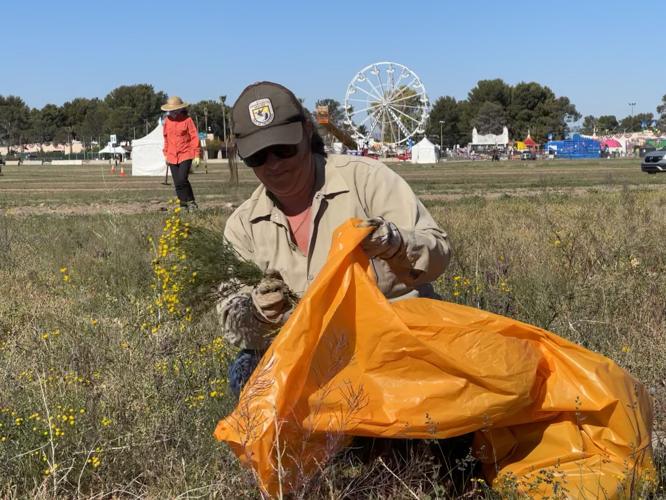
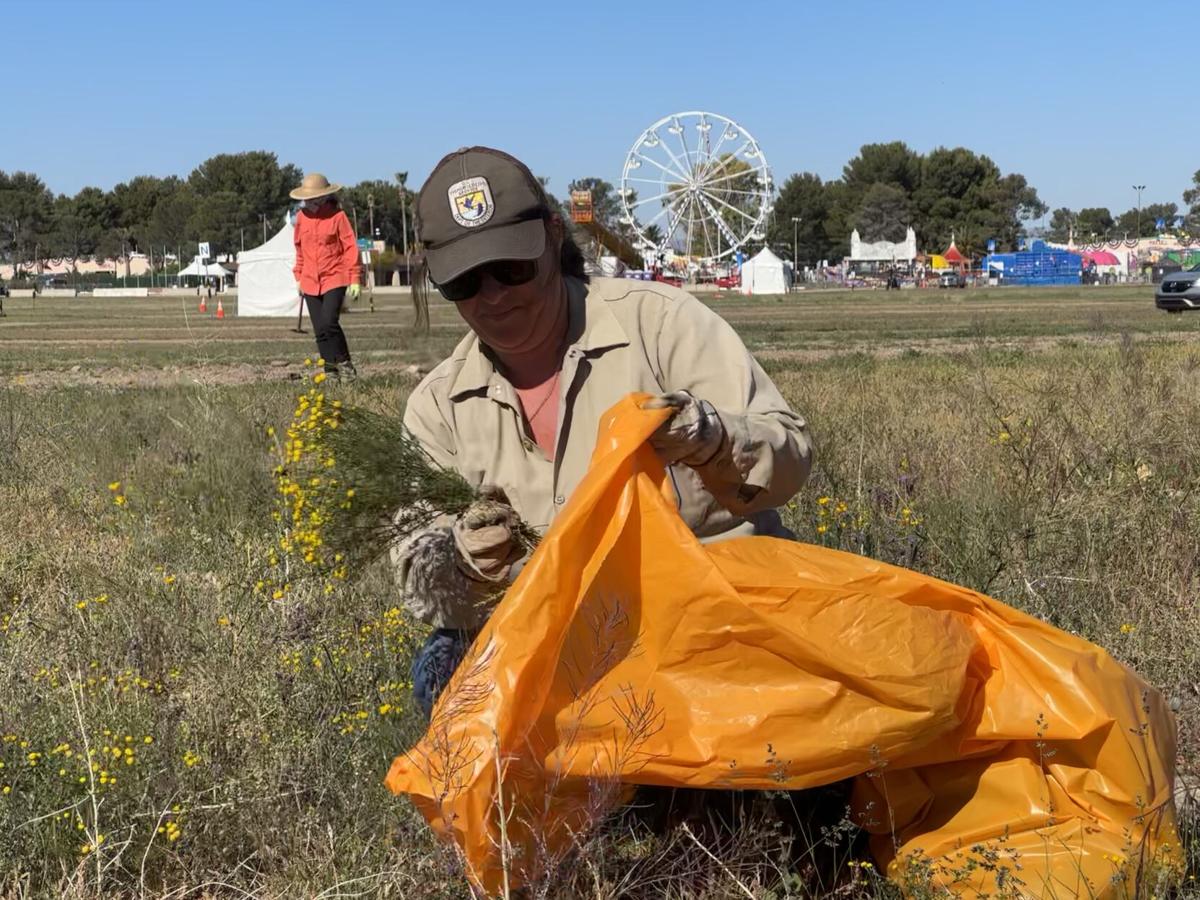
About a dozen volunteers gathered in the parking lot on the east side of the fairgrounds to yank out stinknet plants before their powder-fine seeds can be carried off on the clothes and vehicles of fairgoers.
The emergency operation was organized by Ellie Schertz, invasive species program coordinator for Pima County Natural Resources, Parks and Recreation.
“We know that stinknet travels on car tires. What we want to prevent is for this to become a large vector for seeds,” Schertz said.
The noxious weed has already overrun the Phoenix area, but invasive plant experts are fighting to keep it from taking hold in and around Tucson.
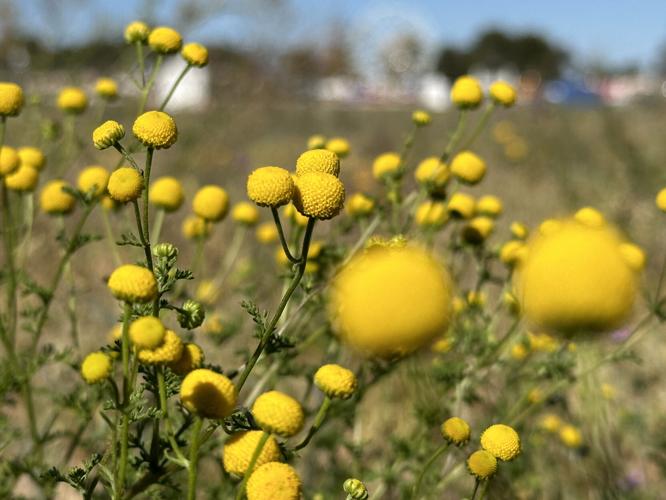
Schertz suspects the weeds at the fairgrounds arrived as seeds on construction equipment brought in for a nearby landscaping project last year. A large patch of stinknet plants — with their distinctive globe-shaped blossoms, ranging in size from a pea to a marble — can be found right at the fairgrounds’ front gate, in the flood channel along the Chuck Huckelberry Loop.
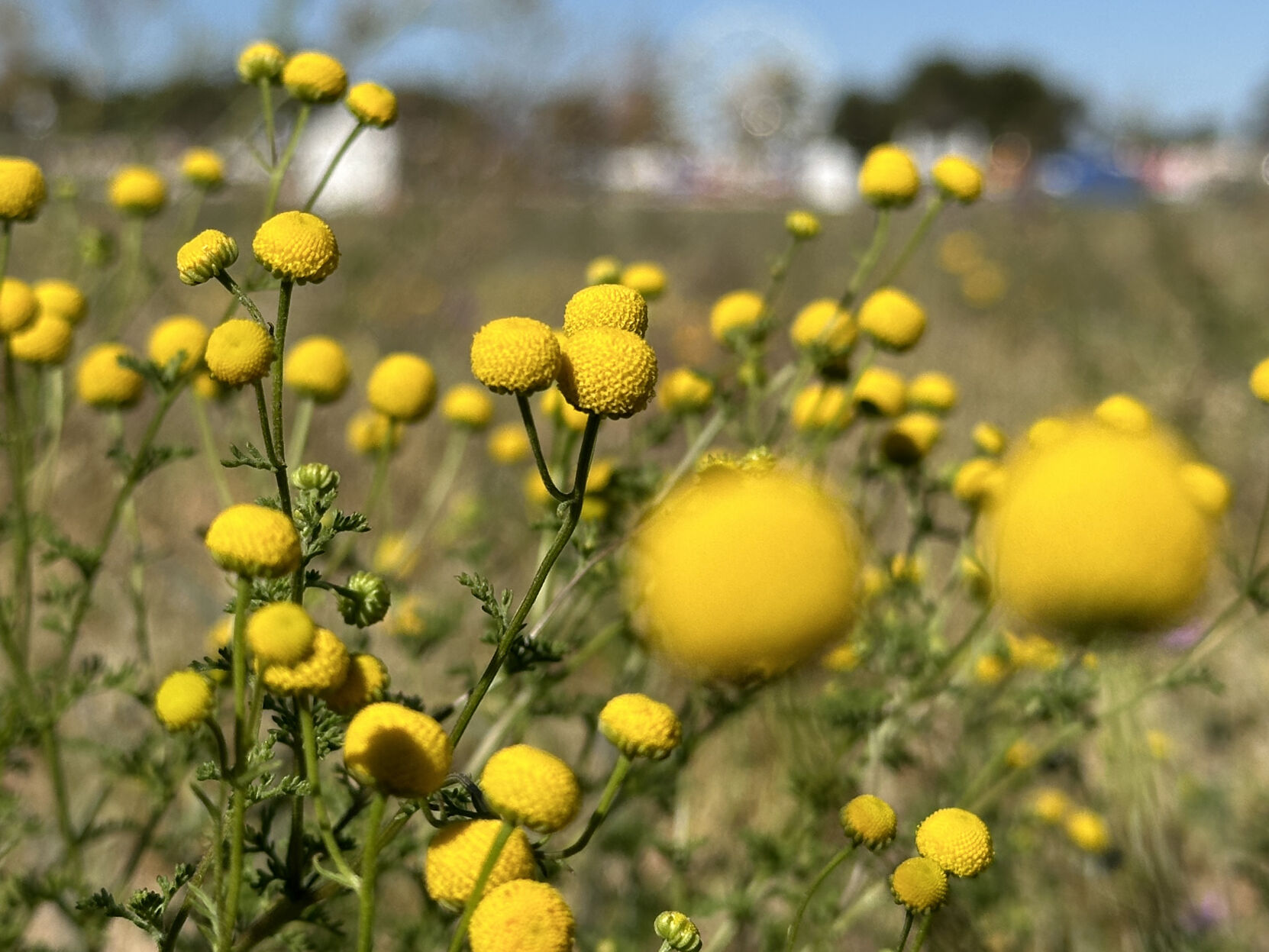
Stinknet, also known as globe chamomile, is a noxious weed from South Africa that plant experts are trying to keep from taking over in Southern Arizona the way it has in Maricopa County. This plant was found recently in the parking lot at the Pima County Fairgrounds.
Luckily, though, the plants in the parking lot were scattered and had not yet gone to seed, Schertz said. “It’s not a carpet, which is good.”
Wednesday’s weed-pulling crew included volunteers from the county, the National Park Service, the U.S. Fish and Wildlife Service and the Arizona-Sonora Desert Museum — agencies and entities that are all active in local stinknet eradication efforts.
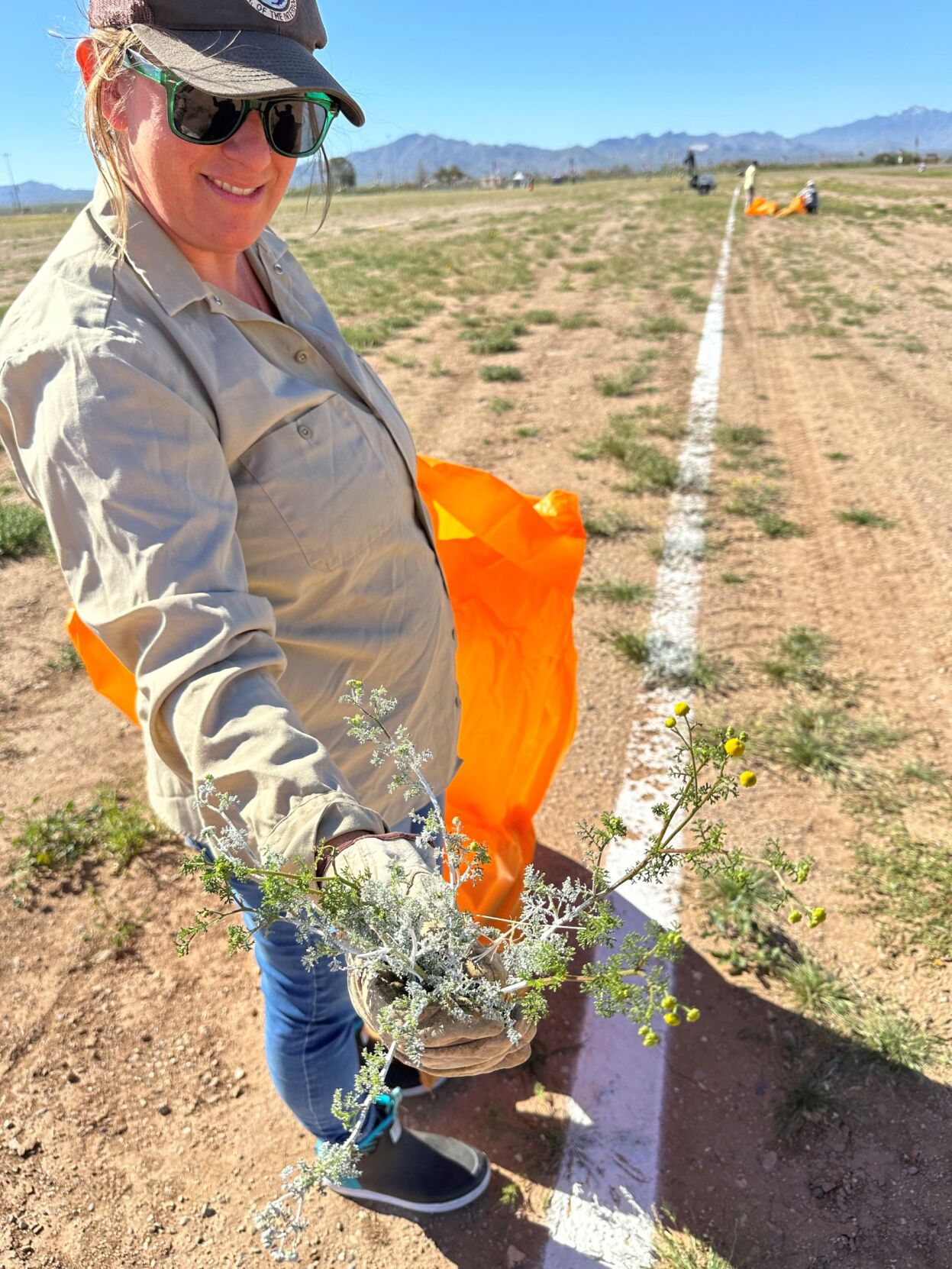
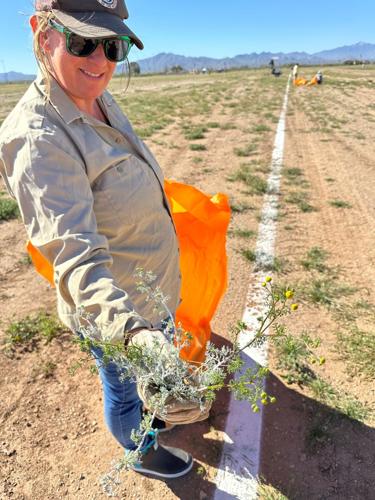
Bethany DeRango, Arizona Invasive Species Strike Team leader for the U.S. Fish and Wildlife Service, shows off a stinknet weed that was painted over in the parking lot at the Pima County Fairgrounds.
The Arizona Department of Agriculture, the Arizona Native Plant Society and the Southwest Vegetation Management Association are also key players, as is the Tucson Audubon Society, which maintains a website called stinknet.org that people can use to identify the weeds, report sightings and learn more about the threat.
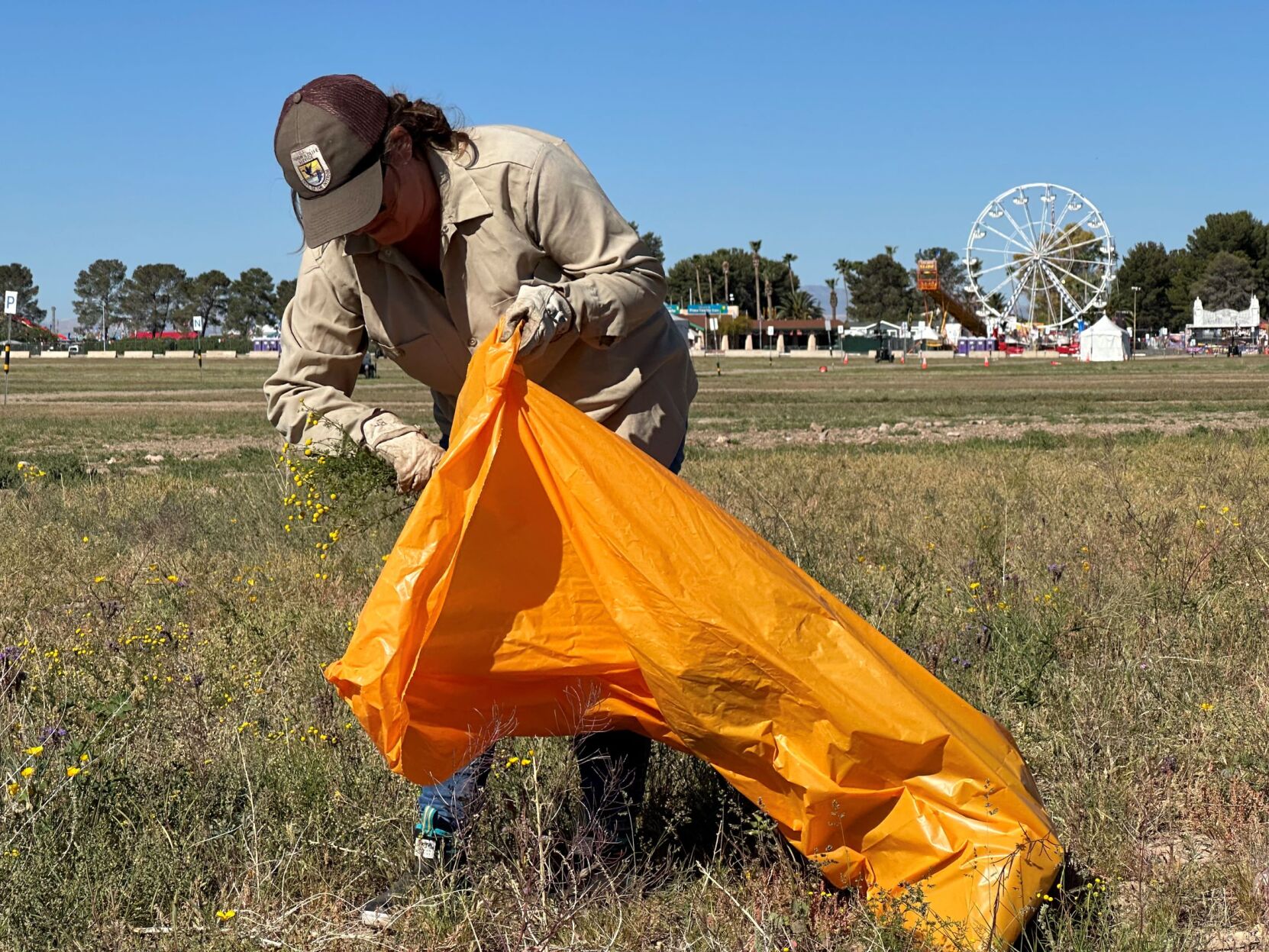
Bethany DeRango from the U.S. Fish and Wildlife Service disposes of an invasive stinknet plant during an emergency weed pull Wednesday conducted in the Pima County Fairgrounds parking, ahead of the start of this year’s fair.
The noxious weed from South Africa arrived in Maricopa County in the 1990s and quickly spread. Within a decade, the yellow flowers could be found each spring carpeting empty lots and highway embankments from the northern edge of Phoenix to Casa Grande.
It first appeared in Tucson in 2015 on a vacant lot near Prince Road and Interstate 10.
Depending on the weather, the annual plant generally emerges in staggered fashion between November to March. It resembles carrot greens at first, growing low to the ground before developing the flowers that give it its other nickname: globe chamomile.
But don’t let its charming appearance fool you.
The Arizona Department of Agriculture added stinknet to its list of noxious weeds in 2020.
It can cause skin rashes and asthma attacks in people sensitive to it. And the weeds spread more easily than other invaders, quickly squeezing out native plants to create dense mats that can dry out and catch fire, producing smoke that irritates the lungs.
Some participants in Wednesday’s weed pull wore protective gloves and face masks as they handled the plants.
Bethany DeRango showed up to the fairgrounds in her uniform shirt and hat from the Fish and Wildlife Service. She is the Tucson-based leader of the agency’s Arizona Invasive Species Strike Team.
She said she has been chasing stinknet outbreaks across Southern Arizona nonstop since winter. The weed seems to be popping up everywhere from Ajo to Douglas.
On Tuesday, a new patch with more than 10,000 plants was reported along the I-10 frontage road in Willcox.
After pulling weeds at the fairgrounds, DeRango was headed to Buenos Aires National Wildlife Refuge to assess another fresh crop of weeds along state Route 286 near Sasabe.
“It’s been a heck of a couple of months,” she said.
She thinks this year’s increase in stinknet sightings is probably the result of new growth spurred by wet conditions, coupled with greater public outreach and awareness about the problem.
The war against stinknet in Tucson has not been lost, DeRango said, but “I think we’re going to have to adjust our expectations for what we can achieve.”
The problem likely has grown beyond the capacity of a few government agencies and conservation groups. It’s going to require everyone watching out for the weeds in their own yards and neighborhoods, DeRango said. “It’s going to take a community effort.”
Schertz agreed.
“This is a hopeful story for us. We have an opportunity to prevent this from becoming widespread,” she said. “Hopefully we’ll start to see containment and control, rather than absolute explosion.”

