


HAYS, MONTANA — Inside a double tipi lodge on the Fort Belknap Reservation one September morning, four children huddled together, each with a lollipop in hand.
“You’re going to learn about dehydration in science class when you’re in my grade,” 13-year-old LeCass Camel told the others.
Jeremiah Camel, LeCass’ 12-year-old brother, recited the numbers of pi.
“You’ll learn that in math,” he proudly told the younger kids, who were more focused on their candy.

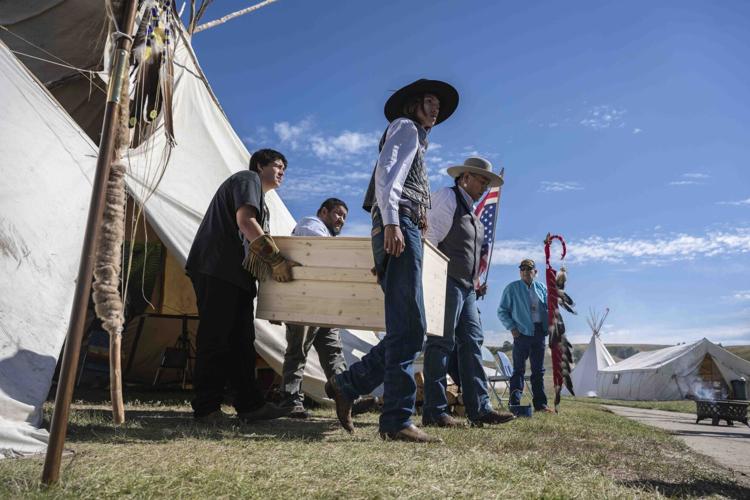
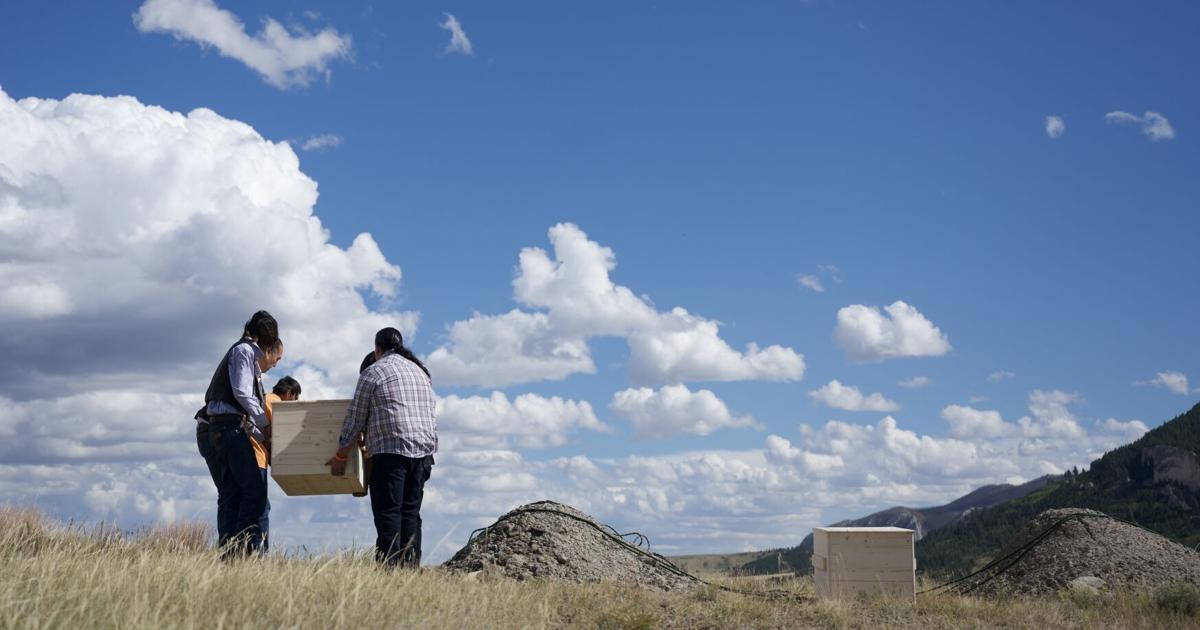
The Fort Belknap Indian Community carries the caskets of Bishop L. Shield, John Bull and Almeda Heavy Hair to be transported to the Aaniiihnin Traditional Burial Grounds on Sept. 20 in Hays, Montana. For the last seven years, Native American tribes have worked with the Office of Army Cemeteries to exhume and return ancestral remains. While the process is painful, tribal leaders say it serves as an important step toward healing.
Just feet away from Jeremiah and LeCass sat three small caskets containing the remains of children not much older than themselves — a stark reminder that life for the Aaniiih people didn’t always look this way.
While LeCass and Jeremiah live with their family members and attend school in their community, the children in the caskets were sent thousands of miles from home to Carlisle Indian Industrial School.
Located in Pennsylvania, Carlisle opened in 1879 and was the first government-run boarding school for Native Americans. The explicit mission of the campus — which later served as a model for others — was cultural genocide. Native American children who attended were forbidden from speaking their languages or practicing culture. They were emotionally, physically and sexually abused. The historical trauma created there persists in tribal communities.

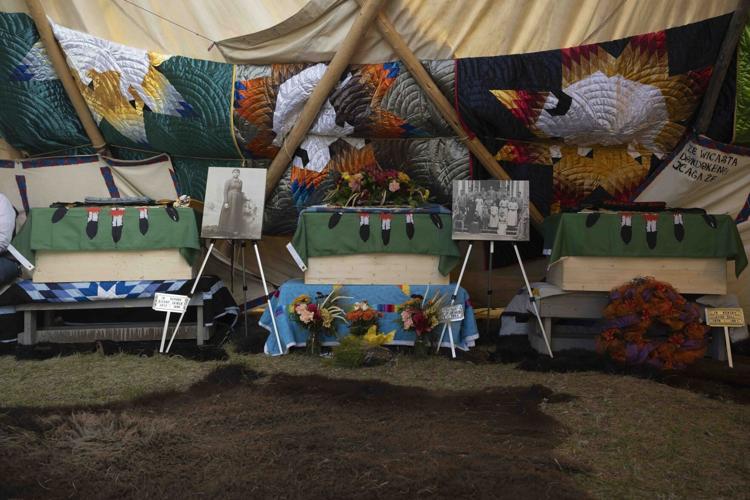
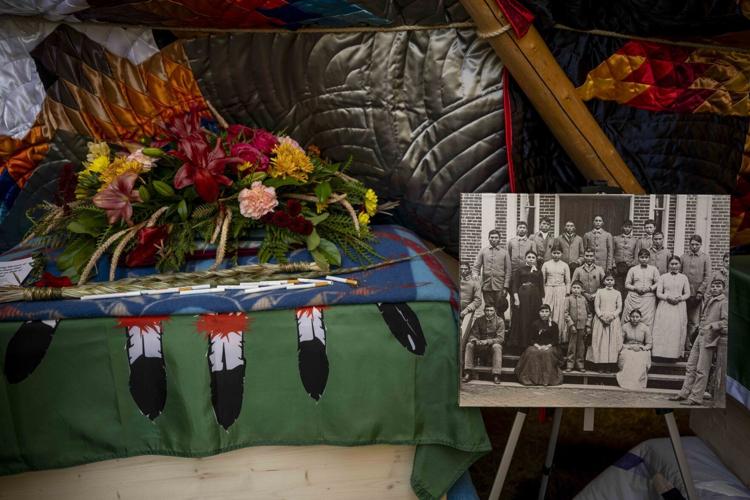
The caskets of Bishop L. Shield, John Bull and Almeda Heavy Hair rest inside a tipi on Friday, Sept. 20 in Hays, Montana, before being transported to the Aaniiihnin Traditional Burial Grounds to be buried.
Some children died at these schools. Some are still unaccounted for. Many never came home — until now.
For the last seven years, Native American tribes have worked with the Office of Army Cemeteries to exhume and return ancestral remains. While the process is painful, tribal leaders say it is an important step toward healing.
Recovering from centuries of harmful U.S. policy, the Fort Belknap Aaniiih and Nakoda Tribes — like hundreds of tribes nationwide — are charting a new path forward, one that acknowledges the tragedies of the past while celebrating the opportunity for a better future.
George Horse Capture Jr., a cultural leader, put it simply: “We’re trying to learn to be Aaniiih and Nakoda again.”

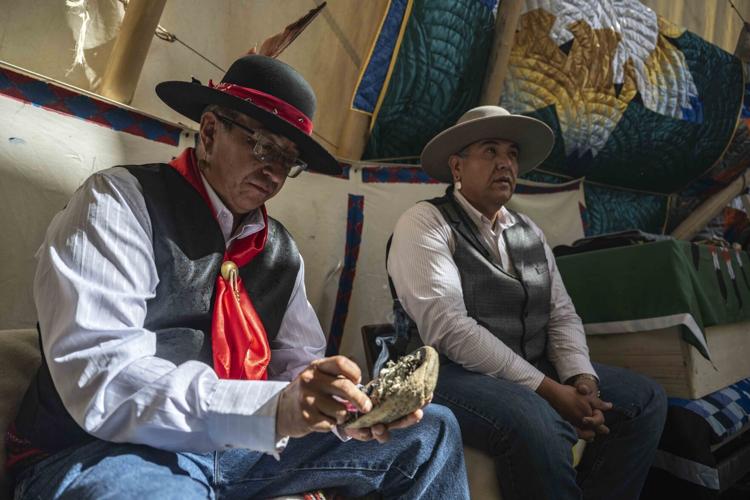
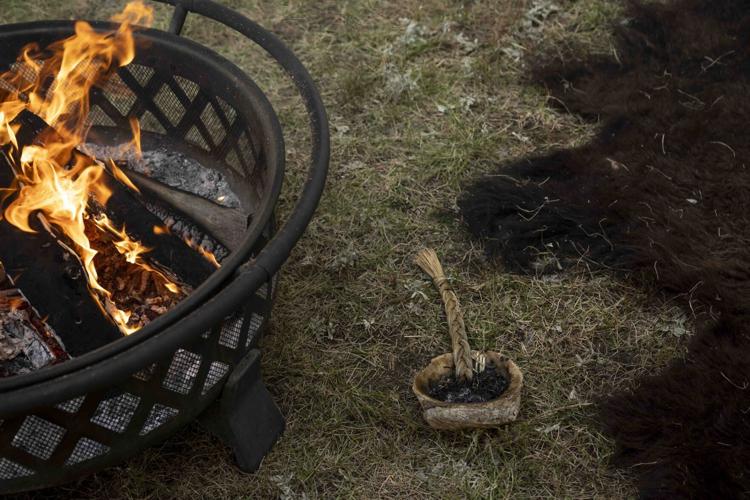
Catcher Cuts the Rope lights sage before a prayer during the burial ceremony on the Fort Belknap reservation on Sept. 20 in Hays, Montana.
A lethal system
Bishop L. Shield, John Bull and Almeda Heavy Hair each arrived and died at Carlisle in the 1890s.
Around that time, the U.S. government was acquiring tribal land, legally and illegally. Settlers and U.S. soldiers killed millions of bison to devastate tribal communities. Tribal populations began to plummet, as people faced malnutrition, infertility and disease. Responding to these conditions, some tribal leaders believed off-reservation schools, like Carlisle, would provide opportunity for children, according to Blackfeet historian Rosalyn LaPier.
She said the federal government also used coercion to ensure Indigenous people would comply with federal policy. Indian agents, for example, could withhold rations from parents who did not send their children to schools like Carlisle.

Ceremonial sweetgrass rests on the floor of a tipi on Sept. 20 in Hays, Montana.
Because school records are limited, inconsistent and poorly translated, not much is known about the three Aaniiih children who died at Carlisle. Shield (whose Indian name was Sleeps High) died of pneumonia at 17, just three months after arriving at the school in 1890. Bull (The Dwarf) died at 15 in 1891 of “consumption,” a term often used to describe tuberculosis or some kind of lung infection. And Heavy Hair (Heavy Hair on Side of Head) died at 16 in 1894, also of consumption.
Preston McBride, assistant professor of history at Pomona College, said diseases like tuberculosis, typhoid fever and pneumonia thrived at Indian boarding schools.
School leaders, he said, often didn’t enforce vaccination requirements. And the schools, which received funding based on student population, were overcrowded. It wasn’t uncommon for students to share beds, clothing, toothbrushes and towels.

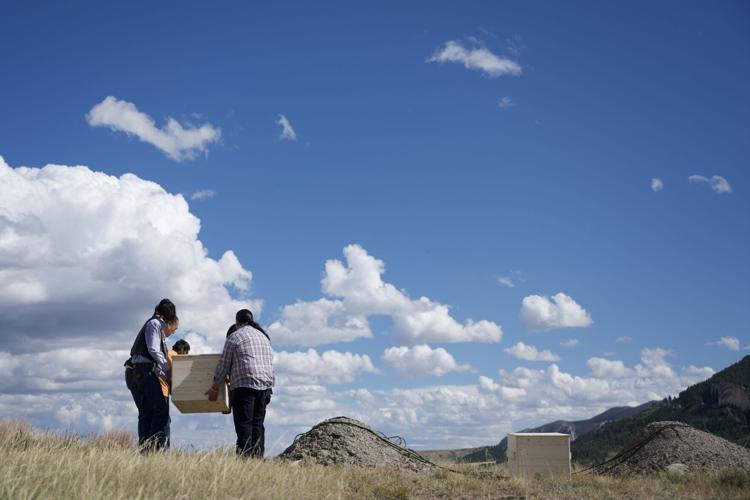
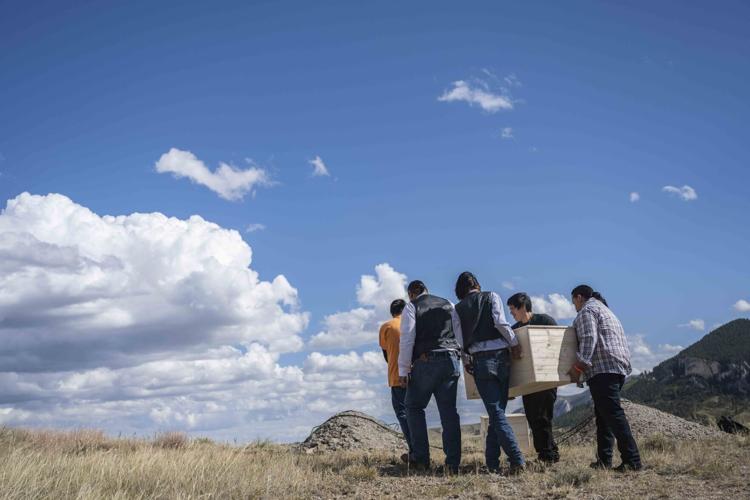
Members of the Fort Belknap Indian Community carry the remains of Bishop L. Shield and John Bull to their graves at the Aaniiihnin Traditional Burial Grounds on Sept. 20.
McBride has studied the spread of disease in four major Indian boarding schools — Carlisle in Pennsylvania, Chemawa in Oregon, Haskell in Kansas and Sherman in California.
From 1810 to 1920, he said students in these four schools were up to 20 times more likely to die than their white counterparts in the U.S. Because school officials failed to keep records on many sick or dying students, McBride said, “the full extent of the system’s lethality is unknown.”
“Indian student deaths in federal custody were considered acceptable collateral damage for the government’s larger push to eradicate Native American cultures and life ways,” he said.

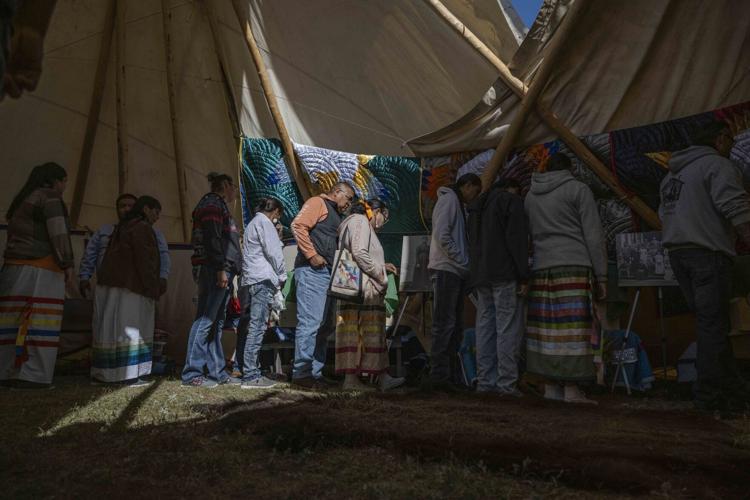
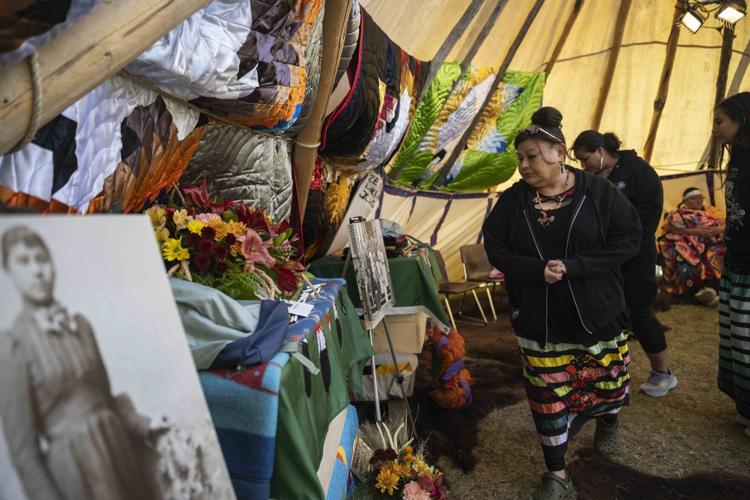
Members of the Fort Belknap Indian Community visit the caskets of Bishop L. Shield, John Bull and Almeda Heavy Hair before they are transported and buried at the Aaniiihnin Traditional Burial Grounds on Sept. 20 in Hays, Montana.
‘A heavy sense of sadness’ visiting Carlisle
At the urging of tribal members nationwide, the Office of Army Cemeteries has exhumed and returned the remains of dozens of children who died at Carlisle. Shield, Bull and Heavy Hair were exhumed in the seventh disinterment operation since 2017.
About a dozen Fort Belknap cultural leaders, council members, elders and youth traveled to Pennsylvania to receive the remains and bring them home.
On campus, Emma Filesteel, the deputy tribal historic preservation officer for the Fort Belknap Aaniiih and Nakoda Tribes, couldn’t bring herself to enter the school’s old infirmary.
“I felt a heavy sense of sadness when I was there,” she said.

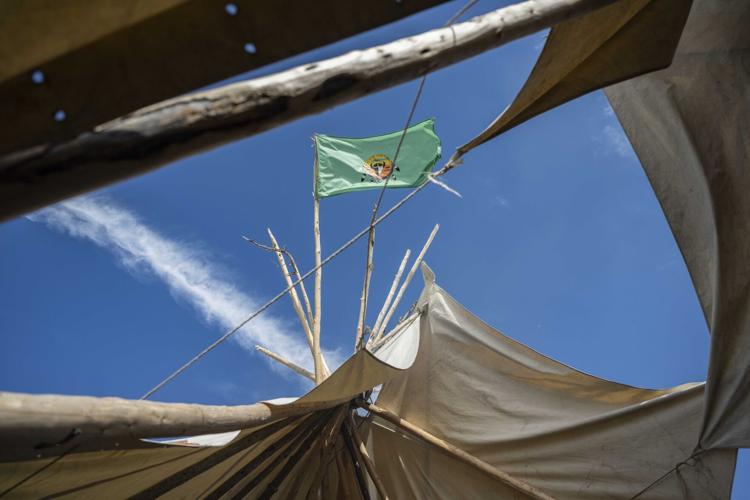
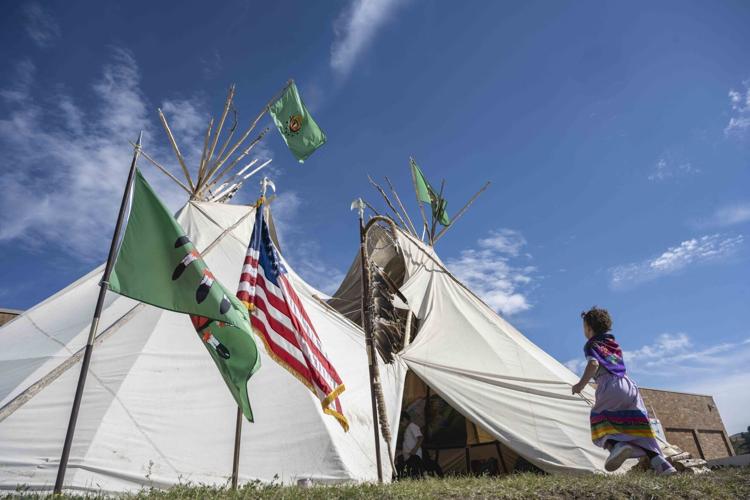
A tribal flag waves atop the tipi on Sept. 20 in Hays, Montana, during a burial ceremony for three children who died at the Carlisle Indian Industrial School in the 1890s.
William Granados, 19, noticed former school buildings had been turned into hotels.
“It’s like if they turned a concentration camp in Germany into a hotel,” he said, shaking his head.
Blackfeet cultural leaders who visited Carlisle last fall said the school was “eerie.” William Gladstone, who works for the Blackfeet Tribal Historic Preservation Office, said he noticed childlike doodles on the walls of what looked to be jail cells. When remains of a Blackfeet child were exhumed last fall, Gladstone said there were pig, cow and deer bones inside the child’s casket. He learned the children’s cemetery was also used as a dump for animal scraps they used in the kitchen.
“They were careless,” he told Lee Montana last fall.
Bringing Lawney home: More than a century later, Blackfeet bury boy who died at Carlisle
That negligence also meant that a fourth Nakoda child buried in an unmarked grave at Carlisle was left behind because it was too difficult to exhume his remains.
“It was one of the worst feelings having to leave him behind,” Filesteel said. “We need to come up with a solution to get him home.”

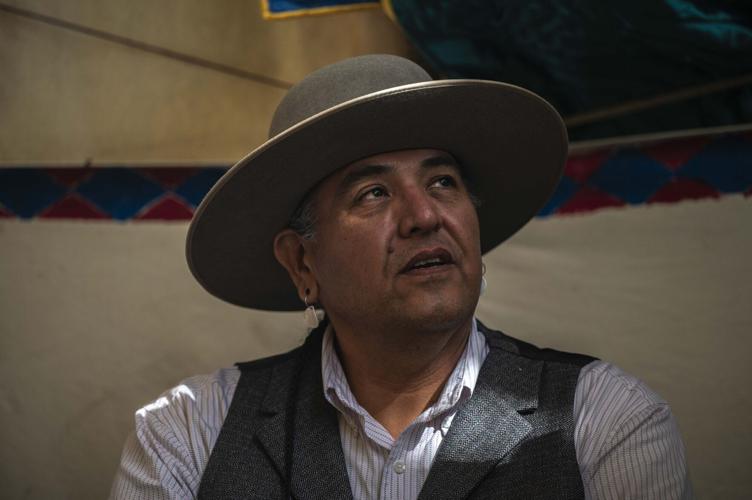
Tribal Historic Preservation Officer, Michael Black Wolf, attends the burial of Bishop L. Shield, John Bull and Almeda Heavy Hair on Friday, Sept. 20 in Hays, Montana.
Enduring consequences
Past boarding school-era policies have long-term, present-day consequences in tribal communities.
Ekoo Beck (LaPier’s child), works for the National Native American Boarding School Healing Coalition, an organization gathering first-person survivor narratives for an oral history collection. Beck said there aren’t a lot of elders from the boarding school period who are still alive. Those who are say their classmates died young.
“People died at an early age of addiction,” Beck said. “Alcohol abuse has roots in boarding schools. Traumatic deaths and the low life expectancy rate in Montana can be attributed to the trauma of boarding schools.”

Historical photos of children in boarding schools are on display next to the caskets of Bishop L. Shield, John Bull and Almeda Heavy Hair on Friday, Sept. 20 in Hays, Montana. The children each arrived and died at the Carlisle Indian Industrial School in the 1890s.
Samuel Torres, deputy chief executive officer of NABS, said boarding school survivors weren’t able to learn traditional ways of parenting. Having grown up in an institutional and abusive environment, some survivors say they don’t trust themselves to discipline their children.
“Now, we have new generations of Native youth who are subject to conditions provoked by the boarding school era, even if those children never went to boarding schools themselves,” Torres said. “This pattern of intergenerational trauma continues as a living legacy.”
Indigenous languages also suffered. When Filesteel’s grandfather was a student at St. Paul’s Mission School near Hays, he was beaten for speaking Aaniiih.
“He didn’t speak Aaniiih after that,” she said. “We never heard him speak it.”
Today, there are 30 fluent Aaniiih speakers, according to a 2023 Native Language Community Coordination report.

Members of the Fort Belknap Indian Community visit the caskets of Bishop L. Shield, John Bull and Almeda Heavy Hair before they are transported and buried at the Aaniiihnin Traditional Burial Grounds on Friday, Sept. 20 in Hays, Montana.
‘This is what we do’
Atop a hill on the Fort Belknap Reservation, community members placed Heavy Hair’s casket in a grave at the Lame Bull Cemetery, where her relatives are buried.
“This is difficult,” said Randall Werk, one of Heavy Hair’s relatives. “But this is what we do. This is who we are. She is our relative, and we are going to put her back in this Earth today. It’s a beautiful day.”
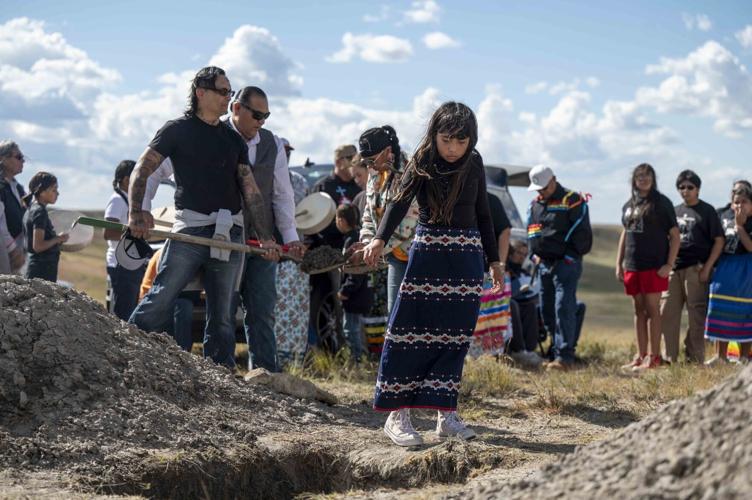
LeCass and his brother Jeremiah beat their drums as cultural leaders sang in Aaniiih. Community members tossed handfuls of dirt into Heavy Hair’s grave, as children gave each other piggyback rides in the cemetery.

Members of the Fort Belknap Indian Community visit the caskets of Bishop L. Shield, John Bull and Almeda Heavy Hair before they are transported and buried at the Aaniiihnin Traditional Burial Grounds on Friday, Sept. 20 in Hays, Montana.
Back at the high school, community members grabbed plates of food and embraced each other in comfort.
As people sat down to eat, LeCass, Jeremiah and their younger cousins chased each other through the empty school hallways.
“You can’t catch me!” one of the children yelled as he ran around a lunch table. The others screamed with joy as they chased him, their long braids bouncing up and down with each stride.
Pinned to a bulletin board, a flyer swayed as the children ran past. It advertised an Aaniiih language class.
Editor's note: This article has been updated to reflect that the Office of Army Cemeteries oversees and directs the Carlisle Barracks Disinterment Program.

Members of the Fort Belknap Indian Community carried the remains of Bishop L. Shields and John Bull to their graves in the Aaniiihnin Traditional Burial Grounds on Friday, Sept. 20 in Hays, Montana.

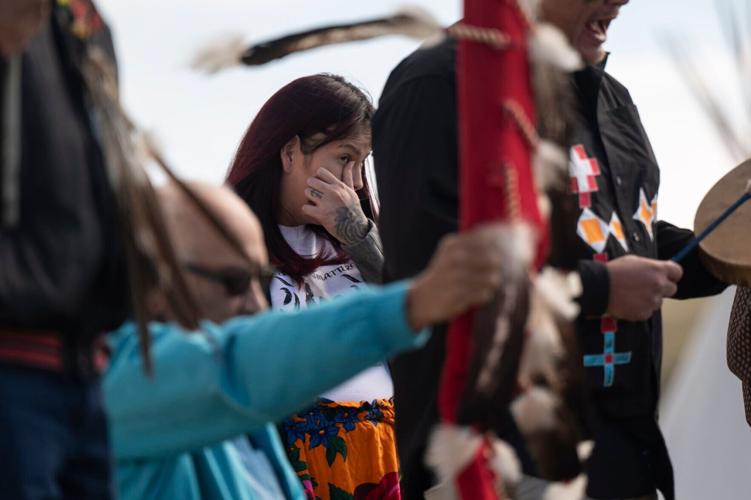
A person cries during honor songs at the burial ceremony of of Bishop L. Shield, John Bull and Almeda Heavy Hair on Friday, Sept. 20 in Hays, Montana.

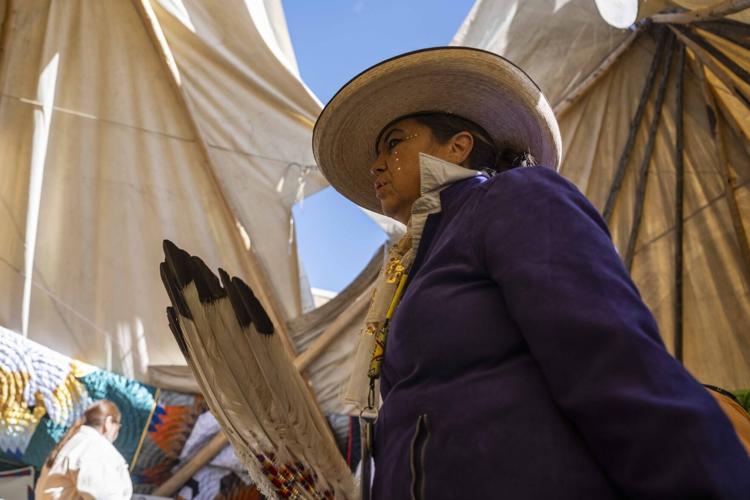
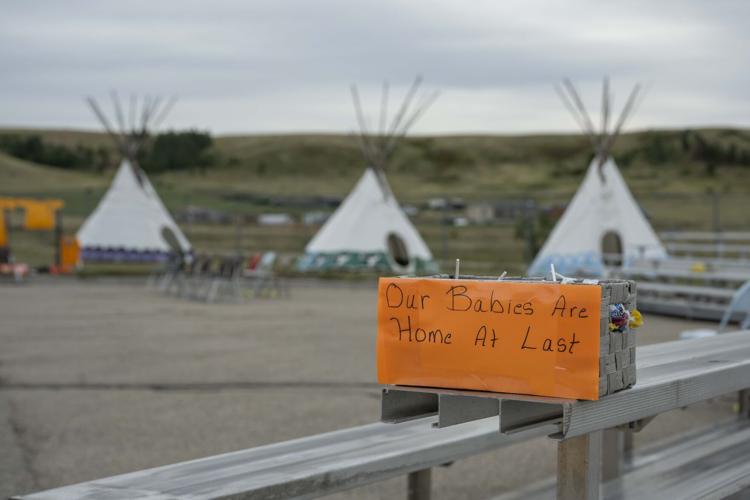
A double tipi serves as the ceremony space for the burial of Bishop L. Shield, John Bull and Almeda Heavy Hair before their caskets are transported to the Aaniiihnin Traditional Burial Grounds on Friday, Sept. 20 in Hays, Montana.

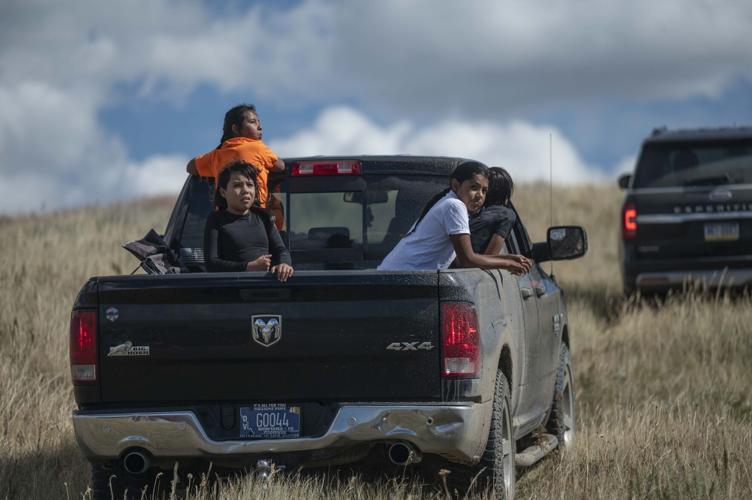
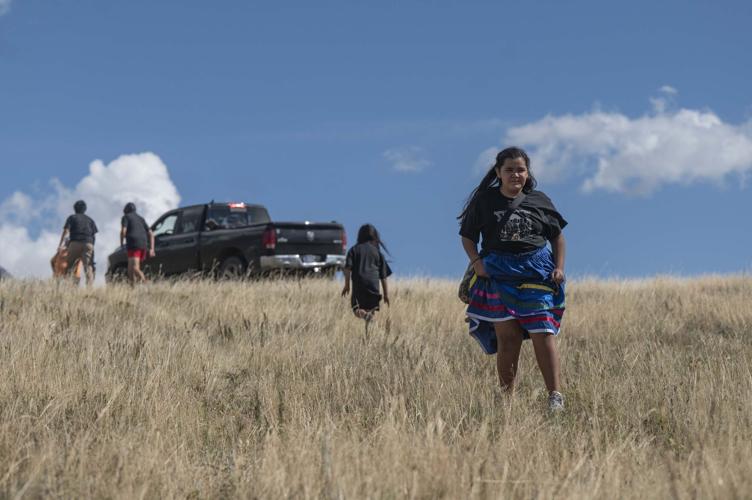
Children sit in the back of a truck on their way to the Aaniiihnin Traditional Burial Grounds on Friday, Sept. 20 in Hays, Montana.

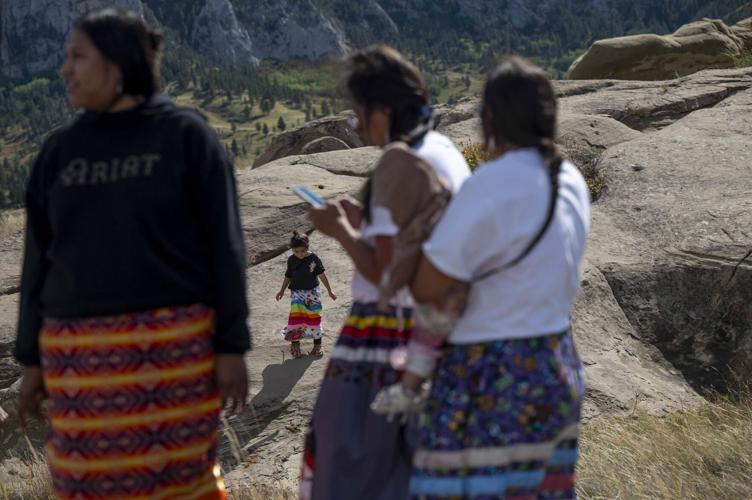
Members of the Fort Belknap Indian Community attend the burial of Bishop L. Shield, John Bull and Almeda Heavy Hair at the Aaniiihnin Traditional Burial Grounds on Friday, Sept. 20 in Hays, Montana.

Members of the Fort Belknap Indian Community attend the burial of Bishop L. Shield, John Bull and Almeda Heavy Hair at the Aaniiihnin Traditional Burial Grounds on Friday, Sept. 20 in Hays, Montana.

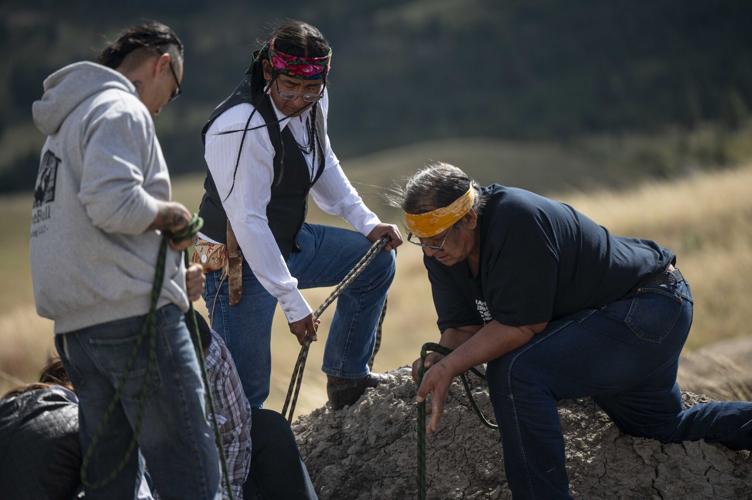
Members of the Fort Belknap Indian Community lower the caskets of Bishop L. Shield, John Bull and Almeda Heavy Hair for burial at the Aaniiihnin Traditional Burial Grounds on Friday, Sept. 20 in Hays, Montana.

Members of the Fort Belknap Indian Community carry the caskets of Bishop L. Shield, John Bull and Almeda Heavy Hair for burial at the Aaniiihnin Traditional Burial Grounds on Friday, Sept. 20 in Hays, Montana.
Members of the Fort Belknap Indian Community lower the caskets of Bishop L. Shield, John Bull and Almeda Heavy Hair for burial at the Aaniiihnin Traditional Burial Grounds on Friday, Sept. 20 in Hays, Montana.

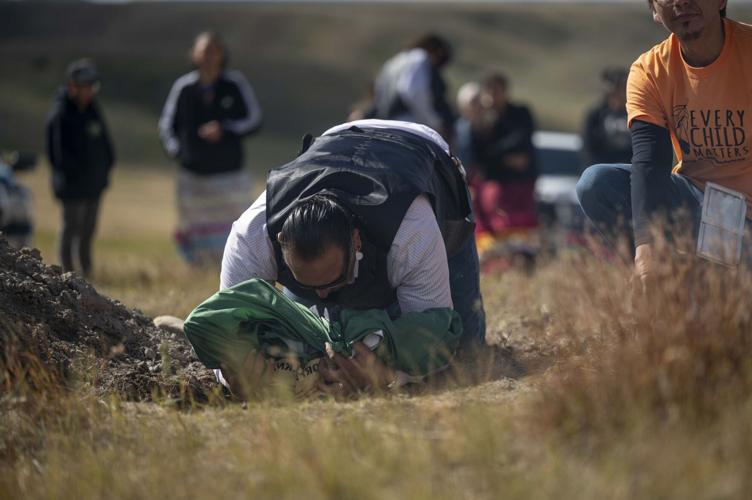
Tribal Historic Preservation Officer Michael Black Wolf lowers items wrapped in a tribal flag into the burial plots of the three children on Friday, Sept. 20 in Hays, Montana.

Members of the Fort Belknap Indian Community toss dirt into the graves of Bishop L. Shield, John Bull and Almeda Heavy Hair for burial at the Aaniiihnin Traditional Burial Grounds on Friday, Sept. 20 in Hays, Montana.

Members of the Fort Belknap Indian Community attend the burial of Bishop L. Shield, John Bull and Almeda Heavy Hair at the Aaniiihnin Traditional Burial Grounds on Friday, Sept. 20 in Hays, Montana.
Aaniiih and Nakoda community members carry the remains of Bishop L. Shield and John Bull to their graves on the Fort Belknap Indian Reservation. Shield and Bull died at Carlisle Indian Industrial School in the late 1800s.
Aaniiih and Nakoda community members help bury Almeda Heavy Hair, who died at Carlisle Indian Industrial School in the late 1800s.