


PORTLAND, Maine — Whales, dolphins and seals living in U.S. waters face major threats from warming ocean temperatures, rising sea levels and decreasing sea ice volumes associated with climate change, according to a first-of-its-kind assessment.
Researchers with the National Oceanic and Atmospheric Administration examined more than 100 stocks of American marine mammal species and found more than 70% of those stocks are vulnerable to threats, such as loss of habitat and food, due to the consequences of warming waters. The impacts also include loss of dissolved oxygen and changes to ocean chemistry.
The scientists found large whales such as humpbacks and North Atlantic right whales were among the most vulnerable to climate change, and that other toothed whales and dolphins were also at high risk.

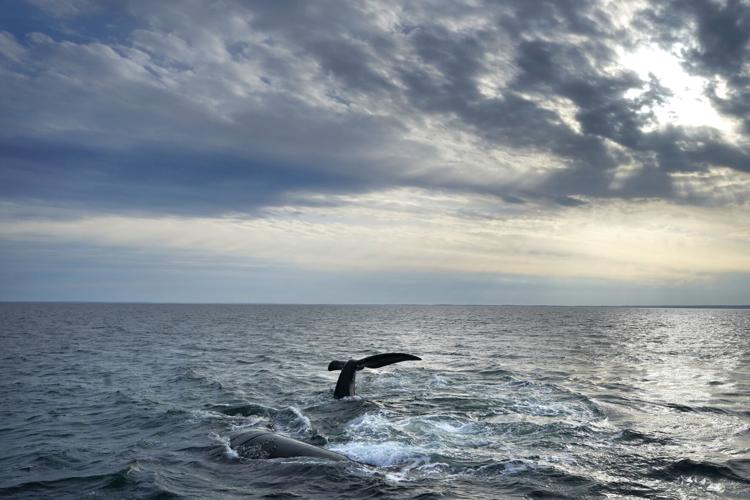
A pair of North Atlantic right whales interact March 27 at the surface of Cape Cod Bay, in Massachusetts. A recent study says the warming of the ocean harms ocean mammals because it alters their ability to find food and reduces the amount of suitable habitat.
The study, published last month in the journal PLOS ONE, is evidence that the way the U.S. manages whales and dolphins needs to adapt in the era of climate change, advocates for marine mammals said.
The news is bleak, but the assessment also is the first to look solely at marine mammal stocks managed by the U.S. and the results can help inform federal ocean managers about how to safeguard the vulnerable animals, said Matthew Lettrich, a biologist and lead author of the study.
“As the climate's changing, we're seeing some of the effects already, and some of our marine mammal populations are more vulnerable to those changes than others,” Lettrich said. “Based on this study, we see a good proportion are highly and very highly vulnerable.”
The researchers studied marine mammals living in the western North Atlantic ocean, Gulf of Mexico and Caribbean Sea. The animals are managed by the National Marine Fisheries Service, the arm of the federal government responsible for stewardship and protection of marine resources.
The scientists looked at the animals' degree of exposure to climate change and sensitivity and capacity to adapt to it. They found 72% of the stocks were highly or very highly vulnerable to climate change, with a little less than half falling in the “very high” category.

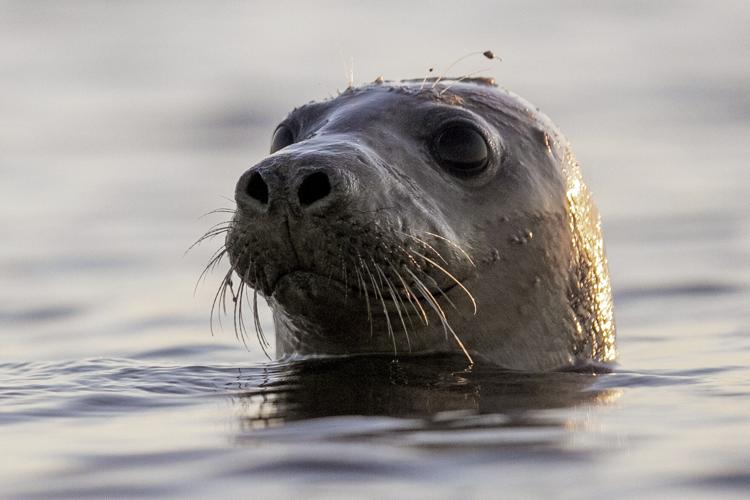
A harbor seal surfaces in Casco Bay on July 30, 2020, off Portland, Maine.
The warming ocean primarily harms marine mammals by altering their ability to find food and reduces their amount of suitable habitat, the study said.
However, the scientists said changes to ocean temperature and chemistry also can change sound transmission. That can affect the sonarlike echolocation marine mammals such as dolphins use to communicate and hunt. Climate change “must be considered to adequately manage species,” the study states.
The NOAA study is significant because it's the first to look broadly at U.S. marine mammals and attempt to predict their resiliency to climate change, said Regina Asmutis-Silvia, a biologist with Massachusetts-based Whale and Dolphin Conservation who was not involved in the study.
The whales will benefit from the study if the information is used to implement laws protecting them, Asmutis-Silvia said.
“The U.S. is one of the most data-rich countries when it comes to marine mammals, and those data should be driving what are arguably some of the world’s strongest laws to protect marine mammals," she said. "However, data are meaningless without the political will to implement management measures.”
The impact of climate change on whales around the world has grown as a subject of scientific inquiry in recent years. Many studies about whales and climate change look only at a single species or a narrower geographic area, said Laura Ganley, a research scientist with the Anderson Cabot Center for Ocean Life at the New England Aquarium in Boston.
But the way climate change affects the giant animals is global in nature, so the broader approach is helpful, she said.
Many scientists have said the vanishing right whale that lives off New England in the summer is made more vulnerable by changes to its food availability caused by warming waters. But climate change also clearly affects less-studied species, Ganley said.

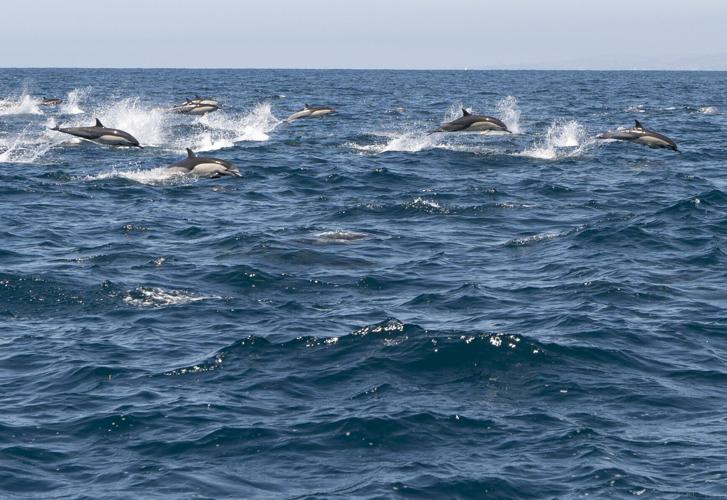
A stampede of dolphins race across the surface of the water Aug. 28, 2020, off Dana Point, Calif.
"This isn't just impacting North Atlantic right whales or bottlenose dolphins. This is impacting most stocks in the United States, and not just the ones in the Caribbean Sea or the Gulf of Maine,” said Ganley, who was not involved in the study.
Climate change also could affect the distribution and behavior of marine mammals, the study states.

Whales such as the right whale, which travels north every year from the waters off Georgia and Florida, migrate hundreds of miles annually to breed and feed. Many also migrate across international boundaries, which could require new kinds of cooperation between countries. That is true of seals with large populations in the U.S. and Canada, such as the gray seal, the study says.
The federal government has tried numerous methods in recent years to try to protect declining whale species, including implementing new restrictions on commercial fishing and new vessel speed restrictions.

Whales are vulnerable to entanglement in fishing gear and collisions with large ships, and scientists have said both threats are made more severe by warming waters because ocean changes cause whales to move outside of protected zones.
Photos: How one country is working to protect vulnerable sea turtles

Sea turtles swim at a tank inside the Marine Rehabilitation center of the Abu Dhabi National Aquarium in Abu Dhabi, United Arab Emirates, on June 13, 2023. Turtles that wash ashore in Abu Dhabi are rescued, rehabilitated and then released back into the ocean.

A girl carries a sea turtle to release on Saadiyat Island of Abu Dhabi, United Arab Emirates, on June 6, 2023. As sea turtles around the world grow more vulnerable due to climate change, the United Arab Emirates is is working to protect the creatures.

Members of the Wildlife Rescue program of Environment Agency Abu Dhabi carry a sea turtle to release on Saadiyat Island of Abu Dhabi, United Arab Emirates, on June 6, 2023.

Members of the Wildlife Rescue program of Environment Agency Abu Dhabi carry a sea turtle to release June 6 on Saadiyat Island of Abu Dhabi, United Arab Emirates. Scientists hope the turtle will thrive back in its natural habitat, joining about 500 sea turtles that have been rescued, rehabilitated and released since Abu Dhabi's Environment Agency launched a program three years ago to aid turtles.

People pet a sea turtle to release June 6 on Saadiyat Island of Abu Dhabi, United Arab Emirates.

Members of the Wildlife Rescue program of Environment Agency Abu Dhabi carry a sea turtle to release in Saadiyat Island of Abu Dhabi, United Arab Emirates, on June 6, 2023. As sea turtles around the world grow more vulnerable due to climate change, the United Arab Emirates is is working to protect the creatures. Many were outfitted with satellite tracking gear to help scientists better understand migration patterns and the success of rehabilitation methods.

A man pushes a sea turtle to the water during a turtle releasing program in Saadiyat Island of Abu Dhabi, United Arab Emirates, on June 6, 2023. As sea turtles around the world grow more vulnerable due to climate change, the United Arab Emirates is is working to protect the creatures. Many were outfitted with satellite tracking gear to help scientists better understand migration patterns and the success of rehabilitation methods.

A girl reacts during sea turtle releasing program on Saadiyat Island of Abu Dhabi, United Arab Emirates, on June 6, 2023. As sea turtles around the world grow more vulnerable due to climate change, the United Arab Emirates is is working to protect the creatures.

Children comfort a sea turtle to release at a hotel on Saadiyat Island of Abu Dhabi, United Arab Emirates, on June 6, 2023. As sea turtles around the world grow more vulnerable due to climate change, the United Arab Emirates is is working to protect the creatures.

A sea turtle moves to the water during a turtle releasing program on Saadiyat Island of Abu Dhabi, United Arab Emirates, on June 6, 2023. As sea turtles around the world grow more vulnerable due to climate change, the United Arab Emirates is is working to protect the creatures.

Sea turtles swim at a tank inside the Marine Rehabilitation center of the Abu Dhabi National Aquarium in Abu Dhabi, United Arab Emirates, on June 13, 2023. Turtles that wash ashore in Abu Dhabi are rescued, rehabilitated and then released back into the ocean.

Anne Valentina, Education & Conservation manager, weighs a sea turtle June 13 at the Marine Rehabilitation center of the Abu Dhabi National Aquarium in Abu Dhabi, United Arab Emirates.

