

Alyssa Ramos' evacuation from Kuwait involved a 48-hour journey across four continents. The U.S. government did not help with any of it, the travel blogger said.
"They keep going on the news and saying they're doing everything they can to get Americans out," Ramos said after landing in Miami on Thursday. "I know for a fact they're not."
She said she repeatedly messaged the U.S. Embassy in Kuwait and was directed to the consular section, which told her it couldn't help her leave the country and that she should enroll in the U.S.'s smart traveler program and shelter in place.
Ramos is one of the many Americans and citizens of other countries who evacuated from the Middle East or were still stranded there Friday, almost a week after Israeli-U.S. attacks on Iran rapidly entangled more than a dozen nearby countries.

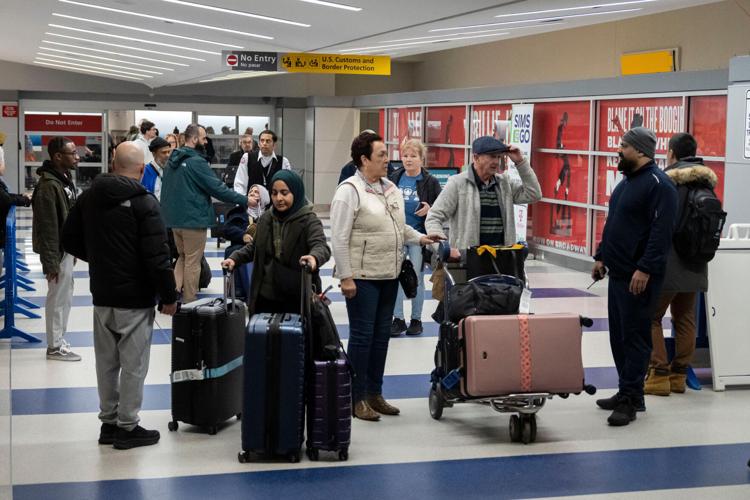
People walk out of the terminal Thursday on their arrival from Amman, Jordan at John F. Kennedy International Airport in New York.
U.S. citizens described frustrations and growing fear as they encountered closed airports, canceled flights and alarming U.S. government guidance while Poland, Australia, France and other countries more quickly dispatched military or chartered planes to bring their citizens home.
"Having the State Department or whoever tell us, you need to get out immediately, well, but there's no help. So you're on your own to get your own travel plans. That was the most stressful thing," Chicago resident Susan Daley said after arriving Thursday on the first commercial flight from Dubai to San Francisco since the Iran war began on Feb. 28. Daley was on a work trip in the United Arab Emirates.
President Donald Trump's administration pushed back against criticism that the U.S. response was too slow.
The U.S. State Department said the first government-chartered repatriation flight made it back from the Mideast on Thursday and claimed more would arrive daily. It wasn't immediately clear how many people were on the planes or where in the Middle East they departed from.
The department claimed as of Thursday, it "directly assisted" 10,000 citizens in the region seeking help or information.

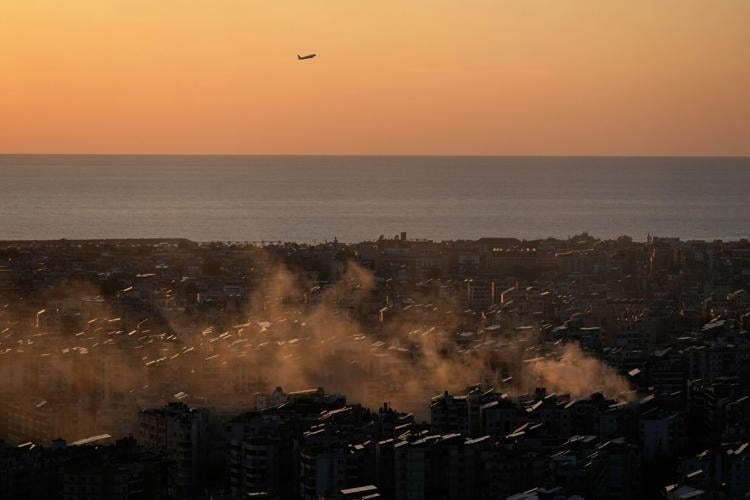
A plane takes off from the Beirut–Rafic Hariri International Airport on Thursday as smoke from an earlier Israeli airstrike rises in Dahiyeh, Beirut's southern suburbs, Lebanon.
A social media post from the assistant secretary of state for public affairs included a photo of Americans boarding a chartered plane emblazoned with the logo of the NFL's New England Patriots. The plane is believed to be at least the second such flight to land at Dulles International Airport outside Washington.
As of Thursday, about 20,000 Americans returned safely to the U.S. since the war started, the State Department said Thursday. U.S. embassies in the region continued to direct Americans to rely on commercial flights to leave, though much of the airspace across the Gulf remained closed or heavily restricted.
In the absence of advice from Washington or U.S. consular offices, some travelers said they turned to WhatsApp group chats and crowdsourced tips on social media for leads on commercial flights and alternative routes out of the United Arab Emirates, Kuwait and other countries. Some set up GoFundMe campaigns to help cover hotel and other expenses from days spent stuck in Dubai and other Gulf cities.
Chat groups help
Ramos started WhatsApp group chats Monday to help people following her difficult evacuation via her social media account, "My Life's a Travel Movie," and messaging her that they needed help getting out, too.
In three days, more than 2,200 people joined the chats about leaving Dubai, Doha, Qatar, and Kuwait. Members organized shared rides to airports where flights were still operating, passed along names of trusted drivers and listed prices and types of currency accepted.
Jason Altmire, a former three-term Democratic congressman from Pennsylvania, made it out of Dubai after the UAE partially reopened its airspace and Emirates airline resumed limited flights.
"We never heard anything from the State Department other than the general email advising us to find our own way out," Altmire said in an email interview. "I found this, along with the 'you're on your own' State Department voicemail, to be infuriating."

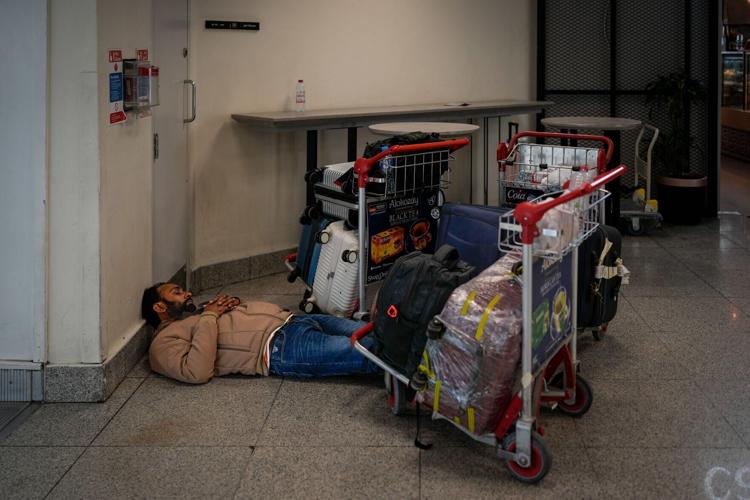
A stranded passenger sleeps on the floor Thursday outside Dubai International Airport terminal as the airport resumes limited operations in Dubai, United Arab Emirates.
Lawmakers call US response 'unacceptable'
In a letter Tuesday to Secretary of State Marco Rubio, Democrats in Congress said that "the lack of clear preparation, planning, and communication to Americans abroad is unacceptable and a violation of the State Department's basic mission to provide consular assistance and the protection of U.S. citizens overseas."
Rubio said Tuesday that the U.S. organized recovery flights but officials faced challenges due to airspace closures.
American Cory McKane, stranded in Dubai, managed to catch a flight out of the region Wednesday after a long, sleepless and expensive journey to Muscat, Oman.
Rather than risk being caught up at the crowded airport in Dubai, McKane and his friends rented a car and drove to the Oman border. There, he said, taxi drivers were charging as much as $650 to take stranded travelers to Muscat's airport, where flights are still operating.
McKane said he was fortunate to have knowledgeable local friends and that stranded travelers created a WhatsApp group to share tips and advice.
"Everyone's been sending each other resources because, quite frankly, the U.S. has not done a single thing in any capacity," McKane said. "That's been really disappointing."

