


MIAMI — A Pacific white-sided dolphin who shared a tank with Lolita the orca at the Miami Seaquarium until Lolita died last month has been moved to SeaWorld San Antonio, where he will live with others of his species, officials said Monday.
Li’i will be joining other Pacific white-sided dolphins in San Antonio, some of whom he lived with previously, the park said in a Facebook post. SeaWorld San Antonio is one of only two places in the United States to care for his species, officials said.
The 40-year-old aquatic mammal had been the only remaining Pacific white-sided dolphin at the Seaquariam, according to a Seaquariam Facebook post. After Lolita's death, animal care experts at the park suggested his relocation to a habitat with other peers of his species.
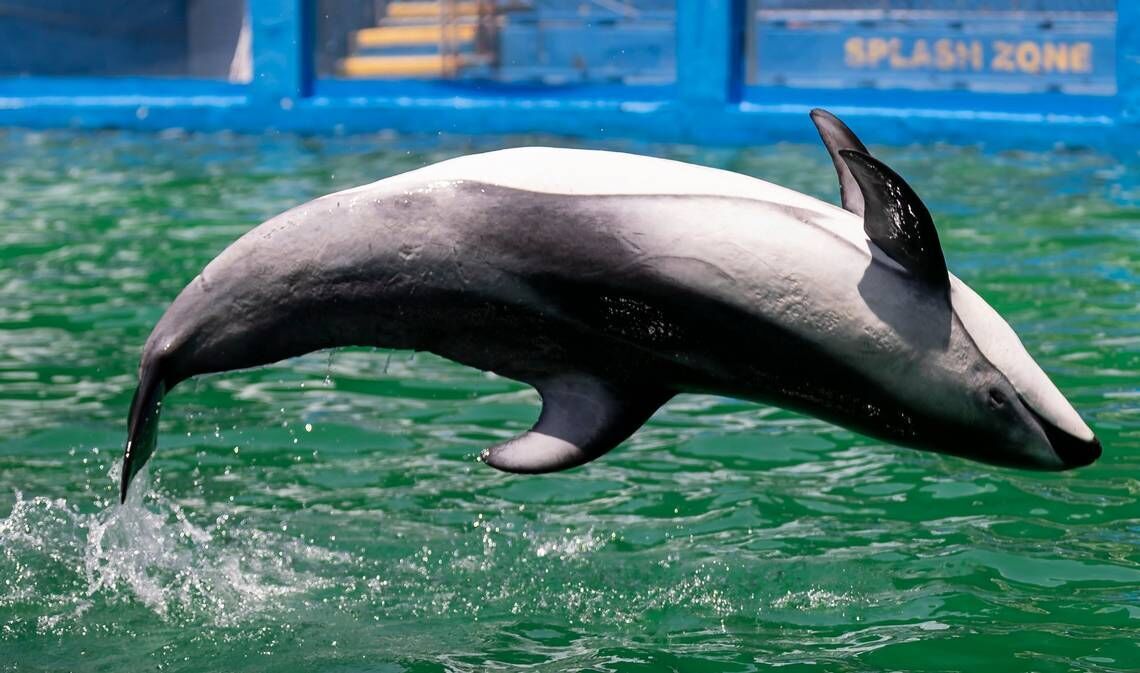
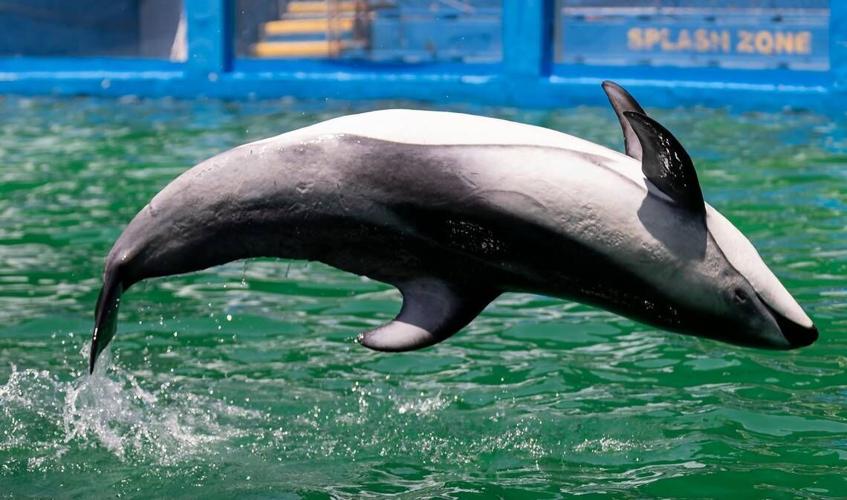
Li’i, the Pacific white-sided dolphin, performs a trick July 8 during a training session inside his stadium tank at the Miami Seaquarium in Miami, Fla. Li’i will join other Pacific white-sided dolphins at SeaWorld San Antonio after the death of Lolita the orca in August.
“Although we will very much miss him, we feel happy to know this is the best for him,” the Seaquariam statement said.
“Li’i’s trip was a success,” Dr. Christopher Dold, SeaWorld’s chief zoological officer, said Monday. “He’s an older dolphin who has never moved before but he was very calm throughout the flight. We placed him in the water here early this morning and he is alert and interactive. He can see the other animals he will soon be living with.”
Once Li’i is oriented to his new home in Texas, he will be moved into one of SeaWorld’s largest habitats, a 2.5-million gallon pool, which he will share with Beluga whales and the other six Pacific white-sided dolphins.
Li’i, captured off the coast of California in 1983, had been living in the Whale Bowl tank with Lolita, the orca whale.
Lolita — also known as Tokitae, or Toki — died Aug. 18 after spending 53 years in captivity. The 57-year-old orca died from an apparent renal condition, officials said.

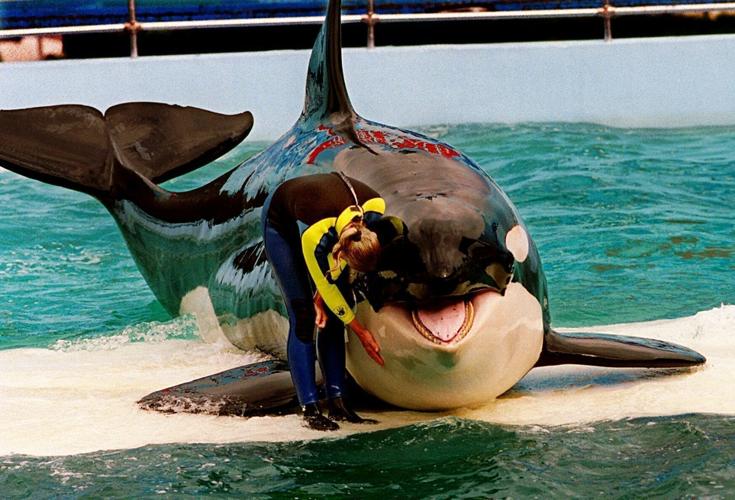
Trainer Marcia Hinton pets Lolita, a captive orca whale, during a March 9, 1995, performance at the Miami Seaquarium in Miami. Lolita died Aug. 18 as caregivers prepared to move her.
Animal rights activists had been fighting for years to have Lolita freed from her tank at the Seaquarium. The park's relatively new owner, The Dolphin Company, and the nonprofit Friends of Toki announced a plan in March to possibly move her to a natural sea pen in the Pacific Northwest, with the financial backing of Indianapolis Colts owner Jim Irsay.
Lolita retired from performing last spring as a condition of the park’s new exhibitor’s license with the U.S. Department of Agriculture. She had not been publicly displayed since. In recent months, new upgrades had been installed to better filter the pool and regulate her water temperature.
Federal and state regulators would have had to approve any plan to move Lolita, and that could have taken months or years. The 5,000-pound orca had been living for years in a tank that measures 80 feet by 35 feet and is 20 feet deep.

“Our main aim was to provide the best welfare for Li’i at a place where he could live with other dolphins of his species,” said Dr. Guillermo Sanchez, chief veterinary officer for The Dolphin Company, which owns Seaquarium and 29 other facilities throughout the world. “As soon as Toki died, we started immediately to plan Li’i’s future. San Antonio has a lot of experience with geriatric animals.”
The Associated Press and Tribune News Service contributed to this report.
Photos: Humpback whales draw thousands of visitors to Colombia's Pacific coast

Tourists ride in boats in hopes of seeing humpback whales surface Aug. 27 in the waters of Bahía Solano, Colombia.

Male humpback whales compete for a female Aug. 29 in the waters of Bahía Solano, Colombia.

A humpback whale surfaces Aug. 27 in the waters of Bahía Solano, Colombia.

A mural of a humpback whale graces a wall of the Luis Lopez de Mesa school, in Bahía Solano, Colombia.

A tourist performs a ritual with several statuettes, including one of a whale, Aug. 29 at the Pacific Botanical Garden in Bahía Solano, Colombia.

Students attend a talk on whale conservation at the Luis Lopez de Mesa school, in Bahia Solano, Colombia, Tuesday, Aug. 29, 2023. Every year the Colombian population of Bahía Solano welcomes humpback whales and thousands of tourists who arrive to watch them as they pass through the Pacific. (AP Photo/Ivan Valencia)

Embera Katio Indigenous craftsman Medardo Machuca stands in his workshop Aug. 29 in Bahía Solano, Colombia.

Embera Katio Indigenous craftsman Medardo Machuca shows off a wooden whale he carved.

A humpback whale surfaces Aug. 29 in the waters of Bahía Solano, Colombia. Every year, the Colombian town welcomes humpback whales and tourists who arrive to watch them as they pass through the Pacific.


