

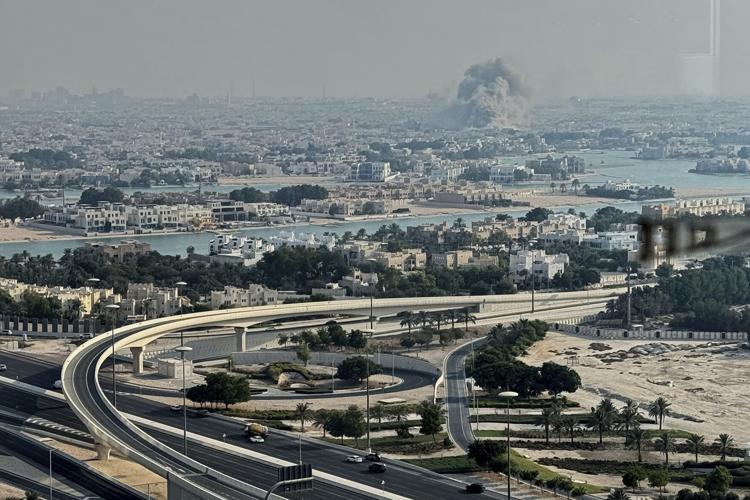

DUBAI, United Arab Emirates — Israel struck the headquarters of Hamas' political leadership in Qatar on Tuesday as the group's top figures gathered to consider a U.S. proposal for a ceasefire in the Gaza Strip.
The strike on the territory of a U.S. ally marked a stunning escalation and risked upending talks aimed at winding down the war and freeing hostages.
The attack angered Qatar, an energy-rich Gulf nation hosting thousands of American troops that has served as a key mediator between Israel and Hamas throughout the 23-month war and even before. It condemned what it referred to as a "flagrant violation of all international laws and norms" as smoke rose over its capital, Doha.
The United States said Israel alerted it before the strike. But American officials sought to distance the U.S. from the attack. White House press secretary Karoline Leavitt told reporters Middle East envoy Steve Witkoff passed along a warning to the Qataris.
She said President Donald Trump believes the Israeli strike was an "unfortunate incident" that didn't advance peace in the region. She said Trump spoke to Israeli Prime Minister Benjamin Netanyahu and "made his thoughts and concerns very clear."
Hamas said in a statement its top leaders survived the strike but five lower-level members were killed, including the son of Khalil al-Hayya — Hamas' leader for Gaza and its top negotiator — and the head of al-Hayya's office.
Hamas, which sometimes only confirmed the assassination of its leaders months later, offered no immediate proof that al-Hayya and other senior figures had survived.
A member of Qatar's Internal Security Force was also killed and others were wounded, Qatar's Interior Ministry said.
Hamas survived numerous assassinations of top leaders and still shows cohesion in Gaza, despite having suffered major blows in Israel's campaign, triggered by the militant group's Oct. 7, 2023, attack on Israel.
The strike threatens to derail long-stalled ceasefire talks as more uncertain, as Israel gears up for a major offensive aimed at taking over Gaza City. That escalation was met with heavy international condemnation and opposition within Israel from those who fear it will doom the remaining hostages.
The U.N. Security Council scheduled an emergency meeting for Wednesday at the request of elected council members Algeria, Pakistan and Somalia.
U.N. Secretary General Antonio Guterres condemned the attack, saying "all parties must work towards achieving a permanent ceasefire, not destroying it."
Gaza City evacuation
Meanwhile, Israel's military warned Gaza City residents Tuesday to evacuate ahead of its planned offensive to take control of what it portrays as Hamas’ last remaining stronghold and where hundreds of thousands of people remain struggling under conditions of famine.
The warning came hours before the Israeli strike in Qatar, officials said.
The warnings directed at Gaza City were the first calling for a full evacuation. Until now, the military only told specific sections of the northern city to evacuate ahead of operations or strikes.
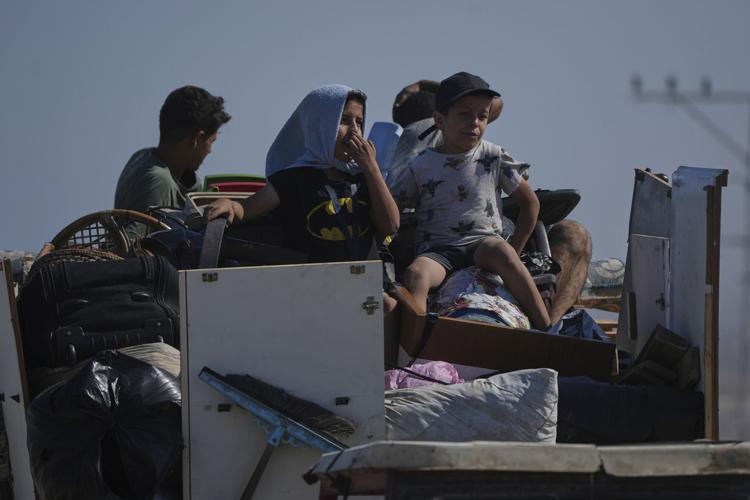
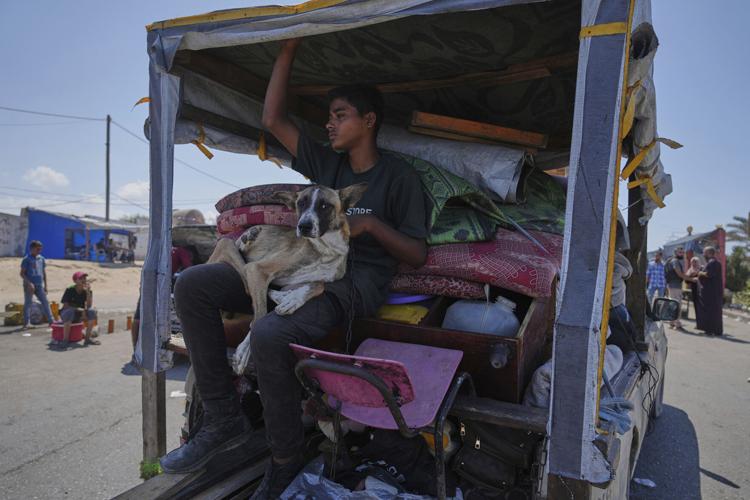
Associated Press reporters saw lines of cars and trucks leaving Tuesday. Children and adults sat atop piles of blankets, pillows, chairs, and clothing stacked on trucks and wagons.
As part of Israel's ramped up offensive, it said it demolished 50 high-rise buildings in Gaza in the past two days. Israeli leaders accuse Hamas of using the buildings for military infrastructure.
Netanyahu said Monday demolition of the high-rises was “only the beginning of the main intensive operation — the ground incursion of our forces.”
First responders rescued two survivors and pulled two bodies from one of the demolished buildings Tuesday, according to the civil defense, part of the Hamas-run Interior Ministry. It said others were trapped under the rubble.
Israel urged Palestinians to flee parts of Gaza City for a designated humanitarian zone in the territory’s south.
Ceasefire negotiations
This week, Trump said he was giving his "last warning" to Hamas regarding a possible ceasefire, as the U.S. advanced a new proposal that Arab officials said included the immediate release of all the hostages.
A senior Hamas official called it a "humiliating surrender document," but the militant group said it would discuss the proposal and respond within days.
The proposal, presented by Witkoff, calls for a negotiated end of the war and the withdrawal of Israeli forces from Gaza once the hostages are released and a ceasefire is established, according to Egyptian and Hamas officials familiar with the talks who spoke on condition of anonymity.
Hamas says it will only release the remaining 48 hostages, about 20 of whom are believed to be alive, in exchange for Palestinian prisoners, a lasting ceasefire and a complete Israeli withdrawal from Gaza.
Netanyahu rejects those terms, saying the war will continue until all the hostages are returned and Hamas has been disarmed, with Israel maintaining open-ended security control over Gaza.
Mediators previously focused on brokering a temporary ceasefire and the release of some hostages, with the two sides then holding talks on a more permanent truce. Witkoff walked away from those talks in July, after which Hamas accepted a proposal that mediators said was almost identical to an earlier one that Israel approved.

